
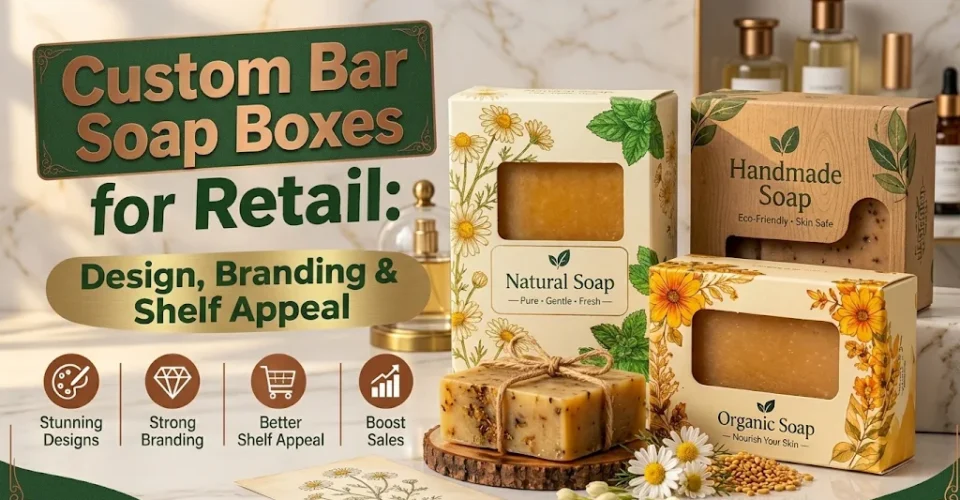
In a competitive retail environment, soap packaging does more than protect a product. It helps customers recognize a brand, understand product benefits, compare scent variations, and decide which soap to purchase. Whether a business sells handmade botanical soaps, organic cleansing bars, moisturizing soaps, or premium bath products, packaging plays an important role in how customers perceive the product.
Custom Bar Soap Boxes give soap brands the flexibility to create packaging that reflects their visual identity while meeting practical retail requirements. From selecting suitable materials and printing finishes to organizing product information and differentiating fragrance variations, every design decision can influence shelf appeal and customer experience.
For retailers and soap manufacturers, effective packaging should balance product protection, branding, readability, and presentation. A well-designed box can make a soap bar easier to identify, create a consistent appearance across product ranges, and help a brand stand out among competing products.
This guide explores how to design retail bar soap boxes, choose suitable materials, improve shelf visibility, and create branded packaging that supports product recognition and sales.
Quick Overview: Custom Bar Soap Boxes for Retail
| Packaging Element | Recommended Approach | Retail Benefit |
|---|---|---|
| Box Structure | Tuck-end, sleeve, or window box | Supports product protection and presentation |
| Material | Kraft, cardboard, or paperboard | Provides suitable structure and print surfaces |
| Branding | Consistent logo, typography, and colors | Improves brand recognition |
| Product Information | Ingredients, scent, weight, and directions | Helps customers make informed choices |
| Printing | High-quality custom printing | Creates a professional appearance |
| Finishes | Matte, gloss, embossing, or foil | Adds visual and tactile appeal |
| Scent Differentiation | Color coding and clear variant names | Makes product selection easier |
| Shelf Presentation | Consistent dimensions and visual hierarchy | Creates an organized retail display |
1. Why Custom Bar Soap Boxes Matter for Retail
Retail customers often encounter several soap products together. When packaging looks similar across different brands, a distinctive design can help a product attract attention and communicate its value.
Custom packaging gives businesses greater control over the appearance, structure, and information displayed on each box.
Improve Retail Shelf Appeal
Shelf appeal refers to how effectively a product attracts attention when displayed alongside competing products. Packaging color, typography, graphics, layout, and overall structure all contribute to this visual impression.
For example, a botanical soap brand may use earthy colors, simple typography, and natural-inspired illustrations. A premium skincare soap brand may prefer minimal layouts, elegant lettering, and refined finishes.
The design should reflect the product’s positioning rather than simply follow packaging trends.
Strengthen Brand Recognition
Consistent packaging helps customers recognize products across different retail locations and product collections.
Using the same logo placement, typography, color palette, and design language across a soap range creates a recognizable visual identity. When customers become familiar with the packaging, they may find it easier to identify the brand when shopping again.
Branded Soap Boxes can also help small businesses present their products more professionally when competing with established skincare and bath brands.
Communicate Product Information
Customers often want to know what a soap contains, what it is designed for, and which fragrance or formulation they are purchasing.
Custom Bar Soap Boxes provide space for important information such as:
- Product name and scent.
- Net weight.
- Ingredient list.
- Brand name and logo.
- Directions for use.
- Relevant warnings or precautions.
- Manufacturer or distributor details.
- Batch or traceability information where applicable.
Clear information makes the packaging more useful and helps customers compare products.
Create a More Professional Product Presentation
A well-constructed box can make a soap bar look organized and ready for retail display. It can also help maintain consistency when a business sells several soap types, sizes, or fragrance variations.
For brands developing a complete packaging range, custom soap boxes offer a starting point for exploring different structures and presentation options.
2. Best Box Styles for Retail Bar Soap Packaging
The right packaging structure depends on soap dimensions, weight, product protection requirements, branding goals, and retail display preferences.
Tuck-End Soap Boxes
Tuck-end boxes are a practical option for many retail soap products. Their folding structure allows the product to be enclosed while providing printable exterior panels.
They can be designed with different tuck styles depending on the product and packaging requirements.
Best for:
- Handmade soap bars.
- Everyday bath soaps.
- Organic and botanical soap collections.
- Retail products requiring full coverage.
Tuck-end structures are useful when a brand wants a clean, enclosed design with space for product details and branding.
Kraft Bar Soap Boxes
Kraft boxes offer a natural paper-based appearance that works well with rustic, botanical, handmade, and minimalist brand identities.
They can be printed with logos, product names, illustrations, and other brand elements. Their appearance can also be combined with simple labels or restrained printing for a more understated presentation.
Best for:
- Handmade soap businesses.
- Natural-inspired soap collections.
- Small retail brands.
- Minimalist packaging designs.
Explore custom Kraft boxes when considering a kraft-style packaging direction.
Window Soap Boxes
Window boxes include a cutout that allows customers to see part of the soap without opening the packaging. This can be useful when the soap’s color, texture, pattern, or decorative appearance is an important selling point.
For example, a soap bar featuring visible botanical pieces or a distinctive layered design may benefit from a window cutout.
However, window placement should be planned carefully. It should provide a useful view without compromising the structure or exposing the product to unnecessary handling.
Read more about window soap boxes and their benefits when comparing packaging styles.
Sleeve-Style Soap Packaging
A sleeve wraps around part of the soap while leaving selected areas visible. It can create a minimalist appearance and reduce the amount of material used compared with some fully enclosed structures.
Sleeves may work well when the product has an attractive surface and the brand wants a simple, contemporary presentation.
The design should still provide enough space for essential product information and suitable handling protection.
Custom Cardboard Soap Boxes
Cardboard packaging is a versatile option for printed retail soap boxes. It offers a suitable surface for brand graphics, product details, illustrations, and color-based product differentiation.
The appropriate board grade should be selected according to soap dimensions, weight, packaging structure, and expected handling conditions.
For brands comparing material and structure options, cardboard boxes provide another packaging direction to consider.
3. How to Design Attractive Retail Soap Packaging
Good packaging design begins with understanding the product and its target customers. A visually attractive box should also be easy to understand, recognizable, and suitable for the retail environment.
Establish a Clear Packaging Hierarchy
Packaging hierarchy determines which information customers notice first, second, and third.
A practical front-panel layout may follow this order:
- Brand logo or brand name.
- Soap product name.
- Main scent or formulation.
- A short product benefit or description, when appropriate.
- Net weight or other required information.
For example, a lavender soap box might place the brand logo at the top, “Lavender Bar Soap” in the center, and a subtle lavender illustration below it.
Avoid placing too many messages on the front panel. A clear design is generally easier to recognize from a retail shelf.
Select Colors That Reflect the Product
Color can help customers understand different scents, formulations, and product collections.
A brand might use:
- Green for herbal or botanical-inspired products.
- Lavender or purple for lavender-scented products.
- Blue for fresh or ocean-inspired fragrances.
- Cream and beige for oatmeal or milk-based soap ranges.
- Brown and earthy tones for rustic or natural-inspired collections.
These are design associations, not proof of ingredients or product benefits. Use colors consistently while ensuring that the printed product information accurately describes the soap.
Use Typography That Is Easy to Read
Typography affects both appearance and usability. Decorative fonts can add personality, but they should not make product names or important information difficult to read.
Consider using:
- A distinctive font for the brand name.
- A clear font for the product title.
- A readable font for ingredients and instructions.
- Consistent font sizes across related products.
Important product information should remain legible at the actual box size.
Use Graphics and Illustrations Carefully
Illustrations can communicate a product’s identity without overcrowding the packaging.
For example, a citrus soap may use simple citrus illustrations, while an herbal soap range may feature botanical line drawings.
Graphics should support the product name and branding instead of competing with them. Consistency across the collection is particularly important when several products are displayed together.
4. Branding Strategies for Custom Printed Bar Soap Boxes
Packaging is one of the physical brand touchpoints customers interact with before using a product. A consistent design can help connect individual soap bars to a recognizable brand.
Keep Logo Placement Consistent
The logo should be easy to find and clearly visible. Its placement should remain reasonably consistent across different product variations.
A business can adjust background colors or supporting graphics for individual scents while keeping the main brand identity recognizable.
Create a Consistent Visual Identity
A unified packaging system should include:
- Brand logo and name.
- Primary and secondary colors.
- Typography rules.
- Illustration or photography style.
- Layout and spacing.
- Consistent placement of product information.
This helps create a coordinated appearance across a product collection.
Differentiate Products Without Losing Brand Consistency
A soap brand may sell lavender, charcoal, rose, citrus, oatmeal, and peppermint bars. Each product should be easy to identify, but the overall packaging should still look like part of the same collection.
A useful approach is to maintain the same box structure, logo position, and typography while changing selected colors, scent names, and illustrations.
This approach supports SKU differentiation without making the product range look disconnected.
Use Packaging to Communicate Brand Positioning
Different brands require different packaging styles.
| Brand Positioning | Suitable Design Direction |
|---|---|
| Handmade | Simple illustrations and warm colors |
| Natural-inspired | Botanical graphics and earthy tones |
| Luxury | Minimal layouts and refined finishes |
| Modern skincare | Clean typography and structured layouts |
| Playful | Bright colors and expressive graphics |
| Traditional | Classic typography and familiar design elements |
The design should reflect the actual product and brand identity. Avoid making claims such as organic, natural, or therapeutic unless they are accurate and supported.
5. Materials for Retail Bar Soap Boxes
Material selection affects the box’s appearance, strength, print quality, and suitability for retail handling.
Kraft Paperboard
Kraft paperboard is often selected for its natural appearance and practical packaging applications.
It can work well for handmade and natural-inspired soap brands. Depending on the material grade and construction, it can provide a suitable structure for lightweight retail soap bars.
Cardboard and Paperboard
Cardboard and paperboard provide flexible printing and finishing options. They are commonly used for retail cartons where a brand needs clear product information and consistent graphics.
The correct thickness should be determined according to the box size, soap weight, and expected handling.
Corrugated Board
Corrugated board has a fluted inner layer that provides cushioning and additional strength. It is generally more relevant to shipping cartons, bulk packaging, and transportation than to small individual soap cartons.
Brands can consider custom corrugated boxes for shipping multiple soap boxes or preparing larger wholesale orders.
How to Select the Right Material
Before choosing a material, consider:
- Soap bar dimensions and weight.
- Whether the box fully encloses the soap.
- Required print quality.
- Expected shelf and storage conditions.
- Handling and shipping requirements.
- Desired packaging appearance.
- Material availability and budget.
A sample box is useful for checking fit, folding, print quality, and overall presentation before approving a larger order.
6. Printing and Finishing Options for Premium Soap Packaging
Printing and finishing can make retail soap boxes more distinctive. The best choices depend on brand positioning, artwork, material, and budget.
Custom Full-Color Printing
Full-color printing allows brands to use detailed graphics, product illustrations, photographs, gradients, and multiple colors.
It is suitable for businesses that want different visual designs for each scent or product collection.
Matte Lamination
Matte lamination creates a smooth, low-gloss surface. It can support a subtle and refined packaging appearance, especially for minimalist or premium soap brands.
Gloss Lamination
Gloss lamination produces a shiny surface that can make colors appear more vibrant. It may be suitable for brands that prefer a brighter retail presentation.
Foil Stamping
Foil stamping adds a metallic effect to selected areas, such as a logo, product name, or decorative detail.
Gold, silver, and other foil colors can be used to create contrast, but the effect should be applied selectively so the packaging remains easy to read.
Embossing and Debossing
Embossing raises selected design elements above the surface, while debossing presses them into the material.
Both techniques can add texture and visual interest. They are often used for logos, brand names, or small decorative elements.
Spot UV
Spot UV applies a glossy coating to selected parts of the design. It can create contrast between coated and uncoated areas, helping a logo or graphic stand out.
Before selecting any finish, confirm that it is compatible with the chosen material and the brand’s packaging and recycling requirements.
7. How to Differentiate Soap Scents and Product Variants
When a soap brand sells several scents or formulations, packaging must make each product easy to identify.
A customer should be able to distinguish lavender soap from citrus soap without having to inspect every detail on the box.
Use a Consistent Color-Coding System
Assign a recognizable color to each scent or product type.
For example:
| Soap Variant | Possible Color Direction | Supporting Graphic |
|---|---|---|
| Lavender | Purple | Lavender flowers |
| Citrus | Yellow or orange | Citrus slices |
| Rose | Soft pink | Rose petals |
| Charcoal | Black or charcoal grey | Minimal dark graphics |
| Oatmeal | Beige or cream | Oat illustrations |
| Peppermint | Green | Mint leaves |
Keep the brand logo and main layout consistent while changing the variant-specific elements.
Make Scent Names Easy to Find
The fragrance or product variant should be clearly displayed on the front panel. Avoid using illustrations alone to communicate the scent, because customers may not immediately understand the product.
Organize Product Information Consistently
Use the same information layout across all soap boxes. When customers become familiar with the packaging, they can find ingredients, weight, and product descriptions more easily.
Use SKU Identification Where Needed
For brands with multiple variants, SKU codes or other product identifiers can help retailers manage stock and distinguish products during ordering and fulfillment.
The packaging design should support both the customer-facing experience and the practical needs of retail inventory management.
8. What Information Should Be Printed on Retail Bar Soap Boxes?
Packaging information helps customers understand what they are purchasing. It can also support product identification and applicable labeling requirements.
Depending on the product, market, and relevant regulations, soap packaging may include:
| Information | Purpose |
|---|---|
| Brand Name | Identifies the manufacturer or brand |
| Product Name | Communicates the soap type |
| Scent or Variant | Helps customers distinguish products |
| Net Weight | States the declared product quantity |
| Ingredients | Provides relevant composition information |
| Directions for Use | Explains how to use the product |
| Warnings | Communicates relevant precautions |
| Manufacturer Details | Identifies the responsible business |
| Batch Information | Supports product traceability where applicable |
| Barcode | Helps with retail scanning and inventory |
Labeling rules can differ depending on the product classification and the country where it is sold. Soap, cosmetic, and cleansing products may be subject to different requirements.
Businesses should verify applicable regulations before printing packaging in bulk. Avoid unsupported claims such as “chemical-free,” “100% safe,” or medical benefits that the product cannot substantiate.
9. Retail Shelf Display Tips for Soap Brands
A well-designed box should look attractive not only on a computer screen but also when several units are placed together on a retail shelf.
Maintain Consistent Box Dimensions
Consistent packaging dimensions can help retailers organize products and create a neat shelf display. If different soap bars require different box sizes, use a consistent visual system to connect them.
Design for Front-Facing Visibility
The front panel should communicate the brand and product name clearly. Important information should not be hidden by folds, overlapping labels, or unnecessary decorative elements.
Use Window Cutouts Strategically
A window can show the soap’s color, texture, or design. It is most useful when the visible product feature adds value to the shopping experience.
However, the window should not make the box weak or leave the product unnecessarily exposed.
Keep Product Collections Visually Coordinated
A consistent range of boxes can create a stronger retail presence. Use related colors, typography, and graphic styles to connect different soap variants.
Consider Shelf and Countertop Displays
Some brands sell soap through independent stores, boutiques, gift shops, and beauty retailers. In these environments, countertop or grouped displays can help organize multiple variants.
The display should make product selection easy and keep brand messaging visible without overwhelming the individual packaging.
10. How to Choose the Right Custom Bar Soap Boxes Supplier
Selecting a packaging supplier involves more than comparing prices. Businesses should evaluate material options, printing quality, customization, production consistency, and order requirements.
Consider the following points before placing an order:
- Material options: Check whether the supplier offers suitable kraft, cardboard, or paperboard options.
- Box structures: Confirm that the supplier can produce the required tuck-end, sleeve, or window design.
- Printing quality: Review color consistency, artwork clarity, and logo reproduction.
- Finishing options: Ask which laminations, foils, embossing, and other finishes are available.
- Customization: Confirm whether dimensions, artwork, and packaging layouts can be tailored to the soap product.
- Sampling: Request a sample or proof to check the fit and appearance before approving production.
- Order quantities: Discuss minimum order quantities and wholesale pricing.
- Production timelines: Confirm estimated production and delivery schedules.
For businesses developing custom soap packaging, Bluebird Packaging’s custom soap box options can be explored according to product dimensions, branding requirements, and preferred packaging style.
You can also contact the Bluebird Packaging team to discuss your packaging requirements.
11. Frequently Asked Questions
1. What are the best custom bar soap boxes for retail?
The best option depends on the soap’s dimensions, weight, brand identity, and display requirements. Tuck-end boxes are practical for enclosed packaging, kraft boxes suit natural-inspired designs, and window boxes allow customers to see the product.
2. How do you design attractive retail soap packaging?
Start with a clear brand identity, readable typography, suitable colors, and a simple information hierarchy. Make the product name and scent easy to recognize, and use illustrations or finishes that support the brand’s positioning.
3. What information should be printed on bar soap boxes?
Common information includes the brand name, product name, scent, net weight, ingredients, directions, relevant warnings, and manufacturer details. Specific labeling requirements depend on the product classification and sales market.
4. How can custom soap boxes improve brand recognition?
Consistent logos, colors, typography, and packaging layouts help customers identify products across different scents and collections. A recognizable design can make a brand easier to remember when customers shop again.
5. Which materials are best for retail bar soap boxes?
Kraft paperboard and cardboard are common choices for individual retail soap boxes. The correct material depends on the soap’s weight, box structure, print requirements, and handling conditions.
6. Are window soap boxes suitable for retail displays?
Yes. Window soap boxes can be useful when the soap’s color, texture, or decorative appearance is part of its appeal. The window should be positioned carefully so the packaging remains structurally suitable.
7. What printing finishes work best for premium soap packaging?
Matte or gloss lamination, foil stamping, embossing, debossing, and Spot UV can all be used. The best finish depends on the brand’s visual identity, material compatibility, and budget.
8. How do you differentiate different soap scents through packaging?
Use a consistent box layout with different colors, scent names, and supporting illustrations for each variant. This makes products easier to identify while maintaining a unified brand identity.
9. What size should retail bar soap boxes be?
The box should be designed around the soap’s actual length, width, and height, with enough allowance for easy insertion and removal. A physical sample is recommended to confirm the fit before production.
10. Are custom printed soap boxes available for wholesale orders?
Custom printed soap boxes can be produced for wholesale requirements, depending on the supplier’s minimum order quantity, material availability, printing specifications, and production capacity. Discuss your quantity and design requirements before placing an order.
Conclusion
Retail soap packaging plays an important role in product presentation, customer recognition, and brand differentiation. From the box structure and material to printing, finishes, and scent-based color coding, every element should support the product and make it easier for customers to recognize.
Custom Bar Soap Boxes allow businesses to build a consistent visual identity while providing suitable space for product information and retail presentation. Whether you sell handmade soaps, botanical bars, or premium skincare products, thoughtful packaging can help your collection look more professional and organized.
If you are planning a new soap collection or upgrading existing retail packaging, explore custom soap packaging solutions from Bluebird Packaging. Request a quote to discuss your preferred box dimensions, materials, printing, and finishing options.