
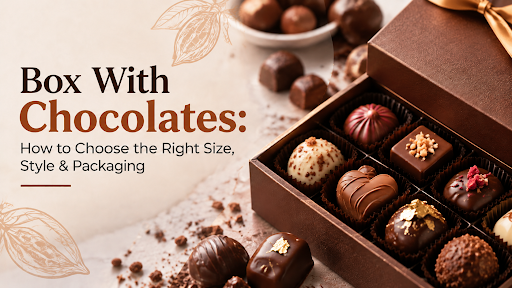
A box with chocolates is more than just a container for sweet treats. It is part of the complete customer experience that protects delicate chocolates, creates a premium presentation, and helps brands build recognition. Whether you sell handmade truffles, luxury bonbons, chocolate bars, or gift assortments, the right chocolate packaging can influence how customers view the quality of your product.
Choosing the perfect packaging requires more than selecting a beautiful design. You need to consider chocolate size, quantity, arrangement, box structure, materials, inserts, printing, and how the package will be displayed or shipped.
At Bluebird Packaging, custom chocolate boxes are designed around different product requirements, including sizes, shapes, materials, printing styles, and finishing options. Brands can create packaging that matches their product quality while improving shelf appeal and customer experience.
This guide explains everything you need to know before ordering custom chocolate packaging.
What Is A Box With Chocolates?
A box with chocolates is a packaging solution designed to hold, protect, and present chocolate products. Depending on the brand and product type, these boxes can range from simple folding cartons to premium rigid gift boxes with customized inserts.
Chocolate packaging serves multiple purposes:
- Protect chocolates during storage and transportation
- Keep different flavors organized
- Improve product presentation
- Display branding and product information
- Create a memorable unboxing experience
Different chocolate businesses require different packaging solutions.
| Chocolate Product | Suitable Packaging |
|---|---|
| Chocolate bars | Folding cartons or sleeves |
| Truffles | Boxes with individual cavities |
| Bonbons | Premium inserts and rigid boxes |
| Chocolate gifts | Luxury chocolate gift boxes |
| Seasonal collections | Custom printed themed boxes |
| Online chocolate orders | Inner box with shipping protection |
The right packaging depends on your product dimensions, sales channel, and brand positioning.
How To Choose The Right Box For Chocolates?
The biggest mistake brands make is choosing packaging based only on the number of chocolates.
A 12-piece chocolate box does not always have the same dimensions because chocolates come in different shapes and sizes.
A small square chocolate assortment and a large handmade truffle collection may both contain 12 pieces, but they require completely different packaging designs.
Before ordering custom chocolate boxes, consider:
1. Measure Your Chocolate Size
Start with the actual product measurements.
Measure:
- Length
- Width
- Height
- Wrapper or liner size
- Decorative toppings
- Final packed dimensions
For handmade chocolates, always consider production variations. A cavity that fits one perfect piece may become too tight during regular production.
2. Decide Chocolate Arrangement
The internal layout affects the complete box structure.
Common arrangements include:
4 Piece Chocolate Box
Usually arranged:
- 2 × 2 layout
Suitable for:
- Small gifts
- Samples
- Premium collections
12 Piece Chocolate Box
Common layouts:
- 3 × 4
- 4 × 3
Suitable for:
- Assorted chocolates
- Retail collections
- Gift packaging
24 Piece Chocolate Box
Common layouts:
- 4 × 6
- Multi-layer arrangement
Suitable for:
- Large gift collections
- Corporate chocolate gifts
Chocolate Box Size Guide
There is no universal chocolate box size because every product has different requirements. However, these common layouts can help brands plan their packaging.
| Number Of Chocolates | Common Layout | Best For |
|---|---|---|
| 4 Pieces | 2 × 2 | Small gifts |
| 6 Pieces | 2 × 3 | Compact assortments |
| 9 Pieces | 3 × 3 | Boutique chocolate brands |
| 12 Pieces | 3 × 4 | Retail and gifting |
| 16 Pieces | 4 × 4 | Premium collections |
| 24 Pieces | 4 × 6 | Large assortments |
The final dimensions should always be calculated after considering:
- Chocolate size
- Insert thickness
- Space between cavities
- Lid clearance
- Customer removal experience
Internal vs External Chocolate Box Dimensions
When ordering custom chocolate packaging, understanding dimensions is important.
Many businesses focus only on the outside size of the box, but the inside dimensions determine whether your chocolates actually fit.
Internal Dimensions
Used for:
- Chocolate placement
- Inserts
- Trays
- Product protection
External Dimensions
Used for:
- Shelf space
- Shipping
- Storage
- Display planning
For example, a box may look large from outside, but thick walls and inserts can reduce the usable internal space.
Always provide your packaging supplier with product dimensions before final production.
Why Chocolate Box Inserts Are Important
A premium chocolate box often needs more than just an outer package.
Custom inserts help keep chocolates:
- Organized
- Protected
- Separated
- Visually attractive
Common insert options include:
Individual Chocolate Cavities
Best for:
- Truffles
- Bonbons
- Luxury chocolates
Each chocolate gets its own position, creating a premium presentation.
Divider Inserts
Suitable for:
- Wrapped chocolates
- Mixed assortments
- Simple gift collections
They prevent chocolates from moving during handling.
Custom Shaped Inserts
Used when chocolates have:
- Unique shapes
- Different sizes
- Special presentation requirements
Best Types Of Chocolate Boxes
Different brands need different packaging styles.
Folding Chocolate Boxes
Folding cartons are lightweight and practical.
Benefits:
- Cost-effective
- Easy to store
- Excellent printing surface
- Suitable for retail shelves
Ideal for:
- Chocolate bars
- Small assortments
- Everyday products
Rigid Chocolate Boxes
Rigid boxes create a premium experience.
They are commonly used for:
- Luxury chocolates
- Corporate gifts
- Premium collections
Benefits:
- Strong structure
- High-end appearance
- Better unboxing experience
Window Chocolate Boxes
Window packaging allows customers to see the product before purchasing.
Benefits:
- Improves product visibility
- Builds customer trust
- Enhances shelf appeal
Sleeve And Tray Chocolate Boxes
These boxes create a unique opening experience.
They are popular for:
- Premium chocolate collections
- Gift packaging
- Seasonal products
Best Materials For Chocolate Packaging
The material you choose affects durability, appearance, and brand perception.
Cardboard Chocolate Boxes
Cardboard is one of the most popular choices because it offers:
- Good printing quality
- Lightweight structure
- Cost efficiency
- Customization options
Bluebird Packaging provides cardboard packaging options with different customization possibilities, including printing, finishes, and structural options.
Kraft Chocolate Boxes
Kraft packaging is ideal for brands focusing on:
- Natural appearance
- Sustainability
- Organic products
Commonly used by:
- Handmade chocolate brands
- Artisan businesses
- Eco-conscious companies
Rigid Board Chocolate Boxes
Rigid materials are suitable for luxury chocolate packaging.
They provide:
- Premium feel
- Better durability
- Elegant presentation
Custom Chocolate Boxes With Logo
Packaging is one of the strongest branding opportunities for chocolate companies.
Custom printed chocolate boxes allow brands to include:
- Logo
- Brand colors
- Product information
- Patterns
- Artwork
- QR codes
- Marketing messages
A well-designed chocolate box helps customers remember your brand even after the chocolates are finished.
Premium finishing options can further improve appearance.
Popular options include:
- Gold foil stamping
- Silver foil stamping
- Embossing
- Debossing
- Spot UV
- Matte finishing
- Gloss finishing
Bluebird Packaging offers custom chocolate boxes with different sizes, shapes, printing options, and finishing choices to support different product styles.
Chocolate Packaging Design Ideas For Better Brand Presentation
A chocolate box is often the first physical interaction customers have with your brand. Before tasting the product, customers judge quality through the packaging design, colors, structure, and overall presentation.
A well-designed custom chocolate box should balance beauty with functionality. The package should protect the chocolates while creating an experience that feels special.
Here are some popular chocolate packaging design approaches brands use:
Luxury Chocolate Packaging Design
Luxury chocolate brands usually focus on premium materials, elegant colors, and sophisticated finishing.
Common design elements include:
- Minimal typography
- Metallic foil details
- Soft-touch finishes
- Embossed logos
- Magnetic closures
- Premium rigid structures
Luxury packaging is commonly used for:
- High-end chocolate collections
- Corporate gifts
- Wedding favors
- Seasonal gift sets
A premium chocolate box should feel valuable even before the customer opens it.
Minimalist Chocolate Box Designs
Minimal packaging has become popular among modern chocolate brands.
This style focuses on:
- Clean layouts
- Simple colors
- Clear branding
- Premium typography
Minimal designs work well for brands that want to communicate:
- Quality
- Authenticity
- Craftsmanship
A simple design can often create a stronger impression than overcrowded packaging.
Window Chocolate Boxes For Product Visibility
Window boxes allow customers to see the chocolates before opening the package.
They are useful for:
- Retail displays
- Gift packaging
- Assorted chocolate collections
Benefits include:
- Increased product visibility
- Better customer confidence
- Attractive shelf presentation
However, the window placement should be planned carefully so it does not affect the strength of the box or important branding areas.
Chocolate Packaging For Different Business Needs
Every chocolate business has different packaging requirements. The ideal box depends on how the chocolates are sold and delivered.
| Business Type | Recommended Packaging |
|---|---|
| Handmade chocolate brands | Custom boxes with inserts |
| Luxury chocolate companies | Rigid gift boxes |
| Retail chocolate brands | Folding cartons |
| Online chocolate stores | Protective inner packaging |
| Corporate gifting companies | Premium branded boxes |
| Wedding chocolate favors | Small customized boxes |
Understanding your sales channel helps determine the right packaging investment.
Food Packaging Considerations For Chocolate Boxes
Chocolate packaging requires careful consideration because chocolates are sensitive products.
The outer decorative box is not always the layer that touches the food.
Important factors include:
- Food-contact materials
- Inner wrappers
- Liners
- Trays
- Inserts
- Storage conditions
Brands should ensure that any material directly contacting chocolates is suitable for the intended application.
A beautiful chocolate box should also maintain product quality.
Does Chocolate Packaging Prevent Melting?
A common misunderstanding is that a thicker or premium-looking box can prevent chocolate from melting.
The outer box alone is not a temperature-control solution.
Chocolate protection depends on:
- Product type
- Storage conditions
- Shipping duration
- Climate
- Insulation requirements
- Complete packaging system
For brands selling chocolates online, packaging should be designed according to the shipping environment.
A successful e-commerce chocolate package usually includes:
- Attractive inner presentation box
- Protective outer shipping box
- Proper cushioning
- Temperature considerations
Chocolate Box Printing Options
Printing plays an important role in creating recognizable chocolate brands.
Different printing methods create different visual effects.
Custom Printed Chocolate Boxes
Custom printing allows brands to create packaging that matches their identity.
Offset Printing
Suitable for:
- Detailed artwork
- High-quality images
- Large production runs
Digital Printing
Suitable for:
- Small quantities
- Personalized packaging
- Testing new designs
Flexographic Printing
Often used for:
- Simple designs
- Large-scale production
Premium Finishing Options For Chocolate Boxes
Finishing adds texture and visual appeal to packaging.
Popular options include:
Foil Stamping
Creates metallic effects using:
- Gold foil
- Silver foil
- Colored foil
Often used for luxury chocolate packaging.
Embossing
Raises specific design elements such as:
- Logos
- Patterns
- Text
This creates a premium touch customers can physically feel.
Debossing
Creates an engraved effect by pressing artwork into the packaging surface.
Spot UV Coating
Adds shine to selected areas.
Commonly used on:
- Logos
- Brand names
- Decorative elements
How Much Do Custom Chocolate Boxes Cost?
The cost of custom chocolate packaging depends on several factors.
There is no fixed price because every packaging project has different requirements.
Main factors affecting cost include:
| Factor | Impact On Cost |
|---|---|
| Box style | Rigid boxes usually cost more than simple cartons |
| Size | Larger boxes require more material |
| Quantity | Higher quantities reduce unit cost |
| Printing | More colors and detailed artwork increase cost |
| Finishing | Foil, embossing, and coatings add production steps |
| Inserts | Custom trays increase design and manufacturing requirements |
| Material | Premium materials increase overall cost |
For an accurate quotation, brands should provide:
- Chocolate dimensions
- Box quantity
- Preferred style
- Material choice
- Printing requirements
- Finishing details
How To Order Custom Chocolate Boxes From Bluebird Packaging
Ordering custom packaging becomes easier when you have the right information prepared.
Step 1: Share Your Product Details
Provide:
- Chocolate size
- Number of pieces
- Product arrangement
- Packaging requirements
Step 2: Select Box Style
Choose from options such as:
- Folding cartons
- Rigid boxes
- Sleeve boxes
- Window boxes
- Gift boxes
Step 3: Select Material And Finishing
Decide:
- Cardboard
- Kraft
- Rigid board
- Premium finishes
- Printing style
Step 4: Approve Packaging Design
Before production, review:
- Dimensions
- Artwork
- Structure
- Insert design
A physical sample is recommended for checking:
- Product fit
- Box strength
- Overall appearance
Common Mistakes To Avoid When Ordering Chocolate Boxes
Many brands face packaging problems because they focus only on appearance.
Choosing Size Without Measuring Chocolates
A beautiful box is useless if chocolates move around or do not fit properly.
Ignoring Inserts
Delicate chocolates often require proper support.
Without inserts, chocolates may:
- Move
- Break
- Lose presentation quality
Designing Artwork Before Final Dimensions
Always finalize the box structure first.
The artwork should match:
- Dielines
- Folding areas
- Cutting lines
- Glue areas
Using Too Many Design Elements
Adding every possible finish can make packaging look confusing. A balanced design usually creates a stronger premium impression.
Forgetting Shipping Requirements
Online chocolate brands should consider:
- Outer protection
- Delivery handling
- Storage conditions
Chocolate Box Packaging Ideas For Different Occasions
Chocolate packaging can be customized for different events and seasons.
Wedding Chocolate Boxes
Popular features:
- Personalized names
- Elegant colors
- Small favor sizes
- Premium finishes
Corporate Chocolate Gift Boxes
Common requirements:
- Company logo
- Professional appearance
- Premium presentation
Holiday Chocolate Packaging
Seasonal packaging can include:
- Special artwork
- Limited-edition designs
- Gift-focused structures
Subscription Chocolate Boxes
Subscription brands usually need:
- Durable packaging
- Consistent branding
- Easy opening experience
Why Custom Chocolate Packaging Helps Your Brand
A custom chocolate box does more than protect your product.
It helps businesses:
- Build brand recognition
- Improve customer experience
- Increase perceived value
- Stand out from competitors
- Create memorable gifting experiences
In competitive markets, packaging often becomes a deciding factor between similar products.
A customer may forget a product name, but they often remember a unique presentation.
Frequently Asked Questions About Box With Chocolates
What size box do I need for chocolates?
The required size depends on chocolate dimensions, quantity, arrangement, and insert design. Measure your finished chocolates first before selecting packaging dimensions.
What is the best material for chocolate boxes?
The best material depends on your product and brand goals. Cardboard works well for retail packaging, kraft supports natural branding, and rigid materials are ideal for premium chocolate gifts.
Can I customize chocolate boxes with my logo?
Yes. Custom chocolate boxes can include logos, colors, artwork, and finishing options such as foil stamping, embossing, and special coatings.
Do chocolate boxes need inserts?
Not every chocolate box requires inserts, but they are recommended for delicate products like truffles, bonbons, and premium assortments because they improve protection and presentation.
Are rigid chocolate boxes better than cardboard boxes?
Both have different advantages. Rigid boxes provide a luxury appearance, while cardboard boxes are lightweight, cost-effective, and suitable for many retail applications.
Can chocolate boxes be used for shipping?
Yes, but the presentation box should usually be combined with protective shipping packaging. Shipping requirements depend on the product, destination, and environmental conditions.
How long does custom chocolate box production take?
Production timelines depend on the box style, quantity, printing method, and customization requirements. Brands should confirm timelines before placing an order.
Create Custom Chocolate Boxes With Bluebird Packaging
The right box with chocolates should combine protection, design, and brand identity. Whether you need simple retail chocolate packaging or premium custom gift boxes, choosing the right structure and materials can transform how customers experience your product.
Bluebird Packaging helps businesses create customized packaging solutions with different box styles, materials, printing options, and finishing choices.
From chocolate gift boxes to luxury retail packaging, the goal is simple: create packaging that protects your chocolates while making your brand memorable.
Ready to Design Your Custom Chocolate Packaging?
Contact Bluebird Packaging today and share your product details, box requirements, and branding ideas to create packaging designed around your chocolates.