

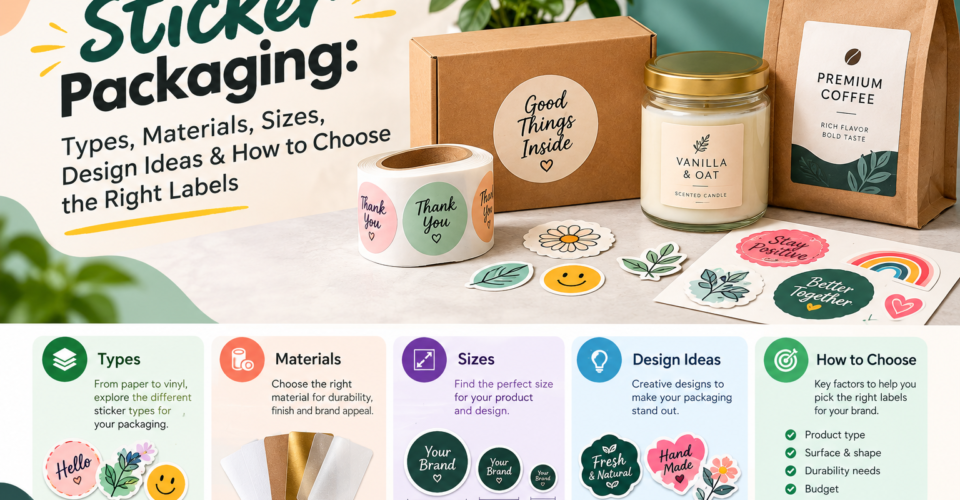
Sticker packaging has become an important part of modern product presentation. Businesses no longer use stickers only for adding a logo or sealing a box. Custom stickers can identify products, improve branding, provide important information, and create a better unboxing experience.
From ecommerce brands using logo seals on mailer boxes to cosmetic companies adding product labels on jars and bottles, packaging stickers provide a flexible way to upgrade packaging without redesigning the entire package.
For small businesses, stickers offer a practical branding solution because they allow quick updates for new products, seasonal campaigns, limited editions, and different product variations.
A well-designed sticker should work with the complete packaging system. The material, size, shape, adhesive, placement, and finish all affect how the final package looks and performs.
Before selecting a sticker, businesses should understand what role it needs to perform:
- Brand recognition
- Product identification
- Package sealing
- Customer instructions
- Promotional messaging
- Unboxing experience
For brands building a complete packaging strategy, choosing the right combination of custom packaging solutions can help create consistent product presentation across every customer touchpoint.
What Is Sticker Packaging?
Sticker packaging refers to the use of adhesive printed materials, including stickers, labels, seals, and decals, as part of a product packaging system.
These stickers can be applied directly to:
- Custom boxes
- Mailer boxes
- Folding cartons
- Product containers
- Paper bags
- Shipping packages
- Gift packaging
Unlike traditional printed packaging, sticker packaging gives businesses more flexibility. A brand can keep the same base box design while using different stickers to identify flavors, colors, collections, sizes, or seasonal products.
For example, a candle company may use the same kraft box for every product while changing the scent label sticker on each candle. A coffee brand may use one packaging design and update stickers for different roast types.
This flexibility makes custom packaging stickers useful for businesses that manage multiple products or frequently update their collections.
Sticker Packaging vs Packaging for Stickers
The phrase “sticker packaging” can sometimes create confusion because it may refer to two different things.
Some people use it to describe packaging used for selling stickers as products, such as sticker sheets, sticker packs, or decorative sticker collections.
In product packaging, however, sticker packaging usually means using stickers as part of the packaging itself.
This includes:
- Brand logo stickers on boxes
- Product information labels
- Security seals
- Promotional stickers
- QR code labels
- Thank-you stickers
The purpose is not simply to decorate the package. A properly planned sticker system supports branding, communication, and customer experience.
Why Are Packaging Stickers Important for Businesses?
1. They Create Stronger Brand Recognition
A package is often the first physical interaction customers have with a brand. A simple logo sticker or branded seal can make plain packaging instantly recognizable.
For growing businesses, stickers provide an affordable way to maintain consistent branding across different packaging formats.
For example:
- A handmade business can add logo stickers to kraft mailers.
- A bakery can seal boxes with branded labels.
- A cosmetic company can apply product stickers without changing the entire box design.
Consistent branding helps customers remember the company and creates a more professional appearance.
2. They Improve the Unboxing Experience
Packaging is part of the customer journey, especially for ecommerce brands.
Small details such as:
- Thank-you stickers
- Custom seals
- Inside-box messages
- Brand labels
can make an order feel more personalized.
A customer opening a package does not only receive a product. They experience the way the brand presents itself.
Businesses that want a complete ecommerce presentation can also explore custom mailer boxes designed around shipping, protection, and customer experience.
3. They Provide Product Information
Packaging stickers are useful when products require additional information that cannot fit directly on the package.
Common details include:
- Product name
- Ingredients
- Usage instructions
- Product variations
- Barcode information
- Website details
- Care instructions
This is especially useful for businesses with multiple SKUs where each product requires different information.
4. They Allow Easy Product Updates
One major advantage of sticker packaging is flexibility.
Brands can update:
- Seasonal collections
- Limited editions
- New flavors
- Product variations
- Promotional campaigns
without producing completely new packaging. For example, a coffee company can use the same printed box design and change only the roast sticker for each product.
Types of Packaging Stickers
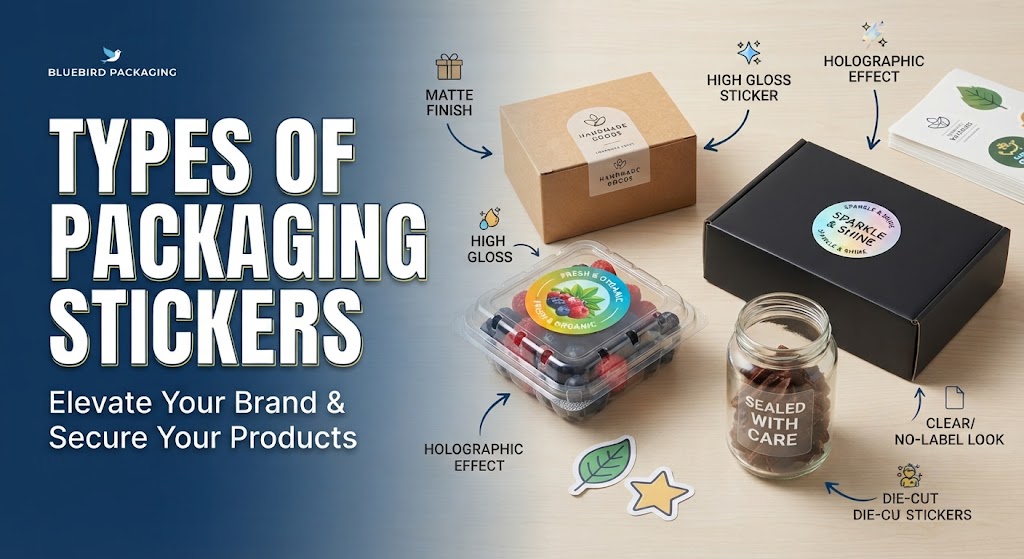
Different sticker formats serve different purposes. Choosing the right type depends on whether the main goal is branding, information, sealing, or decoration.
1. Custom Logo Stickers
Logo stickers are among the most common packaging stickers used by businesses.
They are applied on:
- Product boxes
- Shipping mailers
- Tissue paper
- Gift packaging
- Shopping bags
A logo sticker works as a simple branding element while keeping packaging costs manageable.
Small businesses often use logo stickers when they want branded packaging without investing in fully printed boxes.
For brands comparing different packaging options, custom box printing can provide a more permanent branding solution for larger production runs.
2. Product Label Stickers
Product labels are designed mainly for identification and information.
They are commonly used for:
- Food products
- Cosmetics
- Candles
- Beverages
- Handmade products
A product label may include:
- Product name
- Ingredients
- Instructions
- Size
- Brand details
Unlike decorative stickers, product labels focus more on communication and usability.
3. Packaging Seal Stickers
Seal stickers are used to close or secure packaging while adding branding.
Common applications include:
- Mailer box closures
- Bakery box seals
- Gift box packaging
- Tissue wrap seals
A well-designed seal sticker creates a finished look and gives customers a clear opening point.
4. Die Cut Packaging Stickers
Die cut stickers are custom-shaped stickers that are cut according to a specific design instead of using standard shapes like circles or rectangles.
They are useful for brands that want packaging to feel more unique and creative.
Common examples include:
- Brand logo shapes
- Character designs
- Product icons
- Custom illustrations
- Promotional graphics
Die cut stickers work especially well for:
- Handmade businesses
- Clothing brands
- Lifestyle products
- Subscription boxes
A custom shape can make packaging more memorable, but the design should still remain easy to apply and visually clear.
5. Clear Packaging Stickers
Clear stickers create a clean, premium appearance because the background packaging remains visible through the label.
They are commonly used on:
- Glass jars
- Bottles
- Transparent containers
- Luxury packaging
Clear labels work best when the sticker design has strong contrast. Light-colored artwork may become difficult to read when placed on kraft, dark, or textured surfaces.
Brands should always test clear stickers on the actual packaging material before full production.
For premium product presentation, businesses can combine clear labels with rigid box packaging to create a more elevated unboxing experience.
6. Kraft Packaging Stickers
Kraft stickers are popular among brands that want a natural or handmade appearance.
They are commonly used by:
- Organic product brands
- Coffee companies
- Candle makers
- Sustainable businesses
- Handmade sellers
The brown kraft surface creates a warm visual style, but color selection is important because some designs may blend into the background. Dark ink colors and simple graphics usually provide better readability.
Sticker Packaging Ideas for Different Industries
Different industries use packaging stickers in different ways. The best sticker design depends on the product type, customer expectations, and packaging structure.
Bakery Packaging Stickers
Bakeries often use stickers to add branding and improve product presentation.
Common applications include:
- Cake box seals
- Cookie package labels
- Ingredient stickers
- Thank-you stickers
- Seasonal packaging labels
A simple logo sticker on a bakery box can turn standard packaging into a branded customer experience.
For businesses selling baked products, combining stickers with custom bakery boxes helps create packaging that protects products while improving presentation.
Cosmetic Packaging Stickers
Cosmetic brands frequently use labels and stickers because product information is an important part of packaging.
Common uses include:
- Product names
- Ingredient lists
- Usage instructions
- Brand logos
- Product variations
Cosmetic packaging stickers need careful material selection because products may come in contact with oils, moisture, or frequent handling.
For premium skincare and beauty brands, stickers can work together with custom cosmetic boxes to create consistent branding across outer and inner packaging.
Candle Packaging Stickers
Candle brands often rely on stickers for both branding and product information.
Common candle sticker applications include:
- Scent labels
- Warning labels
- Logo stickers
- Collection names
- Seasonal designs
A well-designed candle label can communicate the product style before the customer even opens the box.
Many candle businesses combine printed boxes with simple labels to maintain a premium appearance while keeping production flexible.
Food Packaging Stickers
Food businesses use packaging labels for:
- Product identification
- Ingredients
- Expiry information
- Nutrition details
- Brand messaging
Food stickers should be selected based on the product environment. Refrigerated products, frozen items, and moisture-prone packaging may require different materials and adhesives.
Businesses should also ensure that required product information remains visible and follows applicable labeling requirements.
Clothing Packaging Stickers
Fashion brands commonly use stickers for:
- Shipping boxes
- Tissue paper seals
- Brand messages
- Size identification
- Promotional campaigns
A simple branded sticker can improve the opening experience for customers ordering online.
Many apparel businesses combine stickers with custom apparel boxes to create a more recognizable delivery experience.
Coffee Packaging Stickers
Coffee brands use stickers for both branding and product identification.
Common uses include:
- Roast type
- Coffee origin
- Flavor notes
- Brewing instructions
- Collection names
Coffee companies often prefer flexible sticker systems because they can introduce new blends without changing their entire packaging design.
Choosing the Right Sticker Material
Sticker material affects appearance, durability, adhesive performance, and overall packaging quality.
The correct choice depends on:
- Packaging surface
- Product environment
- Expected handling
- Moisture exposure
- Brand appearance
Paper Stickers
Paper stickers are one of the most commonly used options for packaging.
They are suitable for:
- Cardboard boxes
- Product packaging
- Gift packaging
- Indoor applications
Advantages:
- Cost-effective
- Easy to print
- Available in different finishes
- Works well with many packaging styles
Paper stickers are a good option when the package does not require high moisture resistance.
Vinyl Stickers
Vinyl stickers provide increased durability compared with standard paper options.
They are often considered for products exposed to:
- Moisture
- Frequent handling
- Temperature changes
Common applications include:
- Beverage packaging
- Outdoor products
- Durable product labels
The right vinyl type and adhesive should always be matched with the packaging surface.
Transparent Sticker Material
Clear sticker material creates a minimal and modern appearance.
Benefits include:
- Clean printed-on effect
- Premium look
- Less visual interruption
However, the background color of the package becomes part of the final design. A sticker that looks good on a white box may appear different on kraft or black packaging.
Kraft Sticker Material
Kraft stickers support natural packaging styles.
They work well with brands focused on:
- Handmade products
- Organic items
- Eco-conscious packaging
Simple designs usually perform better because the kraft texture already provides visual character.
How to Choose the Right Sticker Finish
The finish changes how the sticker looks and feels.
| Finish | Appearance | Best Use |
|---|---|---|
| Matte | Soft and premium | Luxury packaging, minimal designs |
| Glossy | Bright and reflective | Colorful retail products |
| Clear | Seamless appearance | Glass and transparent packaging |
| Metallic | Premium shine | Gift and special editions |
Matte Sticker Finish
Matte stickers reduce reflection and create a smooth, professional appearance.
They work well for:
- Luxury products
- Minimal packaging
- Premium brands
Matte finishes are also easier to read under bright lighting because they create fewer reflections.
Glossy Sticker Finish
Glossy stickers create brighter colors and a polished appearance.
They are commonly used for:
- Retail products
- Promotional packaging
- Color-heavy designs
However, strong lighting can create reflections that affect readability.
Clear Sticker Finish
Clear finishes create a seamless effect where the sticker appears integrated with the package.
They work especially well for:
- Glass containers
- Premium bottles
- Minimal designs
Metallic Sticker Finish
Metallic finishes create a premium visual effect.
They are often used for:
- Limited editions
- Luxury products
- Gift packaging
Because metallic finishes naturally attract attention, they should be used carefully to avoid making packaging look crowded.
How to Choose the Right Sticker Size for Packaging
Choosing the correct sticker size is important because the label needs to fit the packaging without covering important details or affecting the overall design.
There is no universal sticker size that works for every product. The right size depends on:
- Packaging dimensions
- Available surface area
- Sticker purpose
- Amount of information
- Brand design style
A logo seal on a small gift box may only need a small round sticker, while a product label on a bottle or pouch may require a larger rectangular format.
Before ordering custom packaging stickers, measure the actual area where the sticker will be applied.
Small Packaging Stickers
Small stickers are commonly used for branding and sealing.
Typical uses include:
- Logo seals
- Thank-you stickers
- Box closure stickers
- Small product marks
They work well for:
- Jewelry packaging
- Handmade products
- Gift boxes
- Ecommerce orders
Small stickers keep packaging clean while still adding a branded touch.
Medium Packaging Stickers
Medium-sized stickers provide more space for information while maintaining a balanced appearance.
They are suitable for:
- Product labels
- Candle jars
- Cosmetic containers
- Food packaging
These stickers can include:
- Product name
- Brand logo
- Short description
- Product details
Large Packaging Stickers
Large stickers are useful when packaging requires more information or stronger visual branding.
Common uses include:
- Shipping boxes
- Large product containers
- Retail packaging
Large stickers should be designed carefully because too much information can make the packaging look crowded.
Why Sticker Placement Matters
The position of a sticker affects both appearance and functionality. A sticker should not only look attractive but should also work with the structure of the package.
Before applying stickers, consider:
- Box opening points
- Folding areas
- Product visibility
- Barcode placement
- Customer handling experience
Best Places to Apply Packaging Stickers
Front Panel Placement
The front panel is ideal when the sticker needs maximum visibility.
Common uses:
- Product labels
- Brand logos
- Main product information
The design should remain simple because customers usually see this area first.
Lid and Top Placement
Top placement works well for:
- Gift boxes
- Mailer boxes
- Subscription packaging
A sticker on the lid creates a strong opening experience and can act as a branded seal.
For ecommerce businesses, combining stickers with custom mailer box packaging can improve both protection and presentation.
Box Flap Seals
Seal stickers are commonly placed where a package opens.
They can:
- Keep tissue paper closed
- Secure box flaps
- Add branding
However, the sticker should not interfere with the customer opening the package.
Side Panel Placement
Side placement works well for secondary information.
Examples:
- Product variations
- SKU details
- Small branding elements
Side stickers are useful when the front of the package already contains printed designs.
Inside Packaging Placement
Interior stickers create an additional branding moment.
Examples:
- Thank-you messages
- QR codes
- Brand stories
- Care instructions
These small details can improve customer experience after opening the package.
Where Should You Avoid Placing Stickers?
Avoid applying stickers:
- Across folds or seams
- Over opening mechanisms
- Over barcodes
- Over required product information
- On dirty or uneven surfaces
- Where the sticker becomes hidden after packing
Poor placement can affect both appearance and functionality.
Custom Stickers vs Printed Packaging Boxes
Many businesses choose between using stickers or printing directly on their packaging. Both options have advantages depending on production needs.
| Feature | Custom Stickers | Printed Packaging Boxes |
|---|---|---|
| Cost | Lower initial investment | Higher production cost |
| Flexibility | Easy design updates | Requires new printing |
| Best For | Small batches and changing products | Established designs |
| Branding | Adds selected elements | Full package branding |
| Production | Faster updates | Better for large quantities |
When Should You Use Custom Stickers?
Custom stickers are useful when:
- Products have multiple variations
- Packaging designs change frequently
- Businesses need smaller quantities
- Brands want affordable customization
- Seasonal designs are required
For example, a coffee brand can keep the same box design and change only the roast sticker.
When Is Direct Box Printing Better?
Printed packaging may be better when:
- The design is permanent
- Large areas need branding
- The package itself is part of the product experience
- High-volume production is planned
Businesses often combine both methods by using printed boxes with additional stickers for product updates.
For complete packaging projects, custom printed boxes can help create a stronger branded appearance.
How to Design Effective Packaging Stickers
A good sticker design should balance branding, readability, and functionality.
1. Keep the Brand Identity Consistent
Packaging stickers should match existing brand elements:
- Logo
- Colors
- Typography
- Design style
Consistency helps customers recognize the brand across different products.
2. Prioritize Important Information
Avoid adding too many details. The sticker should quickly communicate the most important information.
Depending on the product, this may include:
- Product name
- Brand name
- Variant
- Instructions
- Website
3. Choose Colors Carefully
The sticker should contrast with the packaging underneath.
Examples:
- Dark stickers work well on kraft boxes
- Bright colors attract attention on plain packaging
- Neutral colors support luxury designs
4. Design According to Actual Size
A sticker design that looks good on a computer screen may become difficult to read after printing.
Always check:
- Text size
- Logo visibility
- Small details
- QR code readability
at the final sticker size.
5. Consider the Packaging Material
The same sticker design may look different depending on the surface.
Consider:
- Kraft paper texture
- Matte boxes
- Glossy surfaces
- Transparent packaging
A physical sample test is recommended before large production runs.
How Much Do Custom Packaging Stickers Cost?
The cost of custom packaging stickers depends on several factors.
Main pricing factors include:
Sticker Size
Larger stickers require more material and printing space.
Quantity
Bulk orders usually reduce the cost per sticker.
Material
Paper, vinyl, clear, and specialty materials have different pricing.
Shape
Custom die-cut shapes may require additional cutting processes.
Finish
Special finishes such as metallic or premium coatings can increase costs.
Printing Method
Color quantity and printing technology also affect the final price.
Small businesses usually start with simple stickers and increase customization as their packaging needs grow.
How to Order Custom Packaging Stickers
A simple ordering process helps avoid production issues.
Step 1: Define Your Purpose
Decide whether the sticker is for:
- Branding
- Sealing
- Product information
- Decoration
Step 2: Choose Size and Shape
Measure your packaging and select the sticker format that fits the available space.
Step 3: Select Material and Finish
Choose based on:
- Product environment
- Packaging surface
- Desired appearance
Step 4: Prepare Artwork
Make sure your design includes:
- Correct logo
- Proper colors
- Readable text
- Print-ready files
Step 5: Request a Sample
Testing a physical sample helps identify:
- Adhesion issues
- Color differences
- Size problems
Step 6: Approve Production
After checking the sample, confirm the final specifications.
Common Packaging Sticker Mistakes to Avoid
Choosing Size Before Measuring
A sticker should fit the package, not force the package design around it.
Using the Wrong Adhesive
Different surfaces require different adhesive strengths. A sticker that works on cardboard may not perform well on glass or plastic.
Adding Too Much Information
Small stickers cannot effectively communicate large amounts of text. Keep the design focused.
Ignoring Packaging Conditions
Consider:
- Moisture
- Temperature
- Shipping conditions
- Handling frequency
Not Testing Samples
A digital preview does not always represent the final printed result. Physical testing helps prevent production problems.
Sustainable Sticker Packaging Options
Sustainable packaging decisions should consider the entire packaging system, not only the sticker material.
Businesses can consider:
- Recyclable sticker materials
- Kraft-style labels
- Minimal material usage
- Responsible printing choices
The right option depends on the packaging substrate and local recycling systems.
For businesses developing environmentally conscious packaging, sustainable packaging materials can help create a more complete solution.
Packaging Sticker Checklist
| Check | Question |
|---|---|
| Purpose | What job does the sticker perform? |
| Size | Does it fit the available area? |
| Material | Is it suitable for the surface? |
| Adhesive | Will it stay attached during use? |
| Design | Is the information easy to read? |
| Placement | Does it avoid folds and openings? |
| Finish | Does it match the packaging style? |
| Testing | Has a physical sample been checked? |
Frequently Asked Questions About Sticker Packaging
What is sticker packaging?
Sticker packaging refers to using adhesive printed materials such as labels, seals, and branding stickers as part of a product packaging system.
Can stickers be used on cardboard boxes?
Yes, packaging stickers work well on cardboard, kraft, corrugated, and rigid boxes when the correct adhesive and material are selected.
Are packaging stickers waterproof?
Some materials, such as vinyl and certain coated stickers, provide better moisture resistance than standard paper stickers.
Can I customize packaging stickers with my logo?
Yes, custom stickers can include logos, colors, shapes, and brand-specific designs.
What sticker material is best for packaging?
The best material depends on the packaging surface, product conditions, durability requirements, and desired appearance.
Can stickers replace printed packaging?
Sometimes. Stickers are useful for flexible branding, product variations, and small production runs. Printed packaging may be better for permanent large-scale branding.
How long do packaging stickers last?
Sticker durability depends on material, adhesive, surface, handling, and environmental conditions.
Are clear stickers good for packaging?
Clear stickers work well for premium packaging where brands want a clean, minimal appearance.
What size sticker should I use for product packaging?
The right size depends on the available packaging area, information requirements, and design goals.
Can stickers improve ecommerce packaging?
Yes, stickers can improve ecommerce packaging by adding branding, sealing packages, and creating a better unboxing experience.
Conclusion
Sticker packaging is a flexible way for businesses to improve branding, product presentation, and customer experience without redesigning their entire packaging system.
The right sticker choice depends on several factors, including purpose, material, size, placement, finish, and packaging type.
A small logo sticker can add personality to an ecommerce order, while a detailed product label can provide essential information for retail products. When planned properly, stickers become more than decorative elements; they become an important part of the complete packaging experience.
Businesses should focus on choosing stickers that support the product, match the packaging design, and work effectively throughout handling and delivery.
For custom sticker packaging, labels, and complete packaging solutions, Bluebird Packaging can help brands create packaging options that balance appearance, functionality, and brand identity.
Ready to Improve Your Packaging?
Discuss your packaging requirements, branding goals, materials, and custom box options with Bluebird Packaging.



1 Comments
[…] should maintain product quality while keeping the soap visually attractive. Businesses can explore product packaging types and materials to understand different packaging structures suitable for beauty and personal care […]