

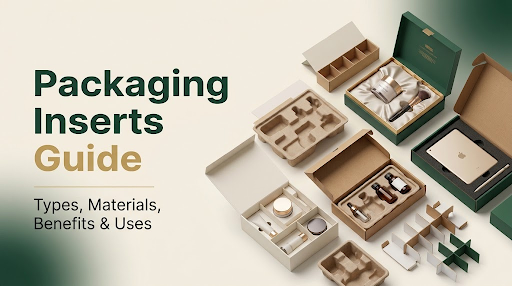
Packaging inserts are internal components placed inside a box, carton, mailer, or other package to hold products in position, separate items, add protection, or improve presentation. They can be simple paperboard dividers, fitted cardboard supports, molded trays, foam components, or custom-designed structures built around a product’s shape.
The right insert can help reduce movement during transportation, organize multiple products, present a gift set neatly, and make the contents easier to unpack. However, an insert that fits poorly may waste space, increase packaging costs, or fail to provide the required protection.
This guide explains the main types of packaging inserts, common materials, how inserts work, industry applications, design considerations, and how to choose a suitable solution for your products.
What Are Packaging Inserts?
Packaging inserts are components placed inside primary or secondary packaging. They may hold one item, separate multiple products, support fragile components, or create compartments for accessories and instructions.
For example, a skincare gift set might use a paperboard insert to hold a serum bottle, cream jar, and product card. An electronics package might use fitted supports to keep a device and its accessories separated. A gift box might use an insert to display several products in a consistent arrangement.
Inserts are not only decorative. Their structural function should be considered alongside appearance.
A suitable insert should:
- Match the product’s dimensions and shape.
- Keep items from moving excessively.
- Provide appropriate separation between components.
- Support efficient packing and unpacking.
- Fit the outer box without unnecessary gaps.
- Use materials compatible with the product and its intended use.
- Meet any relevant food-contact, safety, or industry requirements.
For an overview of how inserts fit into the complete packaging system, see the guide to packaging fundamentals.
Why Do Packaging Inserts Matter?
An outer box protects and presents the package as a whole, but it may not keep individual items secure. Inserts help organize the space inside that box.
Without internal support, products can collide, tip over, scratch each other, or shift during delivery. The risk depends on the item’s shape, weight, fragility, and the movement it experiences in transit.
Inserts can also influence the customer’s first impression. A neatly arranged set of products may feel more intentional and easier to understand than a collection of loose items.
The best insert balances three goals: product fit, practical protection, and clear presentation. A premium appearance is valuable, but it should not replace testing and structural performance.
Types of Packaging Inserts
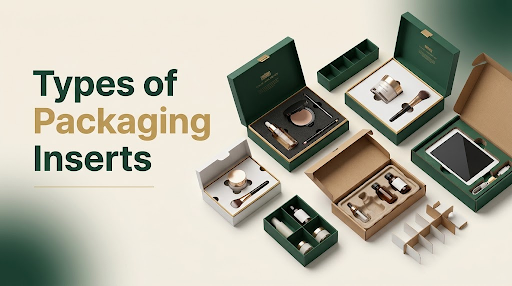
1. Paperboard Inserts
Paperboard inserts are made from stiff paper-based material that can be cut, creased, folded, and assembled into different shapes. They are commonly used for retail cartons, cosmetics, gift sets, small accessories, and lightweight products.
They may include cutouts, folded supports, compartments, or raised platforms. Their suitability depends on board thickness, geometry, product weight, and the package’s handling conditions.
Paperboard inserts can work well when brands want internal organization without using a bulky or complex component.
2. Corrugated Inserts
Corrugated inserts use fluted board structures to provide rigidity and separation. They can be used for heavier products or packages that need internal partitions and support.
A corrugated insert may divide a box into compartments, stabilize an item, or create protective spacing around a product. The design should be matched to the box dimensions and expected loads.
For related material information, read the corrugated packaging guide.
3. Die-Cut Inserts
Die-cut inserts are cut into a specified shape, often using a production tool designed for the package. The shape may include product openings, tabs, folds, slots, or dividers.
These inserts can hold products in a consistent position and may improve packing efficiency when the same configuration is used repeatedly.
A die-cut design should account for production tolerances. If a cutout is too tight, loading can become difficult; if it is too loose, the product may move.
4. Foam Inserts
Foam inserts are often used for products that need cushioning or a fitted presentation. They can be cut or molded to hold individual components and may be useful for delicate equipment, instruments, premium products, and certain gift sets.
Foam type, density, thickness, and cutout design affect performance. Not every foam is suitable for every product or environmental objective, so businesses should review both protective requirements and end-of-life considerations.
5. Molded Pulp Inserts
Molded pulp inserts are formed from fiber-based material into shapes that can hold or cushion products. They may be used for fragile items, electronics, bottles, and other products where a shaped support is useful.
The performance and finish depend on the pulp formulation, geometry, manufacturing method, and intended handling conditions. Businesses should request samples for products that require a precise fit.
6. Plastic Tray Inserts
Plastic trays can create defined compartments and may be useful where moisture resistance, visibility, or a specific shape is required. The material should be selected according to product compatibility and applicable regulations.
Plastic inserts may also affect recyclability when combined with a paperboard box. Where environmental claims matter, consider whether the materials can be separated and whether local recycling facilities accept them.
7. Dividers and Partitions
Dividers separate multiple products inside one outer package. They are useful for glass containers, bottles, jars, food assortments, and products sold in sets.
Partitions can reduce direct contact between items, but their effectiveness depends on height, thickness, fit, and the package’s movement during handling.
Related guidance is available in the box partitions guide.
8. Product Cards and Printed Inserts
Not all inserts are structural. Printed cards can provide instructions, thank-you messages, care information, product details, or promotional offers.
A printed insert should have a clear purpose. Keep the message concise, use readable typography, and ensure that any instructions are accurate. For products with safety or compliance requirements, a marketing card should never replace mandatory information.
Packaging Insert Materials Compared
| Insert Material | Typical Use | Main Consideration |
|---|---|---|
| Paperboard | Lightweight retail products, cosmetics, gift sets | Cutout precision and board stiffness |
| Corrugated board | Shipping, heavier items, compartments | Board construction and load requirements |
| Foam | Fragile or precision-fit products | Cushioning performance and material selection |
| Molded pulp | Shaped protective supports | Fit, surface finish, and handling performance |
| Plastic tray | Defined compartments and selected moisture-sensitive uses | Product compatibility and end-of-life options |
| Paper or card | Instructions, brand messages, care details | Readability and information accuracy |
No single material is best for every application. The product, outer box, shipping conditions, production volume, and sustainability objectives all influence the choice.
Benefits of Using Custom Packaging Inserts
Better Product Organization
Inserts keep different components in defined positions. This is useful for kits, bundles, multi-item gift boxes, and packages that include accessories.
When each item has a designated space, packing can become more consistent and customers can identify the contents more easily.
Reduced Movement During Handling
A fitted insert can limit unnecessary movement inside the outer box. Depending on its design, it may reduce contact between components and help maintain the intended arrangement.
An insert is not a guarantee against shipping damage. Fragile products still require suitable outer packaging, cushioning where necessary, and testing under realistic handling conditions.
More Consistent Presentation
Inserts can help create a repeatable layout for products sold as a set. They are particularly useful when the position of each item is part of the intended presentation.
A carefully designed interior may also support a more memorable unboxing experience without requiring excessive decorative materials.
Support for Product Bundles
A single outer box may contain several items of different shapes. Inserts can separate these items and help prevent accessories from becoming mixed together.
For a bundle containing bottles, jars, cards, and small accessories, the insert design should be based on the actual dimensions of every component.
Easier Packing Operations
A well-designed insert may help staff place products in a consistent order. However, complicated inserts can slow packing if components are difficult to load or require several assembly steps.
Test the packing process with the people who will use it. A design that looks good in a rendering may not be efficient on a production line.
Additional Branding Opportunities
Printed inserts and product cards can carry brand messages, instructions, or product information. The message should support the customer’s needs instead of overwhelming them with promotional copy.
Need Custom Packaging for Your Products?
Pair your packaging with a thoughtfully designed interior to organize products, improve presentation, and create a better customer experience. Explore packaging options tailored to your product dimensions and branding requirements.
Packaging Inserts by Industry
Cosmetics and Skincare
Cosmetic and skincare sets often contain products of different sizes, such as bottles, tubes, jars, and applicators. Inserts can separate these items and keep them in a planned arrangement.
The insert should not put excessive pressure on glass containers, caps, pumps, or fragile closures. Product contact areas should also be reviewed for compatibility with the item and its packaging.
Explore cosmetic packaging boxes for outer-box options and consider a fitted insert when multiple products need to be presented together.
Jewelry and Accessories
Jewelry packaging often uses shaped supports, slots, or compartments to keep small items organized. Inserts may help position rings, necklaces, bracelets, earrings, and related accessories.
The insert material should not scratch the item or allow delicate pieces to become tangled. Jewelry that requires premium presentation may benefit from a fitted structure inside a rigid box.
Food and Confectionery
Food packaging inserts can separate products and organize assortments. Examples include compartments for chocolates, confectionery, baked goods, or other products sold together.
Food-contact suitability is essential. Materials and coatings must be appropriate for direct or indirect contact, temperature, grease, moisture, and the intended storage period.
Electronics and Accessories
Electronics packages may contain a device, cable, adapter, manual, and additional components. Inserts can keep accessories organized and separate parts that could scratch one another.
Designers should consider component weight, connector locations, delicate surfaces, and any cushioning requirements. Where necessary, prototypes should be tested under expected shipping conditions.
Gifts and Subscription Boxes
Gift boxes and subscription boxes often contain multiple products. Inserts can establish a consistent layout and keep contents organized when the box is opened.
A good design should balance appearance with ease of unpacking. Items should be secure but not so tightly fitted that customers struggle to remove them.
Retail and Promotional Products
Retail kits and promotional packages may include brochures, samples, merchandise, and product accessories. Inserts can keep each component visible and prevent the contents from becoming disorganized.
The insert should also support the intended retail display or presentation format.
How to Design the Right Packaging Insert
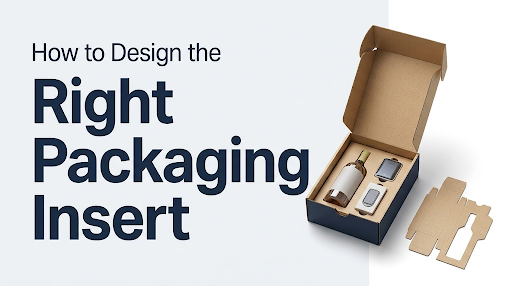
Step 1: Measure Every Component
Measure each item’s length, width, and height. For round, tapered, or irregular products, record the widest points and any areas that require clearance.
Include caps, pumps, handles, protrusions, and accessories that affect the total fit. Do not design around approximate dimensions when a close fit is important.
Step 2: Choose the Outer Box First
The insert must fit inside the finished box, not simply match the product’s measurements. Account for the internal dimensions of the box, material thickness, folding structure, and any liner or protective layer.
For practical guidance, see the complete guide to measuring a box.
Step 3: Define the Insert’s Job
Decide whether the insert needs to separate items, support weight, cushion impacts, display products, hold a card, or perform several functions.
A simple divider may be sufficient for lightweight items, while a fragile product may require a more fitted support.
Step 4: Select the Material
Consider stiffness, cushioning, weight, appearance, cost, production complexity, and disposal options. Ask the supplier to recommend a material based on the product and expected handling.
Step 5: Create the Layout
Position the products to balance stability, access, and presentation. Keep sufficient clearance around delicate areas, and avoid placing pressure on lids, pumps, or fragile components.
Step 6: Prototype the Design
A prototype can reveal problems with product fit, removal, assembly, and box closure. Test the insert using the actual products whenever possible.
Step 7: Test Packing and Handling
Load and unload the package repeatedly. Check whether items move, whether the insert deforms, and whether the package closes properly.
For shipping applications, consider appropriate drop, vibration, compression, or other performance testing based on the product’s risks and distribution route.
Custom Inserts and Standard Inserts: What’s the Difference?
Standard inserts use existing sizes or relatively simple configurations. They may suit products with common dimensions or situations where customization is not necessary.
Custom inserts are designed around specific products, package dimensions, or presentation requirements. They may offer a closer fit but can involve additional design, tooling, or setup costs.
| Factor | Standard Insert | Custom Insert |
|---|---|---|
| Design | Existing or simple format | Designed for specific requirements |
| Fit | Suitable for compatible products | Can provide a more precise fit |
| Setup | Often simpler | May require design or tooling |
| Branding | Depends on the format | Can integrate more closely with the package |
| Production Choice | Useful for straightforward applications | Useful for distinctive layouts or complex products |
The best choice depends on order quantity, product complexity, performance requirements, and budget. Request comparable quotes using the same product and box specifications.
Common Packaging Insert Mistakes
- Using approximate measurements: Even a small dimensional error can make a fitted insert difficult to load.
- Ignoring the outer box: An insert that fits the product may not fit the assembled carton.
- Making cutouts too tight: Customers or packing staff may struggle to remove products.
- Overlooking fragile areas: Pressure on a cap, pump, glass edge, or connector can create damage.
- Adding too many components: More material does not automatically mean better protection.
- Skipping prototypes: A digital drawing cannot fully reveal every assembly or handling issue.
- Ignoring material compatibility: Some products require specific food-contact, chemical, or surface-contact considerations.
- Designing only for appearance: A visually impressive insert still needs to work during packing, transport, and use.
Frequently Asked Questions About Packaging Inserts
What Are Packaging Inserts Used For?
Packaging inserts hold products in place, separate components, organize bundles, provide cushioning, and improve presentation. The exact function depends on the insert’s structure and material.
Which Material Is Best for Packaging Inserts?
Paperboard, corrugated board, foam, molded pulp, and plastic trays can all be suitable in different situations. The choice depends on product weight, fragility, dimensions, presentation, cost, and material compatibility.
Do Packaging Inserts Prevent Shipping Damage?
Inserts can reduce product movement and provide support, but they do not guarantee damage prevention. The complete packaging system should be evaluated and tested for the actual shipping conditions.
Are Paperboard Inserts Recyclable?
Some paperboard inserts can be recycled where local facilities accept them. Coatings, laminations, adhesives, contamination, and mixed materials may affect acceptance.
Can Inserts Be Customized With a Logo?
Yes. Some inserts and accompanying cards can include printed logos, instructions, colors, or product information. Printing options depend on material, structure, and production method.
Are Custom Inserts More Expensive Than Standard Inserts?
They can be, particularly when specialized design or tooling is required. However, the total cost depends on production quantity, material, complexity, assembly, and packaging performance.
How Do I Measure an Insert?
Start by measuring each product and the internal dimensions of the assembled outer box. Then account for material thickness, clearance, product protrusions, and any protective layers.
Are Packaging Inserts Suitable for Food Products?
They may be, but the selected materials must be appropriate for the specific food-contact conditions and relevant regulations. Confirm suitability with the packaging supplier.
Can One Insert Hold Different Products?
Yes. A custom layout can include different compartments for bottles, jars, accessories, cards, and other items. Each component should have adequate support and clearance.
How Can I Choose an Insert for a Gift Box?
List the items, measure them, select the outer box, and determine whether the insert needs to protect, separate, or display each item. Prototype the layout before ordering at scale.
Ready to Create Custom Packaging Inserts?
Give your products a secure, organized, and professional presentation with packaging designed around their dimensions and needs. Discuss your project requirements and explore suitable packaging options for your brand.
Final Thoughts
Packaging inserts can improve organization, product stability, and presentation when they are designed around the actual product and outer box. The best solution balances a secure fit, practical packing, customer access, material selection, and total cost.
Start with accurate measurements, define the insert’s purpose, select an appropriate material, and test a prototype. For custom projects, compare the insert and outer-box designs as one complete packaging system.
Explore custom rigid boxes or custom book packaging boxes for packaging formats that may suit fitted interiors and organized product sets. For a tailored solution, visit Bluebird Packaging or request a packaging quote.




2 Comments
[…] When designing inserts, consider the jewelry’s weight, surface finish, shape, fragility, and the materials that will contact it. For more ideas, explore packaging inserts and their uses. […]
[…] and the cushioning. If you need fitted protection, see Bluebird Packaging’s information on packaging inserts and box […]