
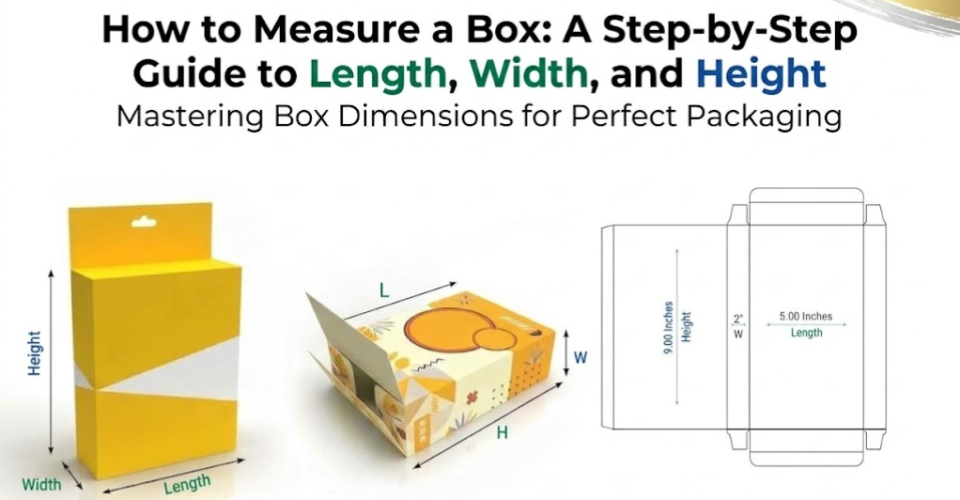
Knowing how to measure a box correctly helps you choose the right packaging, protect products during shipping, estimate storage requirements, and order custom boxes that fit. The basic method is simple: measure the length, width, and height in that order, then confirm whether the supplier needs internal or external dimensions.
For most rectangular boxes, length and width describe the base, while height describes the distance from the base to the top opening. Use a ruler or tape measure, keep the box on a flat surface, and record all three measurements in the same unit—usually inches or centimeters.
A small measurement error can affect product fit, protective cushioning, shipping costs, and packaging design. This guide explains exactly where to measure, how to record dimensions, how to calculate box volume, and what to check before ordering custom packaging.
Quick Answer: How Do You Measure a Box?
To measure a box, follow these steps:
- Place the box on a flat, stable surface.
- Measure the length across the longer side of the opening or base.
- Measure the width across the shorter side of the base.
- Measure the height vertically from the bottom to the top.
- Record the dimensions in the order Length × Width × Height (L × W × H).
- Confirm whether you need the internal dimensions for product fit or external dimensions for shipping and storage calculations.
- Measure twice to check your results before ordering packaging.
For example, if a box has a length of 12 inches, a width of 8 inches, and a height of 6 inches, its dimensions are written as 12 × 8 × 6 inches.
These measurements describe the box’s size, not necessarily the exact space available for a product. Wall thickness, flaps, inserts, and the box’s construction can affect the usable interior.
What Do Length, Width, and Height Mean on a Box?
Length, width, and height are the three measurements used to describe a box’s overall dimensions. Understanding each one helps prevent confusion when comparing packaging sizes or sending specifications to a manufacturer.
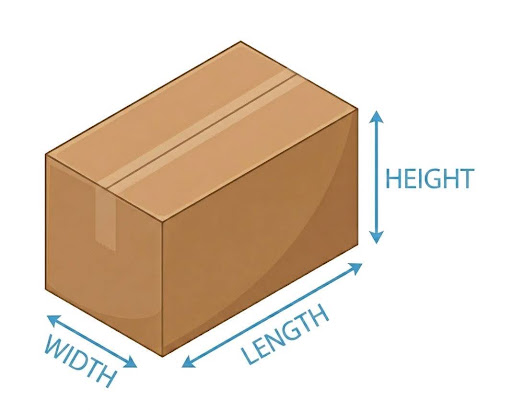
Length (L)
The length is generally the longer side of the box’s base, measured from one end to the other.
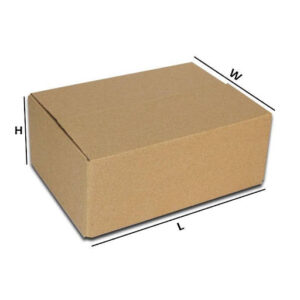
Width (W)
The width is the shorter side of the base, measured perpendicular to the length.
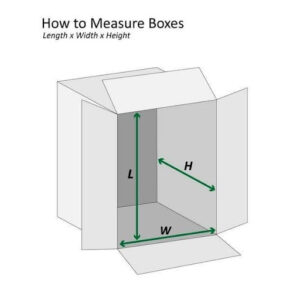
Height (H)
The height is the vertical distance from the bottom of the box to the top. For a standard shipping carton, follow the supplier’s instructions on whether the top flaps are excluded from the measurement.
For example, a shoebox measuring 13 inches long, 9 inches wide, and 5 inches high would be recorded as 13 × 9 × 5 inches.
The longest base side is usually called the length, but box orientation can vary with the design. For a custom order, the most important thing is to label each dimension clearly and use the manufacturer’s specified convention.
If you’re comparing common box sizes, the standard box sizes guide can help you understand how dimensions are typically presented.
How to Measure a Box Step by Step
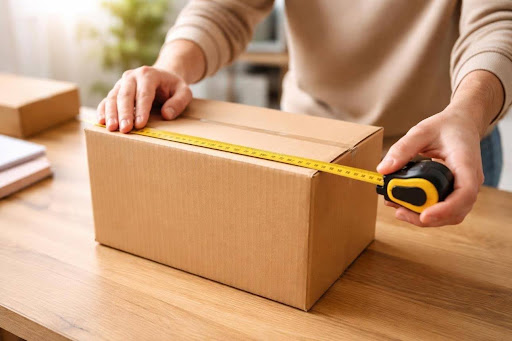
The most reliable way to measure a box is to work through each dimension separately, using the same reference points each time.
Step 1: Prepare the Box
Place the box on a flat surface. If it is already assembled, close the bottom flaps as they would normally sit when the box is used. Do not press or squeeze the walls, because this can change the measurements.
For an existing shipping box, remove any loose items that obstruct the inside. If the box is damaged, bent, or crushed, its measurements may not reflect the intended size.
Step 2: Measure the Length
Measure across the longer side of the box’s base. For an assembled carton, keep the tape measure straight and parallel to the base.
If you’re measuring the interior, place the tape between the inside walls. If you’re measuring the exterior, measure from the outside of one wall to the outside of the opposite wall.
Write the result down immediately, including the unit.
Step 3: Measure the Width
Measure the shorter side of the base, perpendicular to the length. Avoid measuring diagonally across the opening, as a diagonal measurement does not represent the width.
If the box has an unusual shape, such as a tapered carton or a hexagonal package, a simple length-width-height description may not fully define its geometry. In those cases, provide a diagram or template along with the measurements.
Step 4: Measure the Height
Measure vertically from the bottom to the top of the box. Keep the measuring tool straight rather than following a sloped wall.
For a standard rectangular box, the height usually refers to the box body, not the length of its open flaps. Some packaging styles require a different convention, so confirm the measurement method with the manufacturer before placing a custom order.
Step 5: Record the Dimensions in Order
Write the measurements as L × W × H.
For example:
| Dimension | Measurement |
|---|---|
| Length | 12 in |
| Width | 8 in |
| Height | 6 in |
| Recorded box size | 12 × 8 × 6 in |
Always include the unit. A specification that says “12 × 8 × 6” without inches or centimeters can cause costly misunderstandings.
Step 6: Repeat the Measurements
Measure each side a second time. If the box is large, flexible, tapered, or made from thick corrugated board, check that your tape measure is straight and that you are using the same measurement points.
For custom packaging, provide a clear written specification and, when necessary, a sketch showing the intended orientation.
Internal vs. External Box Dimensions: Which Should You Use?
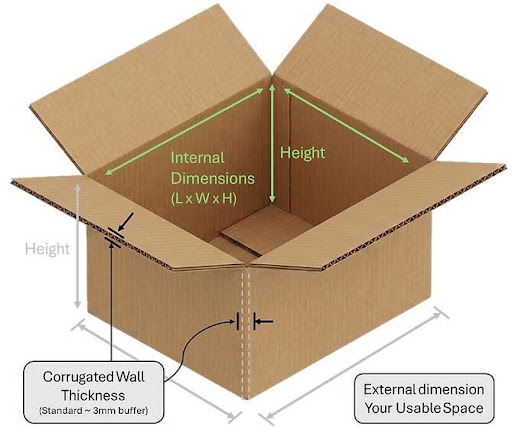
Internal dimensions describe the usable space inside a box, while external dimensions describe the space the box occupies from the outside. The right measurement depends on why you’re measuring.
- Use internal dimensions to check whether a product fits inside the box.
- Use external dimensions when checking storage space, pallet arrangements, or shipping requirements that specify the outside size.
- Ask your packaging supplier which dimension convention to provide for a custom box order.
The difference matters because packaging walls take up space. A corrugated shipping box, for example, may have thicker walls than a lightweight paperboard carton. Its external dimensions can therefore be larger than its internal dimensions.
When Internal Dimensions Matter
Internal dimensions are especially important when the product must fit snugly, when an insert holds the product in place, or when the packaging must accommodate several items.
Measure the usable interior between the inside walls. Also check the clear space around any internal tabs, folds, or structural features that might reduce the area available for the product.
For fragile products, measure the space needed for both the item and the cushioning. If you need fitted protection, see Bluebird Packaging’s information on packaging inserts and box inserts.
When External Dimensions Matter
External dimensions are useful when you need to know whether a box will fit on a shelf, in a storage bin, on a pallet, or within a carrier’s size limits.
Measure the widest outside points, including any protruding construction features that affect the box’s footprint. Shipping carriers can have specific rules for measuring parcels, so use the carrier’s current instructions when calculating billable dimensions.
How to Avoid Confusing the Two
When sending a packaging specification, state the type of measurement explicitly. For example:
- Required internal size: 12 × 8 × 6 inches
- Required external size: Confirm with the manufacturer based on the selected material and construction
Do not assume that a supplier will automatically interpret an unlabelled set of measurements as internal dimensions.
How to Measure a Cardboard Box for Shipping
To measure a cardboard box for shipping, determine its length, width, and height at the widest external points, following the carrier’s measurement rules. Use the exterior measurements when the carrier’s dimensional or parcel-size calculation requires them.
Shipping measurements are not always identical to the internal dimensions needed to pack a product. A box may fit an item perfectly inside yet exceed a carrier’s parcel limit once the walls and closures are included.
Before sending a parcel:
- Close the box as it will be shipped.
- Measure the longest external side as the length.
- Measure the other horizontal side as the width.
- Measure the external height.
- Check the carrier’s current size and dimensional-weight rules.
- Record the weight separately; dimensions alone do not determine shipping charges.
For suitable shipping cartons, compare cardboard boxes, corrugated boxes, and mailer boxes. Each structure may serve a different purpose depending on product weight, shipping conditions, presentation needs, and how the package will be handled.
How Box Measurements Affect Dimensional Weight
Some shipping services use dimensional weight, which considers the amount of space a parcel occupies rather than relying only on its actual weight. The precise formula, divisor, rounding rules, and thresholds depend on the carrier and service.
A commonly used formula is:
Dimensional Weight = (L × W × H) ÷ Carrier Divisor
Use the dimensions and divisor specified by your carrier, and make sure the units match the carrier’s formula. This calculation is not a universal shipping rate; it is one factor that may be used to determine billable weight.
Reducing unnecessary empty space can help improve packaging efficiency, but the box must still protect the product. Do not make the package too small if doing so removes necessary cushioning or creates pressure on the item.
For more practical guidance, read Bluebird Packaging’s articles about shipping packaging and how to package products for shipping.
How to Calculate the Volume of a Box
The volume of a rectangular box is calculated by multiplying its length by its width by its height. This gives the amount of three-dimensional space enclosed by those measurements.
The formula is:
Volume = L × W × H
For a box measuring 12 × 8 × 6 inches:
12 × 8 × 6 = 576 cubic inches
The volume is 576 cubic inches.
If you measure in centimeters, the result is cubic centimeters. Keep the units consistent throughout the calculation.
Example Box Volume Calculations
| Length | Width | Height | Volume |
|---|---|---|---|
| 10 in | 8 in | 4 in | 320 cubic in |
| 12 in | 8 in | 6 in | 576 cubic in |
| 16 in | 12 in | 8 in | 1,536 cubic in |
| 30 cm | 20 cm | 15 cm | 9,000 cubic cm |
Volume helps compare the capacity of rectangular boxes, but it does not guarantee that a particular product will fit. The product’s shape, orientation, and required clearance also matter.
For instance, a long object may not fit inside a box with enough total volume if the box’s length is too short. Always check each individual dimension, not just the calculated volume.
How to Measure a Box for Custom Packaging
When ordering custom packaging, measure the product first and then decide how much space the package needs around it. The final box dimensions depend on the product’s size, shape, fragility, presentation, and any inserts or protective materials.
A useful custom packaging specification should include:
- Product length, width, and height.
- Whether the measurements refer to the product or the required box interior.
- The product’s intended orientation inside the box.
- Required cushioning, dividers, or inserts.
- Material or packaging style, if known.
- Printing, finishes, and any structural features that affect the design.
- Measurement units and a drawing if the structure is unusual.
Measure the Product at Its Widest Points
Measure the product’s longest, widest, and tallest points. Include attached parts that will remain in place during packing. If the item is irregularly shaped, consider the dimensions of the smallest rectangular space that can contain it in the intended orientation.
For example, a bottle may have a narrow body but a wider cap. The packaging must allow room for the widest part, not just the bottle’s main body.
Allow for Protection and Clearance
The product should fit without being forced into the box. Fragile or sensitive items may need cushioning, dividers, or a fitted insert. The appropriate amount depends on the item, packaging structure, and expected handling conditions.
For ecommerce orders, test the complete packed product—not just the bare item—before finalizing the dimensions. This helps identify pressure points, movement, and wasted space.
Consider the Packaging Structure
A folding carton, corrugated shipping box, rigid gift box, and mailer box may use different construction methods. These affect the usable interior, closure, wall thickness, and how the box should be measured.
For example, a folding carton may be selected for lightweight retail products, while corrugated packaging may be more suitable for shipping and distribution. A premium product might need a more structured presentation using rigid boxes.
If the package needs a particular shape or opening, a die-cut box design may be worth considering. Confirm the finished dimensions and construction details with the packaging supplier rather than relying only on a simple three-number measurement.
Request a Sample Before Large Orders
When fit is critical, test a sample or prototype using the actual product and any inserts or protective materials. Check whether the product can be packed and removed easily, whether the closure works properly, and whether the package withstands the intended handling.
Bluebird Packaging offers a product sample page that you can review when evaluating packaging options.
For custom sizing, the custom box sizes guide can help you think through the details to confirm before production.
How Much Extra Space Should You Allow Inside a Box?
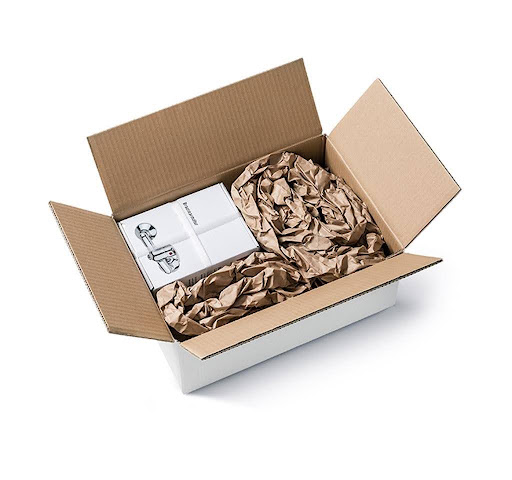
There is no single clearance measurement that works for every product. The required space depends on the item’s dimensions, fragility, shape, protective materials, and packaging method.
For a durable item that fits directly into a retail carton, only modest clearance may be necessary. A fragile item may need additional space for cushioning on multiple sides. Products held in a fitted insert require a different calculation because the insert itself occupies part of the box’s interior.
Use this checklist:
- Measure the product at its widest and tallest points.
- Identify which sides require cushioning or separation.
- Include the thickness of the protective material.
- Check that the item can be inserted and removed without damage.
- Test the packed box to make sure the item does not move excessively.
- Confirm that the closure does not press against the product.
Do not add arbitrary extra space simply to be safe. An oversized box can increase material use and may allow products to move during transit. The goal is an appropriate fit that balances protection, ease of packing, and packaging efficiency.
Common Box Measurement Mistakes to Avoid
Even a simple measurement can go wrong if the reference points or units are unclear. These are some of the most common errors.
Measuring the Inside When the Outside Is Required
This is a frequent problem when preparing shipping dimensions. Internal measurements help determine product fit, while external measurements may be required for carrier calculations or storage planning.
Solution: Label each measurement as internal or external before recording it.
Mixing Inches and Centimeters
A set of measurements becomes unreliable if one dimension is in inches and another is in centimeters.
Solution: Use one unit consistently and write it beside the final dimensions.
Measuring Diagonally
A diagonal measurement across the base is not the same as length or width.
Solution: Measure each side in a straight line, parallel to the relevant edge.
Including Flaps Incorrectly
Open flaps can be much longer than the box body and should not automatically be counted as the box’s height.
Solution: Follow the supplier’s or carrier’s measurement convention and clarify how the flaps should be handled.
Forgetting Material Thickness
The walls of a box reduce its usable interior. This difference is particularly important when the product must fit tightly or when thicker corrugated board is used.
Solution: Specify the required internal dimensions and ask the manufacturer to account for the selected material and structure.
Measuring a Damaged Box
A crushed corner or bowed wall can distort the results.
Solution: If possible, use an undamaged box or confirm the original specifications. For custom production, a sample made to the intended design is more reliable than a deformed carton.
Recording Dimensions Without Labels
The numbers 12 × 8 × 6 are ambiguous if the recipient does not know the units, measurement convention, or intended orientation.
Solution: Record them clearly, for example: “Internal dimensions: 12 × 8 × 6 inches (L × W × H).”
Which Measuring Tools Should You Use?
For most rectangular boxes, a standard tape measure or rigid ruler is sufficient.
| Tool | Best use | Limitation |
|---|---|---|
| Tape measure | Medium and large cartons | Can bend if not held straight |
| Rigid ruler | Small boxes and cartons | Limited measuring length |
| Calipers | Small components and precise edges | Usually impractical for large boxes |
| Measuring square | Checking right angles and alignment | Does not replace all three measurements |
| Digital measuring tool | Certain large or hard-to-reach dimensions | Accuracy depends on the tool and setup |
Choose a tool that can reach the measurement points accurately. For large packaging, check that the tape is straight and that the box is not compressed while measuring.
How to Choose the Right Box Size for Different Products
The best box size depends on what you’re packaging and how the package will be used. A shipping carton, retail display package, bakery box, and luxury gift box may all require different measurement priorities.
Ecommerce and Shipping Products
For shipped products, prioritize a suitable fit, protective materials, and the carrier’s external-size rules. Compare the available space with the fully packed product, including cushioning.
Bluebird Packaging’s mailer boxes may be relevant for certain ecommerce applications, while corrugated cartons can be suitable for many shipping needs depending on the design and product requirements.
Retail Products
Retail packaging may need to fit a shelf, display tray, or merchandising system. In addition to the product dimensions, consider how the package will face forward, whether labels need to remain visible, and whether the box will be stored or displayed upright.
For these requirements, explore custom retail boxes and ensure the finished size suits both the product and the display environment.
Food and Bakery Products
Food packaging must accommodate the product’s dimensions while allowing for any tray, liner, insert, or presentation requirement. For delicate baked goods, also consider whether the product can be placed inside and removed without damaging its decoration.
The dimensions of a cake or bakery item should be measured at its widest point, including toppings or decorations that must not touch the box walls or lid. Explore custom bakery boxes for packaging options suited to different bakery products.
Luxury Gifts and Presentation Packaging
Premium packaging may need to accommodate a product, fitted insert, and presentation components. The external size can be less important than the usable interior and how the item sits inside the box, though both still matter for storage and shipping.
For gift or premium applications, discuss the product’s dimensions, insert design, and closure requirements before finalizing the package.
Box Measurement Checklist Before You Order
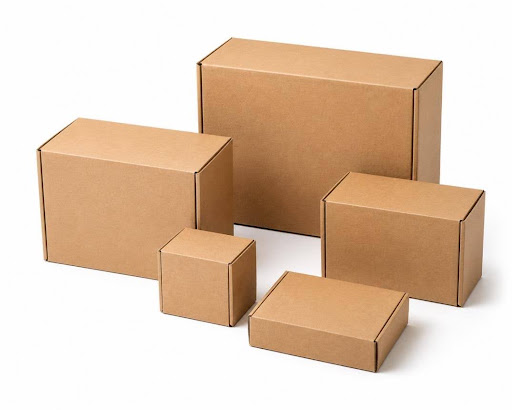
Use this checklist to make sure your specifications are ready to share with a packaging supplier.
- Product dimensions are measured at the widest points.
- Required internal or external box dimensions are clearly identified.
- Length, width, and height are recorded in the correct order.
- All dimensions use the same unit.
- Cushioning, dividers, and inserts have been considered.
- The packaging style and closure are identified, if known.
- Flaps, wall thickness, and structural features have been considered.
- The packed product has been tested when fit is critical.
- A drawing or reference image is attached for unusual structures.
- A sample or prototype is requested when needed.
When you are ready to discuss custom packaging, visit Bluebird Packaging and prepare your dimensions before requesting a quote. Clear measurements make it easier to discuss suitable materials, structure, and fit.
Frequently Asked Questions
1. What is the correct order for box dimensions?
The usual order is Length × Width × Height (L × W × H). Length and width describe the base, while height describes the vertical dimension. Always include the unit and clarify whether the measurements are internal or external.
2. Do you measure a box from the inside or outside?
It depends on the purpose. Use internal dimensions to check whether a product and its protective materials will fit. Use external dimensions when determining the space occupied by the box or when a carrier’s rules require outside measurements.
3. How do you measure a box for shipping?
Measure the box’s external length, width, and height according to the carrier’s rules, with the package closed as it will be shipped. Check the carrier’s dimensional-weight formula and size restrictions separately.
4. How do you calculate the volume of a box?
Multiply the length by the width by the height. For example, a 12 × 8 × 6-inch box has a volume of 576 cubic inches. Volume describes the space enclosed by the dimensions but does not guarantee that a particular item will fit.
5. How do you measure a box with flaps?
For most standard cartons, measure the box body rather than the full length of open flaps when recording the box’s height. However, specific suppliers and shipping carriers may define measurements differently, so follow the instructions relevant to your order or shipment.
6. Should I include cardboard thickness in my measurements?
If you need to fit a product inside a box, focus on the required internal dimensions. Material thickness affects the relationship between the interior and exterior, so the manufacturer should account for it when designing the final structure.
7. How much bigger should a box be than the product?
There is no universal extra-space allowance. The amount depends on the product’s shape, fragility, protective materials, and packaging design. Measure the fully packed product and test the fit before finalizing the dimensions.
8. Can I use the same dimensions for every type of packaging?
Not always. Folding cartons, corrugated boxes, mailers, and rigid boxes use different structures and may have different usable interiors. Confirm the measurement convention and final construction with the supplier.
9. What happens if I provide incorrect box dimensions?
Incorrect measurements can result in poor product fit, excessive empty space, difficulty closing the package, wasted packaging materials, or unexpected shipping-size issues. Double-check your measurements and confirm the required units and dimension type before production.
10. What information should I send when ordering custom boxes?
Provide the product’s length, width, and height; required internal dimensions; protective or insert requirements; preferred material or box style if known; and any printing or finishing needs. For unusual shapes, include a drawing or sample reference and confirm the final specifications with the manufacturer.
Conclusion
Learning how to measure a box correctly starts with three dimensions: length, width, and height. Record them in that order, use consistent units, and determine whether internal or external measurements are required. For shipping, follow the carrier’s rules; for custom packaging, account for product clearance, protective materials, wall thickness, and the box’s construction.
Before placing a large packaging order, verify the measurements and test a sample if product fit or protection is critical. For help exploring packaging styles and custom sizes, contact Bluebird Packaging’s quote team with your product dimensions and requirements.