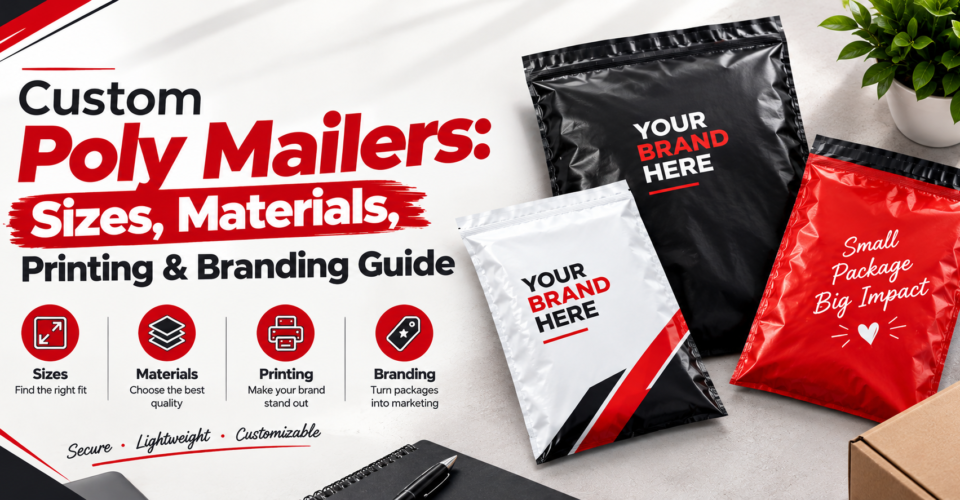
Custom poly mailers give ecommerce businesses a lightweight way to ship clothing, accessories, soft goods, and other products that do not require the structure of a box. These flexible shipping bags can feature a brand logo, custom colors, printed patterns, and self-sealing closures, helping businesses combine practical fulfillment with recognizable packaging.
Choosing the right custom poly mailer involves more than selecting a design. Businesses should consider product dimensions, bag thickness, material performance, closure style, shipping conditions, print requirements, order quantity, and end-of-life disposal. The right choice depends on what you ship, how much protection it needs, and how customers receive their orders.
This guide explains poly mailer sizes, materials, printing options, sustainability considerations, and the differences between standard, padded, and paper-based mailers. It also covers how small businesses can plan branded shipping packaging without paying for unnecessary features.
Quick Answer: What Is a Custom Poly Mailer?
A custom poly mailer is a flexible shipping bag made primarily from polyethylene film and customized with branding, colors, dimensions, and optional features. Many poly mailers have a peel-and-seal adhesive flap and are used for shipping lightweight, non-fragile products such as clothing, fabric items, and accessories.
The best custom poly mailer should fit the product comfortably, close securely, withstand expected handling, and match your brand and shipping requirements. Standard poly mailers work well for many soft goods, while padded mailers are more appropriate when additional cushioning is needed. Products requiring rigid protection are usually better suited to corrugated shipping boxes or another protective packaging format.
What Are Poly Mailers Used For?
Poly mailers, sometimes written as polymailers, are flexible bags designed for mailing products without the bulk of a conventional shipping box. They are common in ecommerce because they can be lightweight, easy to store, and quick to seal during order fulfillment.
Businesses use poly mailer bags for:
- Clothing, T-shirts, hoodies, and other apparel.
- Boutique fashion orders and online clothing stores.
- Fabric products and other flexible merchandise.
- Accessories and selected lightweight retail products.
- Subscription shipments containing suitable soft goods.
- Promotional merchandise that does not require a rigid container.
- Returns when the mailer includes a suitable second adhesive strip.
For example, a clothing brand sending a folded T-shirt may find a standard poly shipping bag more convenient than a box. A business shipping a ceramic mug, however, will usually need a stronger, more protective package with suitable cushioning.
If you’re comparing different formats before selecting a mailer, our guide to different types of packaging explains how packaging structures serve different products and uses.
Why Businesses Choose Custom Poly Mailers
Custom poly mailers offer several practical benefits when the bag format suits the product.
Lightweight shipping: Flexible film can add relatively little weight compared with some rigid packaging formats. Actual postage depends on the complete shipment, carrier rules, package dimensions, and destination.
Brand visibility: Custom printing can display your logo, brand colors, website, social media details, or repeating artwork.
Convenient fulfillment: Self-sealing closures help packing teams prepare suitable orders without additional tape for the main closure.
Storage efficiency: Empty mailers can generally be stored flat, taking up less space than assembled boxes.
Flexible sizing: Different dimensions can accommodate products ranging from small accessories to larger folded garments.
Consistent presentation: Coordinated mailers can help online stores maintain a recognizable look across customer deliveries.
However, poly mailers are not a universal solution. Their flexible structure provides limited crush protection, and the appropriate format depends on the product’s fragility, shape, weight, and shipping journey.
Types of Poly Mailers
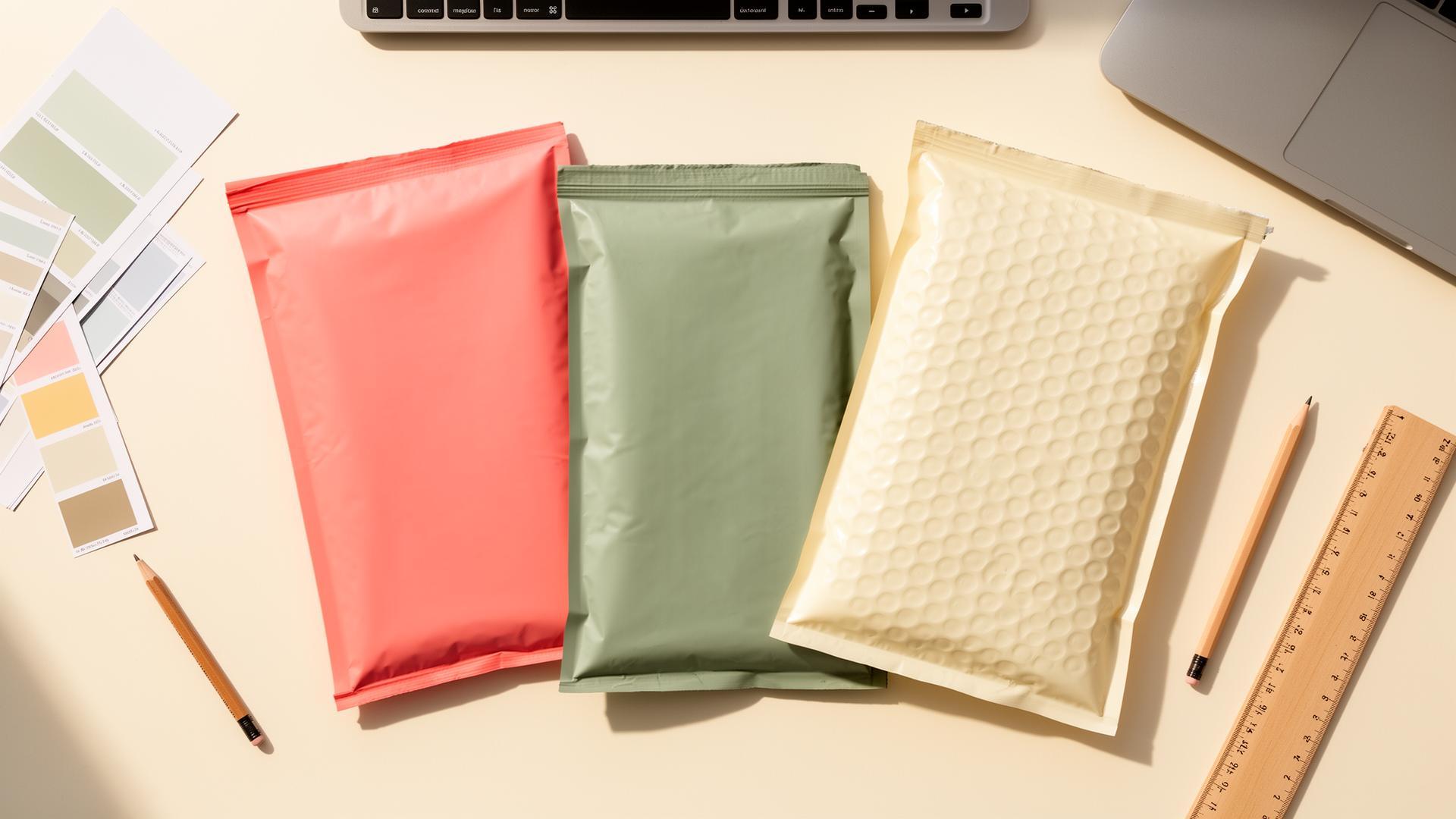
Not every mailing bag has the same structure or performance. Understanding the main options helps you choose between cost, protection, branding, and sustainability priorities.
| Mailer type | Best suited for | Main consideration |
|---|---|---|
| Standard poly mailers | Clothing and flexible products | Little cushioning against impacts |
| Custom printed poly mailers | Ecommerce brands and boutiques | Artwork, print quality, and minimum order |
| Padded or bubble mailers | Selected items needing extra cushioning | Added bulk and material complexity |
| Recycled poly mailers | Brands seeking recycled plastic content | Verify recycled-content specifications |
| Compostable mailers | Products and systems compatible with the material | Check disposal requirements and certification |
| Paper mailers | Suitable products and paper-based packaging strategies | Moisture resistance and tear performance vary |
| Gusseted mailers | Products needing additional expandable space | Check dimensions when the gusset is expanded |
1. Standard Poly Mailers
Standard poly mailers are flexible plastic mailing bags that typically feature a self-sealing adhesive flap. They are commonly used for folded clothing, fabric products, and lightweight merchandise.
Their key advantage is simplicity. They can be easy to store and pack, and the exterior can be printed with branding. However, standard mailers do not provide the same structural protection as a rigid box.
2. Custom Printed Poly Mailers
Custom printed poly mailers are designed with a company’s visual identity. Depending on the supplier and production method, artwork may include a logo, solid brand colors, repeating graphics, promotional messaging, or custom illustrations.
These are useful for businesses that want more than a plain mailing bag. A well-designed mailer can create brand recognition before the customer even opens the package.
3. Custom Bubble Mailers
Custom bubble mailers combine an outer mailing envelope with a cushioning layer, commonly made from bubble material. They may be suitable for selected accessories, small components, and products that need more impact protection than an ordinary film bag provides.
Padded mailers are not a replacement for proper product testing. Fragile or valuable items may still require a box, an insert, or a different protective system. The cushioning level should match the product and expected handling conditions.
4. Recycled and Recyclable Poly Mailers
Recycled poly mailers are made with some proportion of recovered plastic material. The exact percentage and performance depend on the product specification.
A recyclable poly mailer is a different concept: it refers to whether the material can be collected and processed through an available recycling system. A bag may contain recycled material without being accepted by every local recycling program.
5. Compostable and Biodegradable Mailers
Compostable mailers are designed to break down under specified composting conditions. They should not automatically be treated as suitable for home composting or regular trash disposal.
Likewise, the word biodegradable alone does not explain how quickly a material breaks down or what conditions it requires. Before choosing compostable poly mailers, ask for the relevant test information, certifications, and disposal instructions.
6. Paper Mailers
Paper mailers can be an alternative for suitable products and brands that prefer a paper-based exterior. Some are made with cushioning layers or reinforced construction, while others are simple paper envelopes.
Paper is not automatically the best option for every shipment. Consider moisture, tearing, product weight, cushioning needs, and local recovery systems before changing materials.
Poly Mailer Sizes: How to Choose the Right Dimensions
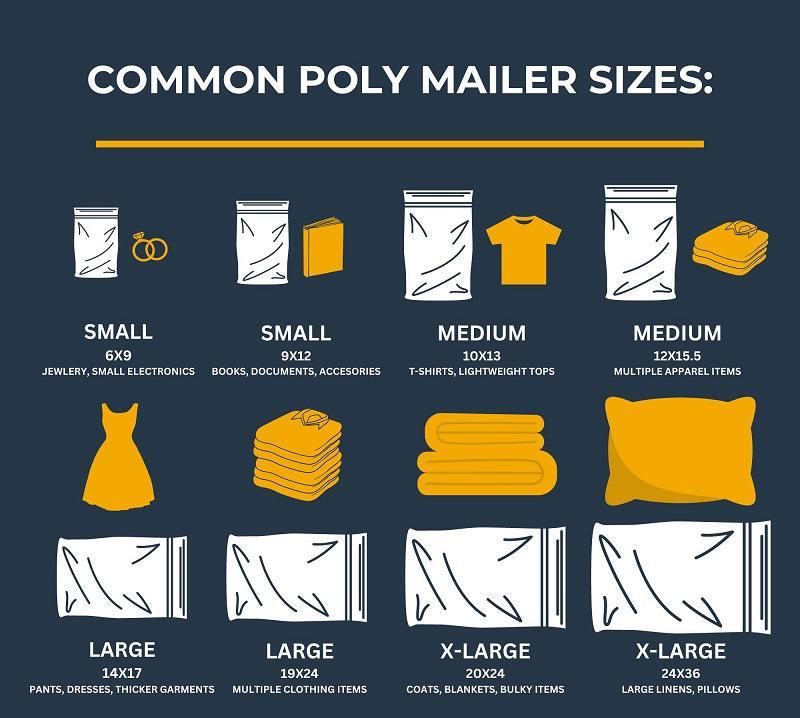
The correct poly mailer size depends on the product’s actual dimensions, its folded or packed shape, and the space needed to insert and seal it. A bag that is too small may strain the seams or closure, while an oversized mailer may create unnecessary material use and allow the contents to shift.
There is no single universal size for every product. Suppliers may offer different dimensions, and usable capacity can vary with the bag’s construction and flap design.
Common Poly Mailer Size Examples
The following dimensions are examples to use as a starting point when planning a size range. They are not a universal standard, and availability varies by manufacturer.
| Example mailer size | Potential application | What to verify |
|---|---|---|
| 6 × 9 inches | Small, flat accessories | Actual product thickness and flap space |
| 9 × 12 inches | Lightweight apparel or small bundles | Folded width and height |
| 10 × 13 inches | T-shirts and similar garments | Folding method and garment thickness |
| 12 × 15.5 inches | Larger clothing items | Product volume and closure clearance |
| 14.5 × 19 inches | Bulky apparel or larger soft goods | Maximum usable capacity and strength |
These examples are useful for initial planning, but always check the supplier’s sizing convention. Some dimensions describe the bag before closure, and the adhesive flap or gusset may reduce the usable interior space.
How to Measure a Product for a Poly Mailer
Follow these steps to choose a suitable bag:
- Prepare the product. Fold the clothing or place the item in its normal inner packaging.
- Measure the packed dimensions. Record the maximum width, height, and thickness of the finished bundle.
- Allow insertion space. The bag must accommodate the product without excessive stretching or forcing.
- Account for the closure flap. The product must sit below the adhesive area so the bag can seal properly.
- Check the material and seams. A heavier or bulky product may require a different film specification or a stronger packaging format.
- Test a real shipment. Pack the actual product and inspect the seal, fit, and appearance before placing a large order.
If you need help understanding packaging measurements more generally, read this box measurement and dimension guide. Although the article focuses on boxes, the same principle of measuring the finished packed product is useful when planning flexible mailers.
Infographic #2 recommendation: Show a folded garment beside a ruler, label the usable bag width and height, and illustrate the closure flap as a separate area. Include a reminder to confirm whether the supplier lists internal or overall dimensions.
Poly Mailer Materials and Thickness
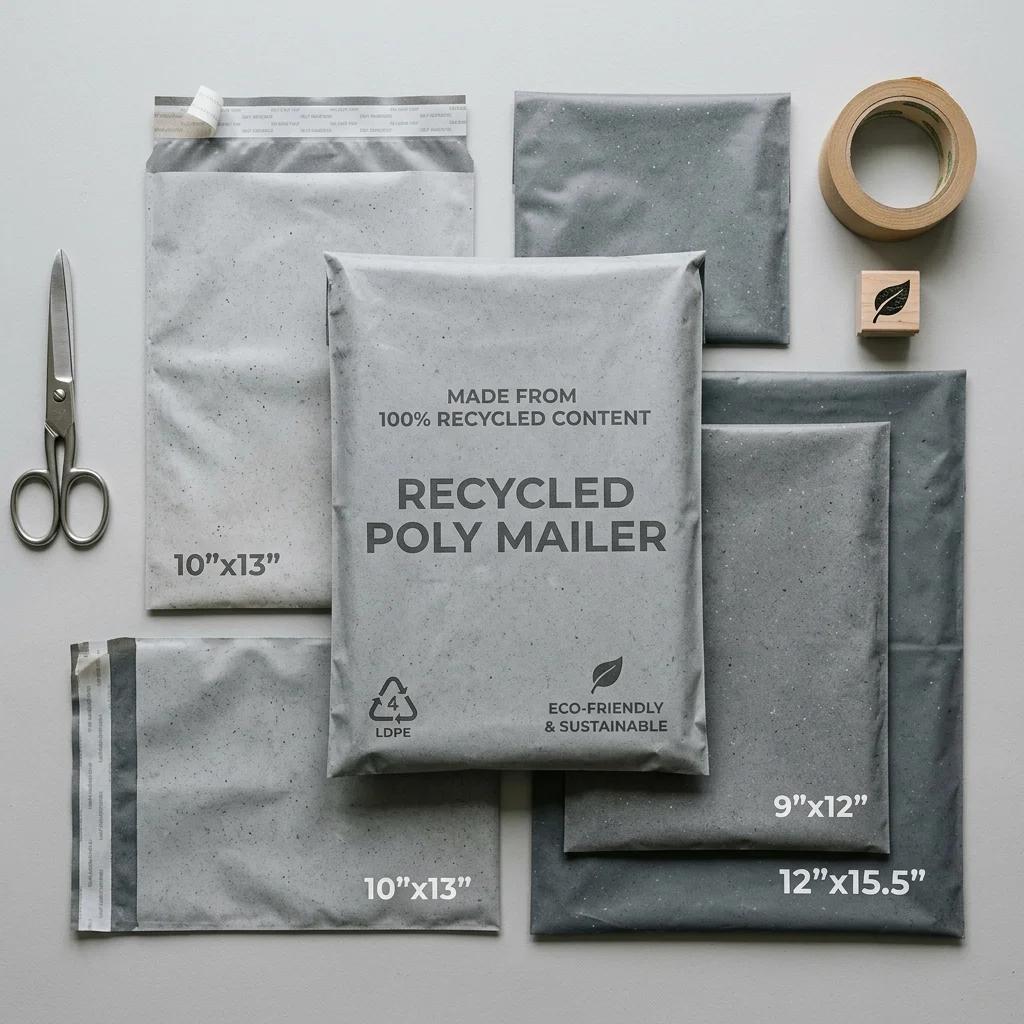
Material selection influences flexibility, tear resistance, opacity, moisture resistance, print appearance, and the way a bag performs during handling. The appropriate material specification depends on the product and the supplier’s available construction.
What Materials Are Used to Make Poly Mailers?
Many conventional poly mailers use polyethylene-based films. Suppliers may offer different film formulations, colors, recycled content, and thicknesses.
When comparing poly mailer materials, ask about:
- Film type and construction.
- Thickness and applicable unit of measurement.
- Tear and puncture resistance.
- Opacity and privacy.
- Adhesive strength and closure design.
- Recycled-content percentage, if applicable.
- Printing compatibility.
- Storage and temperature recommendations.
For a broader understanding of packaging substrates, see Bluebird Packaging’s guide to packaging materials.
How Thick Should a Poly Mailer Be?
Poly mailer thickness should be selected according to product weight, shape, edges, handling conditions, and the bag’s construction. There is no single thickness that is best for every shipment.
Ask your supplier to specify thickness in a clear unit, such as mil or microns, and confirm the test method used. Do not compare numbers from different unit systems without converting them correctly.
For US postal shipments, the USPS provides specific packaging standards for plastic bags and different types of loads. Its guidance includes minimum material requirements in certain circumstances, so businesses should consult the current USPS packaging and mailing standards rather than assuming any thin bag is suitable for mailing.
Postal Explorer+1
A bag’s thickness alone does not guarantee performance. Film formulation, seams, adhesive, dimensions, and the shape of the product inside all affect how well the package performs.
Waterproof Poly Mailers: What Protection Can You Expect?
Many polyethylene mailers offer resistance to light moisture because the film itself does not readily absorb water. However, a product described as a waterproof poly mailer should be evaluated as a complete package, including the seams, closure, and any openings.
Consider the following:
- Film: Does the material resist the moisture expected during normal delivery?
- Closure: Can the adhesive strip seal consistently across the full opening?
- Seams: Are the edges securely constructed?
- Contents: Does the product need a separate inner bag or moisture barrier?
- Conditions: Could the package experience prolonged exposure to water, abrasion, or extreme temperatures?
Do not assume that a self-sealing mailing bag is fully waterproof under every condition. If moisture-sensitive goods are being shipped, test the complete packing method and consider an additional protective layer.
Custom Poly Mailer Printing and Branding
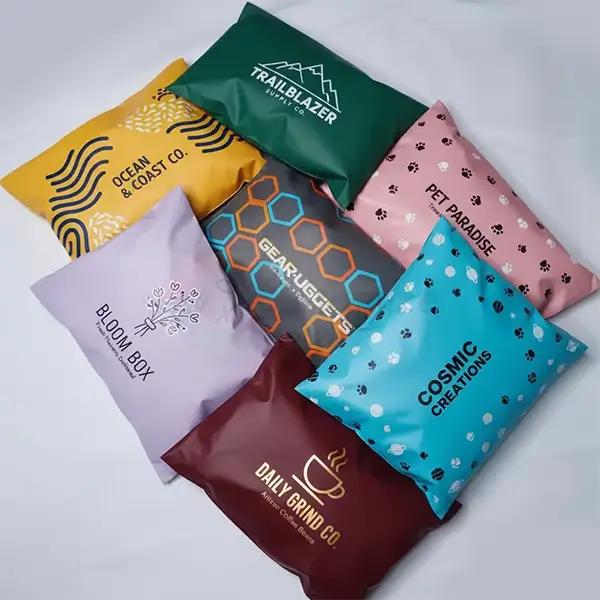
Custom poly mailer printing can help businesses turn a practical shipping bag into a recognizable brand touchpoint. Instead of using generic plastic shipping bags, a business can coordinate its mailing packaging with its website, product labels, promotional materials, and overall visual identity.
What Can You Print on a Poly Mailer?
Depending on the supplier’s printing process and available specifications, artwork may include:
- Company logos and brand names.
- Brand colors and repeating patterns.
- Website addresses or social media handles.
- Short promotional messages.
- Illustrations and product-related graphics.
- Minimalist typography or seasonal artwork.
- Customer-facing messages that support the unboxing experience.
For the best result, use artwork designed specifically for the bag’s printable area. Keep important elements away from adhesive flaps, seams, and areas that may be folded during fulfillment.
How to Design Custom Logo Poly Mailers
Start with a clear visual hierarchy. Your logo should be easy to recognize, and decorative elements should not make the bag look cluttered.
A practical design process is:
- Choose one primary brand color scheme.
- Decide whether the logo should appear once or in a repeating pattern.
- Confirm the printable area with the supplier.
- Use suitable artwork files and follow the supplied template.
- Review text size, contrast, and readability.
- Approve a production proof before the order is manufactured.
For broader guidance on how packaging design supports product presentation, explore this packaging design guide.
Custom Poly Mailer Branding Ideas for Different Businesses
Clothing brands: Use a clean logo, a recognizable pattern, and a consistent color palette.
Beauty and lifestyle businesses: Consider understated typography and colors that match the product range.
Boutiques: Use a distinctive design that reflects the store’s personality without compromising readability.
Subscription businesses: Develop a consistent visual system that works across recurring shipments and seasonal campaigns.
Small online stores: Start with a simple logo and a restrained design. Complex artwork is not necessary to make a mailer recognizable.
The goal is to create packaging that looks intentional while remaining practical to pack, store, and ship.
How to Choose the Right Poly Mailer Size and Style
Before requesting a quote for custom shipping mailers, compare the following factors.
| Decision factor | Questions to ask |
|---|---|
| Product size | What are the packed width, height, and thickness? |
| Product weight | Can the chosen bag and closure handle the expected load? |
| Protection | Is a flexible mailer sufficient, or is cushioning or a box needed? |
| Material | Which film or paper construction fits the product and brand? |
| Printing | What artwork, colors, and print area are available? |
| Closure | Is a single-use seal enough, or is a return closure useful? |
| Quantity | What are the minimum order and price breaks? |
| Sustainability | What recycled content or disposal options can be substantiated? |
| Testing | Can a sample be reviewed with the real product before production? |
Poly Mailers for Clothing and Apparel
Poly mailers for clothing are popular because folded garments can often be packed without the rigid protection of a box. A clothing brand may use several sizes for T-shirts, sweatshirts, trousers, and larger bundles.
When choosing poly mailers for shipping clothes, consider the garment’s folded dimensions rather than its dimensions when worn. Also account for tissue paper, inner bags, tags, and other components that will be shipped with the order.
Large poly mailers can accommodate bulkier garments, but choosing the largest available bag is not necessarily the best solution. A well-planned size range can reduce excess material and make fulfillment more consistent.
Poly Mailers for Small Businesses
For small businesses, custom packaging should balance brand visibility with total cost. The lowest quoted price per bag may not be the most economical choice if the order quantity is too large, the bag does not fit the product, or the material performs poorly.
Before placing an order, compare the cost of the mailer, printing, shipping to your warehouse, storage, and any secondary packaging. If you are launching a new store, our guide to packaging for small businesses offers additional ideas for planning a packaging budget.
Custom Poly Mailers vs. Bubble Mailers vs. Shipping Boxes
The right format depends on how much protection the product requires and how the brand wants it presented.
| Feature | Standard poly mailer | Bubble mailer | Shipping box |
|---|---|---|---|
| Structure | Flexible bag | Flexible padded envelope | Rigid container |
| Best use | Suitable soft goods | Selected items needing cushioning | Products needing structure or stronger protection |
| Empty storage | Usually compact | Usually compact | Depends on whether boxes are shipped flat |
| Branding | Often printable | Often printable, depending on construction | Can offer broad print and finishing options |
| Crush protection | Limited | Limited to moderate cushioning | Depends on board, construction, and packing |
| Product shape | Flexible and flat items | Small products suited to the envelope | A wide range of shapes and sizes |
A poly mailer is often a practical option for clothing, but a box may be more appropriate for fragile, heavy, or irregularly shaped items. USPS guidance similarly distinguishes lightweight mailing bags and cushioning from the stronger containers recommended for heavier or difficult loads.
If your product needs a rigid outer structure, compare custom mailer boxes and cardboard boxes before choosing a flexible bag. Products that need extra shipping strength may be better suited to corrugated boxes.
For retail presentation, you can also explore custom retail boxes or premium rigid box packaging. The goal is to choose the structure that suits the product, rather than forcing every order into the same packaging format.
Are Poly Mailers Recyclable?
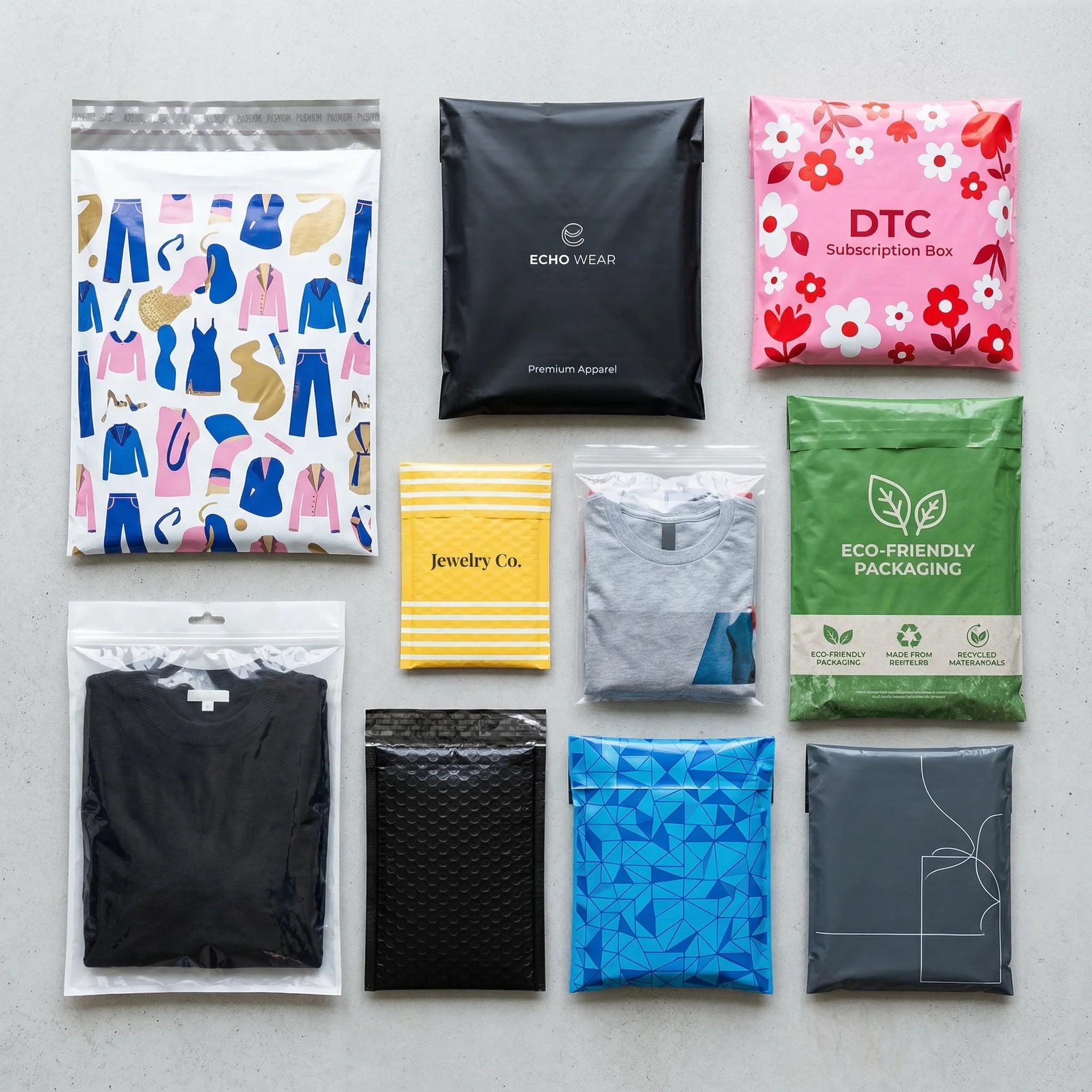
Some poly mailers can be recycled through appropriate plastic-film collection programs, but acceptance depends on the material, local facilities, and the collection system. Many curbside recycling programs do not accept flexible plastic film, even when the film is recyclable through a different program.
Before printing recycling instructions on your custom poly mailer bags, verify the material and the disposal route available to your customers.
Recycled vs. Recyclable vs. Compostable
These terms describe different things:
- Recycled content: The product contains material recovered from an earlier use or manufacturing process.
- Recyclable: The material can be collected and processed into a new material through a suitable recycling system.
- Compostable: The material is designed to break down under specified composting conditions.
- Biodegradable: The material can break down through biological processes, but this term alone does not specify the time or conditions required.
Avoid broad environmental claims unless you can substantiate them. If your business wants to use eco-friendly poly mailers, request documentation from the supplier and check whether the relevant local collection or composting system accepts the product.
For more options and terminology, explore Bluebird Packaging’s guides to sustainable packaging and cardboard packaging. For some businesses, a paper-based package or a recyclable box may be a better fit than a plastic mailer.
How Much Do Custom Poly Mailers Cost?
The price of custom poly mailers varies by size, material, film thickness, printing method, number of print colors, order quantity, special features, and supplier. Shipping, setup, artwork preparation, and other fees may also affect the final cost.
A supplier quote should make clear whether the price includes:
- The specified dimensions and material.
- Printing and artwork preparation.
- Tooling or setup charges, if applicable.
- Adhesive closures or other custom features.
- Sample or proofing costs.
- Freight and delivery charges.
- Applicable taxes and other fees.
Does Ordering in Bulk Reduce the Price?
A larger production run may reduce the per-unit cost because setup and production expenses can be distributed across more bags. However, the savings only make sense if you can use the quantity without excessive storage or waste.
Small businesses should estimate the number of orders they expect to ship, how many sizes they need, and how quickly they will use the packaging. Avoid ordering a large volume of one size if your product mix changes frequently.
For a wider explanation of custom packaging budgets, see the custom packaging cost guide.
How to Order Custom Poly Mailers
A clear brief helps suppliers quote accurately and reduces the risk of ordering packaging that does not fit your product.
Step 1: Define Your Product
List the products you ship and their packed dimensions. Note whether items are folded, wrapped, bundled, or shipped with accessories.
Step 2: Choose the Material and Size
Select a mailer style based on the product, expected handling, required protection, and brand goals. Confirm the usable dimensions and closure area with the supplier.
Step 3: Prepare Your Artwork
Provide the logo, brand colors, graphics, and any text that should appear on the bag. Ask for the supplier’s artwork template and technical requirements.
Step 4: Confirm Quantity and Pricing
Ask about minimum order quantity, price breaks, setup fees, and shipping. Compare quotes using the same specifications rather than comparing unit prices for different materials or dimensions.
Step 5: Review a Proof or Sample
Check the design, color appearance, dimensions, closure, and usability. Where possible, test the mailer with the actual product and normal packing process before approving production.
Step 6: Confirm Delivery and Reordering
Verify the production schedule, shipping terms, and how future orders will be handled. Keep the approved artwork and specifications for consistent reorders.
Custom Shipping Packaging Alternatives at Bluebird Packaging
A poly mailer is not the best solution for every product. Bluebird Packaging offers other custom packaging formats for businesses that need a more structured shipping or retail presentation. The appropriate option depends on your product, dimensions, materials, and protection requirements.
Custom Boxes Manufacturers+1
For example:
- Custom mailer boxes can provide a more structured package for ecommerce orders, product bundles, and subscription shipments.
- Corrugated shipping boxes may be a better fit when the shipment requires a rigid outer structure.
- Display boxes are worth considering when retail visibility is a priority.
- Bakery boxes serve food and bakery applications where the packaging needs to match the product and its handling requirements.
- Cosmetic boxes can support the retail presentation of beauty and personal-care products.
You can review the wider Bluebird Packaging website to explore its available custom packaging formats. If you are considering a box instead of a flexible bag, the team can discuss dimensions, materials, printing, finishing, and order requirements.
Important: Confirm availability, specifications, and minimum quantities directly with the supplier. A custom poly mailer and a custom mailer box are different packaging products, so the right option depends on what you actually need to ship.
Need Custom Packaging for Your Shipping Products?
Share your product dimensions, preferred material, order quantity, and branding requirements to discuss a suitable packaging solution for your business.
Frequently Asked Questions About Custom Poly Mailers
1. What is a custom poly mailer?
A custom poly mailer is a flexible mailing bag, usually made from polyethylene film, that can be customized with a logo, printed artwork, colors, dimensions, and selected closure features. It is commonly used for shipping clothing and other lightweight products that do not require a rigid box.
2. What sizes do poly mailers come in?
Poly mailers are available in a range of sizes, from small bags for accessories to larger options for apparel and product bundles. Actual sizes vary by supplier, so measure your packed product and check the usable dimensions before ordering.
3. How do you choose the right poly mailer size?
Measure the product in its final packed form, including inner wrapping and accessories. Choose a mailer that provides enough space for insertion and sealing without excessive unused room. Confirm the closure flap and usable interior dimensions with the manufacturer.
4. What materials are used to make poly mailers?
Most conventional poly mailers use polyethylene-based plastic film. Depending on the supplier, options may include different film constructions, thicknesses, colors, recycled content, and printing specifications. Paper mailers and padded mailers are alternatives with different performance characteristics.
5. Are poly mailers waterproof?
Many polyethylene mailers resist light moisture, but that does not mean every mailer is fully waterproof under all conditions. Seams, closures, construction, and handling can affect performance. Test the complete package if the contents are sensitive to moisture.
6. Can you print a logo on custom poly mailers?
Yes. Many suppliers offer custom printed poly mailers with logos, brand colors, patterns, and other artwork. Available print methods and design limits vary, so request an artwork template and approve a proof before production.
7. Are poly mailers recyclable?
Some poly mailers can be recycled through suitable plastic-film programs, but many curbside programs do not accept flexible plastic film. Check the material and local collection rules before describing a mailer as recyclable or printing disposal instructions.
8. Are poly mailers suitable for clothing?
Yes. Standard poly mailers are commonly used for folded clothing, T-shirts, and other soft goods that do not need rigid protection. Choose a size that fits the folded garment and any inner packaging, and verify that the bag and closure suit the shipment’s weight and handling.
9. What is the difference between poly mailers and shipping boxes?
Poly mailers are flexible bags that are lightweight and convenient for suitable soft goods. Shipping boxes provide a rigid structure and can offer better support for fragile, heavy, or irregularly shaped products when paired with appropriate cushioning. The correct choice depends on the product’s protection requirements.
10. Are custom poly mailers cost-effective for small businesses?
They can be cost-effective when the mailer fits the product, the quantity matches demand, and the branding or fulfillment benefits justify the cost. Compare the full order cost, including printing, setup, delivery, and storage, instead of looking only at the price per bag.
Final Thoughts
Custom poly mailers can be a useful shipping option for clothing brands, boutiques, and ecommerce businesses that need lightweight packaging with a branded appearance. The best choice balances the packed product’s dimensions, material performance, closure, printing, quantity, and environmental considerations.
Start with the product rather than the artwork: measure it in its final packed form, choose an appropriate mailer structure, and test the packaging before committing to a large production run. Standard poly mailers may suit soft goods, padded mailers can add cushioning for selected products, and shipping boxes may be the safer option when rigid protection is needed.
If your product requires a box rather than a flexible bag, explore Bluebird Packaging’s custom packaging options or request a quote with your product dimensions, preferred material, quantity, and branding requirements.