

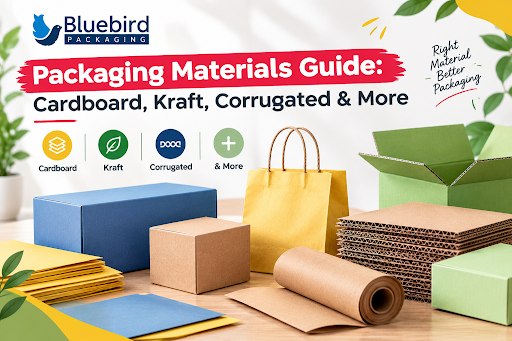
Packaging materials influence how well a product is protected, how it looks on the shelf, how efficiently it ships, and what customers think of a brand. From lightweight paperboard cartons to heavy-duty corrugated shipping boxes and premium rigid gift boxes, each material offers different advantages.
The right choice depends on your product’s weight, dimensions, fragility, storage conditions, shipping method, printing requirements, budget, and sustainability goals. A material that works well for a cosmetic carton may not provide enough protection for a heavy product traveling through a parcel network.
This guide explains the most common packaging materials, how they differ, where they work best, and how to choose the right option for your business.
Quick Answer: What Are the Best Packaging Materials?
The best packaging material depends on the product and its intended use. Corrugated cardboard is generally a strong starting point for shipping, paperboard works well for lightweight retail cartons, kraft paper offers a natural appearance, and rigid board is ideal for premium presentation. Plastic, glass, metal, wood, and flexible packaging also serve important purposes when moisture resistance, barriers, durability, or specialized handling are required.
Before selecting a material, consider the protection needed, the product’s dimensions and weight, the desired appearance, the total delivered cost, and how the package will be disposed of after use.
What Are Packaging Materials?
Packaging materials are the substances used to contain, protect, present, store, and transport products. They can include paper, cardboard, paperboard, corrugated fiberboard, plastic, glass, metal, wood, and combinations of different materials.
Businesses use packaging materials to perform several functions:
- Protect products from impact, compression, dust, and other handling risks.
- Keep products organized during storage, fulfillment, and transportation.
- Display product information, instructions, branding, and required labels.
- Improve shelf presentation and customer experience.
- Support efficient packing, stacking, and distribution.
- Help meet relevant product, food-contact, safety, and transportation requirements.
Packaging material is not the same thing as packaging style. For example, a mailer box is a packaging format, while corrugated board or paperboard describes the material used to manufacture it. The same general box style may be available in different structures, thicknesses, and surface finishes.
For a broader introduction, see our guide to types of packaging.
Main Types of Packaging Materials
Packaging materials vary in strength, flexibility, weight, cost, appearance, and environmental performance. The following options are among the most common in commercial packaging.
1. Cardboard Packaging
Cardboard is a broad everyday term used for paper-based board materials. In commercial packaging, it is important to identify the actual board construction rather than relying on the word cardboard alone. Folding cartons, paperboard boxes, and corrugated shipping boxes do not have identical structures or performance.
Paper-based board is popular because it can be cut, folded, printed, and converted into many shapes. Depending on the grade and construction, it can support retail presentation, product organization, or shipping protection.
Best uses: Retail cartons, product boxes, lightweight shipping applications, presentation packaging, and branded packaging.
Advantages:
- Available in different thicknesses and grades.
- Supports printing, labeling, and customized shapes.
- Can be designed for efficient storage and assembly.
- Some grades can enter established paper recycling streams where local facilities accept them.
Limitations: A thin folding carton may crush under heavy loads or provide insufficient cushioning for fragile items. Moisture can also weaken many paper-based materials.
Explore cardboard packaging and custom cardboard boxes for more information about paper-based box options.
2. Corrugated Cardboard
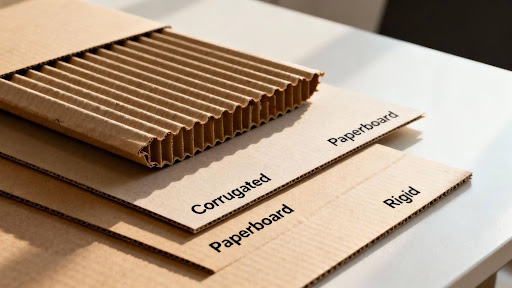
Corrugated fiberboard typically consists of one or more fluted paper layers bonded between flat linerboards. The fluted structure provides stiffness, cushioning, and resistance to compression while keeping the material relatively lightweight.
Corrugated board is widely used for shipping cartons because it can be specified for different product weights, box dimensions, and handling conditions. Single-wall and double-wall constructions have different performance characteristics, so the appropriate choice depends on the package and its intended load.
Best uses: E-commerce shipping, transport cartons, heavier products, subscription shipments, protective outer boxes, and multi-item orders.
Advantages:
- Offers a useful balance of weight and structural protection.
- Can be manufactured in several board constructions.
- Supports custom dimensions, printing, inserts, and dividers.
- Can help protect products during stacking and transportation when correctly specified.
Limitations: Corrugated board can lose strength when exposed to excessive moisture. The wrong board grade, oversized box, poor packing method, or insufficient internal cushioning can also lead to damage.
For product-specific options, explore corrugated packaging and custom corrugated boxes.
3. Kraft Paper and Kraft Board
Kraft paper is produced using a pulping process designed to preserve relatively strong paper fibers. It is commonly recognized by its natural brown appearance, although kraft materials can also be produced in other colors and finishes.
Kraft is not a single box structure. It can be used for bags, wraps, folding cartons, and as a liner in corrugated board. A kraft outer surface can therefore appear on packaging that has a different underlying construction.
Best uses: Natural-looking product boxes, paper bags, wrapping, lightweight retail packaging, soap packaging, and selected food packaging applications.
Advantages:
- Creates a natural, understated brand appearance.
- Can be suitable for printing and labeling.
- Offers a range of grades and paper weights.
- May be recyclable when the finished construction and local recycling system allow it.
Limitations: Brown kraft can change the appearance of printed colors, particularly pale shades and colors that require a bright white background. Uncoated paper can also be unsuitable for products requiring strong moisture or grease resistance.
Learn more about kraft packaging and browse kraft boxes for packaging ideas.
4. Paperboard and Cardstock
Paperboard is a relatively thick, solid paper-based material used to create folding cartons and other lightweight packaging. Cardstock is a related term often used for heavier paper stock. Exact terminology can vary between suppliers, so specifications such as thickness, stiffness, grade, and coating are more useful than the label alone.
Unlike corrugated board, conventional paperboard does not rely on a fluted inner layer. Its smooth surface and ability to be creased and folded make it suitable for detailed graphics and neatly finished retail boxes.
Best uses: Cosmetics, skincare, personal care products, confectionery, supplements, small consumer goods, and retail cartons.
Advantages:
- Provides a smooth surface for detailed printing.
- Can be die-cut and folded into many carton styles.
- Usually stores flat before assembly.
- Supports coatings, lamination, foil stamping, embossing, and other finishes when compatible with the chosen stock.
Limitations: Standard folding carton board is not automatically suitable for heavy standalone shipping. Product weight, board grade, carton design, and shipping conditions must all be considered.
Read our comparison of paperboard vs. cardboard to understand the differences more clearly.
5. Rigid Board
Rigid board is a dense, sturdy board used to manufacture setup boxes that maintain their shape. The board core is often wrapped with printed paper, specialty paper, or another decorative covering.
Rigid packaging is associated with premium presentation because it feels substantial and can provide a clean, structured appearance. However, the premium presentation layer and the shipping protection layer may need to be designed separately.
Best uses: Luxury gifts, jewelry, premium cosmetics, electronics, branded gift sets, and high-value retail products.
Advantages:
- Maintains a firm structure.
- Creates a premium unboxing experience.
- Supports decorative wraps, inserts, and specialty finishes.
- Can be designed around specific product shapes and presentation requirements.
Limitations: Rigid boxes generally require more material and storage space than lightweight folding cartons. They may also cost more to manufacture and ship. A rigid presentation box may still need an outer shipping carton.
Explore custom rigid boxes and rigid gift boxes for premium packaging applications.
6. Plastic Packaging
Plastic packaging includes rigid containers, bottles, trays, films, bags, and flexible pouches. Different polymers have different properties, so plastic should not be treated as one uniform material.
For example, PET is commonly used in bottles and clear containers, HDPE in many durable containers, and LDPE in flexible films and bags. Polypropylene is also used in a range of rigid and flexible packaging applications.
Best uses: Moisture-sensitive goods, liquids, food products, flexible pouches, protective films, and products requiring specific barrier properties.
Advantages:
- Can be lightweight and durable.
- Some grades offer useful resistance to moisture and chemicals.
- Can be formed into many shapes.
- Certain plastics provide strong barriers against air, moisture, or contamination when correctly specified.
Limitations: Recycling options vary by polymer, package design, collection infrastructure, and local processing capabilities. Mixed-material constructions, labels, inks, and residues may complicate recycling.
Plastic may be appropriate when its functional benefits are necessary, but the complete package should be evaluated for material use, reuse potential, and end-of-life options.
7. Glass Packaging
Glass is commonly used for bottles and jars. It provides a hard, chemically stable surface and a premium appearance, making it suitable for many food, beverage, fragrance, and personal care products.
Best uses: Perfumes, beverages, sauces, cosmetics, candles, and products that benefit from a rigid container.
Advantages:
- Can be reused when designed and handled appropriately.
- Is recyclable through suitable glass-recycling systems.
- Offers a premium appearance.
- Provides a strong barrier for many products.
Limitations: Glass is heavy and can break during handling or transportation. It often requires protective cushioning and a well-designed outer package.
For fragile glass products, consider the container, internal cushioning, dividers, and shipping carton as one complete protective system rather than selecting the box material in isolation.
8. Metal and Aluminum Packaging
Metal packaging includes steel cans, aluminum containers, foil, and certain tubes. Metal is useful when strength, light protection, or a barrier against air and moisture is required.
Best uses: Canned foods, beverages, certain personal care products, industrial goods, and products requiring specialized barrier protection.
Advantages:
- Can provide excellent barriers against light and gases.
- Offers good structural strength in suitable formats.
- Some metal packaging can be recycled repeatedly through appropriate systems.
- Supports a wide range of product applications.
Limitations: Material and forming costs can be higher than those of simple paper-based packaging. Metal containers can also be heavier than some alternatives, depending on their design.
For a product box made from paperboard or corrugated board, metallic-looking branding can sometimes be achieved with compatible foil or printed finishes without manufacturing the entire package from metal.
9. Wood Packaging
Wood is used primarily for crates, pallets, and heavy-duty transport packaging. It can support loads that are unsuitable for lightweight consumer cartons.
Best uses: Industrial equipment, heavy goods, machinery, bulk transportation, and products requiring robust handling support.
Advantages:
- Can provide high structural strength.
- Works for heavy or unusually shaped loads.
- Can be reused when maintained properly.
- Supports certain industrial handling and transport systems.
Limitations: Wood can be heavy, take up storage space, and require additional handling. International shipments may also be subject to applicable wood-packaging treatment and compliance requirements.
Wood is generally less relevant for everyday branded retail cartons but can be useful in the transport layer of a larger packaging system.
10. Flexible Packaging
Flexible packaging includes pouches, films, wraps, and bags that bend or conform to a product. It can be made from plastic films, paper, foil, or combinations of materials.
Best uses: Snacks, dry foods, powders, refill products, small consumer goods, and products that benefit from lightweight, space-efficient packaging.
Advantages:
- Often uses relatively little material for the package volume.
- Can reduce storage space before filling.
- Can provide specialized barrier properties.
- Supports a wide range of shapes and opening features.
Limitations: Some flexible packages use multiple bonded layers that are difficult to separate and recycle. Their suitability depends on the product’s barrier, sealing, protection, and regulatory needs.
Flexible packaging can be a strong option when its performance is appropriate and the business has considered the practical end-of-life options available to its customers.
Packaging Materials Comparison Table
The following table provides a practical starting point. Actual performance and cost depend on the grade, construction, design, order quantity, and intended use.
| Material | Common applications | Main strengths | Main limitations |
|---|---|---|---|
| Cardboard and paper-based board | Retail cartons and product boxes | Customizable, printable, versatile | Performance varies by board type |
| Corrugated cardboard | Shipping and protective cartons | Structural support and cushioning | Moisture can reduce performance |
| Kraft paper and board | Bags, wraps, natural-looking boxes | Natural appearance and versatile formats | Brown surface affects color reproduction |
| Paperboard/cardstock | Folding cartons and retail packaging | Smooth print surface and efficient storage | May not protect heavy items alone |
| Rigid board | Premium gift and presentation boxes | Firm structure and premium feel | Higher cost and storage requirements |
| Plastic | Containers, films, pouches | Lightweight and potentially moisture-resistant | Recycling varies by material and region |
| Glass | Bottles and jars | Barrier performance and premium appearance | Heavy and breakable |
| Metal/aluminum | Cans, tubes, foil containers | Strength and barrier properties | Forming and material costs can be higher |
| Wood | Crates and pallets | Heavy-duty support | Weight, space, and handling requirements |
| Flexible packaging | Pouches, wraps, and films | Lightweight and space-efficient | Multilayer formats can complicate recycling |
For a more focused decision, see our guide to packaging material comparison.
What Is the Difference Between Cardboard, Kraft, Corrugated, and Rigid Packaging?
These terms are often compared as if they describe four interchangeable materials, but they refer to different characteristics.
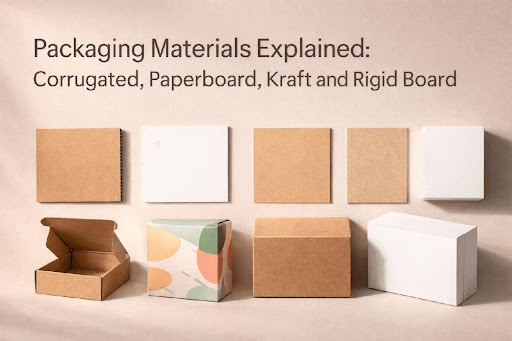
- Cardboard: A broad, commonly used term for paper-based board. The exact structure should be confirmed.
- Kraft: A type of paper or paperboard associated with a particular pulping process and often a natural brown appearance.
- Corrugated: A board construction that uses fluted material between flat liners to add stiffness and cushioning.
- Rigid board: A dense board used to create firm, shape-retaining setup boxes.
- Paperboard: A solid board stock commonly converted into folding cartons.
These categories can overlap. For example, corrugated board may use kraft linerboard, and a rigid box may have a printed paper wrap over its core.
The better question is not simply which material is strongest. It is which construction provides the required protection, appearance, and cost for the specific product.
If you are choosing between shipping and retail packaging, our guide to cardboard vs. corrugated boxes can help clarify the distinction.
How to Choose the Right Packaging Material
The best packaging material is the one that meets your product’s functional requirements without unnecessary cost or complexity. Use the following factors to narrow your choices.
1. Consider Product Weight and Fragility
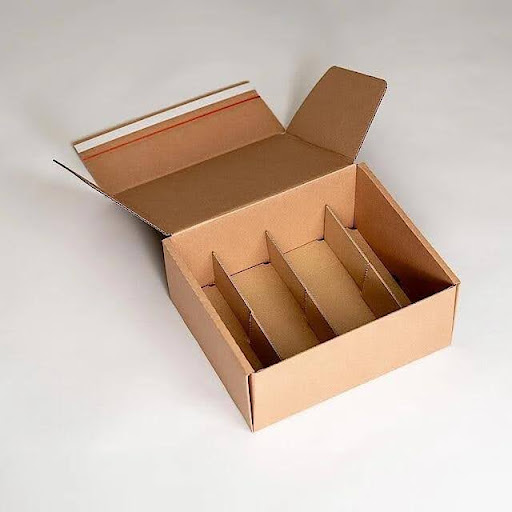
A lightweight product may need only a folding carton, while a heavy product may require stronger corrugated construction. Fragile products may need cushioning, inserts, partitions, or dividers to prevent movement inside the package.
Start by asking:
- How much does the packed product weigh?
- Can the product break, bend, leak, or scratch?
- Does it have sharp edges or an unusual shape?
- Will several items be packed together?
- Does the package need to support stacking?
For products that require extra internal support, explore protective packaging, packaging inserts, and packaging dividers.
2. Evaluate Shipping and Storage Conditions
A package that performs well on a retail shelf may not withstand parcel shipping on its own. Shipping introduces additional risks, including compression, drops, vibration, stacking, and rough handling.
Consider the full journey from filling and storage to fulfillment and final delivery. Check whether the package will be exposed to humidity, temperature changes, long transit times, or repeated handling.
For e-commerce, it can make sense to use one material for the product presentation and another for the outer shipping package. A printed retail carton can sit inside a corrugated shipping box with appropriate cushioning.
Learn more about shipping packaging and e-commerce packaging.
3. Match the Material to Your Brand Identity
Packaging is also part of the customer experience. A natural kraft finish can communicate simplicity, while a smooth printed carton may suit a colorful retail brand. Rigid packaging can create a more substantial presentation for gifts or premium products.
Consider your logo, brand colors, product positioning, target customer, and the environment where the package will be displayed.
If printed branding is important, review custom printed packaging and available packaging printing options.
4. Check Printing and Finishing Requirements
Different surfaces produce different visual results. White paperboard generally offers a controlled background for detailed colors, while brown kraft changes how inks appear. Corrugated print results depend on the liner, construction, and printing method. Rigid boxes commonly use a decorative wrap over the board core.
Depending on the material and design, possible finishing options include:
- Matte or gloss lamination.
- Foil stamping.
- Embossing or debossing.
- Spot UV.
- Printed labels and product information.
Choose finishes that work with the material, intended use, and budget. Not every finish is appropriate for every stock, and coatings can affect recyclability. Explore packaging finishes before finalizing artwork.
5. Compare the Total Packaging Cost
The cheapest material per sheet is not necessarily the cheapest packaging solution overall. Total cost can include raw material, printing, die-cutting, finishing, assembly, storage, freight, and damage during distribution.
For example, a lightweight carton may cost less initially but require a separate shipping box. A stronger package may reduce damage risk but add material and freight costs. The right balance depends on the product and distribution conditions.
Compare:
- Unit cost at your expected order quantity.
- Setup, tooling, and printing costs.
- Shipping weight and package dimensions.
- Storage requirements and assembly time.
- Protective inserts and additional components.
- The potential cost of damaged products or returns.
Our packaging cost guide can help you assess the factors that influence the overall budget.
6. Choose Appropriate Dimensions
Oversized packaging can waste material and increase shipping volume. Packaging that is too tight may make packing difficult or leave insufficient room for cushioning.
Measure the product carefully and account for inserts, protective materials, closures, and any clearance needed for safe packing. The internal dimensions required for the product may differ from the external dimensions used for shipping calculations.
Use our guides to box dimensions and how to measure a box before requesting a custom design.
7. Consider Sustainability and End-of-Life Options
Sustainability depends on more than the material name. The amount of material used, recycled content, sourcing, manufacturing, transport, reuse potential, and local waste infrastructure can all influence environmental performance.
Ask suppliers about recycled content, responsible sourcing certifications where relevant, material separation, coatings, adhesives, and available recycling or composting instructions.
Explore sustainable packaging, eco-friendly packaging, and recyclable packaging for further guidance.
Which Packaging Materials Are Best for Different Industries?
Different products have different protection and presentation requirements. These examples can help narrow the initial options, but the final material should be selected for the actual product and distribution conditions.
Food and Bakery Products
Food packaging may need to manage grease, moisture, freshness, hygiene, and direct food contact. Paperboard and corrugated board are common for many bakery and food boxes, while specific foods may require suitable barriers, liners, or other approved materials.
The packaging must be appropriate for the food and its intended contact conditions. Do not assume that every paper or kraft stock is food-safe simply because it looks natural.
Explore custom food boxes and bakery packaging for relevant packaging formats.
Cosmetics and Personal Care
Cosmetic packaging often balances product protection, shelf appeal, and branding. Folding cartons may work for lightweight products, while inserts can help secure bottles or components. Premium products may benefit from a rigid presentation box.
Choose the structure based on product weight, bottle shape, possible leakage, shipping conditions, and finish requirements.
See custom cosmetic boxes for packaging options in this category.
Retail and E-Commerce
Retail packaging needs to communicate product information and stand out in its selling environment. E-commerce packaging must also survive delivery and handling.
A retail carton may be made from paperboard, while the outer shipping package uses corrugated board. Inserts and dividers can help keep products in position during transit.
Explore custom retail boxes when presentation and product visibility are priorities.
Gifts and Premium Products
Gift packaging often emphasizes appearance, structure, and the unboxing experience. Rigid board, decorative wraps, inserts, and compatible specialty finishes can help create a premium presentation.
However, the presentation box may still need an outer shipper for safe delivery. The complete packaging system should protect the item without adding unnecessary weight or cost.
Recyclable, Biodegradable, and Compostable Packaging: What’s the Difference?
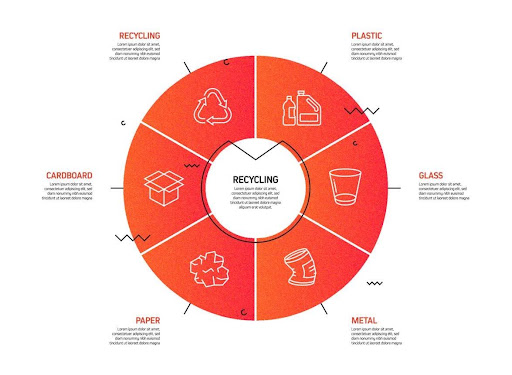
These terms describe different properties and should not be used interchangeably.
Recyclable packaging can be collected and processed into usable material through an appropriate recycling system. Whether a particular package is accepted depends on its material, coatings, adhesives, contamination, and local facilities.
Biodegradable packaging can be broken down by microorganisms under suitable conditions. The term alone does not specify how quickly the material breaks down or whether it will decompose in a particular environment.
Compostable packaging is designed to break down under specified composting conditions and meet relevant requirements. Some products require industrial composting facilities and may not be suitable for a home compost pile.
Paper-based packaging is not automatically the most sustainable option in every application, and plastic is not automatically unsuitable. Performance, material quantity, product protection, reuse, and realistic disposal options should all be considered.
Businesses should use specific, supportable environmental claims and provide disposal instructions that reflect the actual packaging construction and local infrastructure.
Common Packaging Material Selection Mistakes
Avoiding a few common mistakes can improve protection, reduce waste, and make packaging decisions more cost-effective.
Choosing by appearance alone: A beautiful carton may not be strong enough for shipping. Test the structure under realistic handling conditions.
Assuming all cardboard is the same: Corrugated board, folding carton stock, and rigid board have different constructions and uses.
Ignoring moisture and product compatibility: Paper-based materials can weaken in damp conditions, and some products need specialized barriers or approved contact materials.
Using a box that is too large: Excess space can increase shipping volume and allow products to move around. Right-size the package and use appropriate internal protection.
Overlooking the full cost: Compare production, freight, storage, assembly, and potential product damage—not only the raw material price.
Making unsupported sustainability claims: Verify the material specification and available end-of-life options before describing packaging as recyclable, biodegradable, or compostable.
Skipping testing: When the product is fragile, valuable, heavy, or shipped over long distances, evaluate the complete packed package before placing a large production order.
How to Order Custom Packaging for Your Product
Once you have selected a suitable material, the next step is to define the packaging specifications. Providing clear information helps a packaging supplier recommend an appropriate structure and prepare an accurate quotation.
Before requesting a quote, prepare:
- Product details: Share the product’s dimensions, weight, shape, and any fragility or protection concerns.
- Packaging purpose: Explain whether the box is for retail display, storage, shipping, gifting, or a combination of uses.
- Material preference: Identify a preferred material if you have one, but remain open to alternatives that better meet your requirements.
- Box dimensions: Confirm the required internal space and any inserts or dividers.
- Artwork and branding: Supply your logo, brand colors, print requirements, and finishing preferences.
- Order quantity: Estimate the number of boxes needed so production and unit-cost options can be evaluated.
- Delivery requirements: Share the destination, timeline, and relevant shipping or storage conditions.
Bluebird Packaging offers a range of custom box formats for businesses that need packaging tailored to their products. You can review available options, explain your specifications, and request a packaging quote.
Frequently Asked Questions About Packaging Materials
What are the main types of packaging materials?
Common packaging materials include paper, cardboard, paperboard, corrugated fiberboard, kraft paper, rigid board, plastic, glass, metal, wood, and flexible packaging. Each offers different levels of protection, printability, flexibility, weight, cost, and sustainability.
What is the best material for packaging?
The best material depends on the product and how it will be stored, displayed, and transported. Corrugated board is commonly used for shipping, paperboard for folding retail cartons, kraft for natural-looking packaging, and rigid board for premium presentation.
What is the most common packaging material?
Paper-based materials and plastics are widely used across commercial packaging. Corrugated board is particularly common for shipping cartons, while paperboard is widely used for folding retail boxes. The most appropriate option varies by industry and product.
What is the difference between cardboard and corrugated cardboard?
Cardboard is a broad everyday term for paper-based board. Corrugated cardboard has a fluted inner layer between flat liners, providing additional stiffness and cushioning. Conventional folding carton board is generally a solid sheet rather than a fluted construction.
Is kraft paper stronger than regular paper?
Kraft paper is produced using a process that preserves relatively strong paper fibers, but actual performance depends on its grade, weight, construction, and intended use. A kraft bag, kraft carton, and kraft-lined corrugated box can have very different strength characteristics.
Which packaging material is best for shipping?
Corrugated cardboard is a common choice for shipping because its structure can provide stiffness and cushioning at a relatively low weight. The required board construction depends on product weight, fragility, box size, stacking conditions, and handling risks.
Which packaging material is the most sustainable?
There is no single material that is always the most sustainable. Recycled content, sourcing, production, weight, durability, reuse, product protection, and local recycling or composting facilities all affect the result. Choose a material based on the complete use case rather than one environmental claim.
Is paperboard suitable for heavy products?
Standard paperboard folding cartons are generally intended for lightweight products. Heavy items may require corrugated construction, a stronger structural design, internal supports, or a separate shipping carton. The correct specification depends on the product and load.
What is the difference between paperboard and rigid board?
Paperboard is commonly converted into folding cartons that can be shipped flat and assembled when needed. Rigid board is thicker and is used to make setup boxes that retain their shape. Rigid boxes are often selected for premium presentation.
How can I reduce packaging costs without compromising protection?
Start by right-sizing the box, selecting a material that matches the product’s actual needs, limiting unnecessary components, and comparing total costs across realistic order quantities. Test the complete package to ensure that any material reduction does not create unacceptable damage risks.
Can packaging materials be customized with logos and brand colors?
Many paper-based packaging materials can be customized through printing, labels, coatings, and finishing techniques. Results depend on the material surface, print process, artwork, and selected finish. Natural kraft, for example, can affect how colors appear compared with a white surface.
How do I choose packaging materials for a small business?
Start with product protection, package dimensions, order volume, budget, and shipping needs. Then compare suitable material options, printing requirements, storage space, and environmental considerations. Requesting samples or testing a prototype can help you evaluate the package before committing to a larger order.
Final Thoughts
Choosing the right packaging materials means balancing product protection, presentation, cost, logistics, and end-of-life considerations. Corrugated board is often suitable for shipping, paperboard works well for many retail cartons, kraft supports a natural visual style, and rigid board can create a premium presentation. Plastic, glass, metal, wood, and flexible packaging remain useful when their particular properties meet the product’s needs.
Start with the job the package must perform, confirm the material and structural requirements, and evaluate the complete package rather than the material name alone. With the right specifications, businesses can create packaging that protects products, communicates brand value, and supports more efficient operations.




15 Comments
[…] For more detail, see our guide to packaging materials. […]
[…] For a broader look at how packaging materials and structures affect a finished carton, see Bluebird Packaging’s overview of packaging materials and their uses. […]
[…] businesses improving their overall packaging system, a broader packaging materials overview can help clarify the differences between materials and structures used for different operational […]
[…] you are planning a wider packaging project, the principles in our guide to choosing the right packaging materials can help you consider the relationship between structure, board type, protection, and […]
[…] an overview of material terminology and common packaging choices, Bluebird Packaging’s guide to different packaging materials can help you understand how substrate selection affects the final […]
[…] For broader material terminology and packaging construction choices, see Bluebird Packaging’s packaging materials guide. […]
[…] For a broader introduction, see Bluebird Packaging’s packaging materials overview. […]
[…] For a closer comparison of board characteristics and other paper-based options, see Bluebird Packaging’s overview of common packaging materials and their applications. […]
[…] For broader context on how board grades and other packaging materials differ, review the main materials used in product packaging. […]
[…] a broader overview, see Bluebird’s guides to packaging materials and different types of […]
[…] along with the fluting, affect the performance of the finished board. For a broader overview of materials used in different packaging applications, businesses should consider both material composition and product […]
[…] For an overview of how material choices influence packaging performance, see the main types of packaging materials and their uses. […]
[…] For context on the outer box materials used alongside these components, see Bluebird Packaging’s overview of packaging materials and their common applications. […]
[…] more focused comparison of board grades and other paper-based options, Bluebird’s article on packaging materials and how they are used can help readers understand the material choices […]
[…] more background, see Bluebird Packaging’s guides to packaging materials and corrugated […]