
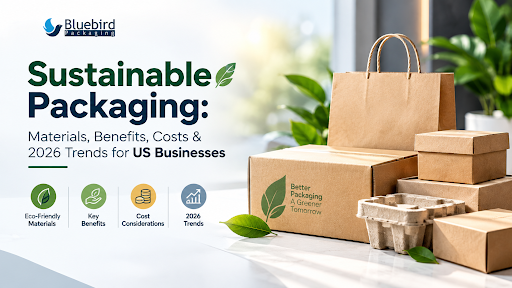
Sustainable packaging helps businesses reduce unnecessary material use, make more informed packaging choices, and improve how products are protected, shipped, and disposed of. For US brands, the best solution is not simply packaging labeled “eco-friendly.” It is packaging that performs its job efficiently while considering material sourcing, manufacturing, transportation, reuse, recycling, and end-of-life handling.
Paperboard cartons, corrugated cardboard boxes, recycled-content materials, reusable containers, and some compostable packaging formats can all play a role. However, no single material is automatically the most sustainable for every product. The right choice depends on the product’s weight and fragility, shipping distance, available recovery infrastructure, customer needs, and total packaging requirements.
For businesses reviewing their packaging, the practical starting point is to use only the material needed to protect the product, select a suitable format, verify environmental claims, and evaluate the entire packaging system rather than one feature in isolation.
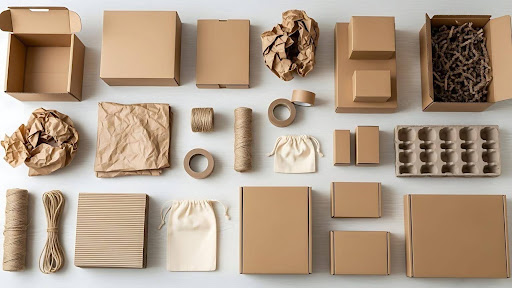
This article explains sustainable packaging materials, design principles, business benefits, costs, recycling considerations, and important US developments in 2026. It also outlines how businesses can compare options and make more defensible packaging decisions.
Quick Answer: What Is Sustainable Packaging?
Sustainable packaging is packaging designed and selected to reduce environmental impacts while still protecting the product and meeting practical requirements. It considers material use, recycled content, manufacturing, transportation, product damage, reuse, recyclability, and disposal.
Examples include right-sized corrugated boxes, paperboard cartons made with recycled content, packaging designed for reuse, and materials that are accepted by appropriate recycling or composting systems.
The key point: sustainable packaging is not defined by one material or label. Its performance depends on how the packaging is sourced, designed, used, recovered, and managed at the end of its life.
Why Sustainable Packaging Matters for US Businesses
Sustainable packaging is becoming a purchasing, design, operations, and compliance consideration—not just a branding decision. Businesses need to balance product protection and customer experience with material efficiency, packaging costs, environmental claims, and changing state-level requirements.
The US policy landscape is especially important for businesses selling across state lines. Packaging extended producer responsibility (EPR) laws can create obligations around reporting, fees, and covered materials, depending on the jurisdiction and the business’s role in the supply chain. The Sustainable Packaging Coalition’s 2026 Sustainable Packaging Trends Report discusses how packaging design, recovery systems, and regional definitions of recyclability are shaping the industry. For businesses, the implications are practical:
- Packaging design: Material choice and package construction can affect waste, shipping efficiency, and recovery.
- Procurement: Suppliers may need to provide clearer information about material composition and recycled content.
- Operations: Right-sized packaging and standardized specifications can simplify packing and inventory management.
- Marketing: Environmental claims need to be specific, accurate, and supported by evidence.
- Compliance: Companies selling in multiple states should check whether packaging laws and reporting requirements apply to them.
A useful sustainability program starts with measurable improvements rather than broad promises. For example, a company might compare the amount of packaging used per shipment before and after redesigning its boxes, while also tracking product damage and customer returns.
What Makes Packaging Sustainable?
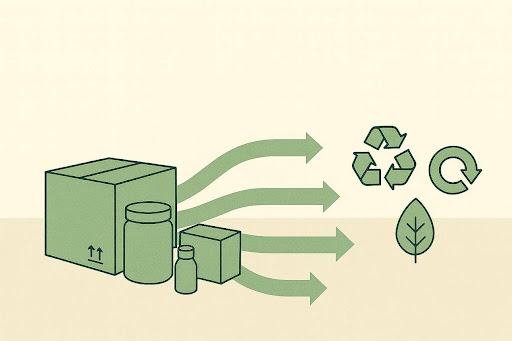
Sustainable packaging combines material efficiency, suitable product protection, responsible sourcing, and realistic end-of-life options. A package should be evaluated as a complete system because improving one feature can affect another.
1. Efficient Material Use
Using less material can reduce packaging demand, but only when the package still protects the product adequately. A box that is too weak or too small may cause damage, leading to replacement shipments and additional waste.
Start by reviewing the package’s dimensions, board grade, inserts, void fill, and protective layers. Identify unnecessary components without removing features needed for safe delivery.
For an overview of how material choices influence packaging performance, see the main types of packaging materials and their uses.
2. Responsible Material Sourcing
Material sourcing involves understanding what the packaging is made from, where its inputs come from, and whether the supplier can provide reliable documentation. Recycled content, responsibly sourced fibers, and manufacturing information may all be relevant, depending on the material and business requirements.
Do not assume that a material is sustainable simply because it is plant-based, brown, lightweight, or described as natural. Evaluate the actual specifications and the claims being made.
3. Product Protection and Shipping Efficiency
Packaging needs to protect the product through handling, storage, and transportation. An efficient design can reduce excess space and unnecessary material, but it must also account for stacking, compression, vibration, moisture, and other conditions relevant to the shipment.
For online retailers, packaging designed for e-commerce orders and delivery can help frame the decision around both protection and fulfillment needs.
4. Reuse, Recycling, and End-of-Life Management
The packaging’s end-of-life pathway matters. A recyclable package only provides that option when the material is accepted and properly processed by available recycling infrastructure. Reusable packaging requires a realistic reuse system, while compostable packaging requires suitable conditions and access to an appropriate composting facility.
A complete assessment therefore asks not just whether a package can be recycled or reused, but whether the intended pathway is practical for the people and places where it will be used.
Sustainable Packaging Materials: Types, Uses, and Trade-Offs
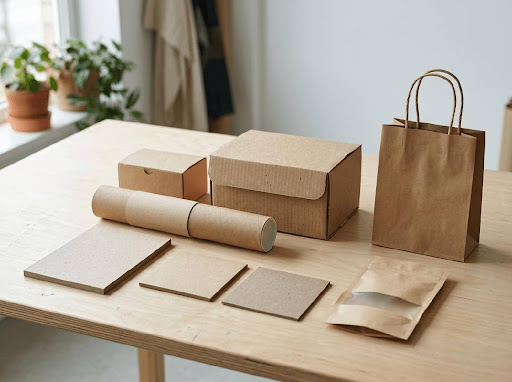
Different materials offer different combinations of strength, weight, printability, moisture resistance, reuse potential, and recovery options. The best material is the one that meets the product’s requirements with an appropriate level of environmental and operational performance.
| Material or format | Common applications | Potential advantages | Important considerations |
|---|---|---|---|
| Corrugated cardboard | Shipping cartons, e-commerce, wholesale shipments | Protective structure, customizable dimensions, widely established recycling streams in many areas | Board grade, moisture exposure, coatings, and local recovery conditions matter |
| Paperboard and folding cartons | Cosmetics, retail goods, personal care products | Lightweight construction, good print surfaces, foldable designs | May need additional protection for heavy or fragile products |
| Kraft paper and board | Retail cartons, mailers, some food and gift packaging | Natural appearance, paper-based construction, versatile design | Brown appearance alone does not prove recycled content or overall sustainability |
| Recycled-content paperboard | Cartons, shipping and secondary packaging | Uses recovered fiber where suitable and available | Verify the percentage and whether it is pre-consumer or post-consumer recycled content |
| Molded pulp | Protective inserts, trays, selected product packaging | Can be shaped to support products and replace some plastic cushioning | Performance, moisture resistance, product fit, and local processing vary |
| Reusable containers | Closed-loop shipping, delivery, selected retail systems | Can spread the impact of manufacturing across repeated uses | Requires collection, return logistics, cleaning, and sufficient reuse cycles |
| Compostable packaging | Specific applications where composting is suitable | May offer a defined composting pathway under appropriate conditions | Not all compostable packaging is accepted in curbside or home composting systems |
Corrugated Cardboard for Shipping
Corrugated cardboard is often a practical option for transporting goods because its fluted middle layer helps provide structure and cushioning. It is commonly used for parcel shipments, warehouse handling, bulk distribution, and protective outer packaging.
Businesses can compare corrugated boxes for shipping and product protection when evaluating packaging strength and dimensions.
The sustainability decision should include more than the material itself. An oversized carton, unnecessary inserts, or a poorly designed package may use more resources than needed. Conversely, removing too much protection can increase damage and replacement shipments.
Paperboard for Retail Packaging
Paperboard is widely used for folding cartons that hold cosmetics, personal care products, small consumer goods, and other retail items. Its printable surface can support product information, brand graphics, and clear instructions.
For suitable products, custom cardboard boxes with tailored dimensions and printed artwork can help align packaging structure with branding and product requirements.
Paperboard cartons should be selected based on the weight and shape of the product, the handling environment, and any protective layers required. Coatings, laminations, windows, and adhesives may affect the package’s recovery options.
Kraft Packaging and Recycled Paper
Kraft board is often selected for its natural appearance and practical versatility. Recycled-content board may also help businesses incorporate recovered fiber into packaging, where the material meets the required performance specifications.
These are separate attributes: a kraft-colored package is not necessarily made from recycled material, and a recycled-content package is not automatically recyclable in every local system. Request specifications from the supplier when recycled content or recovery performance is important.
For brands that prefer an understated paper-based presentation, kraft boxes for retail and product packaging are one option to evaluate.
Reusable and Compostable Packaging
Reusable packaging is most useful when the logistics system supports repeated use. This may involve returnable shipping containers, refill systems, or durable packaging that customers can realistically use again.
Compostable packaging is designed to break down under specified composting conditions. Some products require industrial composting, and many municipal programs do not accept all compostable formats. Businesses should confirm certification, disposal instructions, and local availability before using compostability as a selling point.
Neither option should be selected based on a label alone. Consider how the package will actually be used and recovered.
Sustainable Packaging Design: How to Reduce Waste Without Sacrificing Protection

Sustainable packaging design focuses on using the right structure and amount of material for the product, then evaluating whether the packaging can be manufactured, packed, transported, and recovered effectively.
A useful design process includes these steps:
- Measure the product accurately. Record its dimensions and account for protective wrapping or internal components.
- Review the existing package. Identify excess space, unnecessary layers, redundant inserts, and components that are difficult to separate.
- Choose an appropriate structure. Match the board grade and box style to product weight, fragility, stacking, and delivery conditions.
- Optimize the internal fit. Use suitable inserts or dividers where they prevent movement or damage.
- Review printing and finishes. Keep necessary information legible and assess whether coatings or mixed materials complicate recovery.
- Test a sample. Check assembly, packing speed, closure, product movement, and performance under relevant handling conditions.
- Measure results. Compare material use, packaging cost, damage rates, and shipping efficiency against the original design.
Businesses can also use packaging design principles for a more practical and consistent box layout to assess the relationship between structure, graphics, and function.
Right-Sizing Packaging
Right-sizing means selecting package dimensions that fit the product and required protection without excessive empty space. It can reduce unnecessary material and may improve how efficiently packages fit into storage and shipping systems.
However, the smallest possible box is not always the best choice. Fragile products may need clearance for cushioning, and certain products require room for inserts, labels, or safe opening.
Measure the product and review the internal dimensions of the box before finalizing a specification. For a useful starting point, follow this method for measuring a box accurately.
Simplifying Packaging Components
A package may include an outer carton, inner tray, plastic window, adhesive label, coating, and protective filler. Each component can serve a purpose, but unnecessary complexity can increase material use and make sorting or recycling more difficult.
A design review should ask:
- Can a component be removed without reducing product protection?
- Can a paper-based insert perform the required job?
- Are labels and adhesives compatible with the intended recovery process?
- Can the number of different material types be reduced?
- Does the packaging remain easy to open and use?
The goal is not to eliminate every component. It is to retain what is needed and remove what provides little practical value.
Benefits of Sustainable Packaging for Businesses
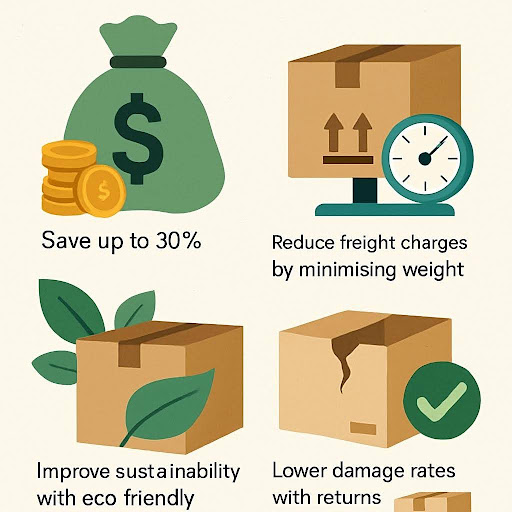
Sustainable packaging can help businesses identify material savings, strengthen packaging design, and prepare for customer or regulatory requirements. The benefits depend on the package, product, supply chain, and the way improvements are measured.
Potentially Lower Material Use
A redesign that reduces unnecessary board, filler, or packaging layers may lower material consumption. Whether it also lowers total costs depends on tooling, order quantity, supplier pricing, production efficiency, and shipping.
Businesses should measure actual material use per packaged product rather than relying only on a claim that the new packaging is “lighter” or “greener.”
Stronger Brand Communication
Packaging communicates a brand’s priorities through materials, graphics, labeling, and the overall customer experience. Clear, specific information can help customers understand what a package contains and how to handle it after use.
Avoid broad environmental promises that cannot be supported. Claims such as “100% sustainable” or “completely eco-friendly” are difficult to substantiate because they do not define a clear performance measure.
Better Operational Planning
Standardized dimensions and packaging specifications can help simplify procurement, inventory management, and packing procedures. A company with many product variations may benefit from reviewing whether a smaller, carefully selected set of packaging formats can meet its needs.
The benefit should be validated through operational data, including packing time, storage requirements, material usage, and damage rates.
Preparation for Changing Requirements
Some US businesses may be affected by state packaging EPR laws, recycling-related requirements, or customer procurement standards. The exact obligations depend on the state, product, packaging type, company role, and applicable implementation schedule.
A 2026 overview from EY explains how state-level packaging EPR activity is creating additional data, cost, and compliance considerations for businesses.
Businesses selling nationally should maintain accurate information about packaging materials and review requirements for the states where their products are sold. This article is general information, not legal advice; companies should confirm obligations with qualified counsel or the relevant state program.
Sustainable Packaging for E-Commerce and Shipping
For e-commerce, sustainable packaging needs to protect products across sorting facilities, vehicles, delivery routes, and customer handling while avoiding unnecessary materials.
A practical approach is to combine an appropriate outer carton with a well-fitted internal layout and protective material suited to the product. The goal is to reduce excess without increasing damage or returns.
Consider the following practices:
- Select box dimensions around the product and required cushioning.
- Use suitable corrugated board for the expected shipping conditions.
- Use inserts or dividers when they provide meaningful protection.
- Avoid unnecessary layers of wrapping and void fill.
- Evaluate packaging damage and return rates after changes.
- Check whether materials and components are accepted by local recovery systems.
For subscription products and direct-to-consumer brands, mailer boxes designed for online orders and unboxing can be considered alongside the product’s shipping requirements.
How to Balance Protection and Material Reduction
A package that uses less material but leads to more damaged products may not be an effective improvement. Product damage can result in replacement items, extra transportation, additional packaging, and customer dissatisfaction.
To compare alternatives fairly, test packaging under conditions relevant to the product’s actual journey. Depending on the shipment, this may include compression, vibration, drops, stacking, or exposure to moisture.
Record the results and compare them with the original package. A successful redesign should meet the required protection level while improving one or more clearly defined measures.
Is Sustainable Packaging More Expensive?
Not always. Sustainable packaging may cost more or less than a conventional alternative depending on materials, order quantity, dimensions, printing, design complexity, supplier availability, shipping, and end-of-life requirements.
A package with recycled content may have a different price from a comparable virgin-material option. A custom-designed box may require setup work but reduce unnecessary material per shipment. A reusable format may require higher initial investment and additional return logistics.
Compare the total cost rather than looking only at the unit price.
| Cost factor | What to evaluate |
|---|---|
| Material | Board grade, recycled content, thickness, and availability |
| Box size | Material use, shipping volume, and storage space |
| Design complexity | Inserts, die cuts, closures, and extra components |
| Printing and finishing | Artwork coverage, coatings, and specialty effects |
| Order quantity | Setup costs and price breaks at different volumes |
| Product damage | Replacement products, returns, and additional shipments |
| Logistics | Storage, fulfillment, shipping, and return handling |
| Recovery | Collection, sorting, recycling, or reuse arrangements where relevant |
When requesting supplier quotes, provide the same dimensions, material requirements, quantity, printing specifications, and delivery location for each option. This makes price comparisons more meaningful.
Businesses can also review the factors that influence custom packaging costs when planning a packaging budget.
How to Measure Sustainable Packaging Performance
Sustainable packaging performance should be measured using specific indicators rather than a single vague environmental score. A business can start with a small set of metrics and expand its assessment as better data becomes available.
Useful Packaging Sustainability Metrics
| Metric | What it measures | How to use it |
|---|---|---|
| Packaging weight per unit | Amount of packaging material used per product or shipment | Compare the old and new design |
| Recycled content | Share of material made from recovered content | Verify the supplier’s documentation and percentage |
| Package-to-product fit | How effectively the package uses space around the product | Review dimensions and unnecessary empty space |
| Damage rate | Share of shipments arriving damaged | Ensure material reduction does not compromise protection |
| Reuse cycles | Number of successful uses for a reusable package | Include return, cleaning, and loss rates |
| Recovery pathway | Whether the package can be accepted by the intended recycling or composting system | Check local facilities and material requirements |
| Packaging cost per shipment | Total relevant packaging cost for each shipment | Include materials and operational effects |
| Material data completeness | How much of the packaging specification is documented | Identify gaps in supplier and compliance records |
A Simple Before-and-After Measurement Process
Use this process when evaluating a proposed packaging change:
- Record the current packaging materials, dimensions, weight, and cost.
- Establish a baseline for product damage and returns over a representative period.
- Document the proposed design and its material specifications.
- Test the new package under appropriate handling and shipping conditions.
- Run a controlled trial where practical.
- Compare material use, total cost, damage rates, and recovery options.
- Keep supplier documents and the basis for any environmental claims.
A packaging redesign should not be described as an improvement unless the comparison supports the claim. If a business states that its new box uses less material, it should identify the comparison basis and retain the supporting measurements.
Sustainable Packaging Trends in 2026
In 2026, sustainable packaging decisions are increasingly influenced by packaging design, material recovery, supplier data, and evolving state-level policy. Businesses should treat these developments as planning considerations rather than assume that every trend applies to every product or market.
1. Designing for Real-World Recyclability
A package’s theoretical recyclability is not the same as its practical recovery. Material combinations, coatings, local collection programs, and sorting infrastructure can affect whether a package is recovered.
The 2026 Sustainable Packaging Coalition report highlights regional approaches to recyclability and the need to consider packaging performance across recovery systems.
Businesses should confirm how the intended packaging is collected and processed in their target markets, rather than rely on a recycling symbol alone.
2. Better Packaging Data and Supplier Documentation
Businesses may need more detailed records of packaging materials, recycled content, and package composition to support procurement decisions, environmental claims, and applicable reporting requirements.
A consistent specification for each packaging item can help teams compare suppliers and update designs more efficiently. Relevant documents may include material breakdowns, recycled-content statements, technical specifications, and evidence supporting any environmental claims.
3. Packaging Reduction and Right-Sized Designs
Reducing excess material remains a practical design objective when product protection is maintained. Right-sized boxes, suitable board grades, and simpler component structures can help businesses examine opportunities to reduce packaging use.
The impact should be measured against the original design, including any changes to shipping performance and product damage.
4. More Careful Environmental Marketing
Customers and business buyers may encounter terms such as “recyclable,” “compostable,” “biodegradable,” and “made with recycled content.” These terms describe different characteristics and should not be treated as interchangeable.
The US Federal Trade Commission’s Green Guides for environmental marketing claims explain the importance of qualifying and substantiating environmental claims.
For example, a recycled-content claim should specify the relevant percentage when appropriate and be supported by reliable supplier information. A recyclability claim should reflect the availability of suitable recycling facilities and the actual package components.
5. Reviewing State-Level Packaging Requirements
Packaging laws and EPR programs can differ by state, including covered materials, responsible parties, reporting, fees, and implementation schedules. Companies selling products in multiple states should monitor applicable requirements and keep packaging data organized.
The 2026 US packaging EPR overview from EY discusses the growing complexity of state-level requirements.
Businesses should verify current obligations directly with relevant state agencies or qualified advisers, as rules and implementation details can change.
Sustainable Packaging for Retail and Consumer Products
Retail packaging has to balance shelf presentation, product information, protection, and material efficiency. Sustainable choices should preserve these functions while avoiding unnecessary layers or difficult-to-recover components where possible.
For beauty and personal care products, paperboard cartons may work well when the product is lightweight and the package does not need to provide the only layer of protection. Businesses can explore custom cosmetic boxes for beauty and personal care products when evaluating dimensions, artwork, and structure.
For food and bakery products, packaging must also suit the intended food application. Material selection should account for relevant food-contact requirements, grease or moisture exposure, product temperature, and handling. Businesses can review custom bakery packaging for cakes, cookies, and other baked goods while confirming that the selected specification is appropriate for the product.
Retail brands may also need to balance shelf impact with material efficiency. Custom retail boxes with product-focused designs can be evaluated based on product fit, printing requirements, and the intended use of the package.
The important principle is to select the structure for the product first, then assess how material, printing, and finishing choices affect the package’s practical recovery options.
How Small Businesses Can Start Using Sustainable Packaging
Small businesses do not need to redesign every package at once. A focused review of the highest-volume or most wasteful packaging formats can help identify practical opportunities.
Start with these steps:
- Audit current packaging: List the materials, sizes, components, costs, and suppliers used for each product.
- Identify avoidable material: Look for oversized boxes, excess filler, redundant wraps, or inserts that do not improve protection.
- Set a measurable goal: Examples include reducing average packaging weight per shipment or increasing the share of packaging with documented recycled content.
- Ask suppliers for specifications: Request details about material composition, recycled content, available sizes, and applicable certifications.
- Test before scaling: Check product protection, packing efficiency, and customer usability before switching the entire range.
- Review environmental claims: Make sure marketing statements match the documentation and explain any relevant limitations.
- Reassess regularly: Update specifications when products, suppliers, recovery systems, or applicable rules change.
A small company may find it useful to start with one product line and compare the original packaging against a proposed alternative. This limits disruption and makes the results easier to interpret.
Recycling, Composting, and End-of-Life Considerations
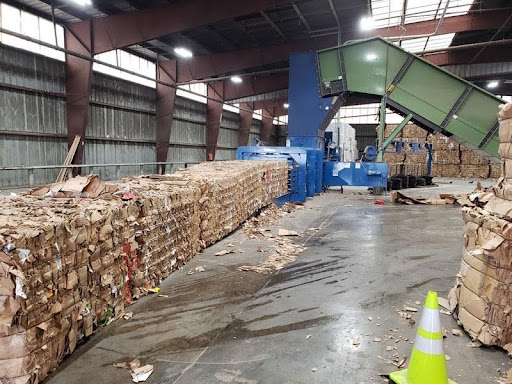
Recyclable, biodegradable, and compostable packaging are different categories. Businesses should explain the specific material property and the conditions required for the intended end-of-life pathway.
Recyclable Packaging
Recyclable packaging is designed to be processed into recovered material through an appropriate recycling system. Whether it is accepted depends on its composition, contamination, local collection rules, and the capabilities of sorting and processing facilities.
Paper-based packaging is accepted in many US recycling programs, but coatings, laminated layers, windows, adhesives, and food contamination can affect acceptance. Check the instructions provided by the local waste or recycling service.
For more information about the role of packaging in material recovery, the EPA provides US data and background on containers and packaging.
Biodegradable Packaging
Biodegradable describes the ability of a material to break down through biological processes under suitable conditions. The term alone does not specify how quickly the material will break down or whether it will do so in a landfill, marine environment, home compost, or industrial composting facility.
Businesses should avoid presenting biodegradable packaging as automatically harmless or suitable for every disposal system.
Compostable Packaging
Compostable packaging is designed to break down under specified composting conditions and meet the relevant requirements for that claim. Some formats need industrial composting, and access to suitable facilities varies by location.
Before choosing compostable packaging, confirm the applicable standard or certification, the disposal instructions, and whether the target market has a practical collection route.
Avoiding Misleading Environmental Claims
US businesses should use specific, evidence-based environmental language. Avoid broad claims such as “zero impact,” “completely green,” or “100% sustainable” unless the claim is clearly defined and substantiated—which can be difficult for a complex packaging system.
The FTC’s guidance on substantiating environmental marketing claims is a useful reference when developing product pages, packaging labels, and sustainability statements.
Frequently Asked Questions About Sustainable Packaging
1. What is sustainable packaging?
Sustainable packaging is packaging designed and selected to reduce environmental impacts while protecting the product and meeting practical requirements. It considers material sourcing, material use, transportation, reuse, recycling, and end-of-life handling rather than relying on a single environmental label.
2. What materials are commonly used for sustainable packaging?
Common options include corrugated cardboard, paperboard, kraft paper, recycled-content paper, molded pulp, reusable containers, and certain compostable materials. The best choice depends on product protection, material composition, supply chain requirements, and available recovery systems.
3. Is sustainable packaging more expensive?
Not necessarily. Costs depend on material, dimensions, order quantity, printing, finishing, production, and shipping. A redesign may reduce material use or improve packing efficiency, but the total result should be measured rather than assumed.
4. Is cardboard considered sustainable packaging?
Cardboard can be a suitable sustainable packaging option when it meets product requirements and is sourced, used, and recovered appropriately. Recycled content, protective performance, coatings, package size, and local recycling access all affect the overall assessment.
5. What is the difference between recyclable and compostable packaging?
Recyclable packaging is processed into recovered material through a suitable recycling system. Compostable packaging is designed to break down under specified composting conditions. The two terms are not interchangeable, and both depend on the material and available infrastructure.
6. How can a business measure packaging sustainability?
Businesses can track packaging weight per unit, recycled content, material use, product damage, total packaging cost, reuse cycles, and the availability of a practical recovery pathway. Comparisons should use a clear baseline and consistent measurement methods.
7. How can e-commerce companies reduce packaging waste?
E-commerce businesses can review box dimensions, remove unnecessary components, select suitable protective materials, and test packaging under real shipping conditions. They should also track product damage to ensure that material reductions do not create additional waste through breakage or returns.
8. What are the sustainable packaging trends in the US for 2026?
Important areas include designing for practical recyclability, improving packaging data, reviewing state-level EPR requirements, reducing unnecessary material, and making environmental claims more precise. The importance of each trend depends on the business, product, and market.
9. Is biodegradable packaging always environmentally friendly?
No. Biodegradation depends on the material and environmental conditions. The term alone does not establish how quickly a package breaks down, what remains afterward, or whether the material is appropriate for a particular disposal environment.
10. How can small businesses switch to sustainable packaging?
Start by auditing existing packages, identifying avoidable material, comparing suitable alternatives, asking suppliers for specifications, and testing a revised design. Track cost, protection, and material use before expanding the change across the business.
Final Thoughts: Choose Sustainable Packaging Based on Performance
Sustainable packaging is most effective when material selection, product protection, design, shipping, and end-of-life options are considered together. Corrugated cardboard, paperboard cartons, kraft packaging, recycled-content materials, and reusable or compostable formats can all serve different purposes, but none is automatically the right solution for every product.
For US businesses, the strongest starting point is a practical packaging audit: measure material use, confirm product protection, review supplier documentation, understand local recovery options, and make environmental claims that can be substantiated. These steps help turn sustainability from a broad marketing phrase into a measurable packaging decision.
Bluebird Packaging can help businesses explore custom box formats and packaging designs suited to their products, branding, and operational needs. If you’re reviewing your current packaging or planning a new product launch, request a custom packaging quote from Bluebird Packaging to discuss your dimensions, materials, printing, quantity, and design requirements.