
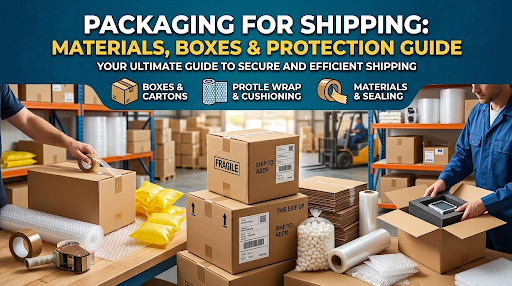
Shipping packaging does more than hold a product. It helps protect items during handling and transportation, controls packing costs, and creates the first physical impression customers have of an online brand. The right solution depends on the product’s size, weight, fragility, shipping distance, and how it will be handled along the way.
Quick Answer: What Is the Best Packaging for Shipping?
The best packaging for shipping is a sturdy, correctly sized box paired with cushioning that prevents the product from moving or getting damaged. Corrugated boxes are a common choice for many shipments because their layered construction provides structural support. Lightweight products may need a smaller mailer or folding carton inside an appropriate outer package, while fragile, heavy, or irregularly shaped items may require stronger boxes, fitted inserts, or additional cushioning.
For most businesses, start by matching the box to the product, selecting protective materials for the risks involved, and minimizing unnecessary empty space. If branding matters, custom shipping boxes can combine product protection with printed logos and a consistent customer experience.
Packaging for Shipping at a Glance
- Best all-purpose option: A properly sized corrugated shipping box for products that need a protective outer container.
- Best for lightweight ecommerce orders: A suitable mailer or compact shipping box, provided it offers enough protection for the item.
- Best for fragile products: A rigid outer box, suitable cushioning on all sides, and inserts or a double-box method when needed.
- Best for premium presentation: Custom mailer boxes or a retail package protected by a separate shipping carton.
- Best starting point for reducing waste and cost: Right-size the package, avoid excessive filler, and use materials appropriate to the product.
- Best approach for branded shipping: Choose a structure that protects the product and supports your brand, rather than prioritizing appearance alone.
The key principle is simple: pack for the journey, not just for the shelf. A package that looks attractive in a warehouse may still fail if it cannot handle normal shipping conditions.
What Is Shipping Packaging?
Shipping packaging is the combination of outer containers, inner packaging, cushioning, closures, and labels used to move products from a business to a customer or another destination. It may include corrugated cartons, mailer boxes, paper cushioning, protective inserts, stretch film, shipping tape, and other materials selected for the shipment.
Unlike packaging designed mainly for retail display, shipping packaging must also account for transportation, sorting, stacking, vibration, impacts, and repeated handling. A product may need two packaging layers: one that presents the item to the customer and another that protects it during delivery.
For example, a cosmetic product could be packed in a printed retail carton, secured in a fitted insert, and placed inside a corrugated shipping box. A clothing item might need only a suitable mailer, while glassware could require individual wrapping, dividers, and stronger outer packaging.
Businesses planning a packaging system should understand the differences between the main types of packaging before deciding which materials and structures fit their products.
Types of Shipping Packaging
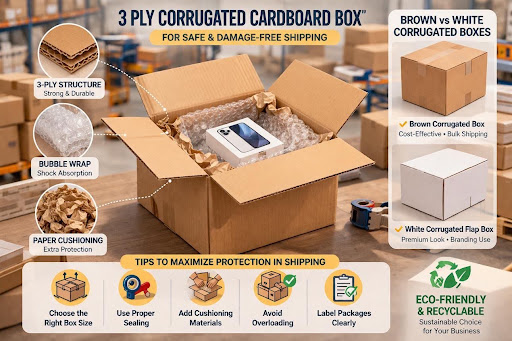
There is no single shipping package suitable for every product. The right choice depends on protection needs, dimensions, weight, presentation, and delivery method.
| Packaging type | Best suited for | Main consideration |
|---|---|---|
| Corrugated shipping boxes | Ecommerce orders, heavier products, multi-item shipments | Choose suitable board strength and construction |
| Cardboard folding cartons | Lightweight products and retail packaging | May need a protective outer shipping box |
| Mailer boxes | Subscription boxes, apparel, gifts, and direct-to-customer orders | Balance presentation with shipping protection |
| Kraft boxes and paper-based packaging | Selected lightweight goods and natural-looking brand presentation | Confirm the structure is strong enough for transit |
| Padded mailers | Small, relatively flat, or less fragile products | Not ideal for every crush-sensitive or breakable item |
| Protective inserts and dividers | Glassware, cosmetics, electronics, kits, and multi-item orders | Design them to keep products from shifting |
| Rigid boxes | Premium gifts and luxury products | Often need an additional shipping carton for transit |
1. Corrugated Shipping Boxes
Corrugated boxes are among the most versatile options for shipping products. They are made from a fluted paper layer combined with linerboard, creating a structure that can offer rigidity and cushioning. The appropriate board construction depends on the product’s weight, dimensions, stacking requirements, and shipping environment.
They can be used for ecommerce shipments, wholesale orders, product bundles, electronics, retail replenishment, and many other applications. Businesses can explore corrugated packaging to understand how its construction differs from other paper-based materials.
For shipping-focused applications, custom corrugated boxes can be specified around product dimensions, material requirements, and branding needs. A box should not be selected on board thickness alone; its design, seams, closure, dimensions, and how the product is packed also affect performance.
2. Cardboard Boxes and Folding Cartons
Cardboard is a broad everyday term, but packaging suppliers may use it to describe different paperboard or box materials. Folding cartons made from paperboard are common for retail products, cosmetics, food items, and lightweight merchandise. They provide a printable surface for logos, instructions, product details, and branding.
However, a lightweight folding carton is not automatically a suitable shipping container. If the product is vulnerable to crushing, moisture, or rough handling, the carton may need an outer shipping box and protective packing.
Explore cardboard packaging for a closer look at its common applications, or consider custom cardboard boxes for packaging that needs specific dimensions and printed artwork.
3. Mailer Boxes
Mailer boxes are commonly used for direct-to-customer shipments, subscription products, apparel, gifts, promotional kits, and product bundles. Their folding structure can offer a tidy, branded presentation without the need for a conventional separate lid and base.
They can be particularly useful when the customer experience matters as much as the practical delivery of the product. The design should still account for the item’s weight, fragility, and movement inside the package.
Businesses can review custom mailer boxes when they want a branded shipping format. For heavier or fragile contents, evaluate whether the selected construction and internal protection are adequate for the intended shipping conditions.
4. Kraft Packaging
Kraft packaging is often chosen for its natural paper appearance and compatibility with many simple, understated brand designs. Depending on the construction, Kraft paper can be used for boxes, wrapping, void fill, and other packaging components.
The word Kraft does not automatically mean a package is stronger, recyclable in every local system, or suitable for every shipment. Performance depends on the finished structure, material specifications, coatings, and the product being packed.
A business comparing paper-based options can explore Kraft boxes and choose a format based on product protection, branding, and handling requirements.
5. Protective Packaging and Inserts
Protective packaging includes materials and structures designed to cushion products, prevent movement, separate components, or reduce damage from impacts and abrasion. Examples include paper cushioning, bubble cushioning, foam, molded inserts, corrugated partitions, and custom-fit dividers.
The best material depends on the type of risk. Glass can need shock protection and separation; electronics may need protection against static electricity as well as impact; and products with delicate surfaces may require a non-abrasive layer.
For multi-item packages, dividers and fitted inserts can keep products from colliding with one another. Learn more about protective packaging when comparing ways to secure products inside the outer box.
6. Rigid Boxes and Premium Product Packaging
Rigid boxes are often selected for luxury goods, gift sets, premium cosmetics, jewelry, and presentation-focused products. They can create a substantial, high-quality unboxing experience, but a rigid box used for presentation may still need a separate protective shipping carton.
The best packaging system distinguishes between the box that presents the product and the package that protects it during delivery. Explore custom rigid boxes when premium presentation is a key part of the product experience.
How to Choose Packaging Materials for Shipping
The best packaging material is the one that protects the product under expected shipping conditions without adding unnecessary cost, weight, or waste. Start with the product itself, then consider the journey it will take and the way orders are packed.
Before selecting a material, answer these questions:
- Is the product fragile, heavy, sharp, liquid, soft, or sensitive to moisture?
- Will it travel directly to a customer or through several distribution points?
- Does it need to be separated from other products in the same box?
- Will the package be stacked in storage or during transport?
- Does the customer need premium presentation when opening it?
- What are the carrier’s size, weight, and packaging requirements?
Shipping Packaging Materials Compared
| Material | Common use | Advantages | Limitations to consider |
|---|---|---|---|
| Corrugated board | Outer shipping boxes | Structural support and multiple construction options | Board strength must match the product and handling conditions |
| Paperboard | Retail cartons and lightweight product boxes | Printable surface and versatile folding structures | Often needs an outer shipping carton for protection |
| Kraft paper | Wrapping, cushioning, and selected boxes | Flexible and suitable for many paper-based packaging systems | Paper alone may not protect heavy or fragile products sufficiently |
| Bubble cushioning | Wrapping and impact cushioning | Conforms around many shapes | Can add plastic waste and may not suit every product |
| Foam inserts | Fragile or precision-fit products | Can hold products in a defined position | Material choice, fit, and disposal requirements vary |
| Molded inserts | Products needing shaped support | Can separate or cradle items | Requires a design suitable for the product and production method |
| Inflatable air cushions | Void fill in selected parcels | Lightweight and quick to use | May be unsuitable for sharp-edged products or certain temperature conditions |
For a broader explanation of how material properties affect packaging choices, see this guide to packaging materials.
Corrugated vs. Cardboard Shipping Boxes: What Is the Difference?
The terms are sometimes used loosely, but corrugated board and paperboard folding cartons are not the same construction. Corrugated board has a fluted layer between liner sheets, while a conventional folding carton generally uses a solid sheet of paperboard.
Corrugated boxes are often a better starting point for outer shipping containers, particularly when products need structural support. Folding cartons are commonly used to package and present individual products and may need additional protection during delivery. The right choice depends on the exact material, construction, product weight, and transit conditions—not simply the label “cardboard.”
For example, a lightweight cosmetic carton might fit inside a corrugated mailer, while a larger product may need a stronger corrugated shipping box with internal supports.
How Much Cushioning Does a Shipment Need?
There is no single cushioning thickness that guarantees safe delivery for every product. A lightweight, durable item needs different protection from a fragile glass product or a heavy electronic device.
As a starting point, choose cushioning that surrounds vulnerable areas and prevents the product from shifting. UPS recommends using suitable cushioning and void fill, securing the contents, and selecting a rigid box with intact flaps. Its guidance also discusses additional protection and a box-in-box approach for certain fragile goods. Review the official UPS packaging tips and adapt them to your product and carrier requirements.
A package should be evaluated as a complete system: outer box, inserts, cushioning, closure, and product placement all work together.
How to Choose the Right Shipping Box Size
The right shipping box should accommodate the product and the protective materials it needs without leaving excessive unused space. A box that is too tight may compress the product or leave no room for cushioning; one that is too large may allow movement and increase dimensional shipping charges.
Follow this process:
- Measure the product. Record length, width, and height at the widest points. Include accessories or wrapping that will remain inside.
- Plan the protection layer. Allow room for inserts, cushioning, or dividers where needed.
- Determine internal box dimensions. Make sure the usable space accommodates both the item and its protection.
- Check the outside dimensions. Carriers may calculate shipping charges using external dimensions and dimensional weight.
- Test the packed product. Confirm that it does not rattle, slide excessively, or press against vulnerable areas.
- Validate the package. For fragile, high-value, or regularly shipped products, conduct appropriate packing and transit tests before scaling up.
FedEx explains that packages should have enough room for cushioning and that dimensional weight can apply when a parcel’s volume is large relative to its actual weight. Its published calculation can vary by service and market, so use the carrier’s current guidance for your shipment. See FedEx’s packing guide.
Internal Dimensions vs. External Dimensions
Internal dimensions describe the space available inside the box. External dimensions describe the package’s outside measurements. This distinction matters because the product must fit inside the box, while the carrier may use outside dimensions to assess the shipment.
Do not assume that every supplier or listing uses the same convention. Confirm the dimensions provided and allow for material thickness, inserts, and the space needed to pack the item properly.
When Should You Use a Custom Shipping Box?
Custom shipping boxes can be useful when standard sizes do not fit your product well, when orders contain a consistent combination of items, or when packaging is an important part of your brand experience.
Consider custom dimensions if you frequently experience:
- Excessive empty space in standard cartons.
- High use of filler to secure a small product inside a large box.
- Product movement that creates damage or presentation issues.
- Difficulty packing products quickly and consistently.
- A need for branded packaging that supports the unboxing experience.
Custom does not automatically mean cheaper. The total value depends on order quantity, tooling or setup requirements, storage, material selection, and how the packaging affects shipping and fulfillment. Compare the full cost rather than the unit price alone.
Best Packaging for Shipping Different Products
Packaging should be selected around the risks associated with the product. Use the following recommendations as starting points, then test the finished package under realistic conditions.
| Product type | Packaging approach | Additional protection to consider |
|---|---|---|
| Clothing and textiles | Suitable mailer or shipping box | Moisture protection where appropriate |
| Cosmetics and skincare | Retail carton inside a suitable shipping box | Inserts, surface protection, and leak prevention where relevant |
| Glassware and fragile items | Strong outer box with fitted protection | Separate compartments, cushioning, or a double-box method |
| Electronics | Appropriate rigid box and protective insert | Anti-static protection where required |
| Books and flat products | Close-fitting carton or mailer | Corner protection and moisture resistance |
| Food and bakery products | Packaging designed for the food and distribution conditions | Food-contact suitability, temperature requirements, and crush protection |
| Multiple products or gift sets | Box with dividers or custom inserts | Separation to prevent products from hitting one another |
| Heavy products | Box rated and designed for the intended load | Stronger construction, secure closure, and handling review |
Packaging for Fragile Items
Fragile products need a package that limits movement and absorbs the forces likely to occur during handling. Wrap individual items when appropriate, protect corners and edges, and use inserts or dividers to prevent direct contact between components.
For particularly fragile products, a box-in-box method may be appropriate: the item is cushioned inside an inner container, which is then placed inside a larger outer box with additional protective material. The exact spacing and cushioning should be determined by the item and tested packaging design rather than applied as a universal rule.
Shipping Packaging for E-Commerce Businesses
E-commerce businesses often need packaging that is practical for fulfillment and appealing when it reaches the customer. A suitable shipping package should be easy to pack, close securely, use space efficiently, and protect the order through normal delivery conditions.
Consider a compact mailer for a durable single item, a corrugated carton for a larger order, or a branded mailer with a fitted insert for a product bundle. The ideal choice depends on the item and the shipping route.
Businesses building a complete online order experience can explore e-commerce packaging for ideas on balancing product protection, presentation, and fulfillment.
Shipping Packaging for Small Businesses
Small businesses may not ship enough volume to justify a complex packaging system, but they still benefit from consistency. Start with a few box sizes that fit the most common orders, standardize the cushioning materials, and document how each product should be packed.
When a business has recurring orders, a consistent product range, or a strong branding requirement, custom packaging may simplify the process. A useful starting point is this guide to packaging for small businesses.
The goal is to use a package that is appropriate for the product—not automatically the largest, thickest, or most expensive option.
Eco-Friendly Shipping Packaging: What Should Businesses Consider?
Eco-friendly shipping packaging usually focuses on reducing unnecessary material, choosing suitable materials with lower environmental impacts, and making disposal or reuse easier. There is no single material that is the most sustainable in every situation. Product protection, material sourcing, transport weight, reuse potential, and local recycling or composting infrastructure all matter.
Practical ways to improve your packaging system include:
- Right-size the box: Avoid shipping a small product in an unnecessarily large carton.
- Use less material where appropriate: Reduce excess wrapping and filler without compromising protection.
- Consider paper-based options: Corrugated boxes, paper cushioning, and some Kraft packaging may be suitable alternatives for particular applications.
- Design for reuse when practical: Durable packaging may be reused by a business or customer, depending on the product and use case.
- Check local disposal options: A material’s recyclability depends on its construction, coatings, contamination, and the facilities available to the customer.
- Make environmental claims carefully: Avoid broad claims such as “100% eco-friendly” unless they are clearly defined and supported.
The U.S. Environmental Protection Agency explains that many cardboard boxes and containers can be recycled, and recommends flattening boxes before placing them in recycling bins. However, local programs determine what they accept. See the EPA’s recycling guidance.
For businesses reviewing paper-based options and waste reduction, the guide to sustainable packaging can help frame the main considerations.
How to Reduce Shipping Packaging Costs
Reducing packaging costs does not simply mean buying the cheapest box. The total cost includes materials, packing labor, storage, shipping charges, damage, returns, and the time required to handle each order.
Use these steps to identify practical savings.
1. Right-Size Your Packaging
Review the dimensions of your most frequently shipped products and compare them with the boxes currently used. If a package is consistently oversized, a better-fitting carton may reduce material use and may lower dimensional shipping charges, depending on the carrier and service.
Do not remove essential protective space just to make a box smaller. The right size includes the room required for inserts and cushioning.
2. Standardize Common Box Sizes
A small range of standard box sizes can simplify purchasing, storage, and packing. Group products by dimensions and protection needs, then identify which box sizes accommodate the largest share of orders without creating poor fits.
Custom sizes may still be worthwhile for high-volume products or items that consistently perform poorly in standard cartons.
3. Use the Right Amount of Cushioning
Too little protection can lead to damaged products and returns. Too much filler can increase material consumption, packing time, and package volume. Choose cushioning based on the item’s fragility, weight, shape, and likely handling conditions.
4. Compare the Total Cost, Not Just the Unit Price
When evaluating a packaging supplier, compare material specifications, box dimensions, order quantities, setup costs, storage requirements, and delivery arrangements. A lower-priced carton may not provide the same performance or customization as another option.
Use this guide to custom packaging costs to help organize the factors that influence packaging budgets.
5. Test Before Ordering at Scale
Before committing to a large order, pack a real product, check closure and fit, and conduct suitable handling or shipping tests. For fragile or high-value items, a more formal packaging test may be appropriate. This can reveal design problems before they affect a larger number of orders.
Custom Printed Shipping Boxes: Protection Meets Branding
Custom printed shipping boxes can give a business greater control over packaging dimensions, structure, and visual identity. Depending on the selected material and supplier, artwork may include a logo, brand colors, product information, instructions, or other brand elements.
Branding should not interfere with the package’s main job: protecting the product. A visually appealing box still needs suitable construction, secure closures, and internal protection for the contents.
Custom shipping packaging may be particularly useful for:
- Online stores shipping branded products directly to customers.
- Subscription businesses sending recurring product collections.
- Companies shipping gift sets or promotional kits.
- Retail brands that want consistent packaging across fulfillment channels.
- Businesses that need custom dimensions or product-specific inserts.
If the product is meant to be displayed on a store shelf as well as shipped, explore custom retail boxes to compare presentation-focused structures. For food-related products, review custom food packaging options and confirm that the material and design are appropriate for the intended food application.
Choosing Printing and Finishing Options
Printing and finishing should match the purpose of the package and the selected material. A simple logo may be sufficient for a practical shipping carton, while a premium direct-to-customer package may benefit from more detailed artwork or a distinctive finish.
Before finalizing artwork, consider:
- Whether the box material supports the desired print quality.
- Whether the logo and text remain clear on all visible panels.
- Whether critical information will be hidden by folds, seams, or labels.
- Whether the design requires coatings or finishes that affect disposal.
- Whether the final artwork has been checked against the production dieline.
A thoughtful packaging design process helps align appearance, usability, and production requirements.
When to Use Display Packaging Inside a Shipping Box
Display packaging is designed to present a product attractively, often in a retail or countertop setting. It may not provide enough protection to act as the only outer package for a shipment.
If a product is shipped to a retailer and then displayed, a separate shipping carton can protect the display structure during transport. Explore display boxes for presentation-focused applications, and evaluate whether a protective outer carton is also needed.
For products that need a specific shape, opening, or presentation, die-cut boxes may offer additional structural flexibility. The final design should be checked for both product fit and shipping performance.
How to Pack Products for Shipping: Step-by-Step Guide
Good shipping packaging combines the right materials with a consistent packing process. Use the following checklist for a typical parcel, adapting it for fragile, liquid, hazardous, temperature-sensitive, or otherwise specialized products.
- Inspect the product. Confirm that it is clean, complete, and ready to pack. Identify fragile parts, sharp edges, or components that could move.
- Choose the correct box. Select a sturdy, undamaged container with suitable dimensions and a construction appropriate for the product’s weight.
- Protect the product. Wrap or position the item using cushioning, sleeves, or a fitted insert as required.
- Prevent movement. Fill unnecessary gaps with suitable void-fill material. The product should not slide freely inside the package.
- Separate multiple items. Use dividers or individual wrapping where items could scratch, collide, leak, or damage each other.
- Close the box securely. Use suitable shipping tape and secure the seams and flaps.
- Check the label. Make sure the shipping label is legible, attached securely, and placed where it can be scanned.
- Inspect the finished parcel. Confirm that the package is properly closed, the contents are protected, and any old shipping labels have been removed or covered.
- Follow special requirements. Products such as batteries, hazardous materials, perishables, and liquids may be subject to additional carrier or regulatory requirements.
For detailed carrier-specific packing guidance, consult UPS’s packaging recommendations and the relevant instructions for your shipping service.
Common Shipping Packaging Mistakes to Avoid
Even a well-designed box can fail if it is used incorrectly. Watch for these common issues:
- Choosing a box based only on appearance: Attractive packaging is not necessarily suitable for the product’s weight or shipping conditions.
- Using an oversized box: Excess space can allow movement and require additional filler.
- Leaving fragile items unprotected: Glass, electronics, and delicate finishes may need specific cushioning or inserts.
- Packing several products without separation: Items can collide during transit if they are not secured.
- Reusing a damaged box: Old cartons with crushed corners, tears, or weakened seams may provide less protection.
- Ignoring shipping dimensions: External dimensions may affect carrier pricing even when the package is lightweight.
- Assuming every paper-based package is recyclable everywhere: Local facilities and material construction affect disposal options.
- Skipping a real-world test: A package that looks correct on a screen may still have problems when packed and handled.
The solution is to test the complete package, not just the empty box. Confirm that the product fits, the closure holds, the cushioning works, and the package can withstand the expected shipping process.
How to Choose a Shipping Packaging Supplier
The right supplier should understand your product and shipping needs—not simply offer a list of box styles. Before requesting a quote, prepare a brief that covers the following points.
| What to confirm | Why it matters |
|---|---|
| Product dimensions and weight | Helps determine box size and construction |
| Material and strength requirements | Supports appropriate protection for the product |
| Order quantity | Affects pricing and production choices |
| Printing and finishing needs | Determines artwork and production requirements |
| Inserts or dividers | Helps secure products and organize multi-item shipments |
| Sample or proof availability | Allows the design and fit to be reviewed before production |
| Production and delivery timing | Helps coordinate packaging with fulfillment |
| Sustainability information | Clarifies material composition and disposal claims |
A reliable packaging process should include a clear specification, review of artwork and dimensions, and confirmation of the finished package before a larger production run.
Businesses that need a coordinated range of packaging can start at the Bluebird Packaging homepage to explore packaging options. The best fit will depend on the products, desired material, order quantity, and shipping requirements.
Is Custom Shipping Packaging Worth It for Small Businesses?
Custom shipping packaging can be worthwhile when it solves a real business problem: poor fit, excessive filler, recurring packing difficulties, inconsistent presentation, or a need for branded customer deliveries. It may be less useful when products are shipped infrequently, packaging needs change constantly, or standard boxes already protect the items effectively.
A practical way to decide is to compare two complete workflows:
- Standard packaging: Box cost, filler, packing time, shipping charges, storage, and any damage or return costs.
- Custom packaging: Unit price, setup or design costs, minimum order quantity, storage, packing time, shipping charges, and expected product protection.
Custom packaging is most valuable when the combined benefits outweigh the additional costs. Businesses should request samples or proofs where available and test the package with actual products before scaling up.
Frequently Asked Questions About Packaging for Shipping
1. What is the best packaging for shipping?
The best packaging for shipping is a sturdy, appropriately sized box or mailer combined with protective materials that suit the product. Corrugated boxes are a common option for many parcels, while fragile or heavy items may require stronger construction, fitted inserts, or additional cushioning.
2. What materials are used for shipping packaging?
Common materials include corrugated board, paperboard, Kraft paper, bubble cushioning, foam, molded inserts, paper void fill, and inflatable air cushions. The right combination depends on product fragility, weight, shape, shipping conditions, and disposal requirements.
3. Which boxes are best for shipping products?
Corrugated shipping boxes are a versatile choice for many ecommerce and business shipments. Mailer boxes can work well for selected direct-to-customer orders, while folding cartons are often used as inner retail packaging. The best box is the one that fits the product and provides suitable protection.
4. What is the difference between cardboard and corrugated shipping boxes?
Corrugated board has a fluted layer between liner sheets, while conventional paperboard folding cartons use a solid sheet of board. Corrugated boxes are commonly used as outer shipping containers, whereas folding cartons often package individual retail products and may need an additional protective box.
5. How do I choose the right shipping box size?
Measure the product’s length, width, and height, then allow space for any wrapping, inserts, or cushioning. Confirm whether the listed dimensions are internal or external, and consider the carrier’s dimensional-weight rules. Test the packed item to ensure it stays secure without being compressed.
6. What packaging is best for fragile items?
Fragile items usually need a sturdy outer box, suitable cushioning on vulnerable surfaces, and protection that prevents movement. Dividers or fitted inserts can keep multiple items apart. Particularly delicate products may need a tested double-box method or specialized protective packaging.
7. How can I protect products during shipping?
Choose an appropriate box, wrap vulnerable products, fill gaps with suitable cushioning, separate items that could collide, and close the package securely. Test the complete package and follow the carrier’s guidance, especially for fragile, liquid, heavy, or regulated products.
8. What is the most eco-friendly shipping packaging?
There is no single universally best option. Right-sized packages, suitable paper-based materials, reuse where practical, and reduced unnecessary filler can support better resource use. The overall choice should account for product protection, material composition, and local recycling or composting availability.
9. How can businesses reduce shipping packaging costs?
Businesses can review box sizes, standardize common packaging formats, reduce unnecessary void fill, compare total supplier costs, and test packaging before ordering in bulk. Savings should not come at the expense of protection, since damage and returns can add costs.
10. Are custom shipping boxes worth it for small businesses?
They can be worth it when standard boxes fit poorly, orders are shipped regularly, branding matters, or consistent packaging improves fulfillment. Compare the total costs of custom and standard options, including materials, packing time, shipping, storage, and potential damage.
Final Takeaway: Choose Shipping Packaging Around the Product
The best packaging for shipping balances protection, appropriate sizing, cost, and the customer experience. Corrugated boxes work for many shipping needs, while mailers, paperboard cartons, protective inserts, and premium packaging can be suitable in different situations.
Start by measuring the product, identifying the risks during transit, selecting appropriate materials, and testing the packed item. Then review whether custom dimensions, printing, or inserts can improve your packaging process without adding unnecessary cost.
If you are developing packaging for ecommerce orders, retail products, or branded shipments, Bluebird Packaging offers custom box options that can be tailored to different product and presentation requirements. Share your product dimensions, quantity, material preferences, and shipping needs through the custom packaging quote form to discuss a suitable packaging option.