

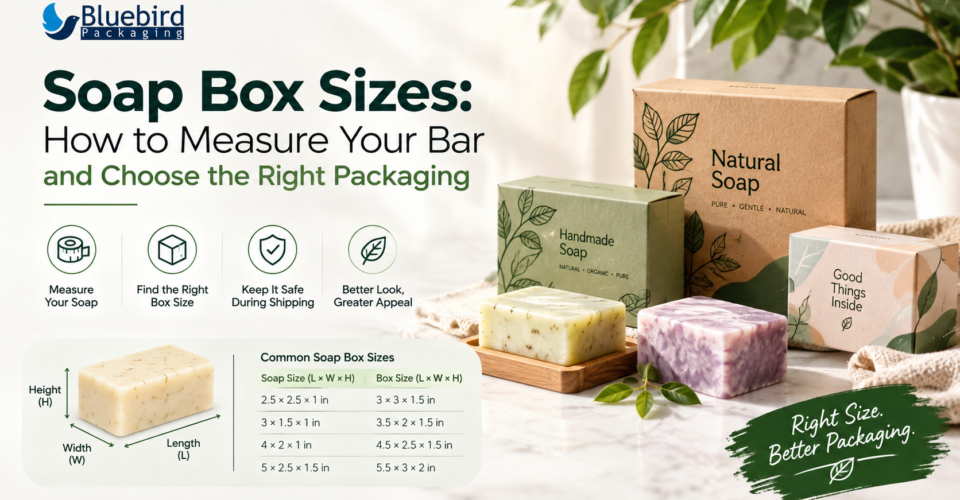
Choosing the right soap box size starts with measuring the finished bar, including any wrapper, and selecting a box that provides enough room for a clean fit without allowing excessive movement. The ideal dimensions depend on the soap’s length, width, thickness, shape, and packaging requirements. For handmade soap brands, the right fit can also improve shelf presentation, protect the product during handling, and make custom packaging more consistent across a product range.
There is no single standard soap box size that works for every bar. A compact guest soap, a thick artisan bar, a slim facial cleansing bar, and a round shampoo bar may all require different dimensions. The best approach is to measure the product, determine the required internal box dimensions, choose an appropriate material and structure, and confirm the fit with a sample before ordering in bulk.
For US soap makers and personal care brands, custom bar soap boxes designed around your product dimensions provide a way to coordinate packaging size, structure, and branding instead of relying on a generic carton.
Soap Box Sizes: Quick Answer
The right soap box size depends on the finished bar rather than its weight alone. As an initial reference, a rectangular soap measuring approximately 3.5 × 2.25 × 1 inches may fit a box with internal dimensions around 3.75 × 2.5 × 1.25 inches. This is an illustrative starting point, not a universal industry standard; the actual size should be confirmed using the soap, its wrapper, the carton structure, and a physical sample.
Here are the key points to remember when choosing soap packaging dimensions:
- Measure the finished soap: Include wrappers, labels, or other components that will be inside the box.
- Use internal dimensions for fit: The inside measurements determine whether the product will fit comfortably.
- Allow appropriate clearance: The soap should slide into the box without being forced, but it should not move excessively.
- Match the structure to the product: A folding carton, sleeve, window box, or gift box may require a different sizing approach.
- Consider the material: Board thickness and construction affect the finished package.
- Test before bulk production: A physical sample can reveal fit, closure, and presentation issues that a drawing may not show.
If your product line includes several bar shapes or sizes, create a separate specification for each product rather than assuming one carton will fit every variation.
Soap Box Size Chart: Common Dimensions for Different Bars
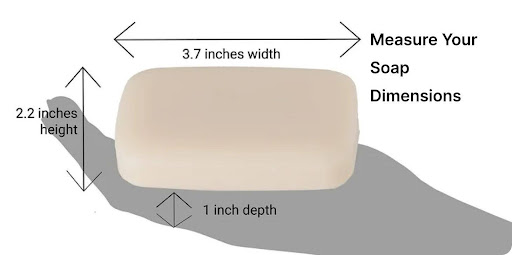
Soap box dimensions vary between manufacturers and products. The measurements below are illustrative starting points for planning, not fixed standards or guaranteed ready-made sizes. Always check the actual dimensions of your soap and approve a sample before final production.
| Soap type | Example soap dimensions (L × W × H) | Example internal box dimensions (L × W × H) |
|---|---|---|
| Small guest soap | 2 × 1.5 × 0.75 in | 2.25 × 1.75 × 1 in |
| Standard rectangular bar | 3.5 × 2.25 × 1 in | 3.75 × 2.5 × 1.25 in |
| Thick handmade bar | 3.5 × 2.5 × 1.25 in | 3.75 × 2.75 × 1.5 in |
| Slim soap bar | 4 × 2 × 0.75 in | 4.25 × 2.25 × 1 in |
| Large artisan bar | 4 × 3 × 1.25 in | 4.25 × 3.25 × 1.5 in |
| Round soap | 3 in diameter × 1 in thick | 3.25 × 3.25 × 1.25 in |
| Small travel bar | 2 × 1.5 × 0.5 in | 2.25 × 1.75 × 0.75 in |
Sizing note: These examples illustrate how a box may be sized around a product. The clearance shown is not suitable for every board, closure, wrapper, or carton style. Confirm dimensions with your packaging supplier.
How to Use the Soap Box Size Chart
Start with the soap’s actual dimensions, not the example box size. If your bar measures 3.5 × 2.25 × 1 inches, for example, a carton with the same internal dimensions would likely be too tight once manufacturing tolerances, board construction, and any wrapper are considered.
An initial box specification might provide additional room in all three dimensions, but the necessary clearance depends on the packaging design. A snug folding carton may require less space than a box containing a thick sleeve or protective insert.
For products with unusual shapes, such as oval, round, tapered, or irregular handmade bars, length × width × height may not fully describe the space required. Provide a product sketch, measurements at the widest points, and a sample if possible.
If you are comparing packaging styles for a soap range, the broader soap box collection from Bluebird Packaging can help you explore options for different products and presentations.
How to Measure a Soap Bar for Packaging
The most reliable way to determine soap box sizes is to measure the finished product in the condition in which it will be packed. Measuring an unwrapped bar and then adding a wrapper later can result in a box that is too tight.
Follow these steps before requesting a custom packaging quote.
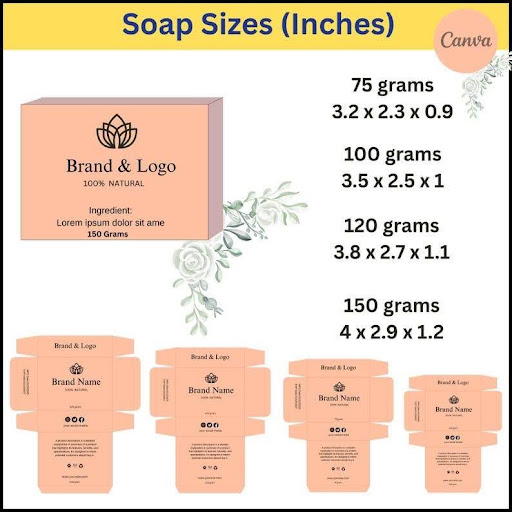
Step 1: Measure the Length
Place the soap on a flat surface and measure from one end to the other along its longest side. If the bar has rounded corners or an irregular outline, measure its maximum length.
For handmade soap, do not assume every bar from the same batch is identical. If there is natural variation, measure several bars and identify the largest dimensions that your packaging must accommodate.
Step 2: Measure the Width
Measure across the shorter side of the soap. For a rectangular bar, this is usually the side perpendicular to its length.
If the soap has a curved, oval, or tapered shape, measure the widest point rather than estimating from the center.
Step 3: Measure the Thickness
Measure the soap from its bottom surface to its highest point. This dimension matters because a bar can fit in length and width but still be too thick for the carton to close comfortably.
For bars with decorative tops, raised patterns, or uneven surfaces, measure the highest point that will sit inside the package.
Step 4: Include Wrappers and Labels
If the soap will be wrapped in paper, a band, or another material before being placed in the box, measure the wrapped product too. Even a thin wrapping layer can affect a close-fitting package.
A good packaging specification should identify whether the dimensions describe the bare soap or the complete packed product.
Step 5: Record the Measurements Consistently
Write dimensions in the order length × width × height, and state whether they are in inches or centimeters.
If you need a refresher, Bluebird Packaging’s step-by-step method for measuring length, width, and height explains how to record box measurements consistently.
For a broader explanation of internal and external box dimensions, remember that the internal dimensions determine the available product space, while external dimensions matter for storage, shipping, and carton planning.
Step 6: Test the Fit
Place the finished soap inside a sample box. Check that it can be inserted and removed without forcing it, that the closure works correctly, and that the bar does not move excessively.
This final check is particularly important for handmade soap, where bar sizes can vary slightly between batches.
Internal vs. External Soap Box Dimensions
Internal and external dimensions describe different parts of the same package. Understanding the difference helps prevent errors when ordering custom soap packaging.
| Dimension type | What it measures | Why it matters |
|---|---|---|
| Internal length | Usable space inside the box along its length | Determines whether the soap fits |
| Internal width | Usable space inside the box across its width | Determines side clearance |
| Internal height or depth | Usable space inside the box from bottom to top | Allows room for soap thickness and closure |
| External length | Overall length of the finished box | Helps with storage and shipping calculations |
| External width | Overall width of the finished box | Helps determine the space the carton occupies |
| External height or depth | Overall external height of the box | Helps with stacking and package dimensions |
The relationship between these measurements depends on the board thickness, folds, seams, and construction. A folding carton’s external dimensions are not necessarily equal to its internal dimensions plus a simple, identical amount on every side.
When requesting a quote, state clearly whether you are providing product dimensions, required internal box dimensions, or target external dimensions. This avoids unnecessary revisions to the design.
How Much Clearance Should a Soap Box Have?
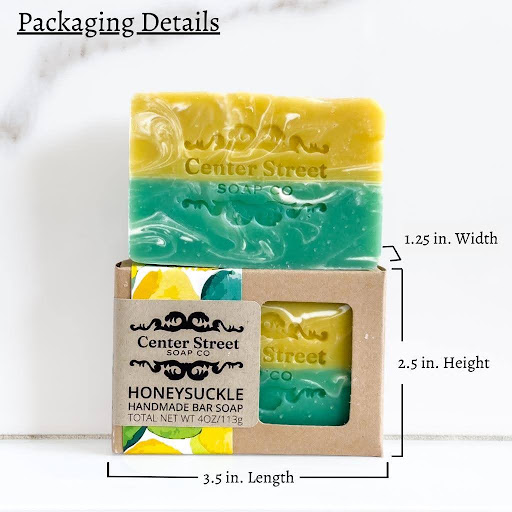
A soap box should provide enough clearance for the finished product to enter and leave comfortably, while keeping the bar secure enough for the intended application. There is no single clearance measurement that works for every soap packaging structure.
The amount of room depends on several factors:
- Product shape: A square-edged bar may need a different fit from a rounded or irregular bar.
- Wrapper thickness: Paper, bands, or other packaging layers add to the product’s final dimensions.
- Board construction: Material thickness and the carton design affect the available internal space.
- Closure style: Tuck flaps, sleeves, and other closures may require different clearances.
- Handling requirements: Packaging for shipping may need a different protection strategy from a box intended mainly for retail display.
- Ease of packing: Handmade or hand-packed products may require more practical clearance than products packed using a consistent automated process.
A box that is too small can scuff the soap, damage decorative surfaces, or make closing difficult. A box that is too large can let the bar shift, reduce the quality of the presentation, and waste space.
The objective is a secure, functional fit, not simply the smallest possible box.
Choosing Soap Box Sizes by Bar Weight
Soap weight can help you categorize products, but it should not be used as a substitute for measuring dimensions. Two bars with the same weight can have different lengths, widths, and thicknesses.
For example, one 4-ounce bar might be long and narrow, while another might be shorter and thicker. Their packaging needs could therefore be quite different.
Use weight as a supporting detail alongside the actual measurements.
| Product format | What to check before choosing a size |
|---|---|
| Small guest soap | Exact dimensions, wrapper, and whether it is sold individually |
| Standard bath bar | Length, width, thickness, and ease of insertion |
| Thick artisan soap | Maximum thickness and any raised surface details |
| Large handmade bar | Overall footprint and whether a stronger structure is appropriate |
| Round or oval soap | Widest diameter, thickness, and orientation inside the box |
| Multi-bar set | Combined arrangement, dividers, and total internal space |
For a range of soaps, document each product separately. This makes it easier to keep specifications consistent when reordering or adding new scents and formulas.
Which Box Style Works Best for Different Soap Sizes?
The best soap box style depends on the bar’s dimensions, how the customer will access the product, and the level of presentation the brand wants to achieve.
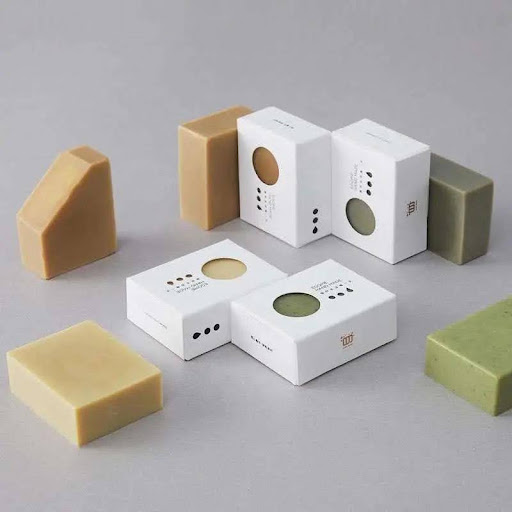
Folding cartons for individual soap bars
Folding cartons are a practical option for many rectangular soaps. They can be developed around the bar’s dimensions and provide space for branding and product information. The exact structure should be selected based on the board, closure, and intended use.
Kraft boxes for handmade soap
Kraft packaging can suit artisan and natural-style product ranges. The box dimensions should still be based on the actual bar and any wrapping rather than the appearance of the material.
Explore Kraft soap boxes for handmade and artisan products.
Window boxes for product visibility
A window can reveal the soap’s color, pattern, or decorative details. Its placement must be considered alongside the box structure, branding area, and the space needed to contain the product.
For distinctive presentation, consider soap boxes with a custom die-cut design.
Gift boxes for multiple bars
Gift packaging needs to accommodate the entire arrangement, not just the individual bars. Measure the combined layout, including dividers or inserts, before finalizing the box dimensions.
Soap gift boxes with space for coordinated product presentation can suit seasonal sets and multi-bar collections.
For a simple single-bar carton, the dimensions may be relatively straightforward. A window structure, sleeve, or gift box requires additional attention to the opening, closure, insert, and complete packed arrangement.
Choosing Materials for Your Soap Packaging
Material selection affects the package’s rigidity, appearance, print surface, and behavior during handling. It should be considered together with the soap’s dimensions and the intended packaging style.
Cardboard
Cardboard-based cartons can be suitable for many individual soap bars and retail products. They provide a surface for printed branding and can be designed in different dimensions and structures.
The appropriate board grade depends on the box style, product weight, required stiffness, and packaging process. Do not assume that every cardboard carton will provide the same strength.
Kraft Board
Kraft is often chosen for its natural brown appearance and minimalist aesthetic. It can work well for artisan soaps, handmade collections, and brands that prefer understated packaging.
If you are planning a natural visual direction, compare the available Kraft packaging materials and their common uses before finalizing the structure and print design.
Corrugated Board
Corrugated packaging has a fluted layer between liner sheets and is commonly used when additional structural support is required. It may be more relevant for outer packaging or shipping applications than for every individual retail soap bar.
The right choice depends on whether the product needs a primary retail carton, a protective shipping box, or both.
Rigid Board
Rigid boxes offer a more substantial structure and may be suitable for premium soap gift collections. They usually require a different design and sizing approach from a standard folding carton.
For a more elevated presentation, compare rigid packaging options for premium product collections.
Designing Soap Packaging That Fits and Looks Professional
Correct dimensions are only one part of an effective packaging design. The box also needs to communicate the brand, provide room for relevant information, and suit the way the soap is sold.
Keep the Front Panel Clear
Plan where the logo, product name, scent, and main visual elements will appear. Avoid crowding the front panel simply because extra space is available.
A clear hierarchy helps customers identify the product quickly, especially when a brand sells several scents or formulas.
Plan for Product Information
Depending on the product and applicable requirements, packaging may need space for ingredients, product identity, business details, usage instructions, or other information.
US brands should confirm which rules apply to their particular product. The FDA explains that products marketed as soap can fall under different regulatory categories depending on their composition and intended use in its Frequently Asked Questions on Soap.
Coordinate Packaging Across a Product Range
A brand may have several bars with slightly different dimensions. Instead of forcing every product into one box size, consider a small family of coordinated sizes that share common typography, colors, and branding elements.
This approach can preserve brand consistency while accommodating different product formats.
Consider Finishes Carefully
Matte or gloss lamination, foil stamping, embossing, debossing, and Spot UV may be appropriate for some soap cartons, depending on the material and design.
Finishing should support the intended presentation rather than make the packaging unnecessarily complicated. If recyclability is important to your brand, check the effects of coatings, laminations, and mixed materials on the available recycling options.
You can review packaging finishes and their visual effects before selecting the final specification.
How to Avoid Oversized or Undersized Soap Boxes
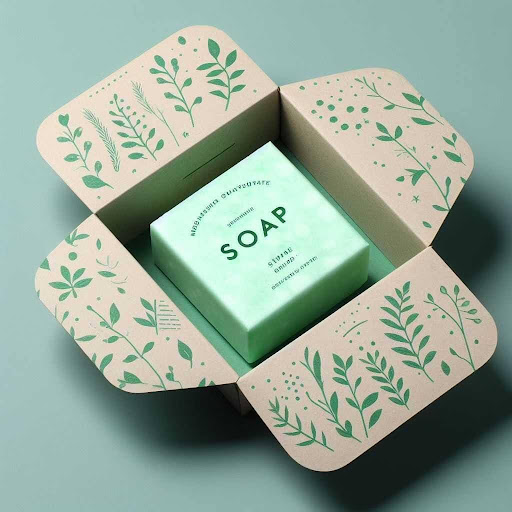
Poor sizing can create problems during packing, storage, display, and delivery. The easiest way to avoid them is to validate the dimensions before approving the production artwork.
Use this checklist:
- Measure the largest representative bar in the product range.
- Include any wrapper or band that will sit inside the box.
- Confirm whether the supplier needs internal or external dimensions.
- Identify the material and carton structure before finalizing the measurements.
- Check whether the box must hold an insert or divider.
- Confirm that the closure can fold and secure correctly.
- Test the box with the finished product.
- Review the packed product under normal handling conditions.
- Approve a physical sample where the fit is critical.
- Save the final dimensions and artwork specifications for future reorders.
If you are developing packaging for a small soap business, packaging considerations for small businesses can help you think through product fit, presentation, and ordering requirements together.
The aim is to avoid both extremes: a carton so tight that it damages the product and a carton so loose that the soap shifts unnecessarily.
Custom Soap Box Sizes for Growing Brands
Custom dimensions become especially useful when a business sells products that do not fit standard cartons or wants to maintain a consistent presentation across a growing range.
Custom-sized packaging may be worth considering when:
- The soap is unusually long, thick, round, or irregular.
- A wrapper or label changes the finished product size.
- Multiple soap variants need coordinated packaging.
- A gift set contains several bars or complementary products.
- A retail display requires a particular orientation.
- Existing stock boxes leave too much empty space.
- The brand needs specific printing or finishing features.
When comparing options, consider the complete cost rather than box size alone. Material, printing, structural complexity, quantity, and finishing can all affect the quotation.
Bluebird Packaging offers custom soap packaging developed around product dimensions and branding, allowing businesses to discuss the structure and specifications that suit their products.
For more general sizing principles, review the relationship between packaging design and product fit. For a cost-focused decision, the custom packaging cost guide explains the types of factors to consider when comparing quotes.
What to Include When Requesting a Soap Box Quote
Before contacting a packaging supplier, prepare the key product and design details. You do not need to know every technical specification, but clear measurements and a description of the intended use make the discussion more productive.
Include the following wherever possible:
- Product dimensions: Length, width, and thickness of the finished soap.
- Product weight: The bar’s weight, in addition to its measurements.
- Packaging condition: Whether the soap is wrapped, banded, or placed directly in the carton.
- Quantity: The number of boxes required.
- Preferred structure: For example, a folding carton, window box, sleeve, or gift box.
- Material preference: Cardboard, Kraft, or another suitable option.
- Artwork: Logo, brand colors, product information, and existing design files.
- Finishing: Any preferred coatings, foil, embossing, or other effects.
- Special features: Windows, inserts, dividers, or custom closures.
- Delivery requirements: Destination and preferred production timeframe.
If you are unsure about the exact dimensions, share the product measurements and intended use first. A packaging supplier can then help determine what needs to be confirmed before production.
For a coordinated product presentation, you can also explore custom printed soap sleeves when a sleeve-style format suits your product better than a fully enclosed carton.
Frequently Asked Questions About Soap Box Sizes
What is a standard soap box size?
There is no single standard size for all soap bars. A rectangular bar measuring around 3.5 × 2.25 × 1 inches may use a box with somewhat larger internal dimensions, but the correct size depends on the finished bar, wrapper, board construction, and closure.
How do I choose the right soap box dimensions?
Measure the soap’s maximum length, width, and thickness, including any wrapper that will be inside the box. Choose internal dimensions that allow the product to fit without being forced, and confirm the result with a sample before ordering in bulk.
Should soap box dimensions be internal or external?
Use internal dimensions to check whether the soap fits. External dimensions are useful for storage, stacking, and shipping calculations. Tell your packaging supplier which measurements you are providing so the specification is interpreted correctly.
Do soap box sizes depend on bar weight?
Weight can help identify the type of soap, but it does not determine the exact box size. Bars with the same weight may have different shapes and dimensions, so measure the actual product before selecting packaging.
How much extra space should a soap box have?
The required clearance depends on the soap’s shape, wrapper, board thickness, carton style, and packing method. The box should close properly and allow the bar to be inserted without force, while limiting unnecessary movement. A sample is the most reliable way to check the fit.
Can I order custom-sized boxes for handmade soap?
Yes. Custom-sized packaging can be developed for handmade bars, thick artisan soaps, round products, unusual shapes, and multi-bar sets. Provide the product measurements and explain how the soap will be packed and displayed.
Are Kraft boxes suitable for handmade soap?
Kraft boxes can be suitable for handmade soap brands that want a natural or minimalist appearance. The correct board and structure still depend on the product dimensions, handling requirements, printing needs, and intended use.
Can one box size fit several soap varieties?
It may work if the bars have compatible dimensions and the carton accommodates the largest product without leaving excessive space around smaller bars. If the sizes differ significantly, separate coordinated box sizes may provide a better fit.
Should I request a sample before placing a large order?
A sample is recommended when the fit, closure, material, or presentation is important. Testing the finished soap inside the sample helps identify problems before larger production begins.
What details should I send for a custom soap packaging quote?
Provide the soap dimensions, weight, quantity, packaging style, material preference, artwork, finishing requirements, and delivery destination. If you do not know the ideal box size, start with accurate product measurements and ask the supplier to confirm the packaging specification.
Choose Soap Box Sizes That Work for Your Product
The right soap box size starts with accurate measurements and a clear understanding of how the product will be packed, displayed, and handled. A well-sized box provides sufficient room for the finished soap, supports the closure and structure, and leaves space for a clear, professional brand presentation.
For US soap makers, handmade product businesses, and personal care brands, custom dimensions can be especially useful when bars vary in shape, thickness, or packaging requirements. Measure the finished product, confirm the internal dimensions, choose a suitable material and structure, and test a sample before approving a larger order.
Bluebird Packaging can help you explore custom bar soap boxes made to suit your product and brand. When you’re ready to discuss your specifications, request a custom packaging quote with your dimensions, quantity, and preferred design.