
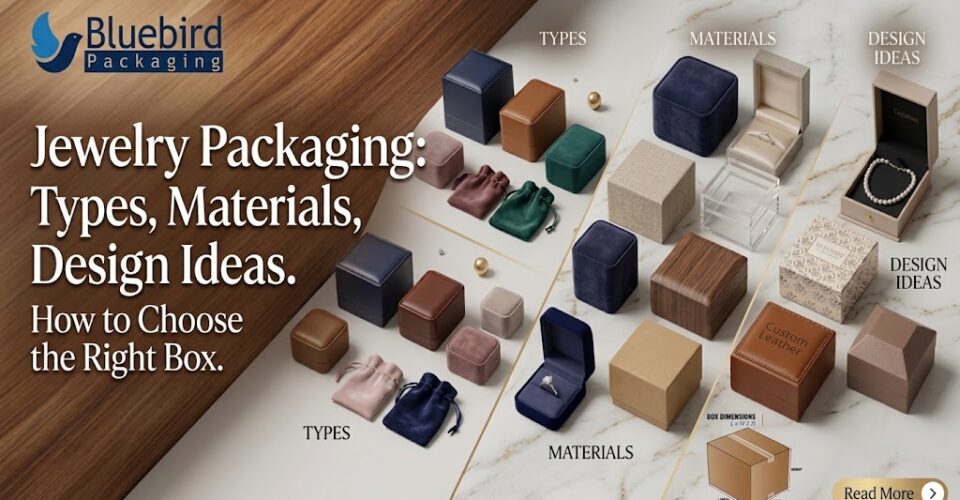
Jewelry packaging protects delicate pieces, presents products professionally, and helps jewelry brands create a memorable customer experience. The best option depends on the jewelry type, its size and weight, the level of protection required, the brand’s identity, and whether the packaging is intended for retail display, gifting, or shipping.
For jewelry businesses, effective jewelry packaging combines product protection, attractive presentation, practical design, and consistent branding. A small ring may need a fitted insert to keep it secure, while a necklace may require a support or compartment to reduce tangling. Luxury collections often benefit from rigid boxes and refined finishes, whereas everyday jewelry lines may work well with lighter folding cartons or kraft packaging.
This guide explains the main jewelry packaging types, materials, inserts, printing options, sustainability considerations, and costs. It also provides practical advice for choosing packaging that suits your products and business goals.
Quick Answer: What Is the Best Jewelry Packaging?
The best jewelry packaging is packaging that fits the item securely, protects it from movement and surface damage, reflects the brand’s positioning, and suits its selling or shipping environment.
- For luxury jewelry: Consider rigid boxes with premium paper wraps, magnetic closures, or foil-stamped logos.
- For rings and earrings: Choose boxes with fitted inserts or slots that hold each piece in place.
- For necklaces and bracelets: Use supports, secure loops, or compartments that help prevent tangling.
- For affordable retail jewelry: Consider folding cartons or lightweight paperboard boxes.
- For eco-conscious brands: Explore recyclable paperboard or kraft-based packaging, while checking coatings, adhesives, inserts, and local recycling requirements.
- For online orders: Use a presentation box inside an appropriately sized shipping carton with suitable protective packing.
Before choosing a style, evaluate the jewelry’s dimensions, weight, fragility, price point, brand image, order volume, and shipping requirements.
What Is Jewelry Packaging?
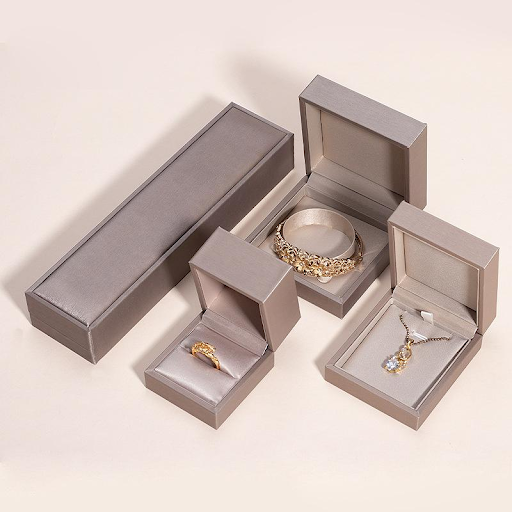
Jewelry packaging refers to the boxes, pouches, inserts, wraps, and outer shipping materials used to contain, protect, display, and present jewelry products. It can range from a simple paperboard box for fashion earrings to a custom rigid box designed for a premium necklace or engagement ring.
Jewelry packaging serves several purposes. It keeps items organized, helps reduce movement during handling, provides space for branding and product information, and makes the product more suitable for gifting. Packaging can also help create a consistent visual identity across an online store, retail display, and customer delivery experience.
Unlike ordinary packaging, jewelry packaging often needs to accommodate small, delicate, or easily tangled items. The insert and internal structure can therefore be just as important as the outer box.
For example, a ring box typically needs a narrow slot that holds the ring upright, while a necklace box may need a flat support or a secure arrangement for the chain. Earrings may require paired holes or a fitted card so that both pieces remain together.
Businesses developing a wider packaging system can also explore packaging materials and their applications to understand how different materials support product protection and presentation.
Types of Jewelry Packaging
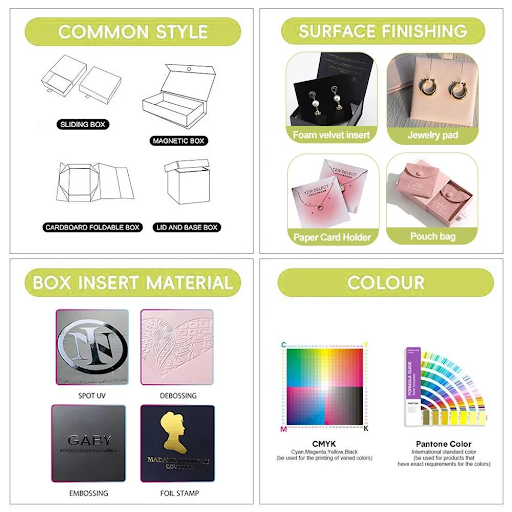
Jewelry packaging is available in several structures. Each offers different advantages in terms of presentation, cost, storage, customization, and protection.
1. Rigid Jewelry Boxes
Rigid jewelry boxes are made from thick, firm paperboard that holds its shape. They are commonly used for premium jewelry, gift collections, and products where a substantial, high-quality presentation is important.
These boxes can accommodate fitted inserts, wrapped exteriors, custom printing, and decorative finishes. Their firm construction can also provide a stable housing for jewelry when paired with a properly designed interior.
Explore rigid jewelry boxes for jewelry-specific presentation, or consider the broader range of custom rigid boxes when developing packaging for multiple product categories.
Best suited for: Fine jewelry, premium gifts, branded collections, and higher-value products.
2. Folding Carton Jewelry Boxes
Folding cartons are typically produced from paperboard that is cut, creased, printed, and folded into shape. They can be shipped flat before assembly, helping businesses reduce storage requirements compared with many pre-assembled rigid boxes.
Folding cartons work well for lightweight jewelry, fashion accessories, retail packaging, and collections that require printed branding without the heavier construction of a rigid box.
The internal design matters. A carton without an appropriate insert may allow small jewelry pieces to shift around, so consider adding a fitted paperboard support, card, or other suitable insert.
Best suited for: Fashion jewelry, everyday accessories, retail collections, and cost-conscious packaging programs.
3. Kraft Jewelry Packaging
Kraft packaging uses paper-based material with a natural-looking brown or otherwise finished surface. Its understated appearance can support minimalist, handmade, rustic, or nature-inspired brand identities.
Kraft packaging is not automatically recyclable or compostable in every configuration. Coatings, laminations, adhesives, and attached components can affect disposal options. Businesses should verify the actual material composition rather than relying on appearance alone.
Explore kraft boxes if you want a natural paper-based style for selected jewelry collections.
Best suited for: Handmade jewelry, artisan brands, minimalist collections, and brands that prefer an understated appearance.
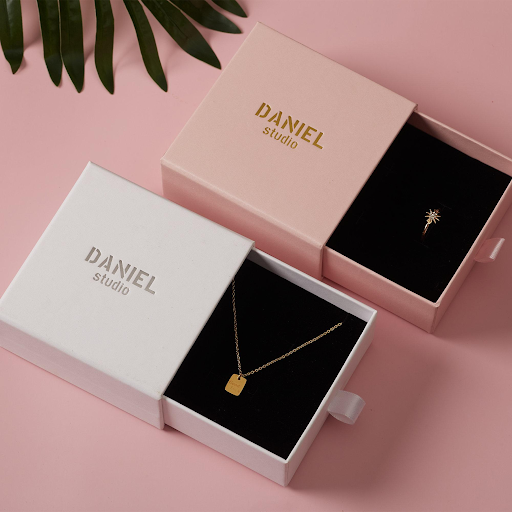
4. Drawer-Style Jewelry Boxes
Drawer-style boxes contain an inner tray that slides into an outer sleeve. This structure creates a layered presentation and can provide convenient access to the jewelry.
A custom insert can help keep the product in position when the drawer is opened. A pull ribbon or tab may also make the packaging easier to handle.
Best suited for: Gift sets, coordinated jewelry collections, and brands seeking an elegant opening experience.
5. Magnetic Closure Jewelry Boxes
Magnetic closure boxes use a flap that closes against the box body with embedded magnets. They offer a clean exterior and a defined opening and closing action.
This style is often selected for premium presentation, corporate gifting, and jewelry collections where the package is intended to feel substantial. The actual protection still depends on the box dimensions, board construction, closure strength, and insert design.
For this structure, explore custom magnetic-closure rigid packaging boxes.
Best suited for: Premium necklaces, bracelets, jewelry gift sets, and branded gifting.
6. Sleeve and Slipcase Packaging
Sleeve packaging uses an outer cover that slides over an inner tray, carton, or box. It can introduce an additional branding surface without requiring a complex box structure.
A sleeve can display the brand logo, collection name, product details, or decorative artwork. It may also work as an outer layer around an existing box, depending on the dimensions and construction.
Explore custom packaging sleeves for ideas on using an outer sleeve to distinguish a jewelry collection.
Best suited for: Lightweight jewelry cartons, collection packaging, promotional sets, and products that benefit from an additional printed layer.
7. Jewelry Pouches and Cards
Pouches and jewelry cards are lightweight alternatives to traditional boxes. Pouches can help separate items and offer a simple presentation, while cards provide a way to secure earrings, display product information, or organize small accessories.
Best suited for: Lightweight accessories, earrings, simple gift packaging, and compact product assortments.
Which Jewelry Packaging Type Should You Choose?
The following table provides a starting point for selecting a suitable structure. Final suitability depends on the product, dimensions, insert, and intended use.
| Packaging type | Main advantage | Common application |
|---|---|---|
| Rigid box | Firm construction and premium presentation | Fine jewelry and gifting |
| Folding carton | Lightweight and efficient to store flat | Fashion jewelry and retail |
| Kraft box | Natural, understated appearance | Handmade and minimalist brands |
| Drawer box | Layered presentation and easy access | Gift sets and collections |
| Magnetic closure box | Refined opening and closing experience | Premium jewelry |
| Sleeve packaging | Additional branding surface | Collection packaging |
| Pouch or jewelry card | Lightweight and compact | Earrings and everyday accessories |
Choosing the Right Material for Jewelry Packaging
The material affects the appearance, strength, weight, print quality, storage requirements, and potential end-of-life options of jewelry packaging. The right choice depends on how the product will be sold, handled, and delivered.
Paperboard
Paperboard is widely used for folding cartons, printed jewelry boxes, sleeves, and internal supports. It can be printed with brand colors, product information, patterns, and other graphics.
Different paperboard grades have different stiffness and surface characteristics. The material should be selected according to the box dimensions, product weight, structural design, and expected handling conditions.
Rigid Paperboard
Rigid paperboard is thicker and more structurally firm than typical folding-carton stock. It is commonly used for premium presentation boxes that need to maintain their shape.
Rigid construction can contribute to a more substantial presentation, but it does not guarantee protection against every impact or shipping condition. A properly fitted insert and suitable outer shipping packaging remain important.
Kraft Paperboard
Kraft-based materials offer a natural paper appearance and can work well with simple typography, one-color graphics, or restrained branding. Depending on the specific grade and construction, kraft material may be used for boxes, sleeves, cards, and other paper-based components.
Check whether the selected stock is coated, laminated, printed with specialty inks, or combined with other materials before making recyclability claims.
Corrugated Material for Shipping
Corrugated board is commonly used for outer shipping cartons because its fluted structure can provide cushioning and structural support. It is usually not necessary for every small jewelry presentation box, but it may be useful as the outer layer protecting the presentation package during delivery.
The correct shipping carton depends on the product, the inner box, void space, parcel handling, and the level of protection required. Learn more about corrugated packaging when planning an outer shipping solution.
Comparing Paper-Based Materials
| Material | Typical strength | Design opportunities | Considerations |
|---|---|---|---|
| Folding paperboard | Depends on grade and structure | Detailed printing, colors, coatings | Needs appropriate structural design |
| Rigid paperboard | Firm shape retention | Wrapped papers, premium finishes, inserts | Uses more material and storage space |
| Kraft paperboard | Varies by grade | Natural appearance and simple graphics | Finish and strength vary by specification |
| Corrugated board | Useful for shipping protection | Printed outer cartons and shipping graphics | Often better suited to outer shipping than small presentation boxes |
A material comparison should consider the complete packaging system, not just the outer box. A light carton with a well-designed insert may suit one product, while a rigid box with an additional shipping carton may be more appropriate for another.
For a broader overview of how material selection affects packaging performance, see this guide to packaging material options.
Why Jewelry Inserts Matter
A jewelry insert is the internal component that holds or organizes the product inside its packaging. Inserts can prevent items from moving freely, separate multiple pieces, support a product for display, and improve how it looks when the box is opened.
For many jewelry products, the insert is one of the most important design decisions because an attractive outer box cannot compensate for an interior that allows delicate items to shift or tangle.
Image placement: Add the insert infographic here, labeling ring slots, necklace supports, earring holes, and separate compartments.
Ring Inserts
Ring inserts commonly use narrow slots that hold a ring upright. The slot should be sized to the ring and insert material so the item stays in position without being forced into place.
For engagement rings or other pieces with raised settings, allow enough clearance around the stone and setting to avoid unwanted pressure or contact.
Necklace Inserts
Necklace packaging should account for chain length, pendant size, and the risk of tangling. Depending on the design, a necklace may be placed on a shaped support, secured through small openings, or arranged within a dedicated compartment.
For long chains, simply placing the item loosely inside a large box can create unnecessary tangling and a poor opening experience.
Earring Inserts
Earring inserts may include paired holes, slots, or a removable card. The design should keep the pair together and support the earring style without putting excessive pressure on delicate components.
Studs, hoops, and drop earrings can require different layouts, so use the actual product dimensions when developing the insert.
Bracelet Inserts
Bracelets may require a curved support, a shaped channel, or a compartment that prevents excessive movement. Larger bangles and rigid bracelets may need more clearance than delicate chain bracelets.
Multi-Product Inserts
Gift sets containing several pieces may need separate sections for rings, earrings, necklaces, or bracelets. A divided layout can keep products organized and create a clear visual hierarchy when the package is opened.
When designing inserts, consider the jewelry’s weight, surface finish, shape, fragility, and the materials that will contact it. For more ideas, explore packaging inserts and their uses.
Jewelry Packaging Design: Branding, Colors, and Finishes
Jewelry packaging design should communicate the brand’s personality while keeping the product secure and easy to access. The best design is not necessarily the most elaborate one; it is the design that connects the packaging’s appearance with the product, customer, and price point.
Use a Consistent Visual Identity
Start with the brand logo, color palette, typography, and preferred graphic style. Use these elements consistently across the box exterior, interior, insert, product card, and any accompanying printed materials.
A minimalist jewelry brand may prefer neutral colors and understated graphics. A colorful fashion jewelry brand may use bold patterns or contrasting colors. A premium collection may use restrained typography and a carefully selected finish.
See packaging design principles for more ideas on balancing brand identity with packaging function.
Choose Colors With the Product in Mind
Packaging colors should complement the jewelry and brand rather than compete with them. Dark packaging may create contrast with light-colored metals, while neutral or pale interiors may make certain products easier to see. The best combination depends on the actual product photography, store environment, and customer expectations.
Before production, review color proofs and confirm that printed colors are appropriate for the selected material and finish.
Add a Logo Without Overcrowding the Box
A logo can be printed on the lid, applied to a sleeve, or placed on an interior panel. The correct size depends on the box dimensions and the logo’s proportions.
Avoid making the logo so large that it overwhelms the packaging. Keep the design legible and allow enough clear space around it.
Consider Foil Stamping, Embossing, and Other Finishes
Finishes can add texture, contrast, or visual emphasis to jewelry packaging.
- Foil stamping: Applies a metallic or specialty foil effect to selected areas.
- Embossing: Raises a design above the surface.
- Debossing: Presses a design into the surface.
- Matte finish: Creates a less reflective appearance.
- Gloss finish: Adds a more reflective surface appearance.
- Spot UV: Applies a localized glossy coating to selected areas.
Each option affects cost, production requirements, and the final appearance. Some finishes also complicate recycling when combined with other materials. Explore packaging finishes before finalizing a design.
Create a Better Unboxing Experience
An effective unboxing experience is organized, easy to understand, and appropriate for the product. Customers should be able to open the box without damaging the package or struggling to remove the jewelry.
Consider the sequence in which the customer encounters the outer packaging, presentation box, insert, jewelry, and any accompanying card. A small thank-you card or care instruction may be useful when it provides genuine value, but unnecessary layers can increase material use and inconvenience.
For further inspiration, review these jewelry and product packaging design ideas.
Jewelry Packaging for Different Business Models
Jewelry packaging should be designed around how customers encounter and use the product. A box intended for a retail shelf may have different requirements from packaging for a subscription service or an online order.
Fine Jewelry Brands
Fine jewelry brands often prioritize a secure insert, refined presentation, and materials that support the product’s positioning. Rigid boxes can be appropriate for rings, necklaces, bracelets, and premium gifts.
The internal structure should fit the specific jewelry piece rather than using a generic insert that allows movement.
Fashion Jewelry Brands
Fashion jewelry collections may include frequent product launches, multiple colors, and different price points. Folding cartons, jewelry cards, and compact boxes can help create a consistent brand appearance while managing storage and shipping requirements.
For a collection with many product styles, consider whether a common outer design can accommodate different inserts.
Handmade Jewelry Businesses
Handmade jewelry brands may prefer kraft packaging, simple printed cartons, or compact boxes with understated branding. The packaging should reflect the brand’s visual identity without adding unnecessary complexity.
Smaller businesses should also confirm minimum order quantities and storage requirements before choosing a custom structure.
Jewelry Gift Sets
Gift sets containing coordinated products often benefit from a larger box with separate compartments. The insert should keep the items arranged while leaving enough space to remove them comfortably.
A coordinated design can make a collection feel unified even when the pieces have different shapes and sizes.
Retail and In-Store Packaging
Retail packaging may need to work with display shelves, price labels, hanging systems, or staff handling. If the box will be displayed upright, confirm that the insert keeps the jewelry in the intended position.
For brands selling through stores, custom retail packaging can be a useful starting point for planning packaging around a retail environment.
E-Commerce Jewelry Packaging
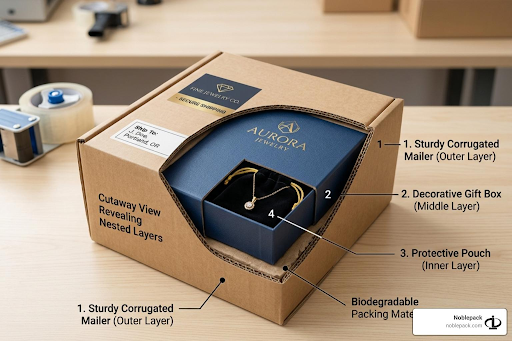
Online jewelry orders require two layers of thinking: the presentation package and the shipping package.
The presentation box protects and displays the product, while the outer shipping carton helps protect the entire parcel during transportation. A jewelry box should not automatically be treated as a shipping carton.
Choose an appropriately sized outer package, secure the presentation box against excessive movement, and test the complete pack-out when practical. Learn more about e-commerce packaging for online order fulfillment considerations.
How to Choose Jewelry Packaging Step by Step
Selecting jewelry packaging becomes easier when the decision is broken into practical steps.
Step 1: Identify the Product
List the jewelry types you sell, including rings, earrings, necklaces, bracelets, watches, or gift sets. Record the dimensions and weight of representative products.
Do not select the box based only on the product category. Two necklaces may need very different inserts because of their chain lengths, pendants, or overall dimensions.
Step 2: Define the Packaging Purpose
Determine whether the package is primarily intended for:
- Retail display
- Gift presentation
- Storage and organization
- E-commerce delivery
- Wholesale distribution
- Promotional or seasonal gifting
A box designed mainly for display may not provide enough protection for shipping without an additional outer carton.
Step 3: Set the Brand Positioning
Decide how the packaging should feel to the customer. Consider whether the brand is minimalist, playful, premium, artisan, or value-oriented.
This decision influences the material, structure, color palette, printing method, and finishing options.
Step 4: Select the Structure
Compare rigid boxes, folding cartons, kraft boxes, drawer boxes, sleeves, and other suitable structures. Consider ease of assembly, storage, shipping weight, opening experience, and how well each option holds the jewelry.
Step 5: Design the Insert
Choose an insert that supports the specific product. Check clearances around delicate stones, chains, clasps, hooks, and other vulnerable components.
If the package contains multiple products, confirm that the insert keeps each piece separated during handling.
Step 6: Finalize Artwork
Prepare the logo, colors, typography, product information, and any required legal or care information. Use the printer’s specifications for artwork dimensions, bleed, safe areas, and file format.
A packaging design and artwork workflow can help reduce avoidable errors before production.
Step 7: Confirm Quantity and Budget
Request pricing based on the required quantity, materials, dimensions, printing, inserts, finishing, and shipping arrangements. Ask whether any setup, tooling, sampling, or other charges apply.
The lowest unit price is not always the lowest overall cost if a design causes storage problems, assembly delays, or excessive damage during fulfillment.
Step 8: Review a Sample
Whenever practical, review a physical sample before committing to a full production run. Check dimensions, closure, insert fit, print quality, color, finish, and how easily the jewelry can be placed inside and removed.
For custom packaging, a sample is particularly useful when the structure or insert is new.
Step 9: Test the Complete Pack-Out
For products that will be shipped, test the presentation box inside its intended shipping carton. Check for movement, scuffing, pressure on the jewelry, and whether the package remains presentable after handling.
A box that looks good on a desk may need changes before it is suitable for parcel delivery.
How Much Does Custom Jewelry Packaging Cost?
The cost of custom jewelry packaging depends on the structure, material, dimensions, order quantity, printing, inserts, finishing, and delivery requirements. There is no single price that applies to every jewelry box.
Common cost factors include:
- Box structure: Rigid boxes may require different materials and assembly processes from folding cartons.
- Dimensions: Larger boxes generally require more material and may affect shipping and storage costs.
- Insert design: Custom-shaped or multi-compartment inserts can add design and production complexity.
- Printing: The number of printed surfaces, color requirements, and print process can influence cost.
- Finishes: Foil stamping, embossing, specialty coatings, and other enhancements may add production steps.
- Order quantity: Unit pricing may vary with quantity, setup costs, and production efficiencies.
- Shipping and handling: Packaging dimensions and total order weight can affect freight costs.
To compare suppliers fairly, provide the same specifications to each one. Include the box dimensions, material, insert, artwork, finish, quantity, delivery location, and whether samples are required. For more general information, see the guide to custom packaging costs.
Sustainable Jewelry Packaging: What Should Brands Consider?
Sustainable jewelry packaging involves evaluating material use, packaging weight, durability, reuse, and end-of-life disposal. Paper-based packaging may be a suitable option for many jewelry brands, but sustainability depends on the complete construction rather than the material’s appearance alone.
A kraft box with a plastic laminate, foam insert, metallic embellishment, and mixed-material components may have different disposal requirements from an uncoated paperboard box.
Brands can start by asking these questions:
- Can the box be made smaller without compromising product fit or protection?
- Can unnecessary layers and decorative components be removed?
- Are the box, insert, and sleeve made from compatible materials?
- Do local recycling facilities accept the actual materials and finishes?
- Is the packaging durable enough to protect the product and reduce avoidable replacements?
- Can any packaging components be reused by the customer?
Avoid describing packaging as biodegradable, compostable, or recyclable unless the claim is supported by the actual material specification and relevant disposal conditions.
For additional context, explore sustainable packaging options and consider how material choices affect the full packaging system.
Common Jewelry Packaging Mistakes to Avoid
Even an attractive box can create problems if its design does not match the product or its intended use.
Choosing a Box That Is Too Large
Excess space can allow jewelry to move around, increasing the risk of tangling or surface contact. It can also make the presentation look unfinished.
How to avoid it: Measure the product and insert together, and confirm the final internal dimensions before production.
Ignoring the Insert
A box without an appropriate insert may not hold the jewelry in place. This is especially important for chains, pairs of earrings, rings with raised settings, and mixed-product gift sets.
How to avoid it: Test the actual jewelry in the intended insert and check whether it remains secure when the box is moved gently.
Overdesigning the Exterior
Too many colors, decorative elements, finishes, and messages can make packaging difficult to read and more expensive to produce.
How to avoid it: Establish a clear visual hierarchy with the logo, key branding elements, and only the details customers need.
Using the Presentation Box for Shipping Without Testing
A presentation box may be designed for display rather than parcel transportation. It may become scuffed or crushed if shipped without an appropriate outer package.
How to avoid it: Use suitable shipping packaging and test the complete parcel under realistic handling conditions.
Ordering Without Reviewing a Sample
Artwork, colors, closures, and inserts can look different in a finished product than they do on a screen.
How to avoid it: Review a sample where possible, and confirm all production specifications in writing.
Making Unsupported Environmental Claims
Words such as “eco-friendly,” “zero waste,” and “fully recyclable” can be misleading when they are not supported by the complete packaging specification.
How to avoid it: Describe the actual materials and explain relevant disposal conditions accurately.
Frequently Asked Questions About Jewelry Packaging
1. What is the best packaging for jewelry?
The best packaging depends on the jewelry type, brand positioning, budget, and intended use. Rigid boxes are often suitable for premium presentation, while folding cartons and kraft boxes can work for many retail collections. A fitted insert is important whenever the jewelry needs to remain securely positioned.
2. What material is commonly used for jewelry boxes?
Jewelry boxes commonly use paperboard, rigid paperboard, and kraft-based materials. Corrugated board is frequently used for outer shipping cartons. The right material depends on the box structure, product weight, required presentation, and shipping conditions.
3. How do I package necklaces without tangling them?
Use a necklace support, secure attachment points, or a fitted insert designed for the chain and pendant. Keep the chain organized and prevent it from moving freely inside the box. For shipping, secure the presentation box within a suitable outer carton.
4. Are rigid jewelry boxes better than folding cartons?
Neither option is universally better. Rigid boxes provide a firm structure and often suit premium presentation, while folding cartons can be lighter and easier to store flat before assembly. Choose based on the product, packaging purpose, budget, and desired customer experience.
5. Can jewelry packaging be customized with a logo?
Yes. Depending on the material and structure, jewelry packaging can feature printed logos, custom colors, foil stamping, embossing, debossing, and other finishing options. The best approach depends on the artwork, production method, quantity, and budget.
6. What insert should I use for rings, earrings, and necklaces?
Rings commonly use narrow slots, earrings may use paired holes or cards, and necklaces often need a support or secure arrangement to prevent tangling. Gift sets may benefit from divided inserts. Always check the fit using the actual product.
7. Is kraft jewelry packaging recyclable?
It may be recyclable, but the answer depends on the specific paper grade, coatings, laminations, adhesives, inserts, and local recycling rules. Check the full packaging specification instead of assuming that every kraft-looking box can be recycled.
8. How can I reduce the cost of custom jewelry packaging?
Consider simplifying the structure, reducing unnecessary finishes, standardizing box sizes across compatible products, and selecting an appropriate order quantity. Compare complete quotations that include inserts, setup, printing, samples, and delivery rather than looking only at the unit price.
9. What should I include in a custom jewelry packaging quote request?
Provide the jewelry type, box dimensions, material preference, insert requirements, artwork or logo, printing and finishing choices, order quantity, and delivery requirements. If you have a reference image or sample, include it to help clarify the intended design.
10. Does jewelry packaging need a separate shipping box?
For many e-commerce orders, yes. A presentation box is designed primarily to display and hold the jewelry, while an outer shipping carton provides additional protection during transportation. The complete pack-out should be selected and tested according to the product and delivery conditions.
Conclusion: Choose Jewelry Packaging That Protects and Represents Your Brand
The right jewelry packaging balances protection, presentation, functionality, and cost. A well-fitted insert keeps jewelry organized, a suitable structure supports the intended use, and thoughtful branding creates a consistent experience from the shelf to the customer’s home.
Before selecting a box, define your product dimensions, packaging purpose, material requirements, branding preferences, order quantity, and shipping conditions. Review a sample where practical and test the complete package before production.
Bluebird Packaging offers packaging options for businesses exploring custom box structures and branded presentation. If you are planning a new jewelry collection or upgrading existing packaging, you can request a custom packaging quote with your dimensions, quantity, preferred materials, insert requirements, and artwork details.