
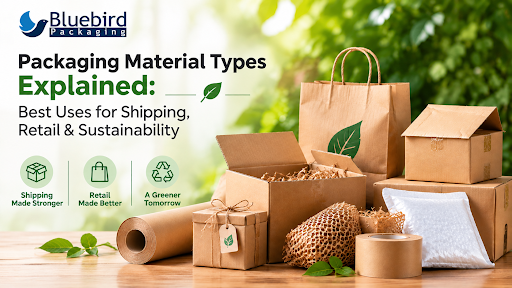
Choosing the right packaging material affects how well a product is protected, how it looks to customers, how much it costs to ship, and what happens to the package after use. The most common packaging material types include paper and cardboard, corrugated board, plastic, glass, metal, wood, and flexible or multi-layer materials. Each offers different levels of strength, moisture resistance, printability, weight, and end-of-life options.
For most businesses, there is no single material that works best for every product. A lightweight folding carton may be ideal for cosmetics, corrugated cardboard may be more appropriate for shipping, and glass or metal may be needed when product compatibility or barrier performance is a priority. The right choice depends on the product, distribution conditions, budget, branding, and local recycling infrastructure.
This article compares the main packaging materials, explains their advantages and limitations, and shows how U.S. businesses can choose suitable materials for retail, e-commerce, food, beauty, and industrial applications.
Quick Answer: What Are the Main Types of Packaging Materials?
The main packaging material types are:
- Paper and cardboard: Used for cartons, boxes, sleeves, bags, and shipping packages.
- Corrugated board: A layered paper-based material commonly used for shipping and protective boxes.
- Plastic: Available as rigid containers, films, pouches, trays, and protective wraps.
- Glass: Used for bottles and jars when product compatibility, visibility, and barrier properties matter.
- Metal: Includes aluminum and steel cans, tins, tubes, and other protective containers.
- Wood: Used for pallets, crates, and heavy-duty industrial or export packaging.
- Flexible and multi-layer materials: Combine films, foils, papers, or coatings to provide specific barrier and packaging properties.
- Alternative fiber-based materials: Include molded pulp and other fiber-based formats designed for cushioning or product containment.
The best packaging material is the one that protects the product throughout its actual supply chain while meeting cost, presentation, handling, and end-of-life requirements. A material should not be selected solely because it looks premium, costs less, or carries a sustainability claim.
What Are Packaging Materials?
Packaging materials are the substances used to contain, protect, preserve, transport, display, or identify products. They may form the primary package that touches or directly contains the product, the secondary package that groups or presents products, or the outer packaging used for storage and shipping.
For example, a cosmetic product may use a glass bottle as its primary container, a printed paperboard carton as its secondary packaging, and a corrugated shipping box as its outer packaging. Each material performs a different job, and the complete packaging system must work together.
Businesses should also distinguish between a material and a packaging structure. Paperboard is a material; a folding carton is a structure made from that material. Corrugated board is a material construction, while a mailer box is a box style. Understanding this difference makes it easier to compare options and communicate specifications to a packaging supplier.
For a broader introduction to the role packaging plays in product protection and presentation, see the different functions packaging performs throughout a product’s lifecycle.
Packaging Material Types Compared at a Glance
The table below summarizes common materials and the applications they often suit. Actual performance depends on the grade, thickness, construction, coatings, closures, and conditions in which the package is used.
| Material | Common uses | Main advantages | Key limitations |
|---|---|---|---|
| Paper and paperboard | Retail cartons, sleeves, bags, labels | Lightweight, printable, available in many grades | Can be sensitive to moisture and grease |
| Corrugated board | Shipping boxes, e-commerce, transit packaging | Layered construction can provide strength and cushioning | Performance varies by board grade and design |
| Kraft paper and board | Bags, wrapping, cartons, mailers | Natural appearance and a range of paper-based formats | Uncoated grades may offer limited moisture protection |
| Plastic | Bottles, tubs, films, trays, pouches | Versatile, lightweight, can provide useful barriers | Recycling availability varies by resin and format |
| Glass | Bottles and jars | Rigid, transparent options; good chemical compatibility for suitable products | Heavy and breakable |
| Metal | Cans, tins, tubes | Strong barrier performance in suitable constructions | Can be heavier or costlier depending on format |
| Wood | Crates, pallets, heavy equipment packaging | Useful for load support and heavy-duty transport | Bulky; treatment and shipping requirements may apply |
| Flexible multi-layer packaging | Food pouches, sachets, protective packs | Can combine several barrier functions in a compact format | Mixed layers may complicate recycling |
| Molded pulp and fiber | Inserts, trays, cushioning | Can hold products in shaped cavities | Strength and moisture resistance depend on design |
For a more focused comparison of board grades and other paper-based options, Bluebird’s article on packaging materials and how they are used can help readers understand the material choices available.
1. Paper, Paperboard, and Cardboard
Paper-based packaging is common in retail, shipping, food, personal care, and e-commerce. It can be converted into bags, folding cartons, corrugated boxes, sleeves, dividers, and protective inserts. The term “cardboard” is often used broadly, but paperboard and corrugated board have different constructions and performance characteristics.
Paper and Paperboard
Paperboard is a relatively thick paper-based material used to make folding cartons, product sleeves, small boxes, and many retail packages. It provides a printable surface for product information, logos, and branded graphics.
It is often suitable for lightweight products that need organized presentation rather than heavy-duty transit protection. However, the correct grade still matters: a small carton for a lightweight cosmetic item has different requirements from a carton holding a heavier product.
Common applications include:
- Cosmetic and skincare cartons
- Food and bakery boxes made for their intended use
- Retail product packaging
- Gift sleeves and presentation cartons
- Product inserts and dividers
- Printed sleeves for bottles, jars, and other containers
Businesses considering paper-based packaging should match the board’s stiffness and dimensions to the product, rather than assuming every paperboard carton has the same strength.
Corrugated Cardboard
Corrugated board consists of one or more fluted paper layers combined with flat liner sheets. The flutes help create a structure that can resist compression and provide cushioning, depending on the board grade and box design.
This makes corrugated board a common choice for parcel delivery, warehouse handling, product distribution, and protective outer boxes. Single-wall, double-wall, and other constructions are available for different performance requirements.
Businesses shipping fragile or heavier products can explore corrugated boxes designed for shipping and distribution. The appropriate specification depends on product weight, stacking, transport conditions, and the amount of internal protection required.
Kraft Paper and Kraft Board
Kraft paper is commonly associated with its natural brown appearance, although kraft materials can also be produced in other colors and converted into different packaging formats. It is used for wrapping, bags, cartons, mailers, and other paper-based products.
Kraft packaging can suit brands seeking a simple, understated look. Its actual strength, printability, moisture resistance, and suitability for a specific product depend on the grade and any additional treatments.
For businesses that want a natural paper-based appearance, kraft boxes for retail products and branded packaging offer a starting point for exploring possible formats.
What Is the Difference Between Paperboard and Corrugated Board?
Paperboard is generally a solid sheet of board, while corrugated board contains a fluted layer between flat liners. Paperboard is often used for retail cartons and product presentation; corrugated board is frequently used for outer shipping boxes because its layered structure can provide greater rigidity and cushioning.
Neither is automatically better in every situation. A retail carton may fit a product neatly and print well, while a corrugated box may be more suitable for transport. Some products use both: a paperboard carton inside a corrugated shipping box.
Read more about how cardboard and corrugated boxes differ in construction and use when choosing between these options.
2. Plastic Packaging Materials
Plastic packaging includes rigid containers, bottles, trays, films, bags, pouches, and protective wraps. Different polymers have different properties, so “plastic packaging” should not be treated as one uniform material category.
Plastic may be chosen for its low weight, flexibility, transparency, sealability, or ability to protect against moisture. Its suitability depends on the product, temperature, chemical compatibility, required barrier performance, and relevant regulations.
Rigid Plastic
Rigid plastic formats include bottles, jars, tubs, trays, and containers. Depending on the polymer and design, they can be useful for products that require a durable container, a specific closure, or visibility of the contents.
Typical applications include personal care products, household goods, beverages, and some food products. Businesses must check that the selected material is compatible with the contents and intended conditions of use.
Flexible Plastic Films and Pouches
Flexible plastics can be converted into bags, wraps, sachets, and pouches. Some formats use multiple layers or coatings to improve protection against moisture, oxygen, light, or other factors that affect product quality.
These structures may use less material by weight than some rigid formats, but the overall result depends on the product, barrier requirements, manufacturing, transport, and disposal route. Multi-layer formats can be difficult to recycle through conventional collection systems when their layers cannot be separated or processed together.
Advantages and Limitations of Plastic
Plastic packaging can be lightweight, versatile, and useful for products that need moisture resistance or a flexible seal. However, recycling access varies substantially across resin types, package designs, and U.S. communities.
Before choosing plastic, consider:
- Whether the material is compatible with the product
- Required barrier performance and shelf life
- Whether the package needs to be rigid or flexible
- How the product will be filled, stored, and transported
- Whether local recycling systems accept the particular format
A material that performs well during use is not automatically the most sustainable option. Compare the full packaging system rather than judging by material name alone.
3. Glass Packaging
Glass is commonly used for bottles and jars containing beverages, food, fragrances, cosmetics, and other products. It offers a rigid structure and can provide strong barrier properties, depending on the closure and package design. Its transparency may also help customers see the product.
Glass can be suitable when chemical compatibility, product presentation, or a reusable container is important. However, it is heavier than many alternatives and can break if dropped or handled improperly. Shipping glass products may therefore require dividers, cushioning, and a protective outer box.
Common applications include:
- Beverage bottles and food jars
- Perfume and fragrance containers
- Skincare and cosmetic jars
- Specialty food products
- Reusable containers designed for repeated use
The packaging system matters as much as the glass itself. A suitable closure, protective secondary packaging, and correct handling procedures may be necessary to protect the contents throughout distribution.
Glass can be recycled in many U.S. communities, but accepted colors, collection methods, and local processing capabilities vary. Reusability and recyclability should be assessed alongside transport weight, breakage risk, and the number of uses a container actually receives.
4. Metal Packaging
Metal packaging commonly uses aluminum or steel. It is found in beverage cans, food cans, tins, tubes, closures, and selected industrial applications. Metal can provide useful protection from light, oxygen, and moisture when the package and closure are designed for the intended contents.
Aluminum is often used for beverage cans, foil, and some lightweight containers. Steel is common in food cans and other durable packaging formats. Internal coatings may be needed depending on the contents and the metal used.
Benefits of Metal
- Strong, rigid construction for suitable formats
- Useful barrier properties against light and gases
- Suitable options for many food and beverage applications
- Potential for recycling where collection and processing systems exist
- Compatibility with a range of closures and container shapes
Limitations to Consider
Metal packaging can dent or deform under certain impacts, and the material and manufacturing process can influence cost. Product compatibility, protective coatings, closure performance, and regulatory requirements must be considered before choosing a metal container.
Metal is not automatically the best choice because it is durable or recyclable. The correct comparison includes the quantity of material required, manufacturing impacts, transport, use, and actual recovery options at the package’s end of life.
5. Wood Packaging
Wood is mainly used for transport, handling, and industrial packaging rather than everyday retail cartons. Pallets, crates, and wooden supports can carry heavy or unusually shaped goods that need a sturdy transport structure.
Typical uses include machinery, large components, equipment, and certain export shipments. Wood packaging can be repaired or reused in appropriate systems, but it is bulky and may require additional protective materials to keep products secure.
For international shipping, wood packaging may be subject to phytosanitary requirements. Businesses should confirm applicable import and export rules, including any treatment and marking requirements, before dispatch.
Wood is generally not a practical substitute for paperboard cartons or lightweight mailer boxes. It is best evaluated for loads and handling conditions that justify its structure and weight.
6. Flexible and Multi-Layer Packaging
Flexible packaging includes pouches, sachets, wraps, bags, and films. It may use one material or several layers selected to deliver specific barrier, sealing, or durability properties.
For example, a food pouch may need to resist moisture and oxygen, while another product may require a light barrier or a seal that prevents leakage. A flexible structure can meet these needs in a compact format, but the exact layers and their compatibility matter.
Multi-layer packaging can be challenging to recycle where local systems are designed primarily for single-material formats. Some specialist collection or processing options exist, but businesses should confirm access instead of assuming that a package is widely recyclable.
When comparing flexible formats, assess:
- Required barrier and sealing performance
- Compatibility with the product
- Filling and production equipment
- Storage and shipping conditions
- Labeling and regulatory requirements
- Available collection, reuse, or recycling options
For products requiring protective packaging, the material should be chosen around the specific risks involved. See packaging options for protecting products during storage and transit for more context.
7. Molded Pulp and Other Fiber-Based Materials
Molded pulp is made from processed fiber formed into a particular shape. It is commonly used for trays, inserts, corner protectors, and cushioning components that hold products in place.
It may be suitable for electronics, glassware, consumer products, and other items that need shaped internal support. Performance varies with the fiber blend, density, design, and moisture exposure.
Other fiber-based materials may include agricultural residues or alternative fibers. Their availability and performance depend on the supplier and intended use. A plant-based origin alone does not prove that a package is compostable, recyclable, or lower-impact in every situation.
When evaluating fiber-based inserts, confirm whether they provide enough cushioning, fit the product consistently, and work with the outer package. The entire system should be tested where the product is fragile or the shipping conditions are demanding.
Sustainable Packaging Materials: What Should Businesses Consider?
Sustainable packaging materials are selected by evaluating resource use, product protection, reuse, material recovery, and disposal conditions—not simply by choosing a package labeled “green.” Paper, cardboard, glass, metal, recycled-content plastics, molded fiber, and some compostable materials may all be appropriate in different situations, but each comes with trade-offs.
For U.S. businesses, the most useful starting point is to understand the product’s actual requirements and the disposal or recovery systems available to customers.
Recycled and Recyclable Materials
Recycled-content packaging incorporates material recovered from earlier uses. Recyclable packaging is designed so that its material can be collected and processed into a usable material stream. These terms are related but not interchangeable: a package can contain recycled material without being accepted in every recycling program, and a recyclable package may contain little or no recycled content.
Clean paper and cardboard are commonly collected for recycling in many U.S. communities. Glass, metal, and some plastic formats may also be accepted, but local rules and infrastructure differ.
The U.S. Environmental Protection Agency explains how packaging materials are categorized and managed in its containers and packaging data. Use current local guidance to confirm what can actually be recycled where your customers live.
Biodegradable and Compostable Materials
Biodegradable means a material can break down through biological processes under suitable conditions. The term alone does not establish how quickly it will break down or what conditions are required. Compostable packaging is designed to break down in a defined composting environment under specified conditions.
Some compostable materials require industrial composting facilities, which may not be available in every community. They should not be described as suitable for home composting unless the product is specifically designed and verified for that use.
Before choosing these materials, ask suppliers for clear technical information and any applicable certifications. Also check whether the relevant local waste program accepts the packaging.
Reusable Packaging
Reusable packaging is designed for multiple uses. Examples include refillable containers, returnable transport packaging, and sturdy boxes used repeatedly within a business operation.
Reuse can reduce the need for new packaging when the system supports enough repeat uses. However, cleaning, reverse logistics, breakage, return rates, and transport all influence the result. A reusable package is not automatically a better option if it is rarely reused.
How to Make More Responsible Material Choices
Use this checklist when evaluating a sustainability claim:
- Identify the material composition, including coatings and mixed layers.
- Check whether the package protects the product adequately.
- Look for opportunities to reduce unnecessary material without increasing damage.
- Verify recycled-content claims and relevant documentation.
- Confirm whether local recycling or composting facilities accept the format.
- Evaluate reuse realistically, including collection and return logistics.
- Avoid broad environmental claims that cannot be supported by evidence.
Businesses exploring paper-based alternatives can also review sustainable packaging materials and practical design considerations.
How Packaging Materials Are Used Across Industries
Different industries need different combinations of protection, presentation, barrier performance, and handling convenience. The right packaging choice should reflect the product’s real requirements rather than relying on a general rule about which material is best.
E-Commerce and Shipping
E-commerce packaging must withstand sorting, handling, transport, and delivery. Corrugated boxes are commonly used as outer packaging because their structure can provide strength and cushioning. Inserts, dividers, and appropriately sized cartons can help keep products from moving around.
Businesses shipping lightweight items may also use mailers, while fragile products often need a combination of an outer box and internal protection. Explore mailer boxes for direct-to-consumer and subscription orders when the package also needs to support brand presentation.
Retail and Consumer Goods
Retail products often use paperboard cartons, printed sleeves, rigid boxes, plastic containers, or a combination of materials. The choice depends on shelf presentation, product weight, labeling needs, opening experience, and protection.
A package that looks attractive but is difficult to store or handle may not meet the needs of the retailer or customer. Consider the entire journey from filling and warehouse storage to shelf placement and use.
For retail-focused applications, custom packaging for product display and shelf presentation can help businesses explore suitable box formats and branding options.
Food and Bakery Packaging
Food packaging may need to manage moisture, grease, temperature, contamination, and direct or indirect contact with food. The correct material depends on the food, expected storage conditions, and applicable food-contact requirements.
A paperboard box for dry bakery products has different requirements from a container holding liquids or hot food. Coatings, adhesives, inks, and liners may also matter, so suppliers should confirm suitability for the intended application.
Businesses selling baked products can explore custom bakery boxes for cakes, cookies, and pastries as a starting point for selecting a structure and presentation style.
Cosmetics and Personal Care
Cosmetic packaging can combine a primary container—such as glass or plastic—with a printed carton or rigid outer box. The primary package must be compatible with the formula, while the outer packaging can support branding, product information, and protection during handling.
The material choice depends on the product’s viscosity, sensitivity to light or air, dispensing method, and shelf-life requirements. A secondary carton does not replace the need for a suitable primary container.
For outer packaging and presentation, custom cosmetic boxes for skincare and beauty products may be relevant to brands developing a consistent product range.
Premium Gifts and Specialty Products
Premium packaging may use rigid board wrapped in printed paper, specialty cartons, inserts, or other materials selected for presentation and protection. These formats can create a more substantial feel, but they may add weight, cost, and storage requirements.
The right decision depends on the product’s price point, customer expectations, and the practical requirements of fulfillment. See rigid boxes for structured, premium product presentation when comparing more substantial packaging formats.
How to Choose the Right Packaging Material
The best selection process begins with the product and its supply chain. Before requesting quotes, define what the package needs to protect, where it will travel, how it should look, and what should happen to it after use.
Step 1: Identify the Product’s Risks
List the risks the package must manage. These may include impact, compression, moisture, light, contamination, leakage, or movement during transit. A glass product may need cushioning against impact, while a moisture-sensitive product may need a suitable barrier.
Do not assume the outer box alone will solve every problem. Some products require inserts, dividers, liners, closures, or a primary container that performs a specific protective function.
Step 2: Decide Whether You Need Primary, Secondary, or Shipping Packaging
Primary packaging contains or directly protects the product. Secondary packaging groups products or adds presentation and information. Tertiary packaging supports bulk storage and transportation.
For example, a product might use a plastic or glass container, a printed paperboard carton, and a corrugated shipping box. Defining each layer separately helps prevent material choices from being made in isolation.
Step 3: Consider Weight, Size, and Shipping Conditions
Packaging affects storage and transportation. Larger or heavier packages may increase shipping costs, while undersized packaging may fail to protect the product adequately.
Measure the product and account for required inserts or protective materials. When designing a box, use the correct internal dimensions and confirm how much clearance is needed for safe packing.
Step 4: Match the Material to Branding Needs
Consider the print surface, color reproduction, logo placement, finishes, and how the package will be displayed. Paperboard and many corrugated formats can support printed branding, while glass, metal, and plastic containers may use labels, direct printing, or other decoration methods.
Choose features that improve recognition or customer understanding rather than adding finishes without a clear purpose.
Step 5: Compare Total Cost, Not Just Material Price
A low-cost material may require additional protective packaging, create more shipping weight, or increase damage risk. A more expensive option may reduce some other costs, but that should be verified rather than assumed.
Compare the total packaging system, including material, conversion, printing, inserts, storage, fulfillment, transport, and expected waste. For custom cardboard packaging, the cardboard boxes available for different product and shipping needs can help illustrate how box formats differ.
Step 6: Check End-of-Life Options
Confirm whether the material can be reused, recycled, or composted through systems available to the intended customer. Check the complete package, including coatings, closures, windows, adhesives, and mixed-material components.
A package’s disposal route should be based on the actual local system and reliable supplier information, not assumptions based on appearance.
Step 7: Request Samples and Validate Performance
Where possible, test a sample using the actual product and packing process. Assess fit, closure, handling, stacking, print quality, and how the package behaves during representative shipping conditions.
For products where damage could be costly, consider suitable packaging performance tests before placing a large order.
Common Packaging Material Selection Mistakes
Avoid these common errors when selecting packaging:
- Choosing by price alone. The cheapest material may not deliver the required protection or presentation.
- Treating all paper-based materials as equivalent. Paperboard, kraft paper, and corrugated board have different constructions and uses.
- Ignoring product compatibility. Materials, inks, coatings, and adhesives must be suitable for the product and its intended conditions.
- Overlooking shipping risks. Transit packaging may need cushioning, dividers, stronger board, or a different structure.
- Assuming a material is recyclable everywhere. Collection and processing rules differ by community and packaging format.
- Using unsupported sustainability claims. Claims such as “eco-friendly,” “biodegradable,” or “fully recyclable” need appropriate evidence and clear qualifications.
- Skipping sample checks. A design that looks correct on screen may not fit, assemble, or perform as expected in practice.
A well-defined specification helps suppliers recommend a material that fits the product, budget, and use case.
Frequently Asked Questions About Packaging Material Types
1. What are the most common packaging material types?
The most common types include paper and paperboard, corrugated cardboard, plastic, glass, metal, wood, flexible packaging, and fiber-based protective materials. The best option depends on the product’s protection needs, distribution, appearance, cost, and end-of-life requirements.
2. Which packaging material is best for shipping products?
Corrugated cardboard is a common choice for shipping because its layered construction can provide strength and cushioning. However, the correct board grade, box design, internal protection, and package dimensions depend on the product’s weight, fragility, and shipping conditions.
3. What is the difference between cardboard and paperboard?
Paperboard is generally a solid sheet of thick paper-based material used in folding cartons and retail packaging. Corrugated cardboard contains a fluted layer between flat liners and is often used for shipping boxes. The word “cardboard” is also used informally for several paper-based board products.
4. Which packaging materials are recyclable in the USA?
Paper, cardboard, glass, metal, and some plastic packages are accepted by recycling programs in many U.S. communities. Acceptance varies by location, material type, contamination, and package construction. Check local recycling guidance before describing a package as widely recyclable.
5. What are the most sustainable packaging materials?
There is no single most sustainable material for every application. Recycled paper, corrugated cardboard, glass, metal, reusable containers, and certain alternative materials may be appropriate depending on the product and recovery system. Compare protection, material use, transport, reuse, and end-of-life options before deciding.
6. Are biodegradable and compostable packaging the same?
No. Biodegradable describes the ability of a material to break down through biological processes under suitable conditions. Compostable packaging is designed to break down under specified composting conditions. Some compostable materials require industrial facilities and may not be accepted in local programs.
7. What packaging material is best for cosmetics?
Cosmetics may use glass or plastic containers for the product itself and paperboard or rigid boxes for secondary packaging. The choice depends on formula compatibility, light and moisture sensitivity, dispensing needs, protection, branding, and the intended customer experience.
8. How do I choose packaging materials for a small business?
Start with the product’s dimensions, weight, fragility, storage conditions, and shipping method. Then compare suitable materials, printing options, order quantities, total costs, and local recycling or reuse options. Request a sample when fit or protection is important.
9. What packaging materials are best for food products?
Food packaging materials must suit the specific food, temperature, moisture, grease, shelf-life, and contact requirements. Paperboard, plastic, glass, and metal may all be used in appropriate applications, but the exact grade, coating, closure, and regulatory compliance must be verified.
10. Can different packaging materials be combined?
Yes. Many products use multiple packaging materials because each layer serves a different purpose. A glass bottle may be placed in a paperboard carton and shipped in a corrugated box with protective inserts. However, combined materials should be evaluated for compatibility, cost, and end-of-life handling.
Conclusion: Choose Packaging Materials Around Product Needs
Understanding packaging material types helps businesses make better decisions about product protection, shipping, presentation, cost, and waste management. Paperboard, corrugated cardboard, plastic, glass, metal, wood, flexible packaging, and molded fiber all have useful applications—but their performance depends on the exact grade, structure, design, and conditions of use.
For U.S. businesses, the strongest approach is to start with the product and its journey through the supply chain. Define the protection required, consider customer and branding needs, compare total costs, and verify local recycling or recovery options before making a final selection.
Bluebird Packaging offers custom packaging options for businesses that need product-specific box dimensions, printed branding, and suitable structures for retail or shipping. If paper-based packaging is appropriate for your application, share your requirements to discuss the available options.
Ready to explore packaging for your products? Request a custom packaging quote from Bluebird Packaging with your product dimensions, order quantity, intended use, and design preferences.