
Handmade soap is more than a cleansing product. Its colors, textures, scents, ingredients, and handcrafted appearance all contribute to its appeal. Packaging is the first thing customers notice, so the right design can help a small soap business communicate quality, build brand recognition, and create a memorable unboxing experience.
However, attractive packaging must also be practical. It should fit the soap bar, protect it during handling, provide space for product information, and suit the way the product is stored and sold. A handmade soap brand selling at farmers’ markets may prefer simple kraft wraps, while a premium skincare retailer may need custom printed boxes with a refined finish.
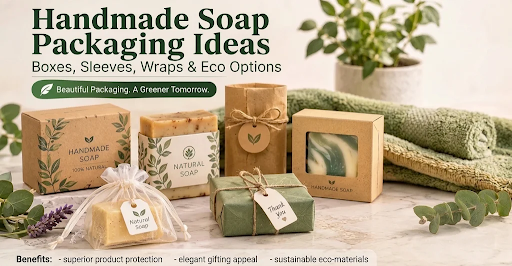
The good news is that there are plenty of ways to package artisan soap without relying on expensive or overly complicated designs. From Custom Soap Boxes and handmade soap sleeves to paper wraps, belly bands, window packaging, and reusable gift containers, each format offers different benefits.
This guide explores creative Handmade Soap Packaging Ideas, compares materials and packaging styles, and explains how small businesses can create professional, attractive, and more sustainable packaging.
Quick Answer: What Is the Best Packaging for Handmade Soap?
The best packaging depends on the soap’s formula, moisture sensitivity, storage requirements, selling channel, and brand positioning.
- Kraft soap boxes: A practical option for rustic, natural, and artisan branding.
- Soap sleeves and belly bands: Suitable when you want to display part of the bar while keeping branding simple.
- Paper wraps: Useful for affordable, minimalist, and gift-inspired presentation.
- Window soap boxes: Allow customers to see the product without removing the packaging.
- Custom printed soap boxes: Provide more space for branding, product information, and retail presentation.
- Gift boxes and fabric pouches: Add a premium or reusable presentation for gift sets.
For a small soap business, a good starting point is a properly sized paperboard box or sleeve with clear branding. Choose the final material and any inner protection according to the soap formula and storage conditions.
10 Creative Handmade Soap Packaging Ideas for Every Brand
The most effective soap packaging design is not necessarily the most expensive. It is the one that suits the product, communicates the brand’s personality, and makes the soap easy to identify and handle.
Here are ten practical soap packaging ideas for artisan makers and growing businesses.
1. Kraft Soap Boxes for a Natural, Rustic Look
Kraft soap boxes are a popular choice for handmade brands that want a simple, earthy appearance. Their natural brown surface works well with botanical illustrations, black typography, ingredient-inspired colors, and minimalist logos.
You can use kraft packaging for lavender, oatmeal, charcoal, honey, herbal, and other artisan soap collections.
Design ideas:
- Use a one-color logo for a clean appearance.
- Add botanical illustrations or small ingredient icons.
- Include a short product description on the side panel.
- Use a small window when product visibility is important.
- Choose a suitable paperboard grade for the bar’s weight and handling needs.
Kraft packaging can support a rustic brand identity, but the material should still be selected according to the soap’s oils, moisture behavior, and storage conditions.
Explore Kraft Soap Boxes for a natural packaging direction, or read our guide to what Kraft boxes are and how they are used.
2. Handmade Soap Sleeves for Minimalist Packaging
Soap sleeves are paperboard bands that wrap around part of a soap bar instead of enclosing the entire product. They are useful when you want to show the soap’s color, texture, or decorative design.
A sleeve can include the brand name, soap variety, scent, weight, and other relevant product details. It also gives small businesses a simple way to create a consistent look across multiple soap varieties.
Design ideas:
- Use a wide center panel for the brand logo.
- Leave the sides or ends open to show the soap.
- Add a color strip for each fragrance.
- Use textured or uncoated paper for an artisan feel.
- Include a small ingredient or product-information panel.
Sleeves may use less material than a fully enclosed box, but they offer less overall protection. Consider an appropriate inner wrap or another protective format if the product needs additional coverage.
See Custom Printed Soap Sleeves for a packaging option that combines a visible soap bar with branded information.
3. Soap Belly Bands for Affordable Branding
A belly band is a narrow strip of paper or cardstock wrapped around the center of a soap bar. It is similar to a sleeve but is generally designed to cover a smaller area.
This format works especially well for small-batch businesses that want to keep packaging costs manageable while giving every bar a recognizable brand identity.
Ways to customize belly bands:
- Print the soap name and fragrance on the front.
- Add a logo and brand tagline.
- Use different colors for individual product varieties.
- Include a QR code that leads to the brand website.
- Choose a simple die-cut or folded design.
Belly bands are particularly useful when the appearance of the soap itself is part of the selling point. They do not fully enclose the bar, so they may need additional protection depending on the product and sales environment.
4. Paper-Wrapped Soap Packaging for a Handmade Feel
Paper wrapping is one of the simplest ways to package handmade soap. A sheet of suitable paper can be folded around the bar and secured with a sticker, label, or branded seal.
It is a flexible option for businesses that produce limited batches or regularly introduce seasonal soap varieties.
Paper wrap ideas include:
- Natural kraft paper with a stamped logo.
- White paper with minimalist black typography.
- Printed botanical wrapping paper.
- Recycled-paper wraps with a branded sticker.
- Colored paper that matches the soap’s fragrance or ingredients.
Make sure the selected paper is suitable for contact with the product and its storage conditions. If the soap contains oils that may transfer to the outer wrap, consider a suitable grease-resistant inner layer.
For more inspiration, see our guide to handmade soap boxes for natural soap brands.
5. Window Soap Boxes to Show the Product
Window soap boxes are a useful choice when the soap’s color, shape, texture, or decorative details are important to the purchase decision.
A die-cut opening allows customers to view part of the bar while the rest of the package provides space for branding and product information.
Window box design ideas:
- A small rectangular window on the front.
- A circular opening with a clean border.
- A botanical or leaf-shaped die-cut.
- A wide display window with a printed frame.
- A transparent window combined with a minimalist label.
The window material and construction should be considered as part of the overall packaging design. If your brand wants to minimize plastic, ask about material options and whether a window is necessary for the product.
Explore Window Soap Boxes and learn more about the benefits and limitations of window versus solid soap boxes.
6. Custom Printed Soap Boxes for Professional Retail Branding
Custom printed soap boxes help businesses create a consistent packaging identity across multiple product varieties. Unlike a simple wrap or belly band, a full box provides several panels for branding and product information.
You can use the front panel to communicate the brand and soap variety, while the side or back panels provide supporting details.
Printing and design options may include:
- Full-color brand artwork.
- Minimalist typography.
- Botanical or ingredient-inspired illustrations.
- Matte or gloss finishes.
- Embossed or debossed brand elements.
- Foil accents for selected premium collections.
Choose finishes according to your desired appearance, budget, and packaging material. A restrained design with clear typography can look just as professional as a more decorative box.
For a complete packaging approach, explore Bar Soap Boxes and our guide to custom bar soap boxes for retail.
7. Minimalist Soap Packaging for a Clean Brand Identity
Minimalist handmade soap packaging focuses on clarity rather than decoration. It uses limited colors, simple typography, generous white space, and carefully selected design elements.
This style is suitable for brands that want a modern, calm, and premium appearance.
Minimalist design tips:
- Use one or two main colors.
- Keep the logo easy to recognize.
- Avoid unnecessary graphics.
- Use consistent typography across the product range.
- Highlight the soap variety and key product details.
- Keep the layout organized and readable.
Minimalist packaging can work with kraft paper, white paperboard, or other suitable packaging materials. The important thing is to maintain consistency across all soap varieties.
8. Luxury Handmade Soap Packaging for Gift Collections
Luxury soap packaging is designed to make the product feel special before the customer even opens it. It can be useful for premium handmade collections, holiday releases, spa gifts, wedding favors, and bundled products.
Consider:
- Rigid-style gift packaging for selected premium sets.
- Magnetic or drawer-style gift boxes where suitable.
- Premium paperboard with refined printing.
- Foil-stamped logos or subtle embossing.
- Custom inserts to keep multiple soap bars organized.
- Coordinated tissue paper or paper-based gift wraps.
The design should reflect the product’s price and positioning. A premium finish is most effective when the box, printing, product presentation, and overall customer experience feel consistent.
For gift collections, explore Soap Gift Boxes and Custom Gift Boxes.
9. Fabric Pouches and Reusable Soap Packaging
Cotton, muslin, and other fabric pouches can provide a soft, gift-inspired appearance. Some customers may reuse the pouch for storage or other purposes after opening the soap.
Fabric packaging is particularly suitable for gift sets, travel collections, and limited-edition products. However, it may not provide the same barrier or protection as a properly selected paper or sealed inner package.
Ideas for fabric packaging:
- Cotton drawstring pouches with a printed logo.
- Muslin bags with a small product tag.
- Reusable fabric wraps for gift collections.
- Coordinated pouches for multi-bar sets.
- Natural cord or ribbon closures.
If you use fabric packaging, explain whether the pouch is reusable and provide practical care information when appropriate. Avoid calling it biodegradable or compostable unless the actual material and construction support that claim.
10. Handmade Soap Gift Packaging for Seasonal Collections
Gift packaging can turn individual soap bars into a coordinated product set. It is especially useful during holidays, weddings, birthdays, corporate gifting, and special events.
You can combine different scents, colors, and product sizes in one box to create a ready-to-gift collection.
Gift packaging ideas:
- Two- or three-bar soap gift boxes.
- Seasonal soap collections with coordinated artwork.
- Soap and bath-product gift sets.
- Personalized wedding-favor boxes.
- Gift boxes with paper dividers or inserts.
- Ribbon-accented boxes with branded labels.
Use an insert or divider when necessary to prevent bars from shifting and rubbing against each other. The packaging should also be sized to avoid excessive empty space.
For additional inspiration, explore our soap subscription packaging guide.
Eco-Friendly Handmade Soap Packaging: Materials and Practical Choices
Eco-friendly soap packaging is becoming an important consideration for businesses that want to reduce unnecessary packaging and communicate material choices more clearly.
However, a material should not be described as sustainable simply because it looks natural. Its environmental impact depends on its source, manufacturing, coatings, adhesives, inks, recyclability, and available disposal facilities.
Here are several materials and formats worth considering.
Kraft Paper and Paperboard
Kraft paper and paperboard are widely used for soap boxes, sleeves, labels, and wraps. They offer a natural appearance and can support different printing and finishing styles.
Depending on the specific grade and construction, paper-based packaging may be recyclable where local facilities accept it. Check for coatings, laminations, adhesives, and attached components that could affect disposal.
Recycled Paper Packaging
Recycled-content paperboard can be a suitable option for brands that want to use recovered paper materials. Ask suppliers for details about the recycled content and whether the finished packaging can be recycled in the markets where it will be sold.
Glassine and Grease-Resistant Paper
Glassine and other suitable specialty papers may be considered for inner wrapping when a soap bar needs additional separation from the outer box or sleeve.
The correct grade depends on the product’s oil content, moisture behavior, and storage conditions. Confirm suitability with the packaging supplier rather than assuming all paper wraps provide the same protection.
Fabric and Reusable Packaging
Fabric pouches can be reused by customers, which may extend their useful life beyond the original purchase. Their overall environmental value depends on material sourcing, production, washing, and actual reuse.
Biodegradable and Compostable Packaging
Biodegradable and compostable are not interchangeable terms. These claims should be supported by evidence relating to the complete packaging construction, including coatings, inks, adhesives, and any attached components.
For example, a paper box with a plastic laminate or mixed-material window may not be accepted in the same recycling or composting stream as an uncoated paperboard box.
The U.S. Federal Trade Commission advises businesses to qualify environmental claims and avoid broad, unsupported descriptions such as unqualified “eco-friendly” or “biodegradable.” Read the FTC’s Green Guides summary before making environmental claims on packaging.
A more responsible approach is to describe the specific attribute you can verify, such as the percentage of recycled content or the material used.
Soap Boxes vs. Sleeves vs. Paper Wraps: Which Should You Choose?
Different packaging formats serve different needs. A box provides more enclosure, a sleeve leaves more of the bar visible, and a paper wrap offers a flexible and often simple presentation.
| Packaging Type | Main Advantage | Main Limitation | Best Suited For |
|---|---|---|---|
| Full soap box | Encloses the bar and provides branding space | Uses more material than a narrow sleeve | Retail and shipping-ready presentation |
| Soap sleeve | Shows part of the product | Limited coverage and protection | Artisan and minimalist brands |
| Belly band | Simple, compact branding | Leaves most of the bar exposed | Small-batch and market sellers |
| Paper wrap | Flexible and easy to customize | May need an inner protective layer | Rustic and handmade presentation |
| Window box | Combines visibility with enclosure | Window construction affects material choices | Retail display |
| Gift box | Supports premium presentation and sets | Usually higher material and production cost | Gifting and multi-bar collections |
Are Soap Boxes Better Than Paper Wraps?
Soap boxes are generally more suitable when a product needs greater enclosure, stacking support, and a larger area for product information. Paper wraps may be better when the brand wants a simple, low-profile appearance and the soap does not require full enclosure.
Neither format is automatically better for every product. The decision depends on the soap’s condition, storage environment, sales channel, and packaging requirements.
For more detailed comparisons, read bar soap boxes versus soap sleeves.
How to Choose Packaging for Different Types of Handmade Soap
The soap-making method and finished product condition can influence packaging decisions. A package that works for one type of soap may not be suitable for another.
Cold-Process Soap
Cold-process soap generally needs an appropriate curing period before packaging. Once the bar is sufficiently cured and hardened, the maker can choose a sleeve, box, wrap, or another suitable format.
Avoid selecting packaging only for appearance. Consider the bar’s remaining moisture, oils, fragrance, and storage environment.
The Handcrafted Soap and Cosmetic Guild explains the basic soap-making process and how cold-process bars are handled after curing. See its guide to how soap is made.
Melt-and-Pour Soap
Melt-and-pour soap is made using a ready-made soap base. Depending on the formula and surrounding humidity, some bases may attract moisture from the air and develop surface condensation.
Packaging should therefore be selected according to the manufacturer’s instructions and the product’s storage conditions. A suitable protective wrap may be needed before placing the bar in a decorative sleeve or box.
Wholesale Supplies Plus discusses packaging considerations for different handmade soap formats in its handmade soap packaging guide.
Natural and Botanical Soap
Soap bars containing visible botanicals, herbs, or decorative elements can benefit from packaging that highlights their appearance.
A sleeve or window box may allow customers to see these details. If the product needs more protection, use a suitable inner layer and test the finished package before production.
Premium and Gift Soap
Premium soap collections often benefit from coordinated boxes, printed sleeves, or gift packaging. Consider adding a divider or insert if several bars are packed together.
The final package should feel consistent with the soap’s quality and price point without making the design unnecessarily complicated.
DIY Handmade Soap Packaging Ideas for Small Businesses
Small soap businesses do not always need a fully custom printed box for every product. A simple packaging system can create a professional appearance while allowing the brand to test new scents and product collections.
Here are some affordable DIY options:
- Kraft wrap with a branded sticker: Wrap the bar in suitable kraft paper and secure it with a logo sticker.
- Printed belly bands: Use one standard band layout and change the scent name or color for each product.
- Rubber-stamped paper wraps: Apply a consistent logo stamp to plain paper for a handmade appearance.
- Simple paper sleeves: Use one sleeve size for bars with similar dimensions and update the product information.
- Seasonal labels: Create limited-edition labels for holidays without redesigning the entire package.
- Coordinated gift sets: Combine multiple bars in a suitably sized box with paper dividers.
How Can Small Businesses Keep Soap Packaging Affordable?
Start with a limited number of packaging sizes and designs. Use a consistent layout across different scents, and change only the product name, color, or small graphic elements.
Compare the total cost of each packaging format, including the box or wrap, printing, labels, assembly time, protective materials, and shipping. A cheaper package is not necessarily the most economical option if it causes product damage or requires extra handling.
If you are planning a new product range, review our guide to choosing the right soap packaging.
How to Make Handmade Soap Packaging Look Professional
A professional package does not need to be complicated. It needs to communicate the product clearly and create a consistent brand experience.
Use these practical design principles:
Keep Branding Consistent
Use the same logo treatment, typography, and main color palette across your soap collection. Customers should be able to recognize your brand even when the fragrance or product name changes.
Make Product Information Easy to Read
Keep the soap name, fragrance or variety, net weight, and relevant product details readable. Avoid overcrowding the front panel with too many design elements.
Use Color to Organize Product Varieties
A consistent color system can help customers distinguish lavender, citrus, charcoal, oatmeal, and other soap varieties. Use color as a supporting visual cue rather than the only way to identify a product.
Select Finishes Carefully
Matte finishes can create a restrained appearance, while gloss finishes may add brightness. Foil, embossing, and debossing can provide extra detail for premium collections.
Consider the budget and the material’s suitability before adding special finishes. You can learn more in our guide to packaging finishes.
Test the Package Before Ordering
Check the bar’s dimensions, fit, closure, label placement, and handling requirements. Test a sample under the conditions in which it will be stored, displayed, or shipped.
Important Labeling and Packaging Considerations for Handmade Soap
Packaging is also a place where customers look for product information. Before printing, confirm which details are appropriate for the product and the market where it will be sold.
Depending on the product and applicable rules, relevant information may include:
- Product identity and variety.
- Net quantity or weight.
- Brand or business details.
- Ingredients, where required.
- Directions or warnings, where applicable.
- Batch or traceability information, where relevant.
Regulatory requirements depend on the product’s composition and intended claims. In the United States, the FDA explains that a product qualifies as “soap” under its regulatory definition only when it meets specific composition, cleansing, and marketing conditions. Products promoted with cosmetic claims, such as moisturizing or deodorizing, may be regulated as cosmetics instead. Read the FDA’s Frequently Asked Questions on Soap.
Do not assume every product sold as handmade soap follows the same labeling rules. Check the requirements for your product category and target market before finalizing the artwork.
Frequently Asked Questions About Handmade Soap Packaging
1. What is the best packaging for handmade soap?
The best packaging depends on the soap formula, storage conditions, and brand style. Kraft boxes, paper sleeves, belly bands, and paper wraps are common choices. A full box offers more enclosure, while sleeves and belly bands leave more of the soap visible.
2. How do you package handmade soap attractively?
Choose a packaging format that fits the bar, then use consistent branding, readable typography, and a suitable color palette. A logo sticker, printed sleeve, kraft box, or small window can create a professional appearance without making the design too complicated.
3. What materials can be used to wrap handmade soap?
Depending on the product and storage requirements, options include kraft paper, paperboard, suitable specialty papers, glassine, and fabric pouches. Some soaps may also require an additional protective inner wrap. Confirm that the chosen material is suitable for the product.
4. Is Kraft paper good for handmade soap packaging?
Kraft paper is useful for rustic, minimalist, and natural-looking packaging. It can be used for wraps, sleeves, and boxes. However, the paper grade and construction should be selected according to the soap’s oil content, moisture behavior, and storage conditions.
5. How do you package handmade soap without plastic?
You can consider paperboard boxes, kraft wraps, paper sleeves, belly bands, and suitable paper-based labels. Whether the complete package is plastic-free depends on all its components, including coatings, adhesives, windows, and labels.
6. Are soap boxes better than paper wraps?
Soap boxes provide more enclosure and space for branding, while paper wraps offer a simple and flexible presentation. Boxes may be more suitable for retail handling or shipping, whereas wraps can work well for products that need less coverage. The right choice depends on the soap and its selling environment.
7. How can small businesses package handmade soap affordably?
Use a small range of standard packaging sizes, print consistent designs, and customize only the product name or scent information. Kraft wraps, belly bands, and simple sleeves can help control costs while maintaining a recognizable brand identity.
8. What is the best eco-friendly packaging for soap bars?
There is no single best option for every soap. Paperboard, recycled-content paper, kraft paper, and reusable fabric pouches may be worth considering. Evaluate the complete package, verify material claims, and check whether local recycling or composting facilities accept it.
9. Should handmade soap be wrapped before putting it in a box?
It depends on the soap formula, moisture behavior, and box material. Some bars can be placed directly in a suitable box, while others may need an inner wrap or liner. Test the actual soap under expected storage conditions before deciding.
10. How do you make handmade soap packaging look professional?
Use consistent branding, clear product information, suitable packaging dimensions, and a clean layout. Choose finishes that match the brand’s positioning, and test a physical sample before approving the final packaging.
Conclusion: Choose Handmade Soap Packaging That Reflects Your Brand
The best handmade soap packaging balances appearance, protection, practicality, and brand identity. Kraft soap boxes create a natural look, sleeves and belly bands offer simple branding, paper wraps support a handmade style, and window boxes help customers view the product. Gift boxes and premium finishes can also make selected collections feel more special.
For small businesses, the most effective approach is to begin with packaging that fits the soap and suits the selling channel. Test the material, confirm the product information, and keep the design consistent across different scents and collections. If you want to reduce packaging waste, verify the material and disposal claims rather than relying on broad environmental labels.
Whether you need simple sleeves, kraft boxes, window packaging, or custom printed designs, choose a format that supports both your product and your brand. Share your packaging requirements through our Request a Quote page to discuss suitable box styles, materials, printing, and quantities.
Ready to create a consistent packaging range for your soap collection? Explore the available options and request custom soap packaging based on your bar dimensions, preferred style, and order quantity.
References
- Federal Trade Commission: Environmental Claims and Green Guides
- U.S. Food and Drug Administration: Frequently Asked Questions on Soap
- Handcrafted Soap and Cosmetic Guild: How Soap Is Made
- Wholesale Supplies Plus: Handmade Soap Packaging Ideas
Packaging recommendations depend on the soap formula, product condition, storage environment, and applicable market requirements. Test the finished package before approving a production order.
Explore More Handmade Soap Packaging Options
Every soap collection has different packaging needs. If you are developing a natural soap range, explore our guide to organic soap packaging ideas for your brand and discover more soap packaging ideas for different product styles.
For individual bars, consider Handmade Soap Boxes and Black Soap Boxes for different branding directions. You can also compare the full range of custom soap packaging solutions or explore retail packaging options for products sold in stores.
If you are creating a coordinated gift collection, our Custom Gift Boxes category offers another packaging direction. Share your preferred box style, soap dimensions, material, printing requirements, and order quantity through our custom soap packaging quote form to discuss a suitable solution.