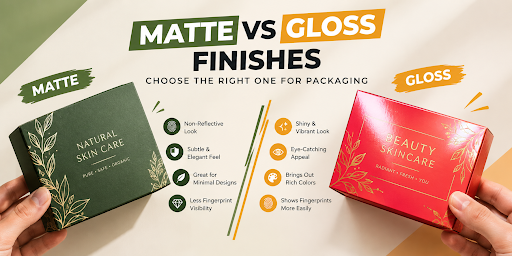
Choosing between matte and gloss packaging can change how a product looks, how its colors appear, and how customers perceive a brand. Although both finishes can be used on custom printed boxes, they create different visual effects and have different practical considerations.
Matte packaging has a low-reflection, understated appearance, while gloss packaging has a shiny surface that reflects more light. The right choice depends on your product, artwork, target audience, handling requirements, budget, and overall brand identity.
Quick answer: Matte packaging is often a good fit for minimalist, sophisticated, or understated branding, while gloss packaging can suit colorful designs that benefit from shine and strong visual contrast. Neither finish is universally better. Both can improve the appearance of printed packaging, but actual scuff resistance, fingerprint visibility, and protection depend on the specific coating or lamination and the material beneath it.
For brands developing custom boxes, the finish should complement the packaging structure and artwork rather than be selected in isolation. Businesses can explore custom packaging options from Bluebird Packaging when planning a branded box.
What Is the Difference Between Matte and Gloss Packaging?
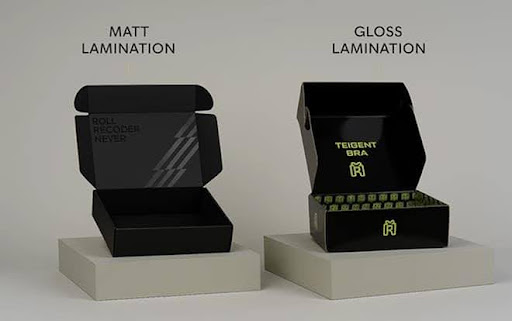
Matte and gloss are surface finishes used to change the appearance of printed packaging. Matte surfaces have relatively little shine and diffuse reflected light, while gloss surfaces reflect more light and create a shiny appearance.
These terms can refer to finishes produced through different coatings or laminations. The exact visual effect and performance depend on the finishing material, printing process, substrate, and manufacturing quality.
| Feature | Matte packaging | Gloss packaging |
|---|---|---|
| Surface appearance | Soft, subdued, low-reflection | Shiny, reflective, polished |
| Visual style | Often understated or sophisticated | Often bold, bright, and attention-grabbing |
| Light reflection | Lower | Higher |
| Color appearance | Can look softer or less reflective | Can make colors appear more vivid |
| Fingerprint visibility | Fingerprints may be less noticeable on some matte surfaces, but oils can still show | Fingerprints may be noticeable on some glossy surfaces |
| Glare | Generally lower | Generally higher |
| Scuff resistance | Depends on the coating; some matte finishes scuff or burnish visibly | Depends on the coating; gloss may show scratches or surface marks |
| Photography | Often easier to photograph with less reflected glare | Reflections may need to be managed |
| Common applications | Premium retail, cosmetics, gift boxes, minimalist designs | Colorful retail cartons, promotional boxes, vibrant graphics |
| Cost | Depends on material and finish specification | Depends on material and finish specification |
Important: Matte does not automatically mean more durable, and gloss does not automatically mean more protective. The performance of the actual finish matters more than the name alone.
What Is Matte Finish Packaging?
Matte finish packaging has a relatively non-reflective surface. Instead of creating a strong shine, it gives printed packaging a softer visual appearance that can complement restrained layouts, muted colors, textured designs, and premium branding.
Matte finishes are used on various packaging formats, including folding cartons, rigid boxes, cosmetic packaging, gift packaging, and other printed boxes. Their suitability depends on the material and finishing process.
Benefits of matte packaging
1. A restrained visual style
A matte finish can support a clean, understated design. It is often considered for brands that use minimalist graphics, neutral palettes, simple typography, or subtle visual details.
2. Less reflected glare
Because matte surfaces generally reflect less light directly, printed details may be easier to view under bright lighting than on a highly glossy surface. Actual readability still depends on contrast, font size, and print quality.
3. A useful background for selected design details
Matte surfaces can create visual contrast with metallic foil, embossing, debossing, or spot UV effects, provided the chosen materials and processes are compatible.
4. A tactile design opportunity
Some matte coatings and laminations produce a smooth, velvety, or soft-touch feel. These are specific finishing options rather than a property of every matte surface, so confirm the finish sample before ordering.
Potential drawbacks of matte packaging
- Some matte surfaces can show oily fingerprints, rubbing, or visible burnishing.
- Dark matte packaging may reveal scuffs or handling marks depending on the material.
- A matte surface may not produce the shiny, high-impact look desired for certain colorful designs.
- Some specialty matte or soft-touch finishes can add cost.
When should you choose matte packaging?
Matte can be a suitable choice for:
- Premium gift boxes and luxury product packaging.
- Minimalist skincare and cosmetics brands.
- Subscription boxes with a restrained visual identity.
- Business gifts and promotional kits.
- Packaging that combines a soft-looking surface with contrasting foil or spot UV.
For premium box structures, consider exploring custom rigid boxes and luxury rigid boxes.
What Is Gloss Finish Packaging?
Gloss finish packaging has a shiny surface that reflects more light. It can make printed graphics look bright and polished, and it is often chosen for colorful packaging intended to attract attention on shelves or in product photographs.
Gloss finishes can be used on many types of printed boxes, but the final appearance depends on the coating or lamination, substrate, artwork, and lighting.
Benefits of gloss packaging
1. Bright visual presentation
Gloss can make colors appear more vivid or saturated because the reflective surface changes how light interacts with the printed design. The exact effect varies with the ink, substrate, and finish.
2. Strong contrast for colorful artwork
Brands with bold graphics, vibrant colors, photographic imagery, or high-energy designs may find gloss suitable for their packaging.
3. A polished, shiny appearance
Gloss can complement products that use a bright, sleek, or energetic visual identity. It may also work well for promotional packaging that needs to stand out in a busy retail environment.
4. Potential surface protection
Some gloss coatings and laminations provide resistance to certain forms of moisture, abrasion, or handling. However, protection varies by product specification; a gloss finish alone is not a guarantee of water resistance or durability.
Potential drawbacks of gloss packaging
- Reflections can create glare under bright lights or in photographs.
- Fingerprints and surface marks may be visible on some glossy finishes.
- Scratches can be noticeable depending on the finish and color.
- The shine may not suit every minimalist or understated brand identity.
When should you choose gloss packaging?
Gloss can be worth considering for:
- Colorful retail product boxes.
- Promotional packaging and product launches.
- Consumer products with vibrant graphic designs.
- Printed packaging where a shiny appearance is part of the brand concept.
- Designs that benefit from strong visual contrast.
For relevant formats, explore custom retail boxes and custom printed packaging options.
Matte vs Gloss Lamination: How Do They Work?
Lamination is one method of applying a finishing layer to printed material. Matte and gloss laminations use different surface characteristics to create their respective appearances.
Other finishes, including coatings, can produce similar visual effects. The specific finishing method should be confirmed with the packaging manufacturer.
Matte lamination
Matte lamination creates a low-shine surface over the printed material. It is often selected when the design calls for a softer appearance or reduced reflection.
Gloss lamination
Gloss lamination creates a more reflective surface. It can enhance the shiny appearance of printed artwork and may offer certain forms of surface protection depending on the laminate specification.
Are matte and gloss lamination equally durable?
Not necessarily. Durability depends on the specific finishing material, its thickness and formulation, the substrate, the printing process, and how the package is handled.
If the packaging will be frequently handled, shipped, or stacked, ask your supplier about scuffing, scratching, cracking at folds, and other performance considerations. A physical sample is often more informative than the finish name alone.
Which Finish Makes Packaging Look More Premium?
Neither matte nor gloss automatically looks more premium. The perceived quality depends on the design, product category, material, construction, print execution, and customer expectations.
Matte is often associated with restrained, minimalist, or understated design. Gloss can look premium too, especially when used intentionally with high-quality printing, strong graphics, or a polished product concept.
Consider the following examples:
- Skincare: A matte surface may support a calm, minimalist brand identity.
- Luxury gifting: Matte rigid boxes combined with foil or carefully placed spot UV can create contrast.
- Bright consumer products: Gloss can complement bold colors and energetic graphics.
- Retail products: Either finish can work, depending on shelf conditions and brand guidelines.
- E-commerce packaging: Choose the finish based on appearance, handling performance, cost, and the unboxing experience.
Rather than choosing based only on what looks expensive, match the finish to the brand’s intended personality and the conditions the package will face.
Matte vs Gloss Packaging for Different Industries
Cosmetics and skincare
Cosmetics packaging often relies on consistent branding, legible product information, and visual presentation. Matte can complement neutral palettes and understated designs, while gloss may suit vibrant graphics and bold colors.
The package’s size, structure, and print quality are just as important as the surface finish. Explore cosmetic boxes when evaluating packaging formats for beauty products.
Luxury and gift packaging
Rigid boxes can support a premium presentation with either finish. Matte is often paired with foil stamping or embossing, while gloss can be used for a brighter, more reflective look.
The overall result depends on the board, wrap material, artwork, edges, inserts, and finish quality—not just the surface shine.
Food and bakery packaging
The right finish depends on the package’s intended use and whether the material is suitable for the product and its food-contact requirements. A finish should not be assumed safe for direct food contact merely because it is commonly used on printed boxes.
Explore custom bakery boxes for bakery-specific packaging formats.
E-commerce packaging
E-commerce boxes may be exposed to repeated handling, movement, friction, and stacking. A finish should therefore be evaluated alongside box construction, protective design, and the expected shipping journey.
For shipping-oriented packaging, consider mailer boxes.
Retail packaging
Retail packaging needs to fit the product and communicate the brand clearly. Gloss may suit bright, high-contrast graphics, while matte may support a restrained design. Both can work well when the layout, color contrast, and finish are planned together.
Can You Combine Matte and Gloss Finishes?
Yes. Some packaging designs combine a matte base with selective gloss effects, such as spot UV. This creates contrast between low-reflection and shiny areas.
For example, a box may have a matte surface with a glossy logo, pattern, or selected graphic. The effect can make certain details more noticeable without making the entire package highly reflective.
Other options may include:
- Matte lamination with foil stamping.
- Matte surfaces with embossed lettering.
- Matte backgrounds with spot UV graphics.
- Gloss surfaces with selected textured or raised elements, where the production process supports them.
The available combinations depend on the material and manufacturer. Ask for a sample or proof to verify the appearance before approving the full production run.
How to Choose the Right Packaging Finish
Follow these steps before selecting matte or gloss packaging.
1. Start with your brand identity
Decide whether your brand should look minimalist, natural, premium, vibrant, playful, or bold. The finish should reinforce that identity rather than compete with it.
2. Review the artwork
Large blocks of color, photographic images, small text, and subtle design details may appear differently under matte and gloss finishes. Review your actual artwork rather than relying on a general example.
3. Consider the lighting
If packages will be displayed under bright retail lights or photographed frequently, consider how reflected light may affect visibility. Matte generally reduces direct reflection, while gloss creates more shine.
4. Think about handling
Ask how the finish performs when rubbed, stacked, folded, shipped, or handled repeatedly. The exact finish specification matters more than the label “matte” or “gloss.”
5. Set a realistic budget
Compare equivalent specifications, including material, print method, coating or lamination, specialty effects, quantity, setup, and shipping. Do not assume one finish is always cheaper than the other.
6. Request a sample
A sample allows you to check color, shine, texture, print clarity, and the overall feel. It is especially helpful for dark colors, premium packaging, and designs with special finishing effects.
7. Confirm production compatibility
Not every finish is suitable for every board, fold, or print process. Ask the supplier to confirm that the finish will work with your chosen packaging structure.
How Much Does Matte vs Gloss Packaging Cost?
There is no universal price difference between matte and gloss packaging. Cost depends on the board or substrate, box dimensions, order quantity, print method, finish specification, special effects, tooling, and delivery.
For an accurate comparison, ask for two quotes based on the same box style, dimensions, material, artwork, quantity, and shipping destination—changing only the finish.
This helps isolate the actual cost difference instead of comparing two packages with different specifications.
Frequently Asked Questions
1. What is the difference between matte and gloss packaging?
Matte packaging has a low-reflection surface that creates a softer appearance, while gloss packaging has a shiny surface that reflects more light. The best option depends on the design, product, and desired brand presentation.
2. Is matte or gloss better for packaging?
Neither is universally better. Matte often suits understated or minimalist designs, while gloss can suit bright, colorful artwork. Both should be evaluated for appearance, handling, and cost.
3. Which packaging finish looks more premium?
Both can look premium. Matte is often used for restrained designs, while gloss can look polished and vibrant. Material quality, structure, artwork, and execution all influence the final result.
4. Does gloss lamination protect packaging?
Some gloss laminations provide resistance to certain types of moisture or surface abrasion, but protection varies by product. Ask the manufacturer for the specific performance characteristics rather than assuming all gloss finishes offer the same protection.
5. Is matte packaging more expensive than gloss?
Not always. Pricing depends on the finish specification, material, box design, print process, quantity, and production requirements. Compare quotes based on otherwise identical packaging.
6. Which finish is better for custom printed boxes?
The better finish depends on the artwork and brand identity. Matte may complement minimalist graphics, while gloss may enhance the visual impact of bright designs. Review a physical sample when possible.
7. Does matte packaging show fingerprints?
Some matte surfaces hide fingerprints better than glossy surfaces, but this is not universal. Oils, rubbing, and visible burnishing can affect matte materials, particularly darker ones.
8. Is gloss packaging better for bright colors?
Gloss can make printed colors appear more vivid or reflective, depending on the ink, substrate, and artwork. It is worth testing the actual design because color appearance varies across materials and finishes.
9. Which finish is best for luxury product packaging?
Either finish can work for luxury products. Matte combined with foil, embossing, or selective gloss effects is one option; gloss can suit a sleek or highly polished brand concept.
10. Can matte and gloss finishes be combined?
Yes. Some packaging designs use matte lamination with selective gloss effects, such as spot UV, to create contrast. Confirm compatibility and request a sample before production.
Final Thoughts
Matte vs gloss packaging is not a choice between a good finish and a bad one. It is a decision about how your packaging should look, feel, and perform in its intended environment.
Choose matte when a low-reflection, understated appearance supports your design. Consider gloss when shine and a vibrant visual effect suit your artwork. If you are unsure, compare samples using the actual colors and box structure planned for production.
For brands planning custom printed packaging, explore Bluebird Packaging and its custom rigid box options. You can also request a quote with your preferred box style, dimensions, quantity, artwork, and finish requirements.