

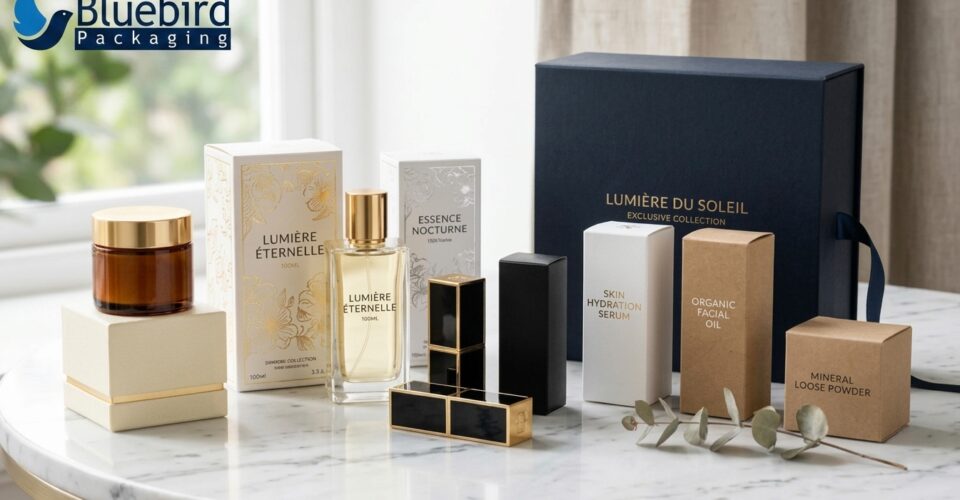
Choosing the right cosmetic packaging materials affects much more than how a box looks. The material influences product protection, printing quality, shipping weight, sustainability, cost, and how customers perceive your beauty brand.
For most cosmetic brands, three materials are especially useful to compare: cardboard/paperboard, Kraft, and rigid board. Each serves a different purpose. Cardboard is often the practical choice for retail cosmetics, Kraft works well for natural and sustainability-focused brands, while rigid boxes are better suited to luxury products, gift sets, and premium unboxing experiences.
The best material is not necessarily the most expensive one. It is the material that matches your product, brand positioning, sales channel, budget, and required level of protection.
Need Help Choosing the Right Cosmetic Packaging Material?
Not sure whether cardboard, Kraft, or rigid packaging is right for your cosmetic product? Bluebird Packaging can help you select the right material, box structure, size, printing, finishing, and inserts based on your product and brand requirements.
Which Cosmetic Packaging Material Is Best?
There is no single best material for every cosmetic product.
| Factor | Cardboard / Paperboard | Kraft | Rigid Board |
|---|---|---|---|
| Best for | Retail cosmetics & skincare | Natural & eco-focused brands | Luxury cosmetics & gift sets |
| Print quality | Excellent | Good, but colors can appear muted | Excellent |
| Structural strength | Moderate | Moderate to good | Very high |
| Weight | Lightweight | Lightweight | Heavier |
| Premium appearance | High with finishing | Natural and understated | Very high |
| Sustainability potential | High depending on stock/coating | Strong for paper-based designs | Depends on construction |
| Cost | Low to medium | Low to medium | Medium to high |
| Best use | Serums, creams, makeup, soaps | Organic skincare, natural product | Perfume, luxury skincare, gift set |
The right choice depends on what your packaging needs to accomplish rather than simply choosing the material with the highest perceived quality.
What Are Cosmetic Packaging Materials?
Cosmetic packaging materials are the substrates and boards used to manufacture boxes and other packaging for beauty, skincare, makeup, fragrance, and personal-care products.
Common options include paperboard, Kraft board, corrugated board, and rigid board.
Material selection should consider:
- Product size and weight
- Required protection
- Retail or e-commerce use
- Brand positioning
- Printing requirements
- Finishing requirements
- Shipping conditions
- Sustainability goals
- Order quantity
- Packaging budget
A small serum bottle sold in a retail store has very different packaging requirements from a luxury fragrance gift set shipped directly to a customer.
That is why material selection should happen alongside structural and design decisions rather than as an afterthought.
Cardboard Cosmetic Boxes: Versatile and Print-Friendly
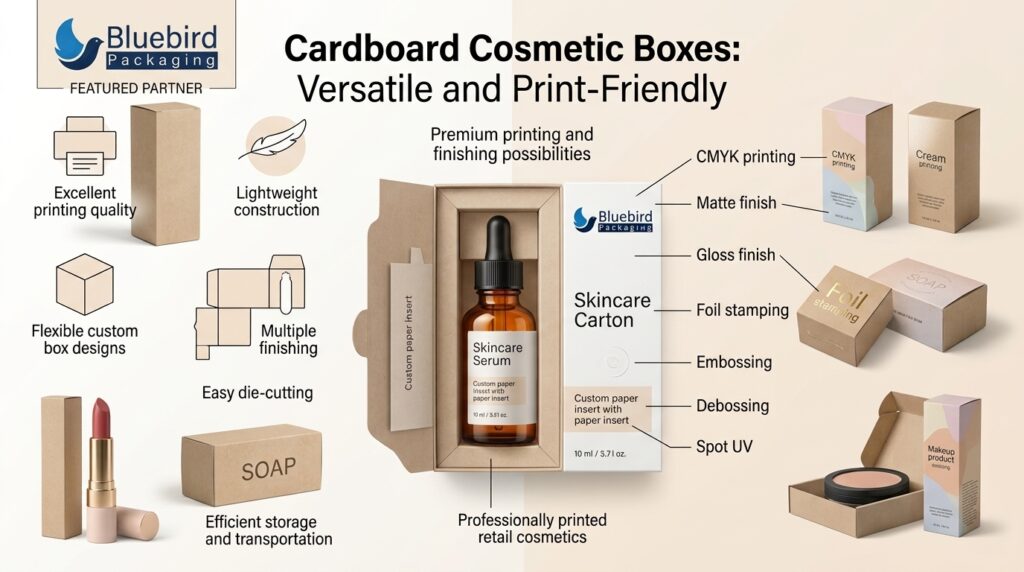
Cardboard or paperboard is one of the most widely used cosmetic box materials because it provides a strong balance between appearance, customization, weight, and cost.
Cardboard is one of the most versatile materials for custom cosmetic packaging, especially when brands need strong visual branding without adding unnecessary packaging weight.
Paperboard can be converted into folding cartons and other custom structures for products such as skincare bottles, creams, soaps, makeup, lip products, and beauty kits.
Advantages of Cardboard Packaging
Cardboard cosmetic boxes are particularly useful when strong branding and efficient packaging are important.
Benefits include:
- Excellent surface for detailed printing
- Lightweight construction
- Flexible custom box designs
- Easy die-cutting
- Wide range of finishing options
- Efficient storage and transportation
- Suitable for many retail products
Brands can use CMYK printing, specialty colors, matte or gloss finishes, foil stamping, embossing, debossing, and Spot UV depending on the selected board and production specifications.
When Should You Choose Cardboard?
Cardboard is a strong option when you need custom cosmetic packaging that looks professional without the added weight and cost of a rigid setup box.
For example, a skincare brand selling serums in retail stores may benefit from a printed folding carton with a custom insert. The box can communicate the brand identity while keeping the packaging relatively lightweight.
However, standard paperboard is not automatically the best choice for every product. Fragile glass containers may require inserts, stronger structures, or additional protective packaging. Bluebird Packaging provides you a large number of exciting customization options for the Cardboard Box Packaging.
Kraft Cosmetic Boxes: Natural and Sustainability-Focused
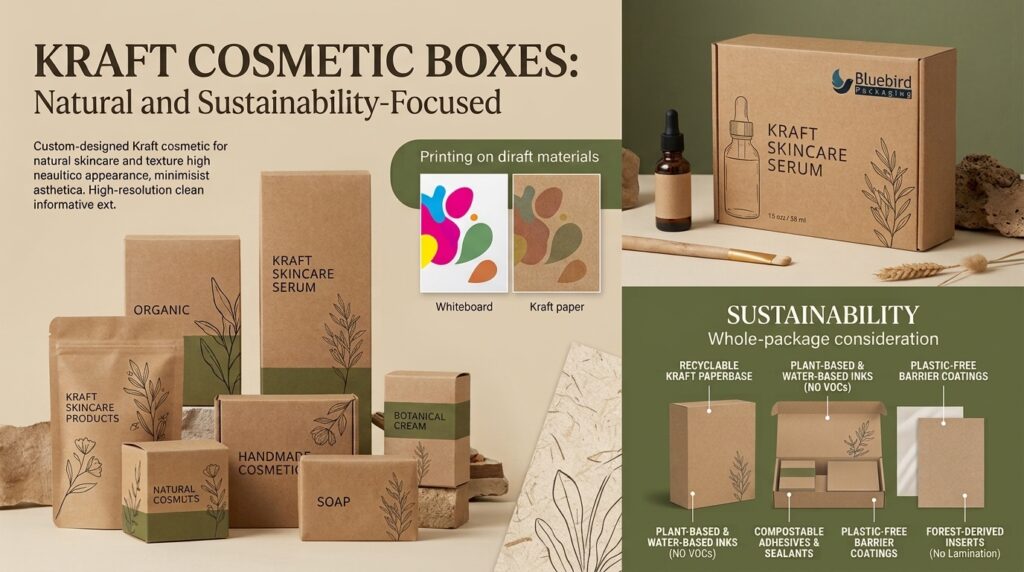
Kraft is often selected by brands that want packaging with a natural, understated appearance. Brands that want a natural, minimalist presentation can consider Kraft cosmetic boxes as an alternative to conventional white paperboard packaging.
The characteristic brown Kraft surface can communicate an organic or environmentally conscious brand identity without requiring elaborate graphics.
Kraft cosmetic boxes can work particularly well for:
- Natural skincare
- Organic beauty products
- Handmade cosmetics
- Soap products
- Botanical brands
- Minimalist packaging
- Eco-conscious product lines
What Makes Kraft Different?
One important difference is its appearance and printing behavior.
The natural brown surface can affect how printed colors appear. Bright colors may look less vibrant than they would on a white paperboard surface. Brands can either work with this natural appearance or specify suitable printing treatments depending on the desired result.
This is actually an advantage for some brands.
A minimalist skincare company may prefer muted printing, natural textures, and simple typography instead of bright full-color graphics.
Is Kraft Automatically More Sustainable?
Not necessarily.
Kraft can be a useful material for paper-based packaging, but sustainability depends on the complete package. Coatings, laminations, inks, adhesives, inserts, and other components can affect how easily packaging can be recycled.
Therefore, avoid choosing a material simply because it is marketed as “eco-friendly.” Look at the complete packaging construction and the recycling system relevant to your market.
Rigid Cosmetic Boxes: Built for Premium Presentation
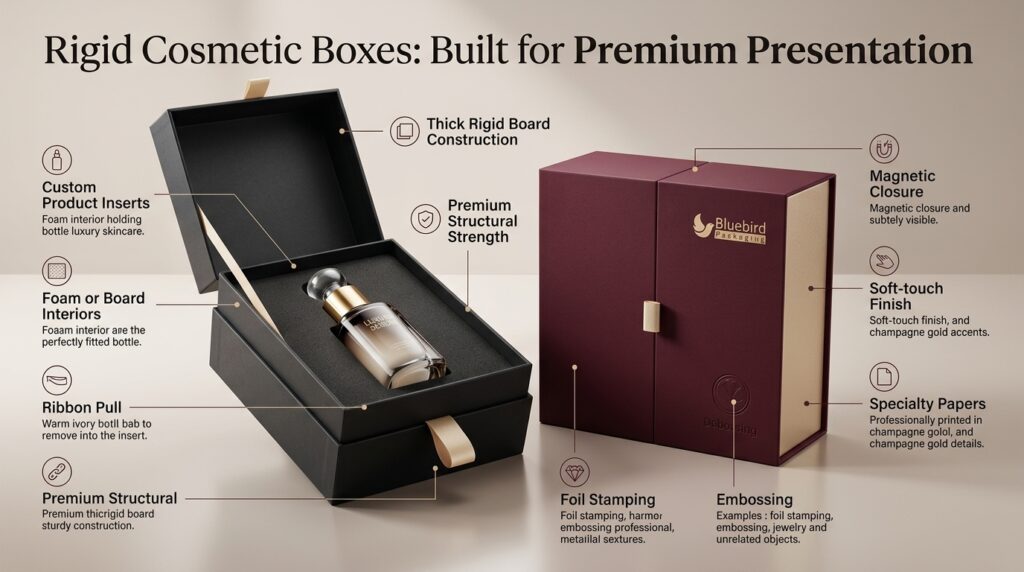
Rigid boxes take a different approach from folding cartons.
Instead of being designed primarily for lightweight folding construction, rigid boxes use a thick board structure that creates a sturdy setup box with a substantial feel.
This makes rigid cosmetic boxes particularly suitable for premium and luxury applications.
Common uses include:
- Luxury skincare sets
- Premium cosmetic collections
- Perfume packaging
- Beauty gift boxes
- Limited-edition products
- PR and influencer kits
- High-end product launches
Why Do Rigid Boxes Feel More Premium?
The physical structure contributes significantly to the experience.
A rigid box feels substantial when a customer picks it up. The structure also provides a strong foundation for premium finishing and specialized interiors.
Depending on the design, rigid packaging can include:
- Magnetic closures
- Ribbon pulls
- Custom inserts
- Foam or board interiors
- Foil stamping
- Embossing
- Debossing
- Soft-touch finishes
- Specialty papers
The goal is not simply to make the box heavier. The objective is to create a packaging experience that supports the positioning of the product.
For a luxury facial serum or fragrance gift set, this may justify the additional packaging investment. For a low-cost everyday cosmetic product, it may not.
Cardboard vs. Kraft vs. Rigid: Which Should You Choose?
The easiest way to choose between these packaging materials for cosmetics is to start with your product and customer.
Choose Cardboard If:
You need:
- Strong printed branding
- Lightweight packaging
- Flexible box structures
- Efficient retail packaging
- A balance between presentation and cost
- Custom sizes and shapes
Cardboard is generally the most versatile choice for mainstream cosmetic and skincare packaging.
Choose Kraft If:
You want:
- A natural visual identity
- Paper-based packaging
- Minimalist presentation
- An organic or artisanal appearance
- Packaging aligned with sustainability goals
Kraft is particularly effective when the material itself is part of the brand story.
Choose Rigid If:
You need:
- Premium presentation
- A substantial unboxing experience
- Luxury product positioning
- Gift-ready packaging
- Strong structural construction
- More elaborate interior presentation
Rigid packaging makes the most sense when the box itself contributes meaningfully to the perceived value of the product. For luxury skincare, fragrance, and gift sets, two-piece rigid setup boxes can provide a structured presentation while giving the product a more premium unboxing experience.
What About Cosmetic Packaging Costs?
Material is only one part of packaging cost.
The final cost of custom cosmetic packaging can also depend on:
- Box dimensions
- Material thickness
- Quantity
- Box structure
- Printing method
- Finishing
- Inserts
- Windows
- Custom tooling
- Production complexity
- Shipping requirements
A larger rigid box with custom inserts and multiple finishing processes will naturally have different production requirements from a small folding carton.
For this reason, comparing materials by price alone can be misleading.
A better question is:
What packaging specification gives your product the protection and presentation it needs without adding unnecessary cost?
Don’t Forget Box Size and Product Fit
Choosing the right material does not solve every packaging problem.
Box dimensions are equally important.
A package that is significantly larger than the product can require more material, increase shipping volume, and leave unnecessary movement inside the box.
On the other hand, packaging that is too tight may make filling difficult or put pressure on the product.
For cosmetics, the box should be developed around the actual product dimensions, including:
- Length
- Width
- Height
- Container shape
- Product weight
- Closure or cap
- Required insert
- Internal clearance
For fragile glass bottles, a properly designed insert can be more important than simply choosing a thicker outer material.
Printing and Finishing Can Change the Final Look
The same cosmetic packaging material can look completely different depending on its printing and finishing.
Common options include:
- Matte finish
- Gloss finish
- Soft-touch finish
- Foil stamping
- Embossing
- Debossing
- Spot UV
- Raised UV
- Custom interior printing
For example, a minimalist skincare brand may pair white cardboard with a matte finish and restrained typography.
A luxury fragrance brand might use a rigid box with soft-touch paper and foil accents.
A natural skincare company may deliberately keep Kraft’s natural texture visible instead of covering the surface with heavy graphics.
The important point is that finishing should support the brand strategy rather than simply adding every available effect.
Common Mistakes When Choosing Cosmetic Box Materials
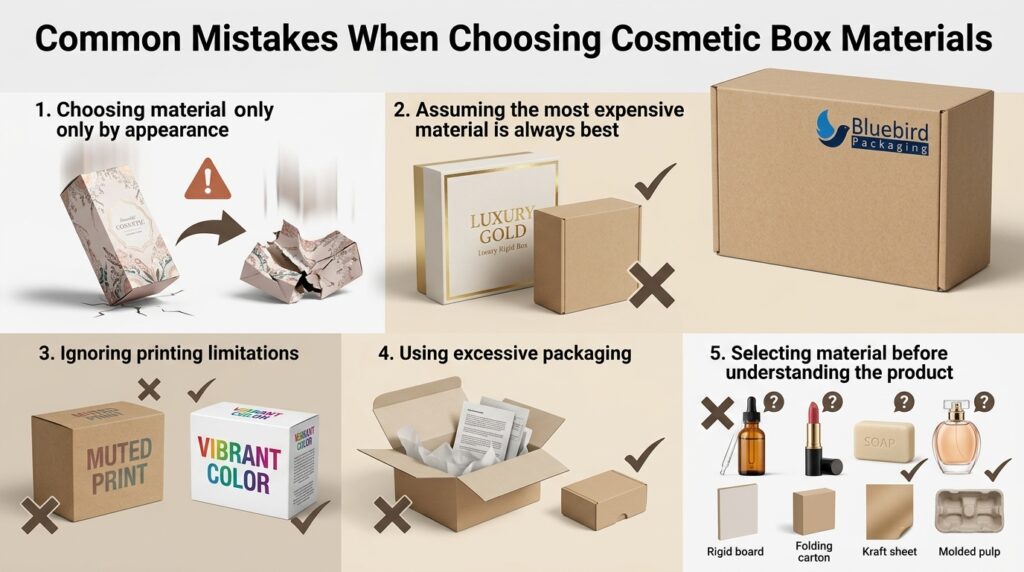
1. Choosing Material Only by Appearance
A box can look excellent in a digital mockup but perform poorly during transportation.
Consider strength, product weight, handling, and shipping conditions before approving the material.
2. Assuming the Most Expensive Material Is the Best
Rigid packaging is not automatically better for every cosmetic product.
If a lightweight folding carton provides sufficient protection and presentation, spending more on rigid construction may not provide a meaningful business advantage.
3. Ignoring Printing Limitations
Kraft’s natural surface can change how colors reproduce. If your brand depends on bright, highly accurate colors, discuss the printing requirements before selecting the substrate.
4. Using Excessive Packaging
More material does not always mean better packaging.
Oversized boxes, unnecessary inserts, or excessive finishing can increase cost and material use without improving the customer experience.
5. Selecting a Material Before Understanding the Product
The product should come first.
A glass serum bottle, lipstick, soap bar, fragrance bottle, and cosmetic gift set may all require completely different packaging specifications.
How to Choose the Right Cosmetic Packaging Material
Before placing an order, answer these seven questions:
- What product are you packaging?
- What are its exact dimensions and weight?
- Will it be sold in retail stores, online, or both?
- What level of protection does it require?
- How should customers perceive the brand?
- What printing and finishing are important?
- What quantity and budget are you working with?
Once these requirements are clear, material selection becomes much easier.
Everyday retail skincare → Cardboard
Natural or minimalist skincare → Kraft
Luxury skincare, fragrance, or gift sets → Rigid
Fragile e-commerce cosmetics → Consider a protective structure or corrugated shipping solution alongside the retail box.
How Bluebird Packaging Can Help
Choosing between cardboard, Kraft, and rigid board is only the first step. Your final packaging also needs the right dimensions, structure, printing, finishing, and internal features.
Bluebird Packaging provides custom packaging solutions that can be developed around your product specifications and branding requirements. Depending on the project, packaging can incorporate custom sizes, printing, inserts, windows, structural options, and premium finishes.
You can explore Bluebird’s Custom Cosmetic Boxes and related packaging solutions when planning packaging for skincare, makeup, beauty products, and other personal-care applications.
Questions and Answers about Cosmetic Packaging Materials
What is the best material for cosmetic packaging?
No one material is the best. Kraft is ideal for minimalist and natural brands. Cardboard, on the other hand, is more versatile, print-friendly and suitable for all types of branding.
Is Kraft better than cardboard for cosmetic packaging?
Both are equally good. When a paper presentation and natural look are desired, Kraft can be a good choice. Cardboard is more flexible for printing with bright colors and detail, as well as conventional retail packaging.
Are rigid boxes suitable for cosmetics?
Yes. Rigid boxes are commonly suitable for luxury skincare, fragrance, beauty gift sets, premium collections, and products where the packaging experience is an important part of the brand.
Which cosmetic packaging material is most affordable?
The cost depends on the material, size and quantity of packaging, as well as other factors such a printing, finishing or structure. Kraft and cardboard structures that are lightweight can be cheaper than rigid packaging. However, a complete comparison of the packaging specifications is needed to make an accurate comparison.
Can cosmetic boxes be made from recycled or recyclable materials?
Recyclability of paper-based packaging is possible, but it depends on all the components, such as coatings and laminations. Do not just evaluate the board. Always consider the entire package.
Can I customize the size of cosmetic packaging boxes?
Yes. Yes. The correct sizing will improve the product’s fit, and reduce unnecessary packaging.
What cosmetic packaging material is best for luxury brands?
Rigid board is often a strong choice for luxury packaging because it provides a substantial structure and supports premium finishes and custom interiors. However, a high-quality paperboard carton can also create a luxury appearance when the design and finishing are well executed.
Final Takeaway
Best cosmetic packaging material is determined by product, brand positioning and customer experience. Also, it depends on the protection needs, channel of sale, budget, and sales channel.
Packaging for retail cosmetics can be printed on cardboard. Kraft works well for brands seeking a natural, minimalist, or sustainability-focused presentation. Boxes that are rigid work best for luxury items, gift sets and premium experiences.
Asking which material offers the best combination of functionality, durability, protection, and price is better than asking what material you should use.
This approach will help you design cosmetic packaging that is attractive on the shelves, works well in transport, and fits your business.
Need help choosing the right material for your cosmetic packaging? Contact Bluebird Packaging about your product size, box structure, material, finishing, and quantity requirements.




3 Comments
[…] that want to understand their packaging material options can explore a detailed guide to cosmetic packaging materials before selecting the right […]
[…] a deeper comparison of common cosmetic materials, read Bluebird’s cosmetic packaging materials guide, which explores the differences between cardboard, Kraft, and rigid […]
[…] a broader comparison of cosmetic materials, Bluebird’s guide to cosmetic packaging materials explains how cardboard, Kraft, and rigid materials differ in appearance, protection, […]