
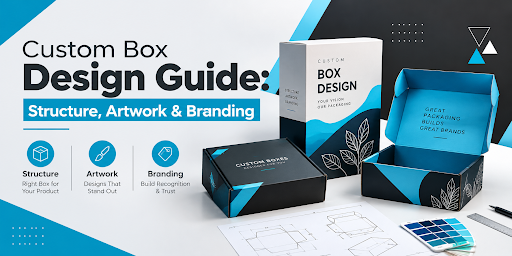
Custom box design is the process of creating packaging around a product’s dimensions, protection requirements, brand identity, and customer experience. It includes selecting the box structure, choosing materials, preparing the dieline, arranging artwork, and deciding how the finished package will be printed and assembled.
A well-designed box should do more than look attractive. It should fit the product, protect it during handling, communicate essential information, support efficient packing, and reflect the brand consistently.
For businesses planning custom packaging, the most effective approach is to treat structural design and graphic design as connected but separate tasks. A visually impressive design can still fail if the box does not fit the product, while a functional structure may not communicate the brand effectively without thoughtful artwork.
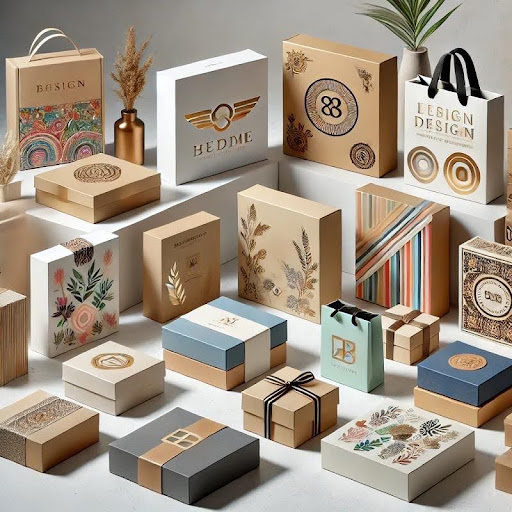
Quick answer: To design a custom packaging box, define your product and target customer, choose a suitable box style and material, confirm the dimensions, prepare an accurate dieline, create print-ready artwork, and review a proof or physical sample before production. The final design should balance product protection, branding, usability, production cost, and the customer’s unboxing experience.
Businesses looking for custom box options can explore Bluebird Packaging to review available packaging styles and discuss project-specific requirements.
What Is Custom Box Design?
Custom box design is the development of a packaging structure and visual appearance for a specific product or brand. Instead of relying entirely on a standard off-the-shelf box, a business can tailor the package’s dimensions, opening style, material, printing, finishes, and internal components.
Custom box design usually involves two major areas:
- Structural design: Determines the box’s shape, dimensions, folds, closures, material construction, and fit.
- Graphic design: Determines the logo placement, typography, colors, images, product information, and visual hierarchy.
These two areas need to work together. For example, a logo should not sit across a fold where it becomes difficult to read, and important product information should not be placed on a panel that is hidden when the box is assembled.
Custom packaging may be used for retail products, e-commerce shipments, subscription boxes, cosmetics, food products, gifts, electronics accessories, and promotional kits. The best structure depends on the product’s size, weight, fragility, display requirements, and intended use.
For a broader introduction to packaging visuals and layout, explore this guide to packaging design.
Why Is Custom Box Design Important?
Packaging is often one of the first physical interactions a customer has with a product. A thoughtfully designed box can help communicate what the product is, make it easier to handle, and reinforce the brand’s visual identity.
1. Builds a Consistent Brand Identity
A consistent combination of logos, typography, colors, imagery, and messaging helps customers recognize a brand across different products and channels.
Custom box design allows a business to apply its brand identity to the physical package rather than relying on a plain container alone.
2. Helps Protect the Product
The box structure, material, dimensions, and internal fit affect how well a package performs during storage, handling, and shipping.
A properly designed package can reduce unnecessary movement and provide appropriate protection. Fragile or high-value products may also require inserts, dividers, cushioning, or testing under expected shipping conditions.
3. Improves Product Presentation
Packaging can help a product look organized and professional on a retail shelf, in a gift set, or when delivered to a customer.
For premium products, details such as rigid construction, carefully aligned artwork, specialty finishes, and fitted inserts may support the intended presentation.
4. Supports Marketing and Product Information
A box provides space for branding, product details, usage instructions, required labels, and promotional messages. Good information hierarchy helps customers find important details without making the design feel crowded.
5. Can Improve Packing Efficiency
A suitable structure can be easier to assemble, load, close, and store. Accurate dimensions and a practical closure may help a business streamline packing, particularly when orders are processed repeatedly.
6. Creates a More Considered Unboxing Experience
For direct-to-consumer products, gifts, and subscription boxes, the way a package opens can influence the customer’s experience. Internal arrangement, opening sequence, printed messages, and product presentation can all be considered during the design process.
However, extra packaging components should serve a clear purpose. Decorative elements that add cost or waste without improving protection or presentation may not be worthwhile.
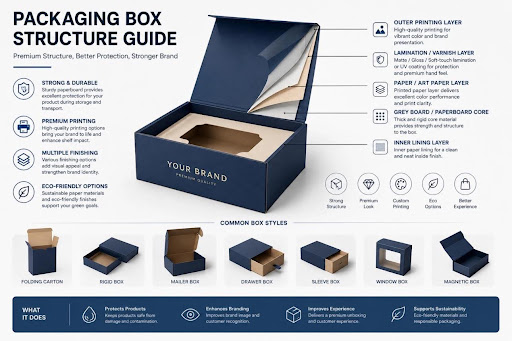
What Are the Main Elements of an Effective Custom Box Design?
An effective box design balances appearance, function, and manufacturability. Before artwork begins, identify the elements that will determine whether the finished package works as intended.
| Design element | What it controls | Key consideration |
|---|---|---|
| Dimensions | Internal fit and external size | Product measurements and clearance |
| Box structure | Shape, opening, and closure | Protection, assembly, and usability |
| Material | Rigidity, appearance, and performance | Product weight and handling conditions |
| Artwork | Visual presentation and information | Readability, branding, and print setup |
| Typography | Hierarchy and legibility | Type size, contrast, and viewing distance |
| Color | Brand recognition and mood | Print process and material appearance |
| Finishes | Surface look and feel | Durability, budget, and intended style |
| Inserts | Product positioning and separation | Fit, cushioning, and ease of removal |
| Sustainability considerations | Material use and end-of-life options | Actual construction and local recycling |
The best design does not necessarily include every possible feature. It includes the features that solve the product’s practical and branding needs.
Types of Custom Packaging Box Designs
Choosing the right structure is one of the first decisions in custom box design. Different styles serve different products, budgets, and handling requirements.
1. Folding Carton Box Design
Folding cartons are commonly made from paperboard and supplied flat before being folded into shape. They are widely used for many lightweight retail products.
They can accommodate printed artwork, product information, and selected finishes. Their suitability depends on the product’s weight, size, and protection requirements.
Common uses: Cosmetics, personal care products, small consumer goods, and retail cartons.
2. Corrugated Box Design
Corrugated boxes use a fluted paper layer between linerboards. Their construction can provide rigidity and cushioning when selected appropriately for the product and shipping conditions.
Design decisions may include board construction, box dimensions, closure style, internal protection, and print requirements.
Common uses: E-commerce shipping, distribution, and products requiring suitable transit protection.
3. Custom Mailer Box Design
Mailer boxes are designed for convenient packing and delivery. They may include self-locking closures, printed interiors, custom inserts, or branding on selected panels.
Common uses: Subscription boxes, direct-to-consumer products, promotional kits, and online orders.
Explore custom mailer boxes for a relevant box style.
4. Rigid Box Design
Rigid boxes use a more substantial board construction than typical folding cartons. They are frequently selected for premium presentation and gift packaging.
Design options may include magnetic closures, lift-off lids, drawer structures, wrapped paper, and custom inserts.
Common uses: Luxury gifts, jewelry, premium cosmetics, and presentation kits.
Explore custom rigid boxes for premium packaging options.
5. Custom Retail Box Design
Retail packaging needs to present the product clearly while fitting the requirements of shelves, displays, or retail handling. The design may include product windows, hanging features, printed product information, or distinctive shapes where suitable.
Common uses: Consumer products, accessories, personal care products, and retail merchandise.
See custom retail boxes for retail-focused packaging options.
6. Custom Gift Box Design
Gift boxes often focus on presentation, opening experience, and the arrangement of the contents. A gift box may use a rigid structure, printed sleeve, insert, or decorative finish depending on the product and budget.
Common uses: Seasonal gifts, promotional sets, branded gifts, and product bundles.
7. Custom Product Boxes with Inserts
Inserts can hold a product in position, separate multiple components, and improve presentation inside the box. They may be made from paperboard, corrugated board, foam, or other materials suitable for the application.
Common uses: Product kits, fragile items, multi-piece sets, and products with accessories.
The insert should be designed around the actual product rather than estimated dimensions alone.
How to Design a Custom Packaging Box: Step-by-Step Process
A clear design process reduces avoidable artwork errors and structural problems. The exact workflow varies by supplier and package type, but these steps provide a useful starting point.
Step 1: Define Your Product and Packaging Goals
Begin by documenting the product, its dimensions, weight, fragility, target audience, sales channel, and intended packaging purpose.
Ask yourself:
- Will the box be used for retail display, shipping, gifting, or storage?
- Does the product need internal protection?
- Is the box part of a premium brand experience?
- What information must appear on the packaging?
- Does the design need to accommodate accessories or multiple items?
These answers help determine the box style and material before visual design begins.
Step 2: Measure the Product Accurately
Measure the product’s length, width, and height. Include protruding components and consider how the product will be inserted and removed.
For multiple-item packaging, measure the complete arrangement, including dividers and protective inserts.
Do not assume that the internal dimensions and external dimensions of a box are identical. Material thickness and structural construction affect the finished package’s size.
Step 3: Select a Suitable Box Structure
Choose a structure that supports the product, intended use, and packing workflow. Consider how the box closes, how it opens, whether it ships flat, and whether it needs an insert.
At this stage, ask the supplier whether the selected style is feasible for the material and quantity you plan to order.
Step 4: Choose the Packaging Material
Material choice influences rigidity, print quality, appearance, cost, and performance.
Paperboard may suit many retail cartons, while corrugated board may be more appropriate for shipping applications. Rigid construction may be suitable for products requiring premium presentation.
The right choice depends on product requirements rather than appearance alone.
Step 5: Create or Obtain the Dieline
A dieline is a flat template that shows where packaging material will be cut, folded, and assembled. It acts as the structural guide for arranging the artwork.
A typical dieline may include:
- Cut lines.
- Fold or crease lines.
- Glue areas.
- Bleed areas.
- Safe zones.
- Panel boundaries.
The exact line colors and conventions depend on the supplier’s template. Always use the correct dieline for the chosen structure and follow the manufacturer’s instructions.
Step 6: Develop the Graphic Design
Once the structure is established, create the visual artwork. Place the logo, product name, supporting text, images, and other required elements on the appropriate panels.
Keep the design aligned with the brand’s existing visual identity. Avoid placing important content across folds, closures, glue areas, or other locations where it may be obscured.
Step 7: Prepare Artwork for Printing
Confirm the supplier’s requirements for file format, resolution, color mode, bleed, fonts, embedded images, and special finishing layers.
Do not assume every supplier uses the same artwork setup. Request a current template and production guidelines before finalizing the file.
Step 8: Review a Digital Proof or Physical Sample
A digital proof can help identify artwork placement, spelling, and layout problems. A physical sample can provide a better view of the actual size, structure, fit, material, and finish.
For packaging with inserts, complicated closures, or fragile products, a structural sample may be especially useful before approving a production run.
Step 9: Approve the Final Specifications
Before production, confirm the final dimensions, material, quantity, artwork, finishes, insert requirements, and delivery details in writing.
The approved specifications should match the proof or sample that was reviewed.
What Is a Packaging Dieline?
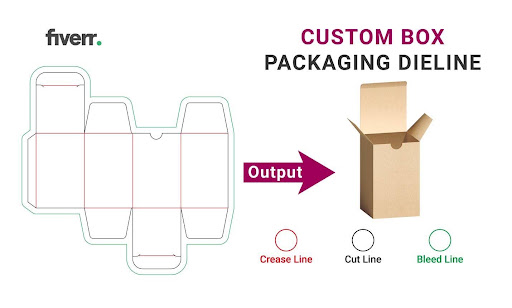
A packaging dieline is a flat template used to guide how a box is cut, folded, and assembled. It shows the panels and structural features that make up the finished package.
The dieline helps the designer understand which areas will be visible on the finished box and which areas will become folds, flaps, glue tabs, or internal panels.
Structural Design vs. Artwork Design
| Structural design | Artwork design |
|---|---|
| Defines the box’s shape and dimensions | Defines the printed visual appearance |
| Determines folds, closures, and assembly | Determines logos, colors, text, and imagery |
| Focuses on fit, usability, and performance | Focuses on branding, communication, and visual hierarchy |
| Uses the approved structural template | Places print-ready graphics onto that template |
| Must account for material thickness and construction | Must account for bleed, safe areas, and printing requirements |
Both are necessary for a successful custom packaging project. Artwork should be created on the correct structural template, not on an approximate box drawing.
Custom Box Artwork Design: Colors, Typography, and Graphics
Graphic design communicates the brand and helps customers understand the product. A strong layout should be attractive without making essential information difficult to read.
Choose a Clear Color Palette
Use brand colors consistently and consider how they will reproduce on the selected material. Screen colors may not appear exactly the same in print, so the printing method, substrate, and proofing process matter.
Use Readable Typography
The product name and key information should be easy to identify. Choose typefaces that suit the brand while remaining legible at the actual printed size.
Small text may become difficult to read when printed on textured materials or placed near folds.
Establish a Visual Hierarchy
Give the most important information the strongest visual emphasis. Depending on the product, that may be the brand name, product name, product variant, or key benefit.
Avoid competing headlines and excessive decorative elements that make the package confusing.
Use Images and Graphics Purposefully
Images should support the product’s positioning and fit the available panel space. Check image resolution and ensure that important visual elements are not clipped by folds or cuts.
Keep Branding Consistent
Use consistent logos, typography, colors, and visual conventions across related products. The design can vary by product while still looking like part of the same brand family.
For more ideas, explore packaging design and custom packaging.
Printing and Finishing Options for Custom Box Design
Printing and finishing affect how the design looks and feels. The right choice depends on the selected material, artwork, order quantity, budget, and intended presentation.
| Option | Typical purpose | Considerations |
|---|---|---|
| Digital printing | Suitable for many short-run or variable-print applications | Availability and cost depend on equipment and material |
| Offset printing | Often used for high-quality printed packaging runs | Setup and quantity can influence economics |
| Flexographic printing | Used for various packaging materials and production applications | Suitability depends on substrate and design |
| Matte finish | Reduces shine for a more subdued appearance | May affect scuff visibility depending on coating |
| Gloss finish | Adds shine and can enhance visual contrast | Reflections may affect readability in some lighting |
| Foil stamping | Adds metallic or specialty visual accents | Requires compatible artwork and production setup |
| Embossing or debossing | Creates raised or recessed design elements | Adds structural and production considerations |
| Spot UV | Applies a localized glossy effect | Works best when the effect is planned in the artwork |
Not every finishing option is available for every structure or material. Ask the supplier to confirm compatibility, cost, and artwork requirements.
Custom Box Design Ideas for Different Products
A useful packaging concept starts with the product and the customer experience—not with decoration alone.
1. Minimalist skincare boxes
Use a restrained color palette, readable typography, and clear product information. Keep the design consistent across product variants.
2. Premium gift packaging
Consider a rigid structure, fitted insert, and carefully chosen finish when the product’s positioning justifies the added cost.
3. Branded e-commerce mailers
Use the outer panels or interior printing to reinforce brand identity while maintaining a practical shipping structure.
4. Retail display packaging
Design for product visibility, easy access, stability, and the available shelf or counter space.
Sustainable Custom Box Design
Sustainable packaging design considers material use, product protection, shipping, reuse, and end-of-life handling. No single material or box style is automatically the most sustainable for every product.
Consider these principles when planning a box:
- Use appropriate dimensions: Avoid unnecessary empty space while leaving room for the protection the product requires.
- Select materials carefully: Ask about material composition and recycled content where relevant.
- Avoid unnecessary complexity: Extra components and mixed materials may complicate manufacturing or recycling.
- Design for the actual use case: A package that fails to protect a product may cause damage and replacement waste.
- Check local recycling conditions: Coatings, laminations, adhesives, windows, and contamination can affect whether a package is accepted.
The best design balances packaging performance with the business’s environmental goals and the capabilities of the local waste system.
Custom Box Design for Small Businesses
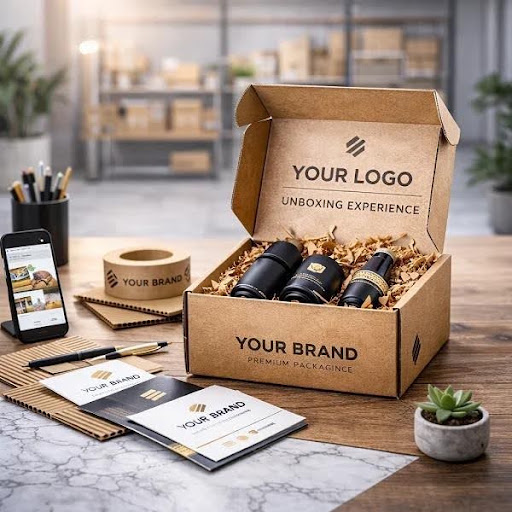
Small businesses often need packaging that looks professional without introducing unnecessary production complexity or expense.
Start by identifying the most important goals: product protection, brand presentation, easy assembly, manageable order quantities, or efficient shipping. Prioritize those requirements before adding specialty finishes or complex structures.
Practical tips include:
- Start with one box style that works for your main product.
- Use a consistent visual system across different product variants.
- Ask suppliers about available minimum quantities.
- Review the total quote, including setup, printing, inserts, and delivery.
- Request artwork guidance or a sample where available.
- Consider how easily the box can be packed and stored.
If you are exploring options for a growing brand, review packaging for small businesses and custom mailer boxes.
How Much Does Custom Box Design Cost?
Custom box design costs vary based on whether the project needs only graphic artwork or both structural engineering and artwork development. Production costs are separate and depend on the material, quantity, printing, finishes, tooling, inserts, and shipping.
The following factors commonly affect the overall budget:
- Complexity of the box structure.
- Need for a new dieline or structural prototype.
- Artwork development and revision requirements.
- Number of printed colors and selected printing method.
- Specialty finishes, windows, or inserts.
- Production quantity and setup requirements.
- Physical sampling and shipping.
When comparing quotes, ask which design services are included, how many revisions are available, whether the dieline is supplied, and whether production costs are itemized separately.
Common Custom Box Design Mistakes to Avoid
Even an attractive design can create problems if the production requirements are overlooked.
Designing Before Confirming the Dieline
An approximate template may not match the final structure. Obtain the correct dieline before placing the artwork.
Ignoring Material Thickness
Internal and external dimensions can differ. Confirm the supplier’s dimensional conventions and account for the actual material and construction.
Using Unreadable Text
Text that looks clear on a large monitor may be too small on the finished box. Check the artwork at the actual print size.
Placing Graphics Across Folds
Important text or logos placed across a fold may look misaligned after assembly. Review how the design appears on the assembled package.
Assuming Screen Colors Will Match Print
Screens and printed materials reproduce colors differently. Follow the supplier’s color specifications and review proofs when color accuracy is important.
Adding Finishes Without a Purpose
Special finishes can increase costs and production complexity. Use them where they support the product’s positioning or make important design elements easier to notice.
Skipping the Sample Review
A proof or sample can reveal fit, closure, readability, and assembly problems before full production. Confirm which sample options are available for your project.
Custom Box Design Checklist Before Production
Use this checklist before approving the final design.
Pre-production checklist
0 of 10 complete
- ☐ Product dimensions and fit confirmed
- ☐ Box style and closure selected
- ☐ Material and protection requirements reviewed
- ☐ Correct dieline received from supplier
- ☐ Artwork placed within safe areas
- ☐ Bleed and print specifications checked
- ☐ Logo, text, and images reviewed at print size
- ☐ Finishes and special layers confirmed
- ☐ Digital proof or physical sample reviewed
- ☐ Quantity, quote, and delivery requirements confirmed
Frequently Asked Questions About Custom Box Design
1. What is custom box design?
Custom box design is the process of creating a packaging structure and visual layout tailored to a product. It includes dimensions, materials, closures, dielines, artwork, printing, and finishing.
2. How do you design a custom packaging box?
Define the product’s dimensions and requirements, choose the box style and material, obtain the correct dieline, create the artwork, check print specifications, and review a proof or sample before approving production.
3. What are the main elements of box design?
The main elements include dimensions, structure, material, artwork, typography, colors, printing, finishes, closures, and any required inserts. These elements should work together to protect the product and communicate the brand.
4. What is a packaging dieline?
A packaging dieline is a flat template showing how packaging is cut, folded, and assembled. It helps the designer position artwork correctly across the package’s panels and avoid important content being placed in folds or glue areas.
5. What is the difference between structural design and artwork design?
Structural design determines the box’s shape, dimensions, folds, and closure. Artwork design determines its printed appearance, including logos, colors, text, and graphics. The artwork should be created using the approved structural dieline.
6. How do you prepare artwork for custom box printing?
Start with the supplier’s current dieline and production specifications. Follow its instructions for bleed, safe areas, resolution, fonts, color mode, image embedding, and any special finishing layers. Review the final proof before production.
7. How does box design strengthen brand identity?
Consistent use of logos, colors, typography, and messaging helps customers recognize a brand. A suitable structure and well-organized information can also make the package more useful and reinforce the intended product positioning.
8. What materials are best for custom box design?
Paperboard is often used for folding cartons, corrugated board for many shipping applications, and rigid construction for premium presentation. The best material depends on the product’s weight, fragility, dimensions, appearance, and handling requirements.
9. How much does custom box design cost?
Costs depend on structural complexity, artwork development, dieline requirements, revisions, sampling, and whether design services are included in production. Request an itemized quote to understand what is covered.
10. What makes a custom packaging box design effective?
An effective design fits the product, provides suitable protection, communicates important information clearly, reflects the brand, can be manufactured correctly, and meets the intended budget and use case.
Final Thoughts: Create a Custom Box Design That Works for Your Brand
Effective custom box design combines structural planning, visual communication, material selection, and production preparation. A successful package should fit the product, support its protection needs, communicate the brand clearly, and be practical to manufacture and use.
Before approving a design, confirm the dimensions, structure, material, dieline, artwork, finishes, and sample or proof requirements. These checks help reduce avoidable errors and make it easier to compare suppliers.
If you are planning a custom packaging project, explore Bluebird Packaging to review relevant box styles, including retail packaging and rigid boxes. You can also request a quote with your product dimensions, quantity, artwork, and packaging requirements.