
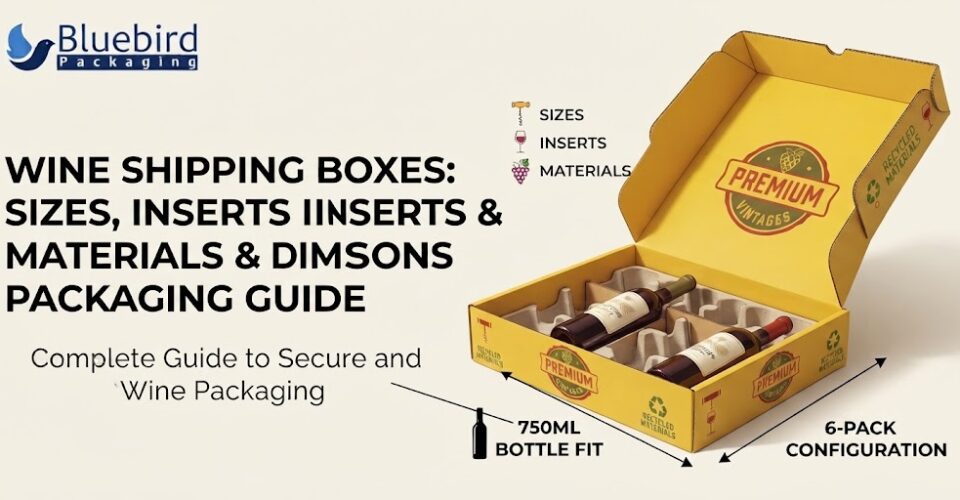
Shipping wine requires more than placing bottles inside a standard carton. Wine bottles are fragile glass products with different shapes, sizes, and weights, which means the packaging system needs to provide proper protection from packing to final delivery.
The right wine shipping boxes are designed to control bottle movement, prevent glass-to-glass contact, reduce damage risks, and support efficient fulfillment. A complete wine shipping solution includes more than the outer box. It combines the bottle dimensions, protective inserts, box structure, shipping method, and brand presentation.
A simple way to plan wine packaging is:
Bottle → Insert → Box → Shipping → Customer Experience
The bottle determines the insert requirements. The insert influences the box size. The complete package decides how safely the product moves through transportation.
For brands shipping wine through ecommerce, wholesale, or subscription services, packaging should balance protection with presentation. Businesses can explore custom packaging solutions to create packaging designed around their specific product requirements.
What Are Wine Shipping Boxes?
Wine shipping boxes are specially designed packaging boxes used to transport wine bottles safely during storage, handling, and delivery.
Unlike standard shipping cartons, wine shipping packaging is created around the challenges of transporting fragile glass bottles. A complete solution usually includes:
- Strong outer carton
- Bottle separators
- Protective inserts
- Cushioning structure
- Secure closing system
The purpose of wine shipping boxes is not only to hold bottles but also to keep them stable throughout the shipping process.
A properly designed wine shipping package helps:
- Prevent bottle movement
- Reduce impact damage
- Separate multiple bottles
- Protect fragile glass
- Improve packing consistency
Wine shipping boxes are commonly used by:
- Wineries
- Wine retailers
- Beverage companies
- Wine clubs
- Gift businesses
- Wholesale suppliers
For brands selling different products, understanding complete product packaging solutions helps create packaging systems that protect products while supporting brand identity.
Why Wine Bottles Need Special Shipping Packaging
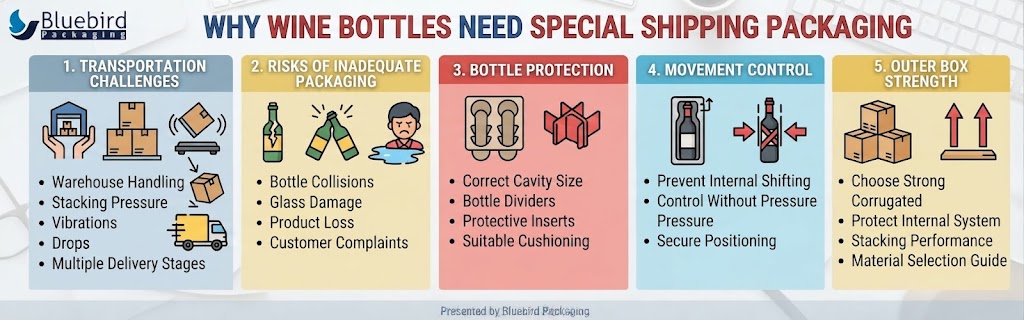
Wine bottles create unique packaging challenges because they combine heavy glass construction with liquid contents.
During transportation, packages may experience:
- Warehouse handling
- Stacking pressure
- Vibrations
- Drops
- Multiple delivery stages
A regular shipping box without proper internal protection may allow bottles to move inside the carton. This movement increases the chance of:
- Bottle collisions
- Glass damage
- Product loss
- Customer complaints
The goal of wine bottle packaging is not only to select a strong box. The complete packaging system should work together.
Bottle Protection
The packaging should keep each bottle secure inside its own protected area.
Important elements include:
- Correct cavity size
- Bottle dividers
- Protective inserts
- Suitable cushioning
Movement Control
Too much empty space allows bottles to shift during transportation. A properly designed package controls movement without creating excessive pressure on the bottle.
Outer Box Strength
The outer carton protects the complete internal system. Material selection plays an important role in shipping performance. Brands can compare different options through this packaging material types guide, including cardboard, kraft, corrugated, and rigid materials.
Wine Shipping Boxes vs Standard Shipping Boxes
Many businesses assume any strong cardboard box can be used for wine delivery. However, wine bottles require more controlled protection because of their fragile glass structure.
A standard carton may work for some applications, but wine shipping boxes are designed around the complete bottle protection system.
Wine Shipping Boxes vs Wine Gift Boxes
Wine shipping boxes and wine gift boxes may look similar, but they serve different purposes.
A wine shipping box focuses on:
- Bottle safety
- Stability
- Transportation
A gift box focuses on:
- Appearance
- Opening experience
- Luxury presentation
Many premium brands combine both by using protective shipping packaging with a branded presentation layer.
For luxury wine collections, brands may also consider rigid packaging boxes when the packaging experience is an important part of the product.
How to Choose the Right Wine Shipping Box
Choosing the correct wine shipping box starts with understanding the product first.
Before selecting packaging, consider:
- Bottle dimensions
- Bottle shape
- Number of bottles
- Shipping method
- Insert requirements
- Branding goals
A properly planned package helps avoid:
- Poor bottle fit
- Extra empty space
- Higher shipping costs
- Unnecessary packaging materials
Measure Your Wine Bottle Before Choosing Packaging
Bottle measurements are one of the most important factors when selecting wine shipping packaging.
A common mistake is choosing a box only based on bottle volume. Two bottles may both contain 750ml wine but have different:
- Heights
- Diameters
- Shoulder shapes
- Neck sizes
- Base structures
Important measurements include:
- Bottle height
- Maximum diameter
- Neck size
- Shoulder profile
- Filled shipping weight
These measurements help determine the correct insert design and final box dimensions.
Brands can also review custom box sizes to understand how product measurements affect packaging dimensions.
Determine How Many Bottles You Ship Together
Bottle quantity changes the entire packaging structure.
Common wine shipping configurations include:
A single bottle shipment requires different protection compared with a large wholesale order. The packaging should match the actual shipping pattern instead of using one standard solution for every order.
Wine Shipping Box Sizes and Bottle Configurations
There is no single standard size for every wine shipping box because bottles come in different shapes, heights, and diameters. A package designed for one bottle type may not work properly for another bottle profile.
The final box dimensions depend on:
- Bottle measurements
- Number of bottles
- Insert thickness
- Protective spacing
- Outer carton structure
Common wine shipping box configurations include:
When choosing dimensions, businesses should measure the complete packaging system rather than only the bottle.
Bottle Size + Insert Size + Protective Space = Final Box Dimensions
For businesses managing multiple products, reviewing custom box sizes can help create packaging based on actual product measurements instead of standard assumptions.
Choosing the Right Insert for Wine Shipping Boxes
The insert is one of the most important parts of a wine shipping box. A strong outer carton cannot provide complete protection if the bottles can move freely inside.
A proper insert helps:
- Hold bottles securely
- Separate glass surfaces
- Reduce movement
- Improve packing consistency
- Protect products during transportation
The right insert depends on:
- Bottle shape
- Shipping distance
- Product weight
- Brand requirements
- Material preferences
Common wine bottle insert options include:
Corrugated Bottle Dividers
Corrugated dividers are one of the most widely used solutions for wine shipping packaging.
These dividers create separate compartments for each bottle and help prevent direct contact between glass bottles.
Benefits include:
- Lightweight construction
- Easy assembly
- Cost-effective design
- Recyclable material option
- Suitable for multiple bottle shipments
Corrugated dividers are commonly used for:
- Six bottle shipments
- Twelve bottle cases
- Wholesale wine distribution
- Ecommerce fulfillment
For businesses requiring stronger shipping protection, corrugated packaging can provide structural support while keeping packaging efficient.
Molded Pulp Inserts for Wine Bottles
Molded pulp inserts use shaped cavities designed around the bottle structure.
They are often selected by brands looking for:
- Fiber-based packaging
- Sustainable material options
- Custom bottle positioning
- Professional presentation
Molded pulp can work well for:
- Premium wine shipments
- Specialty bottles
- Gift packaging
The insert design should always match the actual bottle shape. A cavity that is too loose may allow movement, while one that is too tight can create unnecessary pressure.
Foam Inserts for Wine Packaging
Foam inserts provide cushioning and shaped support around bottles.
They are commonly used when brands need:
- Additional impact protection
- Premium presentation
- Custom bottle fitting
Foam inserts can be useful for:
- Luxury wine gifts
- Limited edition bottles
- High-value products
The best insert choice depends on the complete packaging system rather than the material alone.
Custom Die Cut Inserts
Custom die cut inserts allow businesses to create packaging around specific bottle shapes and product requirements.
They are useful when:
- Standard inserts do not fit properly
- Bottle shapes are unique
- Brands need custom presentation
- Multiple components are shipped together
Custom inserts can be designed around:
- Bottle dimensions
- Product quantity
- Brand presentation
- Shipping conditions
Wine Shipping Box Materials
The material used for wine shipping boxes affects durability, appearance, weight, and shipping performance.
Common material options include:
- Corrugated cardboard
- Kraft packaging
- Cardboard folding cartons
- Rigid packaging
Each material serves a different purpose.
Corrugated Cardboard Wine Shipping Boxes
Corrugated cardboard is one of the most common choices for shipping applications because it provides strength while remaining lightweight.
Advantages include:
- Strong outer protection
- Better stacking ability
- Suitable for transportation
- Cost efficiency
- Flexible customization
Corrugated wine shipping boxes are commonly used for:
- Ecommerce shipments
- Wholesale orders
- Subscription services
- Retail distribution
Kraft Wine Shipping Packaging
Kraft packaging provides a natural appearance and is often selected by brands that want a simple, organic look.
Kraft wine boxes can support:
- Boutique wineries
- Sustainable branding
- Handmade products
- Gift packaging
The final material choice should depend on product requirements, shipping needs, and brand goals.
Rigid Wine Boxes for Premium Products
Rigid boxes provide a stronger and more premium structure compared with standard folding cartons.
They are commonly used for:
- Luxury wine collections
- Corporate gifts
- Limited edition bottles
- Premium launches
Rigid packaging can improve:
- Opening experience
- Brand perception
- Product presentation
Brands interested in premium presentation can explore rigid box packaging for luxury product applications.
Create Wine Packaging Around Your Bottles
Get packaging designed around your bottle dimensions, quantity, inserts, shipping requirements, and brand presentation.
Custom Wine Packaging vs Stock Wine Shipping Boxes
Businesses usually choose between standard packaging options and custom wine shipping boxes.
Stock wine boxes may work when:
- Bottle sizes are common
- Order quantities are predictable
- Branding requirements are limited
Custom wine packaging becomes more useful when brands need:
- Better product protection
- Unique bottle fitting
- Premium presentation
- Consistent branding
How Custom Wine Packaging Improves Brand Experience
Wine packaging is often the first physical interaction customers have with a brand.
A well-designed package can communicate:
- Brand identity
- Product quality
- Attention to detail
- Premium positioning
Custom wine packaging options may include:
- Logo printing
- Brand colors
- Custom artwork
- Interior printing
- Premium finishes
- Product information
For businesses building complete packaging systems, custom boxes can be designed around product dimensions, printing needs, and customer experience goals.
How to Design Wine Shipping Boxes for Ecommerce
Ecommerce wine packaging needs to perform throughout the complete delivery journey.
The package may move through:
- Warehouse storage
- Fulfillment centers
- Delivery networks
- Customer handling
A good ecommerce wine shipping box should be:
- Easy to pack
- Secure during transportation
- Consistent for every order
- Suitable for branding
Direct-to-Consumer Wine Shipping
Direct-to-consumer wine brands need packaging that combines protection with customer experience.
Important considerations include:
- Fast packing process
- Reliable bottle protection
- Attractive unboxing
- Consistent presentation
A customer receiving a wine order should experience packaging that feels intentional from the outside to the inside.
Businesses can also review ecommerce packaging solutions to understand how packaging decisions affect online orders and fulfillment.
Wine Subscription Box Packaging
Wine subscription businesses often ship different bottle combinations regularly.
Packaging should support:
- Repeat orders
- Flexible bottle quantities
- Efficient fulfillment
- Brand consistency
A flexible packaging system allows brands to handle changing collections without creating a completely new box for every shipment.
Wine Gift Packaging
Gift orders require both protection and presentation.
Customers expect:
- Safe delivery
- Attractive appearance
- Easy opening experience
Combining protective inserts with branded packaging can create a stronger customer impression.
How to Specify Custom Wine Shipping Boxes
A successful wine shipping box starts with a clear packaging specification. Before production begins, businesses should define the product requirements, shipping conditions, and branding goals.
A detailed packaging brief should include:
Providing accurate information helps avoid packaging problems and creates a smoother production process.
Businesses that need packaging designed around specific products can explore Bluebird Packaging custom boxes created according to product dimensions, structure, and branding needs.
How to Pack Wine Shipping Boxes for Safer Delivery
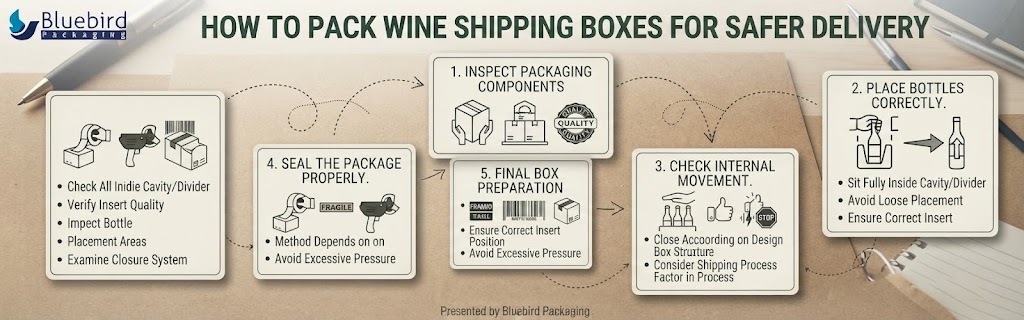
Even a well-designed wine shipping box requires proper packing practices. Incorrect packing can reduce the effectiveness of the packaging system.
Follow these steps:
1. Inspect Packaging Components
Before packing, check:
- Outer box condition
- Insert quality
- Bottle placement areas
- Closure system
All components should match the approved packaging design.
2. Place Bottles Correctly
Each bottle should sit fully inside its designed cavity or divider section.
Avoid:
- Loose bottle placement
- Incorrect insert positioning
- Bottle contact with other bottles
3. Check Internal Movement
After placing bottles inside the package, check whether there is unnecessary movement. A good packaging system should keep bottles secure while avoiding excessive pressure.
4. Seal the Package Properly
The final carton should be closed according to the packaging design.
The sealing method depends on:
- Box structure
- Shipping requirements
- Distribution process
Does Packaging Testing Matter for Wine Shipping Boxes?
Wine bottles are fragile products, so testing before a large production run can help identify packaging issues.
Testing helps evaluate:
- Bottle movement
- Insert performance
- Box strength
- Packaging stability
- Shipping conditions
A prototype test can reveal problems such as:
- Incorrect cavity size
- Weak structural points
- Excess empty space
- Poor bottle support
For brands ordering custom packaging, testing provides an opportunity to improve the design before committing to larger quantities.
Common Wine Shipping Box Mistakes
Choosing a Box Before Measuring the Bottle
One of the most common mistakes is selecting a box based only on bottle volume.
A 750ml bottle does not always have the same dimensions. Different wine bottles may vary in:
- Height
- Diameter
- Shoulder shape
- Base structure
Always design packaging around the actual bottle.
Using the Same Box for Every Bottle Type
A single packaging design may not work for:
- Bordeaux bottles
- Burgundy bottles
- Champagne bottles
- Oversized bottles
Different shapes often require different insert designs.
Ignoring the Insert System
The outer carton is only one part of wine shipping protection. Without the correct insert, bottles may move during transportation.
The insert should match:
- Bottle shape
- Bottle quantity
- Shipping environment
Creating Too Much Empty Space
An oversized box can create problems such as:
- Bottle movement
- Increased material usage
- Higher shipping volume
The goal is not the smallest box possible. The goal is the right-sized packaging system.
Businesses can also review custom box sizes to understand how product dimensions influence packaging selection.
Treating Gift Packaging as Shipping Packaging
A premium wine gift box may look attractive, but it may not provide enough protection for transportation.
Shipping packaging needs to prioritize:
- Strength
- Stability
- Bottle protection
Presentation elements can be added after structural requirements are addressed.
Skipping Internal Quality Checks
Before shipping products to customers, brands should confirm:
- Correct bottle placement
- Proper inserts
- Secure closure
- Matching packaging components
Consistent quality checks help create reliable fulfillment.
Wine Shipping Boxes for Ecommerce Brands
Ecommerce has changed how customers receive wine products. Packaging is no longer only about transportation; it is also part of the customer experience.
Online wine brands need packaging that supports:
- Safe delivery
- Easy fulfillment
- Brand presentation
- Customer satisfaction
A successful ecommerce wine packaging system should consider the complete journey:
Warehouse → Shipping Carrier → Customer Doorstep
For businesses shipping multiple products online, reviewing ecommerce packaging solutions can help identify packaging choices that support fulfillment efficiency.
Branded Wine Shipping Boxes and Customer Experience
Custom wine shipping boxes allow brands to create a stronger connection with customers.
Branding options may include:
- Logo printing
- Custom colors
- Product information
- Interior printing
- Promotional messaging
A branded shipping box can transform a standard delivery into a memorable customer experience.
Packaging can communicate:
- Brand quality
- Product value
- Professional presentation
For brands selling different products, maintaining consistent packaging elements helps create a recognizable identity.
Adding Printed Inserts Inside Wine Packaging
Many wine brands include additional printed materials inside their shipments, such as:
- Thank you cards
- Product information sheets
- Care instructions
- Promotional offers
- Brand stories
When multiple-page printed materials are included, proper organization becomes important during fulfillment.
Businesses managing printed packaging components can also learn about what collate means on a printer to understand how printed pages are arranged into complete sets before being packed with products.
Wine Shipping Box Selection Checklist
Before ordering custom wine shipping boxes, review:
- ☐ Bottle height measured
- ☐ Bottle diameter confirmed
- ☐ Bottle shape identified
- ☐ Shipping weight calculated
- ☐ Bottle quantity selected
- ☐ Insert type chosen
- ☐ Material selected
- ☐ Outer box dimensions confirmed
- ☐ Branding requirements prepared
- ☐ Prototype tested
- ☐ Final packaging approved
Protect Your Wine Bottles With Custom Packaging
From single-bottle shipments to multi-bottle cases, create a packaging system built around your bottles, inserts, shipping requirements, and brand presentation.
Frequently Asked Questions About Wine Shipping Boxes
What are wine shipping boxes?
Wine shipping boxes are protective packaging solutions designed to transport wine bottles safely. They usually combine a strong outer carton with inserts or dividers that help secure bottles during shipping.
What size box do I need to ship wine bottles?
The correct size depends on the bottle height, diameter, quantity, insert design, and shipping requirements. Wine boxes should be designed around the complete packaging system instead of only bottle volume.
Can I use regular shipping boxes for wine?
Regular shipping boxes may not provide enough protection for fragile glass bottles. Wine shipments usually require inserts or dividers that reduce movement and prevent bottle contact.
What inserts are used in wine shipping boxes?
Common insert options include:
- Corrugated dividers
- Molded pulp inserts
- Foam inserts
- Custom die-cut inserts
The best option depends on bottle type, shipping conditions, and packaging goals.
Are custom wine shipping boxes worth it?
Custom wine shipping boxes can provide better bottle protection, improved branding opportunities, and packaging designed around specific products.
Can wine shipping boxes include branding?
Yes. Brands can add logos, colors, artwork, and other design elements depending on the packaging material and printing method.
What materials are used for wine shipping boxes?
Common materials include:
- Corrugated cardboard
- Kraft packaging
- Cardboard
- Rigid materials
The right material depends on product requirements, shipping conditions, and brand goals.
Final Takeaway
Choosing the right wine shipping boxes requires more than selecting a standard carton size. The best packaging starts with understanding the bottle, selecting the correct insert, choosing suitable materials, and creating a box structure that supports safe transportation.
A complete wine packaging system should balance:
- Bottle protection
- Shipping efficiency
- Brand presentation
- Customer experience
From single bottle ecommerce shipments to larger wholesale orders, custom wine shipping packaging helps businesses protect their products while creating a professional experience for customers.
Explore Bluebird Packaging custom packaging solutions to create packaging designed around your wine products, shipping requirements, and brand goals.