
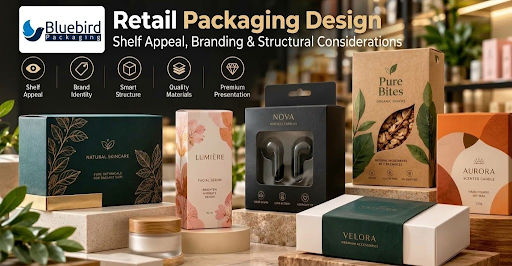
Retail packaging design is the process of creating a product’s packaging so it attracts attention, communicates the brand, presents product information clearly, and protects the item during storage and handling. Effective design combines visual appeal with practical decisions about box structure, material, dimensions, printing, finishing, and the customer’s experience.
For brands selling in the United States, retail packaging must work in real shopping environments: crowded shelves, online product listings, warehouses, retail displays, and customers’ homes. A package should help shoppers recognize the product quickly while making it easy for retailers to stock, display, scan, and handle.
The best retail packaging is not necessarily the most colorful or expensive. It is packaging in which brand identity, product visibility, structural performance, and customer expectations work together. A well-designed folding carton may suit a lightweight beauty product, while a die-cut display box may be better for countertop merchandise and a rigid box may suit a premium gift set.
This article explains how to plan retail packaging design, choose suitable box styles and materials, create a recognizable visual identity, avoid common design mistakes, and prepare packaging for production.
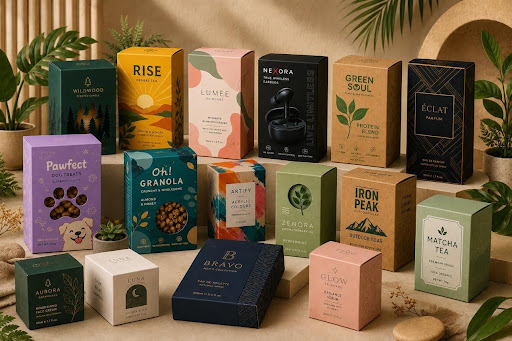
Quick Answer: What Makes Retail Packaging Design Effective?
Effective retail packaging design balances five essentials:
- Shelf appeal: Use a clear visual hierarchy, readable typography, appropriate contrast, and distinctive brand elements.
- Product clarity: Help shoppers understand what the product is and why it may suit their needs.
- Suitable structure: Choose a box style that fits the product and its display, storage, and handling requirements.
- Protection and usability: Make the package secure, appropriately sized, and easy to open and handle.
- Consistent branding: Coordinate colors, graphics, typography, and information across the complete product range.
Before choosing finishes or finalizing artwork, define the target customer, retail environment, product dimensions, packaging purpose, and budget. These decisions provide a foundation for the visual design and reduce the risk of creating an attractive package that does not perform well.
What Is Retail Packaging Design?
Retail packaging design brings together the visual, structural, and functional elements of packaging intended for products sold or presented to customers. It includes the outer box or carton, material, dimensions, artwork, product information, opening mechanism, inserts, finishes, and how the package appears when displayed.
A retail package has several jobs. It must identify the product, communicate the brand, provide relevant information, and protect the item. Depending on the product and sales channel, it may also need to support shelf display, barcode scanning, inventory handling, shipping, or a premium unboxing experience.
Retail packaging is different from transport packaging, although the two can overlap. A shipping carton primarily needs to protect products as they move through distribution. Retail packaging also needs to communicate visually and help the product make sense to a shopper.
For example, a skincare carton may use a refined color palette, clear product naming, and a compact structure to support shelf presentation. A box of small consumer accessories may need stronger internal organization, while a countertop display package must keep products visible and easy to access.
Brands planning their complete visual system can also explore custom packaging design that connects artwork, structure, and production.
Why Retail Packaging Design Matters
Retail packaging influences how a product is presented, understood, handled, and remembered. Although packaging alone cannot guarantee a purchase, it can make important product information easier to find and give customers a clearer impression of the brand.
It helps shoppers identify the product
Customers often compare several products in a short period. Clear product naming, recognizable brand elements, and readable benefit statements help shoppers understand what is inside without having to study every panel.
The most important information should receive the strongest visual emphasis. A crowded front panel with too many competing messages can make even a professionally printed box difficult to understand.
It differentiates a brand from competitors
When similar products share a shelf, packaging can create visual distinction through color, typography, imagery, proportions, and structure. The objective is not to imitate the loudest competitor. It is to develop an identity that fits the product and remains recognizable across the range.
A consistent packaging system can also help customers recognize a brand when products are displayed in different stores or appear in online listings.
It supports protection and handling
Packaging must function as a physical product, not just a graphic design. The structure should fit the item, keep it secure, and account for normal handling, storage, and display conditions.
For retail products that require a specialized format, custom retail boxes designed around product fit and presentation can help align the packaging structure with the intended use.
It creates a more considered customer experience
The opening experience matters when customers interact directly with the package. A secure closure, logical opening sequence, organized interior, and clean presentation can make a package easier to use.
Premium details are most effective when they support the product and brand rather than adding complexity for its own sake.
The Core Elements of Effective Retail Packaging Design
Retail packaging works best when its major elements are planned as one coordinated system. Artwork should not be finalized before the team understands the product, the structure, and the environment in which the package will be used.
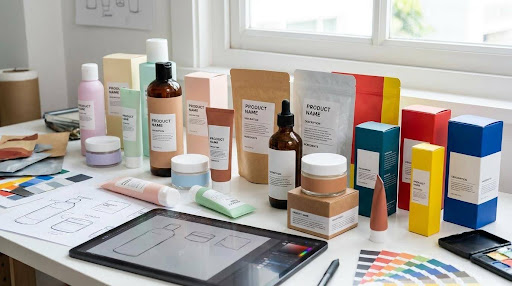
1. Brand identity and visual hierarchy
Brand identity includes the logo, typography, colors, imagery, graphic style, and other visual elements customers associate with a business. Visual hierarchy determines the order in which shoppers notice and understand those elements.
A practical front-panel hierarchy often includes:
- Brand name or logo.
- Product name and category.
- One important differentiator or benefit, where appropriate.
- Supporting product details or variant information.
The order can change according to the product and category. A familiar brand may emphasize its name, while a new product may need a clearer category description.
Keep the hierarchy consistent across related products. When a brand offers several scents, flavors, sizes, or product variations, retain recognizable core elements and use controlled changes to distinguish each version.
Brands developing a broader packaging system can use packaging design ideas that balance consistency with product-specific creativity.
2. Color and contrast
Color helps establish brand recognition and differentiate product variants. It also affects legibility, particularly when text is placed over photographs, patterns, or colored backgrounds.
Choose colors according to the brand, product category, audience, and desired visual impression. Then test the design on the intended packaging material. Colors shown on a monitor may not reproduce identically in print, and a finish can change how a printed surface looks under store lighting.
Do not rely on color alone to communicate essential differences between products. Clear names, readable labels, and recognizable visual cues provide additional support.
For a more detailed approach to color selection, consider how color psychology influences packaging design decisions.
3. Typography and readability
Typography should help customers understand the package, not force them to work harder. Product names, key details, instructions, and required information need appropriate size, spacing, and contrast.
Use a limited set of typefaces and establish a consistent hierarchy for headings, supporting text, and fine print. Decorative fonts can contribute to the brand identity, but they should not make essential information difficult to read.
Review the design at the actual package size. Text that looks readable on a large computer screen may be too small on a compact carton.
4. Product imagery and visibility
Product photography, illustrations, and transparent windows can help customers understand what they are buying. The right approach depends on whether seeing the actual product provides meaningful information.
A window may be useful for products whose appearance or quantity matters to the purchase decision. However, windows can affect structural strength, usable artwork space, and material selection. In other cases, clear product imagery may communicate the offer without exposing the product.
The decision should be based on the product, packaging structure, and retail environment rather than visual preference alone.
5. Consistency across product variants
Packaging consistency helps customers recognize a product family. It also makes it easier for businesses to extend a design to new SKUs without starting from scratch.
A useful system keeps the logo, core typography, and principal brand elements consistent while allowing product-specific colors, names, images, or secondary graphics to change.
Before finalizing the system, test several products side by side. A design that works for one carton may become confusing when multiple variants appear together.
Choosing the Right Retail Packaging Structure
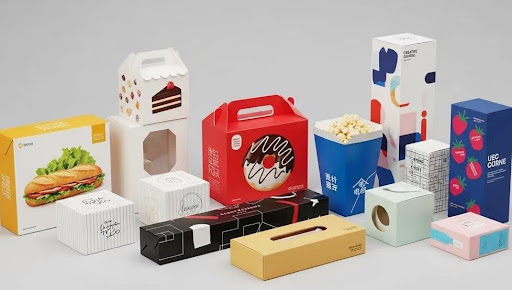
There is no single best box style for every retail product. The right structure depends on product dimensions, weight, fragility, display requirements, opening experience, production constraints, and budget.
| Packaging structure | Common applications | Main advantages | Important considerations |
|---|---|---|---|
| Folding cartons | Cosmetics, personal care, small consumer goods | Printable surfaces and efficient storage | Board strength and product fit |
| Die-cut boxes | Unusually shaped products and distinctive retail packs | Flexible structural design | Requires careful structural planning |
| Window boxes | Products where visibility matters | Shows the actual item | Window position and material compatibility |
| Sleeves | Secondary branding and presentation | Adds a branded outer layer | Requires a suitable inner package |
| Rigid boxes | Premium gifts, jewelry, and high-end sets | Substantial feel and structured presentation | Cost, storage volume, and material use |
| Corrugated boxes | Shipping, bulk handling, and some retail applications | Can provide added structural protection | Board grade and final appearance |
| Display boxes | Counters, shelves, and promotional placements | Organizes products for visibility and access | Stability, loading, and display footprint |
Folding cartons for everyday retail products
Folding cartons are widely used for products that need printed presentation without the bulk of a rigid box. Their flat surfaces can accommodate logos, product names, imagery, and supporting information.
They may suit cosmetics, personal care products, small accessories, and many packaged consumer goods. The board and construction should still be matched to the product’s weight, fragility, and handling requirements.
Die-cut boxes for distinctive presentation
Die-cut structures allow designers to create specific shapes, openings, and closures. They can support a recognizable appearance or help the package fit an unusual product.
For custom structural designs, die-cut cardboard boxes with product-specific shapes and openings may be worth considering. The design should be reviewed for strength, ease of assembly, material use, and reliable production.
Window boxes when product visibility matters
Window packaging can make a product visible without requiring customers to open the box. It may be useful for selected retail goods, gifts, and products where appearance helps explain the offer.
A window should be positioned so it shows the most relevant part of the product without compromising necessary information or protection. The window material and attachment method should also be considered when evaluating recyclability and disposal.
Businesses planning visible product displays can explore window display boxes for retail presentation.
Sleeves for an additional branding layer
A sleeve wraps around an existing package or product grouping. It can add graphics, instructions, product information, or a distinctive presentation without requiring a completely new outer structure.
Sleeves work best when the inner package already provides suitable protection and fit. Their dimensions must allow the sleeve to slide into place securely without becoming too loose or difficult to remove.
For this application, custom packaging sleeves for a coordinated branded finish offer one possible direction.
Display boxes for counters and shelves
Display packaging is designed to present products in an organized, accessible way. Countertop and point-of-sale formats may be suitable for small packaged goods, promotional items, and products that benefit from prominent placement.
The display must be stable when loaded, easy to replenish, and appropriate for the amount of space available. Consider how products will be removed and whether the package must remain attractive as stock decreases.
Bluebird’s product display boxes for organized retail presentation are relevant when display and packaging need to work together.
Selecting Materials for Retail Packaging
Material selection affects print quality, rigidity, product protection, weight, finishing options, and overall presentation. The best material is the one that meets the product’s requirements without adding unnecessary complexity.
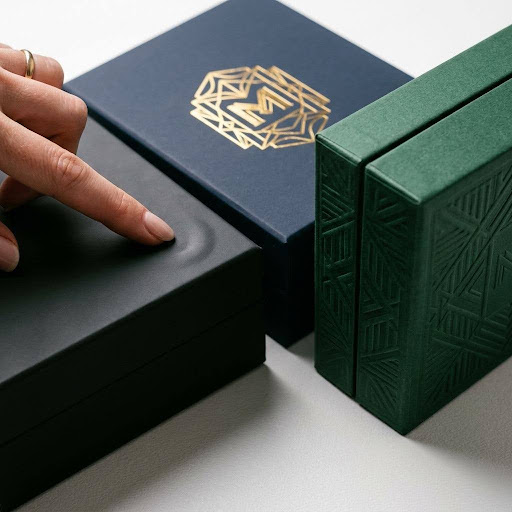
Paperboard and cardboard
Paperboard is commonly used for folding cartons and many lightweight retail packages. It provides a printable surface and can be converted into a range of box structures.
The term “cardboard” is often used broadly in everyday conversation, so specifications should identify the actual board type and grade. Material thickness alone does not establish whether a package will withstand the intended handling conditions.
Kraft board
Kraft-based packaging is often selected for its natural brown appearance and understated design. It can support minimalist branding, but the final print appearance depends on the material’s surface and the selected inks.
Do not assume that a brown appearance automatically makes a package more sustainable. Environmental performance depends on the full material specification, manufacturing, use, and end-of-life options.
Corrugated board
Corrugated board contains a fluted layer between liner sheets and is often selected when additional rigidity or cushioning is needed. It is common in shipping cartons and can also be used in certain retail structures.
If the package will be displayed in-store and shipped directly to customers, evaluate both the display requirements and the distribution conditions before selecting the board construction.
Rigid board
Rigid packaging uses a substantial board structure and is commonly associated with premium presentation. It can be suitable for gifts, jewelry, and selected high-value products where a structured feel is important.
However, rigid boxes can require more storage space and material than folding cartons. Compare the intended customer experience with production, storage, shipping, and budget requirements before making a decision.
For a broader overview of packaging materials and their common applications, compare the options against the product’s actual needs.
Retail Packaging Design for Different Industries
Different product categories have different design priorities. A package that works for a skincare bottle may not suit a food product, jewelry set, or countertop display.
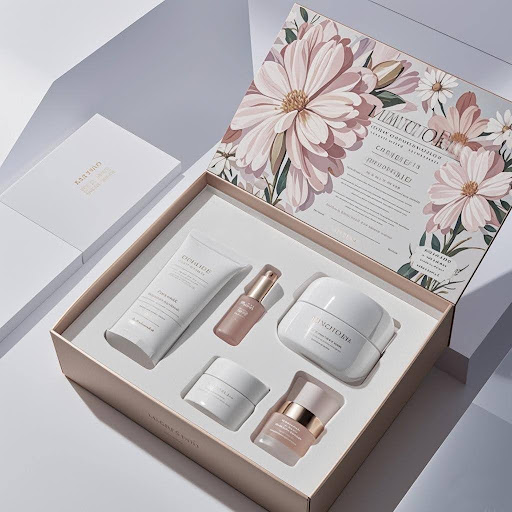
Beauty and skincare packaging
Beauty packaging often needs to communicate product identity, variant, and brand positioning while accommodating bottles, jars, tubes, or other containers.
Designers should consider the fit of the primary container, the information that must appear on the carton, and the way multiple products will look together. Finishes can be used selectively to support the brand, but readability and accurate product information remain important.
For brands developing a beauty range, custom cosmetic boxes for skincare and beauty products provide a relevant starting point for packaging planning.
Food and bakery packaging
Food packaging may need to balance product visibility, handling, freshness-related requirements, labeling, and presentation. The material and construction must be appropriate for the particular food application.
Do not assume that every printed cardboard box is suitable for direct food contact. Confirm applicable material and regulatory requirements with the packaging supplier and the relevant compliance team.
For bakery brands, custom bakery boxes designed around baked goods and presentation can help connect the product’s shape with the desired packaging style.
Jewelry and premium gifts
Jewelry and gift packaging often places greater emphasis on presentation, internal organization, and the opening experience. Inserts can help keep items in position, while a structured box may create a more substantial feel.
The package should still be sized sensibly. Oversized structures can add material and shipping volume without necessarily improving the experience.
For premium gift presentation, rigid boxes with a structured, upscale appearance may be suitable depending on the product and budget.
Retail displays and promotional products
Promotional packaging needs to work within the available display space. It should keep products organized, make the brand easy to identify, and allow shoppers or staff to access items without damaging the structure.
Businesses should consider the display footprint, loading method, stability, and the package’s appearance when partially empty. For countertop applications, counter display boxes designed for easy product access can help address these requirements.
Designing Retail Packaging for Both Stores and E-Commerce
A brand that sells through physical stores and online channels should evaluate packaging across the complete customer journey. Retail shelves reward clear product communication and display stability, while e-commerce introduces additional considerations such as transit protection, package dimensions, and the opening experience.
| Requirement | Physical retail | E-commerce | Shared consideration |
|---|---|---|---|
| Brand recognition | Visible from the shelf | Recognizable in product photos and on delivery | Consistent visual identity |
| Product protection | Storage and in-store handling | Shipping and parcel handling | Fit and appropriate structure |
| Package dimensions | Shelf footprint and display fit | Parcel size and dimensional efficiency | Accurate measurements |
| Product information | Easy to read in-store | Clear in images and on arrival | Legible, accurate information |
| Opening experience | Practical for shoppers | Secure during delivery and convenient to open | Usability and product fit |
A retail carton is not automatically suitable as a shipping container. If the same package will serve both purposes, assess whether it provides adequate protection under the intended shipping conditions.
Brands planning their online order experience can also review packaging options for e-commerce fulfillment before finalizing the structure.
Printing, Finishes, and Artwork Preparation
Printing and finishing should support the design rather than compensate for unclear branding or a weak layout. Before production, make sure the artwork fits the approved structure and works on the selected material.
Printing considerations
The appropriate printing method depends on the packaging material, artwork, order quantity, color requirements, and supplier capabilities. Review the available options with the packaging provider rather than assuming every process is suitable for every box.
Check that:
- The logo and product name are readable at the final size.
- Important text does not fall across folds, cuts, or glue areas.
- Colors and images suit the selected substrate.
- Required product information is accurate and legible.
- Barcodes have sufficient space and are placed according to applicable specifications.
- The final artwork matches the approved dieline.
For retail products scanned at checkout, barcode placement should be coordinated with the packaging and printing teams. GS1 provides guidance on barcode placement for products, including the need to avoid edges and preserve the space needed for reliable scanning.
Finishes that support the brand
Finishing options may include matte or gloss coatings, foil stamping, embossing, debossing, and spot UV. These features can add contrast or texture when used in the right places.
| Finish | Potential design role | What to check |
|---|---|---|
| Matte | Restrained, low-glare appearance | Scuff resistance and color rendering |
| Gloss | Stronger surface shine | Reflections and readability |
| Foil stamping | Highlight selected logos or details | Fine detail and substrate suitability |
| Embossing | Raised tactile elements | Placement and line detail |
| Debossing | Recessed branding or patterns | Visibility and structural location |
| Spot UV | Selective gloss contrast | Registration and artwork alignment |
Before selecting a finish, consider its impact on cost, production complexity, appearance, and disposal requirements. If environmental claims will be made, they should be specific and supported by evidence. The U.S. Federal Trade Commission explains how businesses should substantiate packaging-related environmental marketing in its Environmental Claims guidance.
A digital mockup can help review the overall layout, but a physical sample is especially useful when the material, color, fit, closure, or finishing effect is important.
A Step-by-Step Retail Packaging Design Process
A structured workflow helps teams make design decisions in the right order and identify potential problems before production.
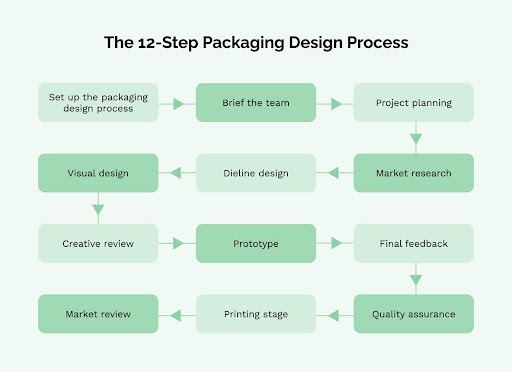
1:Define the product and customer
Identify the product’s dimensions, weight, fragility, target customer, price positioning, and retail environment. Clarify what customers need to understand when they first see the package.
2:Choose the packaging structure
Select a folding carton, die-cut box, window format, sleeve, rigid box, or display structure according to the product and intended use. Confirm whether the package also needs to support shipping.
3:Measure and plan the internal fit
Measure the complete packed product, including inserts and protective components. Confirm internal dimensions first, then review external dimensions for storage, shelf, and shipping needs. Bluebird’s box-measuring instructions can help establish a consistent specification.
4:Build the visual system
Establish the logo placement, typography, color palette, product naming, imagery, and information hierarchy. Make sure the design can extend across the product range without losing recognition.
5:Prepare artwork and finishing specifications
Place the artwork on the supplier-approved dieline and confirm cut, fold, and glue areas. Specify printing, coatings, and special finishes before final approval. Bluebird’s packaging artwork and dieline considerations are relevant at this stage.
6:Review a proof or sample
Check product fit, closure, print appearance, text, barcode placement, and display stability. Test the package under conditions that reflect its intended use when protection is important.
7:Approve the production specification
Confirm the final artwork, material, dimensions, quantity, finishing requirements, and delivery arrangements. Keep an approved reference so future orders can follow the same specification.
Common Retail Packaging Design Mistakes
Many packaging problems happen when teams prioritize the appearance of a mockup over the performance of the finished package.
| Mistake | Why it creates a problem | Better approach |
|---|---|---|
| Too much information on the front | Shoppers may struggle to identify the product | Establish a clear information hierarchy |
| Inconsistent product variants | Customers may not recognize the product family | Keep core brand elements consistent |
| Poor contrast | Text can become difficult to read | Review color and legibility on the actual material |
| Incorrect box dimensions | Products may move, become damaged, or fail to fit | Measure the complete packed product |
| Artwork finalized too early | Graphics may conflict with folds or closures | Approve structure and dieline first |
| Too many decorative finishes | Costs and visual complexity may increase | Use finishes selectively |
| Ignoring barcode placement | Scanning may be less reliable | Follow relevant barcode specifications |
| Designing only for store shelves | The package may not withstand shipping | Review the full distribution path |
| Making unsupported environmental claims | Customers may receive a misleading impression | Use precise, substantiated claims |
| Skipping sample review | Production issues may only appear after printing | Inspect a sample when fit or finish is critical |
Retail Packaging Design Checklist
Use this checklist before approving packaging for production.
- Product dimensions, weight, and sensitivities are documented.
- Target customer and retail environment are defined.
- Packaging structure suits the product and its intended use.
- Internal and external dimensions are clearly specified.
- Product inserts, dividers, and protective elements are included in the sizing plan.
- Brand name and product information are easy to identify.
- Typography and contrast remain legible at actual size.
- Product variants are distinguishable but visually consistent.
- Barcode placement and required information have been checked.
- Artwork matches the approved dieline.
- Printing and finishing requirements are confirmed.
- Material and environmental claims are accurate and supportable.
- Display, storage, and shipping requirements have been considered.
- A sample or proof has been reviewed where appropriate.
- Quantity, production timing, and delivery details are confirmed.
How Much Does Retail Packaging Design Cost?
Retail packaging design costs vary according to the complexity of the structure, the amount of artwork required, the number of product variants, the materials, finishing, sampling, and production quantity. A simple printed carton and a multi-component premium box involve different design and manufacturing requirements.
When requesting a quote, separate design and setup requirements from the cost of producing the boxes where possible. This helps clarify which expenses relate to artwork development, tooling or structural setup, printing, finishing, samples, and the final order.
To compare supplier quotes fairly, provide the same specifications to each supplier:
- Product dimensions and packed configuration.
- Preferred box structure and material, if known.
- Quantity and number of design variations.
- Artwork and printing requirements.
- Finishes, inserts, windows, or other special features.
- Delivery location and required timing.
Do not compare unit prices without checking whether the quotes include the same material, construction, finish, quantity, and delivery requirements. A lower-priced option may not provide the same presentation or protection.
Businesses preparing a packaging budget can also review the factors that influence custom packaging costs before requesting a quote.
Frequently Asked Questions About Retail Packaging Design
1. What is the main purpose of retail packaging design?
Its main purpose is to combine product presentation with practical packaging performance. It should help customers identify the product and brand, communicate useful information, and provide suitable protection and usability for the intended retail environment.
2. What makes retail packaging stand out on shelves?
A clear visual hierarchy, readable typography, recognizable branding, suitable color contrast, and distinctive but relevant structure can help a package stand out. The design should also make the product easy to understand rather than relying on decoration alone.
3. Which box style is best for retail packaging?
There is no universal best box style. Folding cartons work well for many lightweight retail products, die-cut boxes support distinctive shapes, window boxes make selected products visible, sleeves add a branded layer, and rigid boxes provide a more substantial presentation. The choice depends on product fit, protection, display needs, and budget.
4. How do I choose the right retail packaging material?
Start with product weight, fragility, dimensions, display requirements, and distribution conditions. Paperboard is commonly used for printed cartons, corrugated board can provide additional structure for shipping, kraft offers a natural appearance, and rigid board supports a more substantial format. Confirm the actual grade and suitability with the supplier.
5. Is retail packaging design important for small businesses?
Yes. Small businesses can benefit from clear branding, accurate product information, appropriate box sizes, and consistent presentation. A package does not need expensive finishes to look professional; thoughtful layout and a structure that fits the product can make a meaningful difference.
6. Should retail packaging be different for e-commerce?
It may need to be. Store packaging prioritizes shelf visibility and product communication, while e-commerce also requires consideration of shipping, handling, parcel dimensions, and delivery presentation. If one package must serve both channels, test whether its structure provides sufficient protection.
7. How can I make packaging look premium?
Focus on consistency, typography, proportions, material quality, precise construction, and a clean information hierarchy. Finishes such as foil stamping or embossing can emphasize selected details, but excessive effects may increase cost and distract from the product.
8. What should be included in retail packaging artwork?
Artwork typically includes brand identification, product naming, relevant product information, and any required labels or symbols. Depending on the product, it may also include instructions, warnings, ingredient information, barcode details, or other legally required content. Confirm the requirements for the specific product and market before approval.
9. How do I ensure a retail box fits the product correctly?
Measure the product at its maximum relevant points and account for protective components, inserts, and the way the item sits inside the box. Confirm internal dimensions and test the complete packed configuration. The finished external dimensions should then be checked for shelf, storage, and shipping needs.
10. When should I approve a physical packaging sample?
A physical sample is particularly useful when fit, structure, closure, color, finish, or product protection is important. It allows the team to check how the package works in real conditions rather than relying solely on a screen-based mockup.
Final Thoughts: Create Retail Packaging That Works Beyond the Shelf
Successful retail packaging design combines a recognizable visual identity with the structure, materials, and information needed for real-world use. It should help shoppers understand the product, support consistent branding, fit the item correctly, and perform across the environments in which the package will be stored, displayed, handled, and delivered.
Start with the product and customer, choose the appropriate structure, and develop the artwork around the actual packaging dimensions. Then review the material, printing, finishing, barcode placement, and protection requirements before approving production.
For businesses developing a new product line or refreshing existing packaging, Bluebird Packaging offers custom box options for different retail and product-presentation needs. Explore the available retail packaging options from Bluebird Packaging and share your product requirements to discuss a suitable solution.
Ready to plan your packaging? Request a quote from Bluebird Packaging with your product dimensions, quantity, preferred box style, and branding requirements.