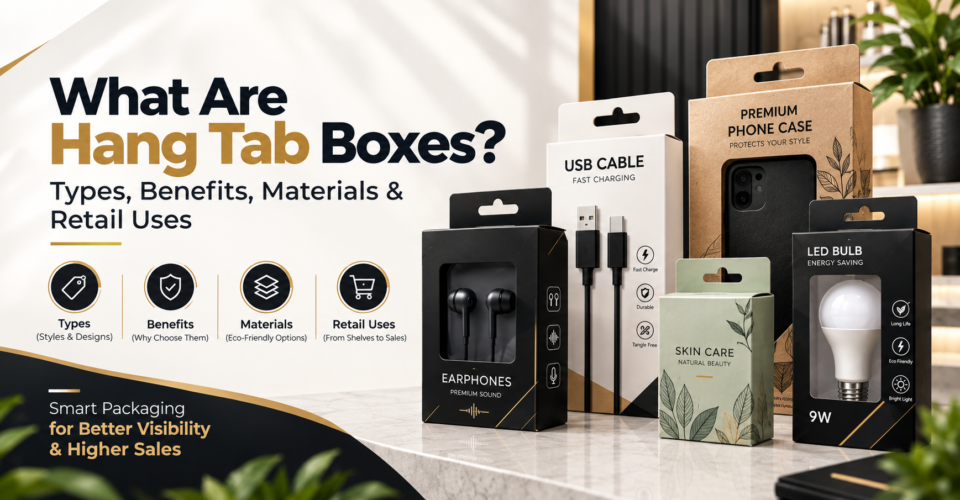
Hang tab boxes are retail packaging boxes with a built-in or attached hanging feature that allows products to be displayed on peg hooks, pegboards, slatwall fixtures, and other retail merchandising systems. They help businesses present products vertically, make packaging easier to browse, and use retail display space more efficiently.
These boxes are commonly used for small electronics accessories, cosmetics, personal care items, stationery, toys, hardware, and other compact consumer products. Depending on the product, hang tab packaging can be made from paperboard, cardboard, kraft board, or suitable corrugated material, with custom printing and structural features to support the product and brand.
For US retailers and product manufacturers, the right hang tab box should do more than hang on a hook. It should fit the product, match the store’s display system, support the package’s weight, provide enough room for branding and required information, and remain presentable during handling.
This article explains how hang tab boxes work, which styles and materials are available, what products they suit, how to choose the right structure, and what to consider before ordering custom retail packaging.
What Are Hang Tab Boxes? A Quick Answer
Hang tab boxes are packaging cartons designed with an integrated tab, die-cut hole, or attached hanger that allows the package to hang from a retail hook or display fixture. Instead of occupying only horizontal shelf space, the product can be displayed vertically, with the front panel facing shoppers.
The hanging feature may be cut directly into the carton or incorporated as a reinforced extension at the top. The best design depends on the product’s weight, box dimensions, material, retail fixture, and how long the package needs to remain on display.
Quick overview
| Feature | What it means |
|---|---|
| Main purpose | Display products on retail hooks and hanging fixtures |
| Common materials | Paperboard, cardboard, kraft board, and suitable corrugated board |
| Typical products | Small electronics, cosmetics, accessories, stationery, and hardware |
| Common hanging styles | Euro slot, round hole, custom die-cut tab, or reinforced hanger |
| Branding options | Full-color printing, logos, product details, and selected finishes |
| Main design priority | Reliable hanging performance combined with clear product presentation |
A hang tab is a display feature, not a guarantee of a particular load capacity. The box must be designed and tested for the actual product weight and intended retail conditions.
How Do Hang Tab Boxes Work?
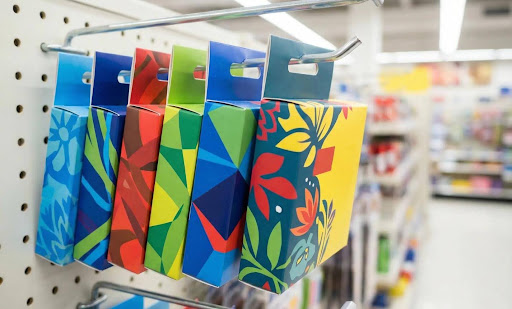
Hang tab boxes work by transferring the packaged product’s weight through the carton structure to a hanging hole or slot that rests on a retail hook. The hook supports the package, while the box keeps the product enclosed and presents the brand to shoppers.
For example, a company selling phone charging accessories could package each item in a printed carton with a Euro slot at the top. Store employees can hang the cartons in rows on a compatible display fixture, making the products easier to organize by brand, model, or price.
The tab’s shape, position, and reinforcement affect how the package hangs. If the hole is too small for the fixture, the box may not fit properly. If the tab tears, bends, or folds under the load, the product can fall or the display can become untidy.
Before approving a design, confirm the following:
- The tab fits the retailer’s hook or display system.
- The carton supports the complete packed product, not just the empty box.
- The hanging point remains stable when the package is handled.
- The front panel faces shoppers in the intended orientation.
- The design leaves enough space for branding, instructions, barcodes, and other product information.
- The finished carton can be packed, transported, stocked, and restocked efficiently.
If you are comparing different packaging structures, Bluebird Packaging’s custom retail box options provide a useful starting point for evaluating how box style and display requirements work together.
Why Do Retail Businesses Use Hang Tab Packaging?
Businesses use hang tab packaging when they want products to be visible on hooks or vertical fixtures without relying entirely on conventional shelves. Its main value is the combination of display convenience, accessible product presentation, and customizable branding.
1. Better Use of Retail Display Space
Retail stores often need to display many products in a limited area. Hanging cartons allow suitable items to occupy vertical merchandising space rather than competing for every available shelf position.
This can be useful in hardware aisles, pharmacy sections, electronics accessory displays, craft stores, and checkout areas. The actual space savings depend on the store fixture, the package dimensions, and how products are arranged.
2. Clearer Product Visibility
A well-positioned hanging box can present its main branding and product information directly toward shoppers. The front panel can communicate the product name, key features, model, color, size, or other details that help customers distinguish between similar items.
For brands selling several variations, a consistent design system makes it easier to maintain recognizable packaging while changing the information specific to each product.
3. Stronger Brand Presentation
Hang tab packaging creates a printable surface for logos, colors, graphics, product photography, instructions, and promotional messaging. Businesses can use this space to make the packaging consistent with their wider brand identity.
The goal is not to fill every inch with graphics. A clear hierarchy—brand first, product identification second, supporting details third—usually creates a more useful package than a crowded design.
Businesses can also explore custom packaging design ideas to plan artwork around the box structure rather than treating the graphics and hanging tab as separate decisions.
4. Easier Organization and Restocking
Products designed for hanging displays can be grouped by type, size, color, or model. Retail staff can arrange matching packages along a display row, making inventory easier to see and replenishment easier to manage.
The benefit depends on the retailer’s merchandising process. A hanging carton is most useful when the store actually has compatible hooks or fixtures and a suitable plan for organizing the products.
5. Product Protection During Retail Handling
A properly designed carton can protect a product from routine contact, dust, scratches, and some handling-related damage. The protection available depends on the material, box structure, closure, internal fit, and product characteristics.
Fragile items may require a fitted insert or additional protective components. A hanging tab alone does not make a package suitable for fragile, heavy, or irregularly shaped products.
6. Flexible Customization
Custom hang tab boxes can be developed around product dimensions, artwork, material preferences, hanging requirements, and finishing choices. This allows businesses to coordinate packaging across product ranges while adapting the structure to individual products.
For brands comparing alternative retail formats, die-cut box packaging can also be considered when the design needs a distinctive shape or a custom structural feature.
Common Types of Hang Tabs Used in Retail Packaging
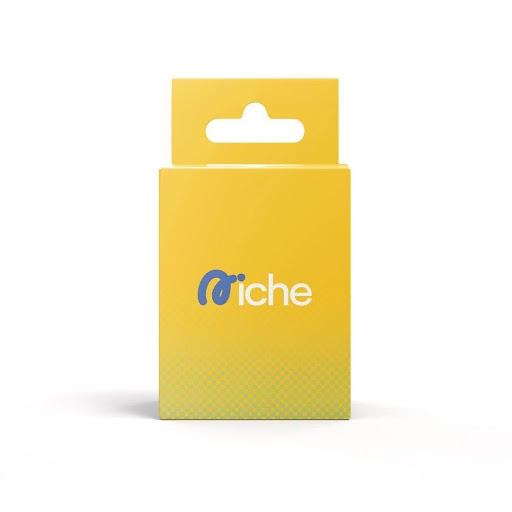
Not every hanging tab has the same shape or function. The correct configuration depends on the retail fixture, package structure, product weight, and display requirements. The following are common design approaches rather than a universal list of standardized load ratings.
Euro Slot Hang Tabs
A Euro slot is a shaped opening near the top of the package designed to fit compatible retail hooks. It is often used on folding cartons for small consumer products.
The shape may include a wider upper section and a narrower lower section, but exact dimensions should be confirmed with the retailer or fixture supplier. Do not assume that every Euro slot fits every peg hook.
Common applications: electronics accessories, small personal care products, accessories, and lightweight household items.
Round-Hole Hang Tabs
Round-hole tabs use a circular opening to hang the package on a compatible peg or hook. They are relatively simple in appearance and can suit certain lightweight cartons.
The hole diameter, material thickness, distance from the top edge, and product weight all affect performance. A round hole should not be selected solely because it is easy to cut.
Common applications: lightweight accessories, stationery, craft supplies, and compact retail items.
Integrated Folded Tabs
An integrated folded tab is created as part of the carton structure. Depending on the design, the tab can be folded or layered to add material around the hanging point.
Because the hanger is part of the carton, it can be incorporated into the artwork and dieline. However, the folded structure still needs to be evaluated for tearing, bending, and compatibility with the retail fixture.
Common applications: custom printed cartons for small consumer products and retail accessories.
Reinforced Hang Tabs
Reinforced tabs use additional material, a folded construction, or another suitable reinforcement method around the hanging point. The purpose is to improve the tab’s resistance to deformation or tearing under the intended load.
Reinforcement should be designed for the actual package rather than added as a substitute for testing. A heavier product may require a stronger box structure, a different material, or an alternative display method altogether.
Common applications: products that need more support than a basic lightweight carton can provide.
Attached or Separate Hang Tabs
Some packages use a separate hanger attached to a carton or another packaging format. This can provide flexibility when a standard box structure is not easy to modify, but the attachment itself becomes an important part of the load-bearing system.
The material, adhesive or mechanical attachment, placement, and surface compatibility should all be checked. If the package includes multiple materials, consider how the combination affects recycling and disposal.
Common applications: selected promotional packs, products with unusual packaging shapes, and packaging systems that need an added hanging feature.
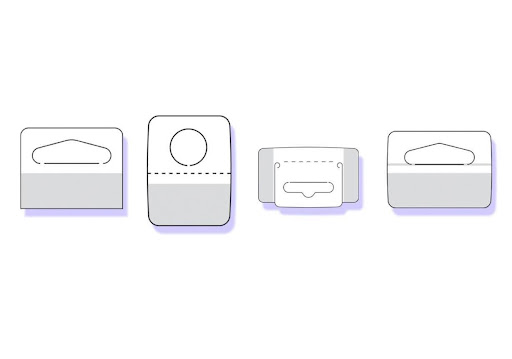
Hang Tab Box Types at a Glance
| Hang tab style | Main characteristic | Best considered for | Important check |
|---|---|---|---|
| Euro slot | Shaped opening for compatible retail hooks | Common hanging-carton applications | Confirm fixture compatibility |
| Round hole | Circular hanging opening | Suitable lightweight products | Check hole size and tear resistance |
| Integrated folded tab | Tab formed from the carton structure | Branded custom folding cartons | Review folds and structural strength |
| Reinforced tab | Additional support around the hanger | Products requiring more support | Test the packed weight and hanging point |
| Attached hang tab | Separate hanging component | Selected nonstandard structures | Validate the attachment and material combination |
The table describes structural approaches, not certified weight limits. Actual performance depends on the finished design and test conditions.
What Materials Are Used for Hang Tab Boxes?
Hang tab boxes are commonly made from paper-based packaging materials, but the right choice depends on the product’s weight, protection needs, print requirements, and intended retail environment.

Paperboard and Cardboard
Paperboard is commonly used for printed retail cartons because it offers a practical surface for logos, text, product images, and other graphics. The selected grade and thickness should provide enough rigidity for the carton and its hanging feature.
For many lightweight retail products, a folding-carton structure may be suitable. The exact material specification should be confirmed after the product dimensions, weight, and display requirements are known.
Explore custom cardboard boxes when comparing paper-based box structures for product presentation and branding.
Kraft Board
Kraft-style board is an option for brands that prefer a natural brown appearance or a simpler visual style. It can work well for selected accessories, handmade goods, and products whose branding suits an understated packaging design.
Printing on brown board can look different from printing on a white surface. Colors, fine details, and contrast should be reviewed against the actual stock before production.
Businesses can compare custom Kraft box options when considering a natural-looking retail presentation.
Corrugated Board
Corrugated board contains a fluted layer between liner sheets. Its construction can provide greater cushioning and stiffness than many lightweight folding-carton materials, depending on the flute and board specification.
It may be worth evaluating when the packaged product needs additional protection or a stronger structure. However, corrugated board can make a package bulkier and may not suit every small retail fixture or fine-detail printing requirement.
Review custom corrugated boxes when the product’s protection needs are an important part of the packaging decision.
How to Choose the Material
| Material | Potential advantages | Considerations |
|---|---|---|
| Paperboard/cardboard | Printable surface, folding-carton flexibility, compact presentation | Must be specified for product weight and tab strength |
| Kraft board | Natural appearance and space for simple branding | Printed colors may look different on brown stock |
| Corrugated board | Can provide added cushioning and structural stiffness | May increase package thickness and affect display fit |
| Mixed-material construction | May support specialized product or display needs | Attachment strength and end-of-life separation need consideration |
No material is automatically the strongest or most sustainable choice for every application. Compare the finished package—not just the flat sheet—and verify that the material, tab, closure, and product fit work as a complete system.
What Products Work Well With Hang Tab Packaging?
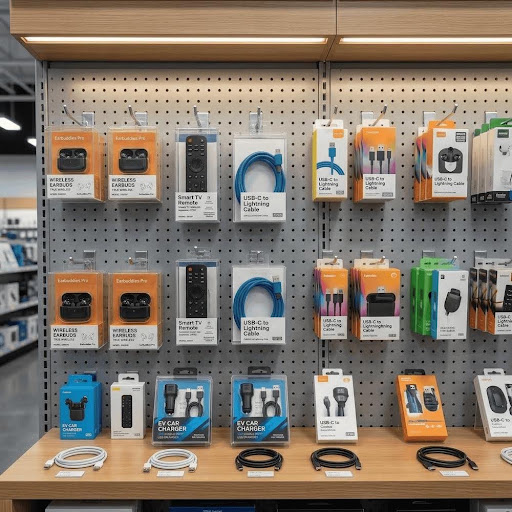
Hang tab boxes are most suitable for products that can be safely supported by a hanging carton and benefit from being displayed vertically. The package should be sized for the product and designed around its weight, shape, retail environment, and handling requirements.
Electronics and Accessories
Charging cables, adapters, earbuds accessories, small device components, and similar products can be packaged in hanging cartons. The design should leave room for product specifications, compatibility information, and barcodes.
Beauty and Personal Care
Selected skincare accessories, cosmetic tools, travel-size products, and personal care items can use hang tab packaging. The box should accommodate the product securely and provide enough space for relevant product information.
Stationery and Craft Supplies
Pens, markers, small craft tools, adhesive products, and compact stationery sets are potential candidates. Hanging packages can help stores organize several product variations in one display area.
Hardware and Home Accessories
Small tools, fasteners, fittings, and selected household accessories may benefit from hanging cartons. These applications require particular attention to product weight, sharp edges, and tab strength.
Toys, Gifts, and Promotional Products
Compact toys, small gift items, and promotional merchandise may work well in hanging packaging when the structure protects the contents and supports the display method.
These are examples, not automatic recommendations for every product in a category. A heavy tool, fragile electronic device, or liquid-filled container may require a different structure or additional protection.
For products that need a front-facing presentation but do not necessarily need a hanging feature, custom display boxes may be a more appropriate option.
Hang Tab Boxes vs. Standard Retail Boxes
The key difference is the intended display method. Hang tab boxes are designed to hang from compatible fixtures, while standard retail boxes are generally placed on shelves, counters, or inside display units. Some custom boxes can be designed for more than one display method.
| Comparison | Hang Tab Boxes | Standard Retail Boxes |
|---|---|---|
| Primary display method | Peg hooks or compatible hanging fixtures | Shelves, counters, or display units |
| Space use | Uses vertical display space | Uses shelf or counter space |
| Structural requirement | Tab and hanging point need suitable support | Structure depends on shelf stability and product weight |
| Front-facing presentation | Often suited to rows of hanging products | Depends on shelf arrangement |
| Product suitability | Products that can be safely suspended | A broad range of products and box sizes |
| Design considerations | Hook compatibility, tab position, hanging strength | Footprint, stacking, access, and shelf presentation |
Choose hang tab packaging when the retailer uses hanging fixtures and the product can be supported safely. Choose a conventional retail box when shelf placement, stacking, a larger product footprint, or a different opening style better suits the application.
If you need a broader comparison of retail packaging formats, the different types of packaging and their uses can help clarify which structure fits your product and sales channel.
How to Design Custom Hang Tab Boxes
A successful hang tab box combines a suitable structure, accurate dimensions, the right material, and readable artwork. The design process should begin with the product and display fixture, not with graphics alone.
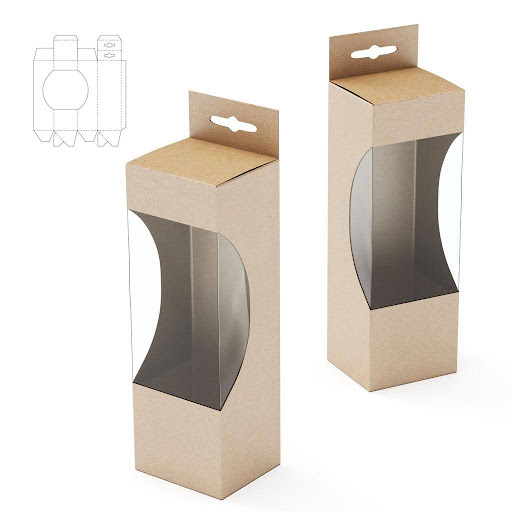
Step 1: Measure the Product
Measure the product at its widest, tallest, and deepest points. Include caps, accessories, closures, or other components that will be packed with it.
Decide how the product will sit inside the carton and whether it needs an insert or protective layer. These details determine the internal space the box needs.
For practical measurement instructions, follow the steps in our guide to measuring a box accurately.
Step 2: Confirm the Retail Fixture
Ask the retailer which display system will be used. A pegboard hook, slatwall fixture, and other hanging systems may require different tab dimensions or configurations.
Do not assume that a standard-looking slot will fit every fixture. Confirm the relevant specifications before finalizing the dieline.
Step 3: Establish the Product Weight
Consider the complete packed weight, including the product, carton, inserts, and any accessories. Evaluate how the package will behave while hanging and when shoppers lift it off the fixture.
The appropriate design may need a reinforced tab, a stronger material, a different box structure, or a separate hanging component. Do not assign a weight limit without validating the finished package.
Step 4: Choose the Box Structure and Material
Select a carton style that suits the product and how it will be filled. Then choose a material specification that supports the product, display method, and required print quality.
A lightweight item may suit a folding paperboard carton, while a product that needs more cushioning may require a different construction.
Step 5: Plan the Artwork
Organize the front panel so shoppers can identify the brand and product quickly. Keep important text away from folds, cuts, glue areas, and the hanging opening.
Depending on the product, the design may include:
- Brand logo and product name
- Product photography or illustrations
- Key features or compatible models
- Instructions or relevant warnings
- Barcode and other required information
- Website or customer support details, where appropriate
The information required on the package varies by product and applicable US requirements. Check the relevant rules before approving final artwork.
Step 6: Select Printing and Finishing
Choose printing and finishing based on the desired appearance, material, and budget. A simple, high-contrast design can work well for products that need clear identification, while a beauty or premium accessory brand may prefer a more refined finish.
Review the available custom packaging printing options and packaging finishes before deciding which features are worth including.
Step 7: Review a Sample and Test the Package
Before committing to a larger production run, review a physical sample when appropriate. Check the fit, closure, tab alignment, print quality, and package orientation.
A practical test should reflect the intended use. Check whether the packed carton remains stable on the selected fixture, whether the tab shows signs of tearing or deformation, and whether the product stays secure during normal handling.
A digital mockup can help review artwork and appearance, but it does not replace physical testing of structural performance.
Printing and Branding Ideas for Hanging Retail Boxes
The hanging tab itself is only one part of the package. Artwork and branding determine how effectively the box communicates the product to shoppers.
Use a Clear Front-Panel Hierarchy
Make the brand and product name easy to identify. Supporting information should be readable without competing with the main message.
For products sold in multiple colors, sizes, or models, use a consistent layout with controlled differences between variants.
Make the Most of the Available Print Area
The tab, opening, folds, and glue areas affect how much usable space is available. Keep essential text and logos away from areas that may be cut, folded, covered, or distorted during assembly.
Artwork should be prepared against the approved dieline rather than a generic flat rectangle.
Choose Finishes That Support the Product
Matte or gloss finishes, foil accents, embossing, and spot UV can be considered where they fit the design and material. They are optional enhancements, not requirements for effective retail packaging.
Consider a Window Only When It Adds Value
A window can help shoppers see the product, but it also changes the package structure and available artwork area. Consider whether product visibility is genuinely useful and confirm the window material and construction suit the application.
For more ideas on coordinating graphics, colors, and structural details, see our custom packaging design resource.
Sustainability and Recycling Considerations
Paper-based hang tab boxes may be recyclable where suitable collection and processing systems accept the material and the finished package. However, recyclability depends on the complete construction, including coatings, laminations, windows, adhesives, and any attached plastic components.
A paperboard box with a plastic hanger or window may be handled differently from a package made entirely from accepted paper-based materials. Local recycling rules also vary across the United States.
Before making environmental claims:
- Identify the actual material used in each packaging component.
- Check whether coatings or laminations affect recycling options.
- Determine whether attached components need to be separated.
- Verify local acceptance rather than assuming every paper-based package is recyclable everywhere.
- Avoid broad claims such as “100% eco-friendly” without appropriate evidence.
The US Environmental Protection Agency provides guidance on how to recycle common materials. Use it as a starting point, then check the rules applicable to your local area and packaging components.
For additional background, read Bluebird Packaging’s guide to sustainable packaging choices and its overview of packaging recycling considerations.
What Affects the Cost of Custom Hang Tab Boxes?
The price of custom hang tab packaging depends on the complete specification rather than the hanging feature alone. Material, dimensions, construction, printing, finishing, order quantity, inserts, sampling, and delivery requirements can all influence the quotation.
| Cost factor | Why it matters |
|---|---|
| Box dimensions | Affects material use and the overall carton design |
| Material and thickness | Influences stiffness, protection, appearance, and production requirements |
| Tab structure | May require extra material, reinforcement, or additional construction steps |
| Printing | Depends on artwork, colors, print coverage, and production method |
| Finishing | Specialty coatings and decorative effects can add production steps |
| Order quantity | Affects setup allocation, unit cost, and total investment |
| Inserts and windows | Add components or change the carton construction |
| Sampling and delivery | Depend on project needs and shipping arrangements |
To compare quotations fairly, give each supplier the same product dimensions, packed weight, hanging fixture requirements, material preference, artwork requirements, quantity, and delivery destination.
For a more detailed explanation of the factors that influence packaging prices, see Bluebird Packaging’s packaging cost guide.
The cheapest unit price is not always the best overall choice. A package that fails during display, damages the product, or does not fit the retailer’s fixture may create additional costs.
Common Hang Tab Packaging Mistakes to Avoid
Even a well-designed carton can underperform if the hanging feature or package specification is overlooked.
| Common mistake | Why it matters | Better approach |
|---|---|---|
| Choosing a tab before checking the fixture | The package may not fit the retail hook | Confirm the retailer’s requirements first |
| Ignoring packed product weight | The tab may bend or tear | Evaluate the complete packed load and test the design |
| Using a carton that is too small | The product may not fit or may be damaged | Measure the product and any protective components |
| Using excessive packaging | Extra material can increase size and cost | Right-size the box without compromising protection |
| Crowding the front panel | Shoppers may struggle to identify the product | Establish a clear visual hierarchy |
| Placing text near cuts and folds | Important information may be damaged or hidden | Review the final dieline before production |
| Skipping sample testing | Structural problems may appear after production | Inspect the physical package under realistic conditions |
| Making unsupported recycling claims | Claims may not reflect the complete package or local facilities | Verify the materials and relevant recycling guidance |
Custom Hang Tab Box Design Checklist
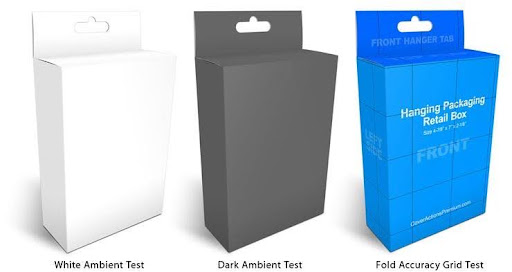
Use this checklist before approving a custom hanging carton.
Pre-production checklist
- Confirm the product’s dimensions and complete packed weight.
- Identify the retail hook, pegboard, or hanging fixture.
- Choose the appropriate tab style and opening dimensions.
- Select a suitable box structure and material specification.
- Allow room for inserts or protective components, if needed.
- Prepare artwork against the approved dieline.
- Check logo placement, text readability, and barcode location.
- Confirm printing and finishing requirements.
- Review recycling and environmental claims for accuracy.
- Inspect a sample and test hanging performance before production.
- Confirm quantity, quotation details, and delivery requirements.
Review each item before approving production.
Frequently Asked Questions About Hang Tab Boxes
What are hang tab boxes used for?
Hang tab boxes are used to display products on retail peg hooks and compatible hanging fixtures. They are common options for small electronics accessories, cosmetics, stationery, hardware, toys, and other compact products that benefit from vertical display.
What is a hang tab on a box?
A hang tab is a built-in or attached part of a package that contains a hole or slot for hanging the box on a retail fixture. Its design must match the fixture and support the complete packed product safely.
What is the difference between a Euro slot and a round-hole tab?
A Euro slot uses a shaped opening designed for compatible retail hooks, while a round-hole tab uses a circular opening. The right choice depends on the fixture, carton structure, product weight, and required display orientation.
Are hang tab boxes strong enough for heavy products?
They can be designed for different product requirements, but not every hang tab box is suitable for heavy items. Material, tab geometry, reinforcement, product weight, and the hanging fixture all affect performance. Test the finished package before use.
Which material is best for hanging tab packaging?
Paperboard and cardboard are common options for many lightweight retail cartons. Kraft board can provide a natural appearance, while suitable corrugated structures may be considered when additional protection or stiffness is needed. The right choice depends on the product and display requirements.
Can hang tab boxes be custom printed?
Yes. Custom hang tab packaging can incorporate brand logos, colors, graphics, product information, and selected finishing options. Artwork must be designed around the carton structure, folds, and hanging opening.
Are hang tab boxes recyclable?
Some paper-based hang tab boxes may be recyclable where local facilities accept their materials and construction. Coatings, plastic windows, attached hangers, and mixed materials can affect how the package should be handled. Verify the complete packaging specification and local guidance.
Are hang tab boxes suitable for e-commerce?
They may be suitable as the product’s primary packaging, but hanging cartons are not automatically designed to withstand parcel shipping. If the package will be shipped directly to customers, evaluate whether it needs an additional protective outer carton or other safeguards. Bluebird Packaging’s e-commerce packaging guidance explains the different considerations involved in shipping and product presentation.
How do I order custom hang tab boxes?
Start with the product dimensions, complete packed weight, quantity, preferred material, display fixture, artwork, and any special protection requirements. These details help a packaging supplier assess the appropriate structure and prepare a more useful quotation.
Choose Hang Tab Packaging That Fits Your Product
Hang tab boxes combine product packaging and vertical retail display in one structure. When correctly designed, they can help businesses organize compact products, present branding clearly, and make effective use of compatible retail fixtures.
The best design depends on the product’s size and weight, the hanging system, material, print requirements, and the conditions the package will encounter. Confirming these details before production helps avoid compatibility issues and unnecessary redesigns.
Bluebird Packaging offers custom hang tab boxes for businesses looking to develop packaging around their product and retail presentation requirements. If you are comparing several formats, explore the wider retail packaging collection to consider alternative box structures as well.
Ready to discuss your packaging specifications? Share your product dimensions, packed weight, preferred material, display requirements, quantity, and artwork with Bluebird Packaging’s custom quote team to discuss a suitable packaging solution.