
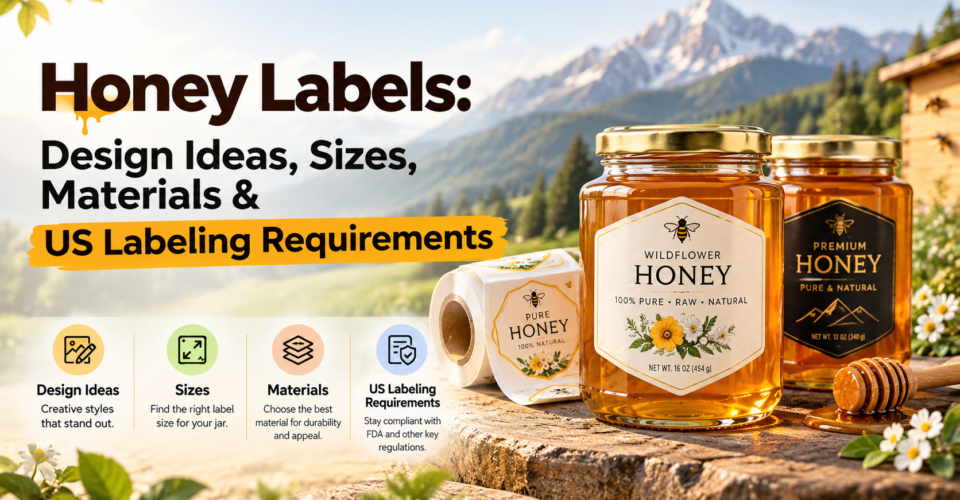
Honey labels do more than identify what is inside a jar. They communicate your brand story, help customers distinguish honey varieties, provide important product information, and influence how your honey is perceived on a shelf or online.
The best honey labels combine clear product information, readable typography, a suitable label size, durable materials, and a distinctive design. For honey businesses selling in the United States, the label must also follow applicable food-labeling requirements, including rules for the product name, net quantity, business information, and any added ingredients.
Whether you are a beekeeper selling at farmers’ markets, a small business launching a honey brand, or an established producer expanding into retail, this guide explains how to design custom honey labels, choose the right materials, measure jars, and prepare your artwork for printing.
Quick answer: A good honey label should clearly identify the product, display the correct net weight, include the required business information, and provide any additional declarations required for that particular honey product. Choose the label size based on your actual container, and select a material that withstands moisture, sticky fingers, and regular handling. In the United States, consult the FDA’s guidance on labeling honey and honey products and check applicable state requirements before printing a large batch.
What Are Honey Labels?
Honey labels are printed or applied graphics that identify a honey product and communicate information about its brand, contents, quantity, and origin. They can be attached to glass jars, plastic containers, squeeze bottles, gift packages, and other honey packaging.
A honey label may include a business logo, the word “Honey,” a floral variety such as clover or wildflower, net weight, manufacturer or distributor details, and other information relevant to the product.
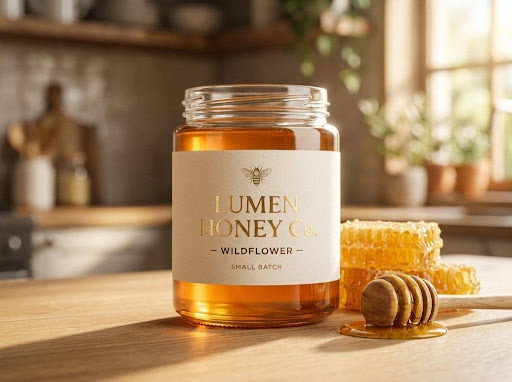
For small honey producers, labels also help create a consistent brand identity. A simple kraft label may communicate a handcrafted, local feel, while a clean white label with gold accents may suit a premium gift product.
Common honey label applications include:
- Retail honey jars: Labels for products sold in grocery stores, specialty shops, and local markets.
- Farmers’ market honey: Labels that highlight the beekeeper, apiary, location, or honey variety.
- Squeeze bottles: Flexible labels designed for plastic honey bears and other squeezable containers.
- Flavored honey: Labels that clearly identify added flavors, spices, or other ingredients.
- Gift honey: Decorative labels designed for wedding favors, holiday gifts, and premium gift sets.
- Private-label honey: Branding for honey sold under a retailer’s or another business’s name.
Choosing the right format begins with understanding your product, container, and intended customer. If you are exploring the wider world of product packaging, remember that the label and the package should work together rather than compete for attention.
What Information Should a Honey Label Include?
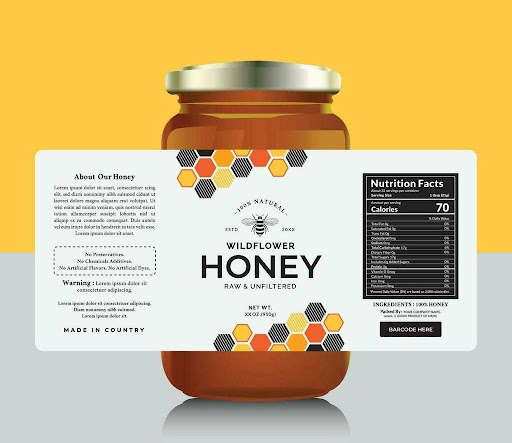
For honey sold in the United States, label requirements depend on the product’s ingredients, packaging, claims, and applicable federal and state rules. Before finalizing a design, separate information that is legally required from optional branding and marketing details.
The FDA provides a useful starting point in its official honey-labeling guidance. This guide is general information, not a substitute for reviewing the rules that apply to your particular product.
1. Product Name
The product name should accurately identify what you are selling. For a product consisting only of honey, “Honey” is the usual common or usual name.
You can add a variety or floral-source description, such as “Clover Honey” or “Wildflower Honey,” when the description is accurate and supported by the product’s characteristics.
Products containing added sweeteners, flavors, spices, or other ingredients may need a different or more descriptive name. Avoid presenting a honey blend or flavored product in a way that could mislead customers into believing it contains only pure honey.
2. Net Weight
The net quantity statement communicates how much honey is inside the container, excluding the jar, lid, and other packaging.
For US retail labels, net quantity is generally expressed by weight rather than fluid volume. A statement might look like this:
NET WT 16 OZ (454 g)
The correct quantity must reflect the actual product and applicable measurement rules. The statement’s placement and type size are also regulated. Under US food-labeling rules, the net quantity statement generally belongs in the bottom 30% of the principal display panel, subject to the applicable requirements.
Do not simply copy a net-weight statement from another honey brand. Confirm your own product’s weight and the appropriate label specifications before printing.
3. Business Name and Address
Honey packaging generally needs the name and place of business of the manufacturer, packer, or distributor, as applicable. Depending on the circumstances and labeling rules, the address may need to include the street address, city, state, and ZIP code.
If another company packs or distributes your honey, make sure the label accurately describes the business relationship. Do not use another producer’s details unless you are authorized to do so and the wording is appropriate.
4. Ingredient Statement
Pure, single-ingredient honey may qualify for an exemption from a separate ingredient declaration under applicable US rules. However, honey containing added ingredients may require an ingredient statement.
For example, a product containing honey and cinnamon should identify the product accurately and declare its ingredients as required. Products containing major food allergens must comply with applicable allergen-labeling requirements.
Do not assume that every flavored, infused, or blended honey product follows the same labeling rules as pure honey.
5. Nutrition Facts
A Nutrition Facts panel may be required, but certain businesses and products can qualify for exemptions under FDA rules. Eligibility depends on the relevant criteria and circumstances, and making certain nutrition claims can affect exemption eligibility.
Before leaving this panel off your honey label, verify whether your business and product qualify for an exemption. When uncertain, consult the FDA’s current guidance or a qualified food-labeling professional.
6. Country of Origin and Product Claims
Imported honey may be subject to country-of-origin marking requirements. Other claims—such as “organic,” “raw,” “local,” “pure,” or a specific grade—must be accurate and comply with the applicable rules.
For organic claims, review the USDA Agricultural Marketing Service’s organic labeling guidance. Do not use the USDA organic seal or make a regulated organic claim unless the product and operation meet the applicable requirements.
7. Additional Information That Helps Customers
Some details may be useful even when they are not universally required on every honey label:
- Floral variety or honey type
- Harvest season or batch identification
- Best-by date, where appropriate
- Barcode for retail distribution
- Website or customer service details
- Storage guidance
- A safety statement advising against feeding honey to children under one year of age
The infant warning is important because honey should not be fed to children under 12 months. Check state-specific requirements to determine whether particular warning wording must appear on your product.
Practical tip: Complete a labeling checklist before designing the artwork. Changing a label after printing can be more expensive than reviewing the wording before production.
Best Honey Label Design Ideas for Different Brands
A strong honey label makes the product recognizable without making the information difficult to read. The best design depends on your customer, honey variety, price positioning, container, and sales channel.
Here are seven honey label design approaches worth considering.
1. Rustic Kraft Honey Labels
Kraft-style labels suit beekeepers, farm shops, local honey brands, and businesses that want a natural, handcrafted visual identity.
Useful design elements include:
- Warm brown and cream colors
- Simple bee or honeycomb illustrations
- Serif typography
- Hand-drawn botanical details
- A restrained, uncluttered layout
Kraft paper can create a natural appearance, but untreated paper may not withstand moisture or sticky honey residue well. Consider a suitable protective finish and test it on the actual container before ordering a large quantity.
2. Minimalist Honey Labels
Minimalist labels use a limited color palette, clean typography, and generous spacing. They work well for contemporary brands that want the honey itself to become part of the visual presentation.
A minimalist front label might feature the brand name, “Honey,” the variety, and the net weight. Additional required information can appear on the appropriate information panel.
Keep decorative elements secondary to essential product information. A minimalist label should be simple, not incomplete.
3. Premium Gold and Black Honey Labels
Black, deep amber, cream, and metallic gold can help create a premium look for specialty honey, gift sets, and higher-end retail products.
Consider:
- A restrained metallic accent
- Matte background material
- A clean brand mark
- A consistent design across product varieties
- A coordinated gift box
Metallic effects may require specialized printing or finishing processes. Ask the printer whether the proposed finish is available on your chosen label material and whether it affects cost or production requirements.
4. Floral and Botanical Honey Labels
Botanical illustrations can help distinguish honey varieties associated with particular flowers or plants.
For example, a brand could use different accent colors and illustrations for clover, wildflower, or orange blossom honey. Only use floral-source descriptions that accurately represent the product.
A consistent design system makes it easier for customers to recognize your brand while identifying the variety they want.
5. Transparent Honey Labels
Clear labels can create a subtle appearance on glass jars, allowing the honey’s natural color to remain visible.
Transparent film may be a good option when the jar itself is part of the product presentation. However, clear labels need careful contrast planning: light text may disappear against the honey, while dark text may be difficult to read on a dark background.
Test the label on a filled jar under normal retail lighting. A design that looks good on a computer screen may appear different when applied to real packaging.
6. Personalized Honey Labels for Gifts
Personalized labels are useful for wedding favors, corporate gifts, seasonal products, and small gift sets.
They might include an event name, a short message, a date, or a customized brand design. Keep any personalization within the available print area and ensure it does not obscure required product information.
For multiple gift products, a consistent label template can reduce design work while allowing the names, colors, or event details to change.
7. Illustrated Labels for Small Honey Businesses
Illustrations of bees, beehives, flowers, mountains, or local landscapes can help a small producer tell a recognizable brand story.
Use illustrations that support the product’s identity rather than crowding the label. A memorable logo and one or two visual elements are often more effective than a collection of competing graphics.
For further inspiration, explore these packaging design ideas and consider how the same visual identity could extend across your jar labels, shipping materials, and gift packaging.
How to Choose the Right Honey Jar Label Size and Shape
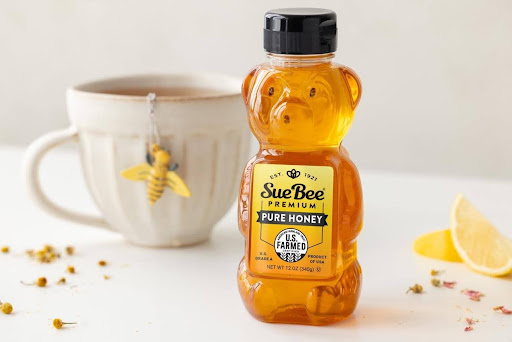
There is no single label size that fits every honey jar. The correct dimensions depend on the container’s shape, the flat or curved area available, the amount of information that must appear, and the label material.
Measure your actual jar or bottle instead of relying only on the container’s advertised capacity.
Common Honey Containers and Suitable Label Shapes
| Container type | Label shapes to consider | Important design consideration |
|---|---|---|
| Round glass jar | Rectangle, oval, or wraparound | Measure the usable body area and allow for a clean seam |
| Queenline-style jar | Oval or rectangle | Keep the label within the flatter front panel |
| Hexagonal jar | Rectangle or custom-shaped label | Check the available flat face and corners |
| Plastic honey bear | Portrait rectangle or shaped label | Choose material that tolerates squeezing |
| Small sample jar | Small rectangle or circle | Prioritize essential information and readability |
| Honey gift jar | Front label plus lid label | Coordinate the label with the gift presentation |
These are starting points, not guaranteed dimensions. Containers that look similar can have different body heights, shoulders, curves, and usable label areas.
How to Measure a Honey Jar for a Label
Follow these steps before preparing your artwork.
Step 1: Identify the label area. Find the portion of the container where the label will sit. Avoid shoulders, sharp curves, seams, and areas that prevent the label from lying flat.
Step 2: Measure the available height. Use a ruler to measure the vertical space between the upper and lower boundaries of the intended label area.
Step 3: Measure the width. For a flat-front jar, measure the usable front panel. For a round jar, wrap a flexible paper strip around the body to estimate its circumference.
Step 4: Allow for a gap or seam. A wraparound label may need a small gap rather than overlapping edges. Follow the label printer’s template and application recommendations.
Step 5: Check the actual filled container. The filled jar is the best reference for checking how the label looks, how much space is available, and whether the material follows the surface correctly.
Step 6: Test a sample. Apply a test label before committing to a large order. Check alignment, readability, adhesion, and appearance from different angles.
If your label is part of a larger box design, the packaging artwork should use the correct dimensions and production template. A related packaging dieline guide can help explain why a print layout needs to account for cut lines, folds, and safe areas.
Choosing the Best Material for Honey Labels
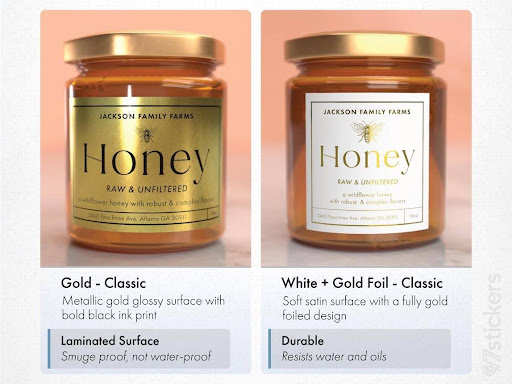
Honey jars can become sticky during filling, handling, transport, and use. Labels therefore need to suit the container, adhesive surface, storage environment, and expected handling.
The best material is not necessarily the most expensive one. It is the material that maintains a readable, attractive appearance throughout the product’s intended use.
| Label material | Appearance | Potential advantages | Considerations |
|---|---|---|---|
| Coated paper | Smooth and polished | Good print appearance and broad design flexibility | May need protection against moisture and residue |
| Kraft paper | Natural and rustic | Suits handmade and farm-inspired branding | Can stain or absorb moisture without suitable protection |
| White film | Clean and versatile | Often practical for wipe-clean labels | Confirm adhesive and environmental suitability |
| Clear film | Transparent | Allows the honey and jar to remain visible | Requires careful contrast and background planning |
| Metallic film or foil accents | Premium and decorative | Can enhance gift and specialty products | May add production cost and require specific printing methods |
| Flexible film | Suitable for squeezable containers | Can follow a container that flexes during use | Confirm flexibility and adhesive performance with the supplier |
Are Waterproof Honey Labels Worth It?
Water-resistant or waterproof label materials are often a practical choice for honey jars because they can handle routine wiping and sticky residue better than unprotected paper.
However, “waterproof” alone does not guarantee a successful label. Adhesive performance depends on the container surface, cleanliness, temperature, application method, and storage conditions.
Before ordering, ask the supplier about:
- Resistance to water and routine wiping
- Adhesion to glass or the specific plastic used
- Performance on curved or squeezable containers
- Compatibility with refrigeration or other storage conditions, if relevant
- Available finishes and printing methods
Always apply labels to clean, dry containers according to the material supplier’s instructions. Honey residue or condensation can interfere with adhesion.
For more detail about selecting packaging stock, see this guide to packaging materials.
How to Design and Print Custom Honey Labels
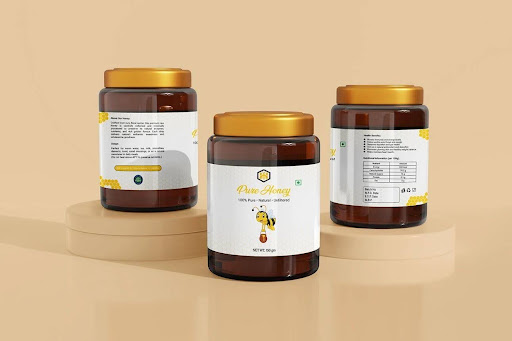
Designing custom honey labels is easier when you work through the project in a consistent order. This approach helps prevent expensive revisions and makes it easier to produce a label that looks good on the finished container.
Step 1: Define Your Brand and Customer
Decide who the honey is for and where it will be sold.
A beekeeper selling locally may want to emphasize the apiary, location, and handcrafted identity. A premium gift brand may prefer refined typography and coordinated packaging. A brand selling through multiple retailers may need a standardized layout across several varieties.
Your intended customer should influence the design, but the label must remain accurate and readable.
Step 2: Collect the Correct Product Information
Gather the product name, net weight, business details, ingredient information when applicable, and any other required declarations before designing the label.
Check the claims you plan to use, especially statements involving organic status, floral source, grade, or other product characteristics.
Do not leave the compliance review until after the artwork has been finalized.
Step 3: Select the Label Shape and Size
Measure the actual container and choose a label shape that fits its usable surface.
A rectangle is often versatile, an oval can complement a rounded front panel, and a wraparound label can provide more space when the container allows it. Custom shapes can make a brand distinctive, but the final shape must remain practical to print and apply.
Step 4: Create a Clear Visual Hierarchy
Organize the information so customers can quickly identify the brand and product.
A typical front-label hierarchy could be:
- Brand name or logo
- Product name
- Honey variety, when accurate
- Net weight statement
- A supporting illustration or design element
This is a design framework, not a substitute for required label placement and formatting rules.
Keep decorative fonts for short brand names rather than small information-heavy text. Make sure the label remains readable at its actual printed size.
Step 5: Prepare Print-Ready Artwork
Use the printer’s specifications rather than guessing the document size or bleed settings.
Ask about:
- Final trim dimensions
- Bleed and safe-area requirements
- Color mode and acceptable color profiles
- Image resolution
- Font handling and outlined text
- Cut lines for custom-shaped labels
- Accepted PDF or other production file formats
If the design includes special finishes, confirm whether the printer needs separate artwork layers or additional production instructions.
A review of your packaging artwork before printing can help catch layout errors, missing text, and other avoidable problems. For color and surface effects, see the available packaging finishes.
Step 6: Approve a Proof
Review the proof at actual size and inspect the design on the intended container.
Check spelling, net weight, business details, ingredients where applicable, text contrast, label alignment, and the appearance of colors. A proof also helps you evaluate whether small text remains readable after printing.
Do not approve a design solely because it looks attractive on a large monitor.
Step 7: Test the Label on a Filled Jar
Apply a sample to a filled container and evaluate the finished presentation.
Check whether the label wrinkles, lifts at the edges, becomes difficult to read, or loses its visual contrast. If the product will be handled frequently, simulate ordinary handling and wiping conditions appropriate to its use.
Make necessary changes before placing a large order.
Step 8: Plan the Print Quantity
Estimate the number of labels needed for your initial production run and allow for reasonable extras to cover application errors, testing, or damaged labels.
Ordering too few can lead to repeated setup or shipping costs. Ordering too many before confirming demand can tie up cash and leave you with outdated labels if the design or product information changes.
For small businesses, an initial sample or short run can be useful before committing to a larger quantity.
Honey Label Requirements: Common Mistakes to Avoid
Even an attractive design can cause problems if the label information is inaccurate or the material is unsuitable.
Avoid these common mistakes:
- Using fluid ounces instead of weight for net quantity: Confirm the correct net-weight statement for the US market.
- Leaving out business information: Check the applicable name-and-address requirements.
- Using an inaccurate product name: Do not describe a blended or flavored product in a way that misrepresents its contents.
- Assuming every honey needs the same ingredient statement: Requirements depend on the product and applicable exemptions.
- Omitting a required Nutrition Facts panel: Verify eligibility before relying on an exemption.
- Making unsupported claims: Use terms such as “organic,” “raw,” or a floral variety only when the claim is accurate and permitted.
- Choosing a label that is too small: Required information must remain legible and meet applicable rules.
- Using unsuitable materials: Unprotected paper may not perform well on jars that become sticky or damp.
- Skipping a physical proof: A screen preview cannot fully show how a label fits a curved jar.
- Ignoring state rules: Requirements may vary depending on where the honey is produced and sold.
Before production, compare your artwork with the FDA’s guidance for honey and honey products and review applicable state agriculture or food-labeling requirements.
How to Make Your Honey Packaging Stand Out
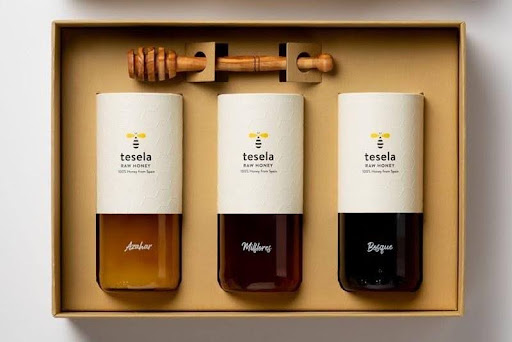
Labels are only one part of the customer experience. The container, outer packaging, product presentation, and shipping protection should reinforce the same brand identity.
Coordinate the Label With the Box
For gift sets, specialty retail, or multiple jars sold together, a coordinated box can make the product look more complete and help keep the jars organized.
Depending on the product and presentation, options include:
- Cardboard boxes for suitable retail or gift packaging
- Corrugated boxes for shipping and protective outer packaging
- Rigid boxes for premium gift presentations
- Display boxes for appropriate retail merchandising
- Die-cut boxes for custom structures and product visibility, where the design allows
- Mailer boxes for selected direct-to-consumer packaging applications
The right structure depends on jar dimensions, weight, fragility, presentation, and shipping conditions. Glass honey jars typically need a well-planned protective arrangement; an attractive outer box alone does not guarantee safe delivery.
Choose Packaging for Your Sales Channel
A jar sold at a farmers’ market may need a different presentation from a multi-jar ecommerce gift set.
For online orders, consider the space required for protective inserts and separation between glass containers. For retail shelves, focus on product visibility and a clear, consistent brand presentation. For gift products, consider how the label, box, and any included accessories work together.
If you sell several food products, explore custom food boxes as a starting point for coordinated food packaging. For brands with a broader retail range, custom retail boxes may also be relevant.
Premium gift collections may benefit from the presentation options available through custom rigid boxes.
Build a Consistent Brand Across Your Product Range
Use a consistent logo, typography system, and overall layout across different honey varieties. Change selected colors or botanical illustrations to distinguish products without making the range look unrelated.
This approach can also make future packaging updates easier. If you add a new variety, you can often adapt an established design rather than starting from scratch.
For a broader look at the role of packaging in brand recognition, read about packaging design and how it can support a more consistent customer experience.
Honey Labels for Small Businesses and Beekeepers
Small honey businesses often need to balance professional presentation with limited budgets, small production runs, and changing product ranges.
A practical approach is to begin with a simple, well-structured label and improve it as the business grows.
Start With One Core Label Design
Create a main template containing the brand identity and recurring information. For different honey varieties, change only the elements that genuinely need to change, such as the product variety or accent color.
Always review the complete label for each product. Different ingredients, claims, weights, or other product details can require changes beyond the visual design.
Choose Materials Based on Real Use
Do not pay for a premium finish simply because it looks impressive in a sample. First decide whether the label needs to resist moisture, accommodate a squeezable container, or create a premium gift appearance.
Test practical materials and finishes on your actual jar. The best option is the one that suits the product, budget, and intended use.
Plan for Label Updates
Honey businesses may change their logo, contact details, product varieties, or labeling information over time. Avoid ordering more labels than you can reasonably use before a likely update.
Before a repeat order, review the artwork and product information rather than automatically reprinting the previous version.
Coordinate Labels With Custom Packaging
As your business expands into retail stores, ecommerce, and gift sets, consistent packaging can make the brand easier to recognize.
Bluebird Packaging offers a range of custom packaging options that may suit honey gift sets, retail presentation, and shipping needs. Explore the Bluebird Packaging website to review available packaging formats and determine whether they fit your project.
For broader guidance on planning packaging with a limited budget, read this article on packaging for small businesses.
Honey Label Design Checklist Before Printing
Use this checklist before approving your final artwork.
- ☐ The product name accurately describes the honey.
- ☐ Net weight is correct and displayed according to applicable requirements.
- ☐ The required business name and address information is present.
- ☐ Ingredient and allergen declarations are included when required.
- ☐ Nutrition Facts requirements or a valid exemption have been reviewed.
- ☐ Organic, raw, floral-source, and other claims are accurate and appropriate.
- ☐ Applicable federal and state labeling requirements have been checked.
- ☐ The label dimensions fit the actual container.
- ☐ Small text is readable at the final printed size.
- ☐ The material and adhesive suit the container and expected use.
- ☐ Artwork follows the printer’s bleed, safe-area, color, and file specifications.
- ☐ A proof or sample has been reviewed on the actual container.
- ☐ The print quantity reflects realistic demand and the possibility of future updates.
A careful review at this stage can reduce avoidable reprints and help ensure that the finished product looks as intended.
Frequently Asked Questions About Honey Labels
1. What should be included on a honey label?
A US honey label generally needs an accurate product name, net quantity statement, and the applicable name-and-address information for the responsible business. Ingredient declarations, Nutrition Facts, country-of-origin information, and other details depend on the product and applicable rules. Review current FDA guidance and state requirements before printing.
2. What information is required on honey packaging?
Requirements depend on the product, how it is sold, and the applicable federal and state regulations. Start by checking the product name, net weight, business information, ingredient requirements, Nutrition Facts requirements, and any relevant origin or claim rules.
3. What size should a honey jar label be?
There is no universal size for honey jar labels. Measure the usable area of your actual container, including its height and available width, and account for curves, seams, and label placement. Test the dimensions on a filled jar before ordering in bulk.
4. Can I create my own honey labels?
Yes. You can create your own design using graphic design software or a suitable label-design tool. Before printing, make sure the artwork fits the container and includes accurate product information. Follow the printer’s requirements for dimensions, bleed, color, resolution, and file format.
5. What materials are best for honey jar labels?
White or clear film labels are often practical for containers that need to be wiped clean. Kraft and coated paper may suit a natural look, especially when the material has appropriate protection. The best choice depends on the container surface, adhesive, moisture exposure, and desired finish.
6. Are honey labels required to list ingredients?
A separate ingredient declaration is not necessarily required for every pure, single-ingredient honey product. Honey with added ingredients may require a declaration, and other rules may apply. Check the FDA’s current labeling guidance for your specific product rather than assuming all honey labels follow the same requirements.
7. How do I design a professional honey label?
Begin with a clear product name, a recognizable brand identity, readable typography, and accurate product information. Choose colors and illustrations that suit your customer, measure the container, select a suitable material, and review a physical proof before printing.
8. Are waterproof labels suitable for honey jars?
Water-resistant or waterproof film labels can be useful for honey jars because they are often easier to wipe clean. However, performance depends on the material, adhesive, container surface, and application conditions. Test a sample on the actual jar before committing to a large run.
9. What is the best label shape for a honey jar?
Rectangular and oval labels are versatile choices for many jars. Wraparound labels can provide more space, while custom shapes can create a distinctive appearance. Measure the usable container surface and confirm that the selected shape can be applied cleanly.
10. How can I make my honey packaging stand out?
Use a recognizable brand identity, a clear product name, an appropriate label material, and a design that fits your intended customer. Coordinating the label with a retail or gift box can also create a more complete presentation. Prioritize readability and accurate product information over decorative elements.
Final Thoughts: Create Honey Labels That Build Trust
The best honey labels combine attractive design, accurate product information, suitable materials, and dimensions that fit the actual container. Whether you prefer rustic kraft labels, minimalist graphics, botanical illustrations, or premium metallic accents, your design should make the product easy to recognize and its information easy to read.
Before printing, confirm the applicable US labeling requirements, test the label material on your jar, and approve a proof at actual size. If you are expanding into gift sets or retail packaging, consider how your labels will work with the box, inserts, and overall brand presentation.
If you are planning custom packaging for a honey product or gift set, you can request a quote from Bluebird Packaging to discuss packaging options for your project.
4. External References
These authoritative resources support the labeling guidance in the article: