
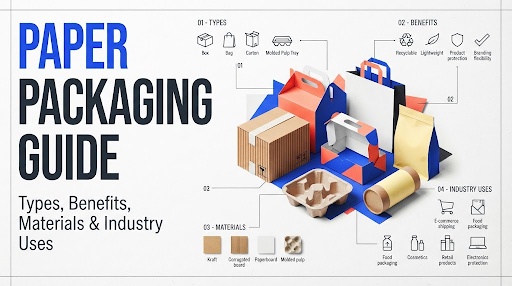
Paper packaging is packaging made primarily from paper, paperboard, kraft paper, or corrugated fiberboard. It is used to protect products, present brands, organize items, and ship goods across industries such as retail, food, cosmetics, and ecommerce. The best option depends on the product’s weight, fragility, moisture exposure, shipping conditions, branding requirements, and budget.
Businesses choose paper packaging because it can be produced in different shapes, thicknesses, and designs. Options range from lightweight paper wraps and folding cartons to durable corrugated shipping boxes and premium paperboard gift packaging. Many paper-based formats can also be recycled where local facilities accept them, although coatings, adhesives, food residue, and mixed materials can affect recyclability.
This guide explains the main types of paper packaging, how they differ, which materials are used, and how businesses can choose an appropriate solution for their products.
What Is Paper Packaging?
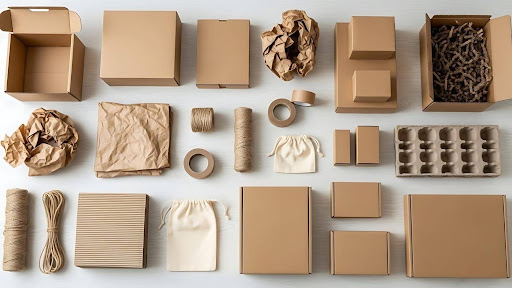
Paper packaging is a broad category of packaging made from paper fibers. Manufacturers process these fibers into sheets, boards, bags, cartons, wraps, inserts, and boxes. Depending on the intended application, the packaging may use recycled fiber, virgin fiber, or a combination of both.
The term includes several materials that perform different functions. Thin paper may be suitable for wrapping or cushioning, while thicker paperboard can form retail cartons. Corrugated fiberboard adds a fluted inner layer between liner sheets, creating a structure commonly used for shipping and product protection.
Paper packaging serves four main purposes:
- Protection: Helps shield products from scratches, dust, movement, and certain handling impacts.
- Containment: Keeps products, components, or multiple items together.
- Communication: Displays branding, instructions, ingredients, warnings, and other product information.
- Presentation: Makes products easier to recognize, display, gift, or unbox.
The right construction depends on the job the package needs to perform. A lightweight cosmetic carton and a heavy-duty shipping box may both be paper-based, but they require different materials and structural designs.
Common Types of Paper Packaging
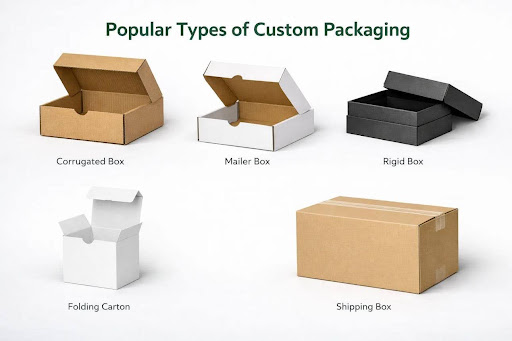
Paper packaging is available in multiple formats, each designed for a different combination of protection, presentation, storage, and transportation.
1. Folding Cartons
Folding cartons are boxes produced from paperboard that is cut, creased, printed, and folded into shape. They are widely used for retail products because they can display graphics and product information on multiple panels.
Common applications include cosmetics, skincare products, tea, confectionery, small electronics, and personal care items.
Folding cartons can be designed with tuck flaps, locking bottoms, display windows, or inserts. Their relatively compact construction also makes many styles efficient to store and transport before assembly.
Businesses planning branded retail packaging can explore custom retail boxes for product-specific structural and visual options.
2. Corrugated Paper Packaging
Corrugated packaging uses one or more fluted paper layers between liner sheets. This structure adds stiffness and cushioning compared with a flat sheet of similar weight.
It is commonly used for shipping cartons, ecommerce orders, wholesale deliveries, and packaging that needs to withstand handling during distribution. The appropriate board grade depends on product weight, dimensions, stacking requirements, and the shipping environment.
Single-wall corrugated board is suitable for many everyday shipping needs, while double-wall or other heavier constructions may be considered for demanding applications.
Learn more about corrugated packaging and its role in shipping and distribution.
3. Kraft Paper Packaging
Kraft paper is made through a pulping process that produces strong paper fibers. It is commonly associated with natural brown paper, although kraft paper can also be manufactured in other colors and finishes.
Typical uses include paper bags, wrapping, protective void fill, product sleeves, and boxes. Kraft packaging is popular with businesses seeking a simple, natural-looking visual identity.
However, the word kraft does not automatically mean a package is recycled, compostable, or environmentally preferable in every situation. Those properties depend on the material composition, coatings, inks, manufacturing process, and disposal conditions.
For box-based applications, kraft boxes can be considered when the product and branding suit this material style.
4. Paper Bags
Paper bags are used for retail purchases, takeaway orders, gifts, groceries, and promotional items. They may include flat handles, twisted-paper handles, reinforced bases, or additional features to support particular products.
The bag’s paper weight, dimensions, handle attachment, and bottom construction affect its performance. A bag intended for lightweight clothing has different requirements from one carrying multiple food containers or heavier retail products.
Paper bags should also be evaluated for their intended reuse, exposure to moisture, and local recycling rules.
5. Paper Mailers and Shipping Envelopes
Paper mailers are lightweight mailing formats used for documents, printed materials, books, and some products that do not require a rigid protective box.
Some mailers use reinforced paper or cushioning layers. Others are designed with peel-and-seal closures or tear strips for convenient packing and opening.
A paper mailer is not suitable for every product. Fragile items, irregular shapes, products vulnerable to compression, or goods that require moisture protection may need additional cushioning or a box.
For ecommerce orders that require a box-style format, businesses can consider custom mailer boxes.
6. Paper Sleeves and Wraps
Paper sleeves and wraps cover a product or another package without necessarily forming a complete enclosure. They can add branding, provide handling information, group multiple items, or create a more finished appearance.
Sleeves are used for food containers, soap products, promotional sets, and retail packaging. Wraps may also help separate products or reduce surface scratches when used with a suitable protective structure.
Because sleeves usually offer limited impact protection, they should not replace a structural box when a product needs substantial support.
7. Paperboard Gift and Premium Packaging
Paperboard can be engineered into attractive packaging for gifts, beauty products, accessories, and specialty retail goods. Some premium formats use thick board, wrapped paper, custom inserts, decorative printing, or surface finishes.
Rigid boxes, for example, use a thicker structure than standard folding cartons. They are selected when the package needs a substantial feel, a defined shape, or a more premium presentation.
Explore rigid packaging boxes when product presentation and structural firmness are key requirements.
8. Paper Dividers and Inserts
Paper-based inserts and dividers help hold items in place inside a larger package. They may separate multiple products, prevent items from colliding, organize a kit, or support a product in a defined position.
Their design should reflect the item’s weight, shape, fragility, and orientation during transit. A properly designed insert can improve organization, but a poor fit may allow movement or create pressure points.
For more context on selecting a material for the entire package, see this guide to packaging materials.
What Materials Are Used in Paper Packaging?
Paper packaging does not rely on a single material. Manufacturers select paper grades and board structures based on the package’s required strength, print quality, appearance, and intended use.
Paper
Paper is generally thinner and more flexible than paperboard. It is used for wrapping, bags, labels, protective sheets, and lightweight packaging components.
Its performance varies according to fiber composition, basis weight, treatment, and manufacturing specifications. Some papers are designed for print quality, while others prioritize tear resistance or handling strength.
Paperboard
Paperboard is thicker than ordinary paper and can be converted into cartons, sleeves, trays, and inserts. It provides a surface for printing and can be cut and creased to create repeatable packaging structures.
Different grades offer different levels of stiffness, smoothness, and printability. The best choice depends on the product’s dimensions, required durability, and visual presentation.
Corrugated Fiberboard
Corrugated fiberboard combines flat liner sheets with a fluted layer. The flutes help create a rigid structure and can contribute to cushioning and stacking performance.
The board’s strength depends on several factors, including liner and medium specifications, flute profile, construction, box dimensions, and exposure to moisture. Selecting corrugated packaging should therefore involve more than choosing a board by appearance alone.
Recycled Paper Fiber
Recycled paper fiber is recovered from used paper products and processed for reuse in new materials. It can help keep recovered fiber in circulation, depending on the recycling system and manufacturing process.
Recycled content does not automatically establish that a package is suitable for every food-contact application or that it can be recycled indefinitely. Fiber quality, contamination, coatings, and applicable regulations all matter.
Virgin Paper Fiber
Virgin fiber comes from newly processed fiber sources rather than recovered paper. It may be used where particular strength, appearance, cleanliness, or manufacturing requirements call for it.
Virgin fiber is not automatically better or worse than recycled fiber in every application. A meaningful comparison considers sourcing, manufacturing impacts, package performance, and end-of-life options.
Coatings, Laminations, Inks, and Adhesives
Some paper packages use coatings, laminations, inks, or adhesives to improve moisture resistance, print appearance, or surface performance.
These additions may also complicate recycling or composting. A package that appears to be made of paper may contain plastic film, metallic layers, or other materials that need to be considered separately.
If a business wants to compare available options, the paperboard versus cardboard guide can help clarify common material terminology and differences.
Benefits of Paper Packaging
Paper packaging offers several practical benefits, but the advantages depend on the design, product, and supply chain.
1. Flexible Design Options
Paper and paperboard can be cut, folded, creased, printed, and converted into many shapes. This flexibility allows businesses to develop packaging around specific product dimensions, display requirements, and brand guidelines.
Custom structures can include tuck closures, sleeves, windows, partitions, and inserts. The design should be driven by the product’s real needs rather than decorative features alone.
2. Strong Branding and Print Presentation
Paper surfaces can support logos, colors, product descriptions, illustrations, instructions, and promotional messaging. Different printing methods and finishing techniques provide options for both simple and elaborate designs.
Packaging design should make essential information easy to find. A package can look attractive while still being difficult to understand if its text is too small, its hierarchy is confusing, or its product details are incomplete.
For practical design considerations, read about packaging design.
3. Options for Multiple Budget Levels
Paper packaging ranges from simple unprinted wraps to complex custom-printed boxes. Businesses can adjust the material grade, printing coverage, finishing, inserts, and structural complexity to suit their budget.
The lowest-cost option is not always the most economical overall. A package that fails during shipping can cause product damage, replacement costs, customer dissatisfaction, and additional transportation expenses.
4. Potential for Recycling
Many uncoated paper and cardboard formats can enter established paper recycling streams. Whether a specific package is accepted depends on local collection rules and its material composition.
Wet-strength treatments, food contamination, plastic windows, foil layers, and certain laminations can affect acceptance. Businesses should confirm the package’s disposal instructions rather than making a blanket recyclability claim.
5. Efficient Storage and Transportation
Some paper packaging formats, especially folding cartons, can be stored flat before assembly. This can reduce storage requirements compared with fully assembled structures.
Corrugated boxes can also be designed to fit product dimensions and shipping needs. Right-sizing may help reduce unused space, but the package must still provide sufficient protection and stacking strength.
6. Broad Industry Use
Paper packaging is used for products ranging from bakery goods and retail accessories to cosmetics, books, and ecommerce shipments. Its variety makes it suitable for many applications, although it is not the right choice for every product or environment.
Limitations of Paper Packaging
Paper packaging has limitations that businesses should consider before choosing a material.
Moisture Sensitivity
Paper fibers can absorb moisture, which may reduce stiffness or strength. Corrugated packaging can lose performance in humid or wet conditions, especially when the board and box design are not suitable for the environment.
Protective coatings or barrier layers may help with specific exposure conditions, but they can change the package’s recyclability and cost.
Limited Protection in Some Applications
Thin paper and lightweight cartons do not provide the same impact protection as every rigid or molded alternative. Fragile, heavy, sharp, or irregularly shaped products may require inserts, cushioning, stronger board, or a different packaging structure.
Performance Depends on Design
A paper package is only as effective as its construction and suitability for the product. Weak closures, poorly positioned folds, inaccurate dimensions, or inadequate board strength can create problems even when the material itself is appropriate.
Finishing Can Affect Disposal
Laminations, coatings, windows, metallic decorations, and mixed-material components may complicate recycling. Before choosing a finish, businesses should consider the desired appearance alongside the package’s intended end-of-life route.
Not Suitable for Every Product
Products requiring specialized moisture barriers, long-term liquid containment, sterile protection, or particular chemical resistance may need other materials or a validated multilayer construction. Food-contact packaging must also meet the relevant safety requirements for its intended use.
Paper Packaging vs. Plastic Packaging
Paper and plastic packaging serve different purposes. Neither is universally superior: the appropriate choice depends on protection, product requirements, reuse, material sourcing, transportation, and disposal infrastructure.
| Factor | Paper packaging | Plastic packaging |
|---|---|---|
| Common formats | Cartons, bags, wraps, corrugated boxes | Films, pouches, bottles, tubs |
| Structural options | Folding, creasing, fluting, rigid board | Molding, forming, flexible film conversion |
| Moisture performance | Often needs suitable treatment for wet conditions | Depends on the plastic type and structure; some provide strong moisture barriers |
| Printing and branding | Can support detailed graphics and multiple finishes | Can support printed labels, films, and molded branding |
| Storage | Some formats ship flat | Depends on whether the format is rigid or flexible |
| Recycling | Depends on fiber quality, contamination, coatings, and local systems | Depends on resin type, design, collection, and local processing |
| Best fit | Many dry goods, cartons, retail packaging, and shipping boxes | Many liquids, flexible barrier applications, and moisture-sensitive products |
The practical decision is not simply “paper or plastic.” It is whether the chosen package protects the product effectively while meeting the business’s cost, branding, regulatory, and disposal requirements.
For shipping-focused applications, compare the requirements of cardboard packaging with those of other available structures before finalizing a material.
How Is Paper Packaging Manufactured?
Paper packaging production varies by material and product design, but most projects follow a series of connected steps.
Step 1: Define the Product Requirements
The process starts with the product’s dimensions, weight, fragility, handling conditions, shelf presentation, and shipping journey. These details influence the required material, package structure, and protective features.
For example, a lightweight retail carton may need a clean printed surface, while a shipping box may need stronger board and an insert to limit movement.
Step 2: Select the Material
The packaging team chooses paper, paperboard, kraft paper, or corrugated board based on the requirements. Thickness, stiffness, print surface, recycled content, and moisture exposure may all affect the decision.
Material selection should also consider how the package will be stored, assembled, filled, and disposed of.
Step 3: Create the Structural Design
A structural design defines the package’s shape, dimensions, folds, closures, and any inserts. A dieline shows the cut lines, crease lines, and panels needed to produce the package.
The design must account for the product’s fit and the manufacturing process. A box that looks attractive on screen may still need adjustment if the folds, closures, or internal clearances do not work in practice.
Step 4: Prepare the Artwork
Artwork preparation includes placing logos, text, graphics, product information, and required labels within the correct printable areas.
Designers should check image resolution, bleed, safe areas, color setup, and the alignment of graphics across folds and panels. For more detail, see packaging printing.
Step 5: Print and Finish
Depending on the order, printing may use digital, offset, flexographic, or another suitable process. Finishing options can include matte or gloss coatings, embossing, foil details, or spot effects.
Each technique should be chosen according to the intended look, material compatibility, production quantity, and budget. Finishing choices should also be reviewed for their effect on recycling or other end-of-life claims.
Step 6: Cut, Crease, Fold, and Assemble
The printed material is converted into the intended package form. Depending on the design, this may involve die-cutting, creasing, folding, gluing, or assembling inserts and other components.
Manufacturing tolerances matter because small dimensional differences can affect how products fit and how packages close.
Step 7: Inspect and Test
Quality checks can examine print accuracy, dimensions, closure performance, material consistency, and structural integrity. For shipping applications, testing may need to consider stacking, compression, vibration, or drops under conditions appropriate to the product and distribution route.
A sample or prototype can reveal design problems before a full production run.
Industries That Use Paper Packaging
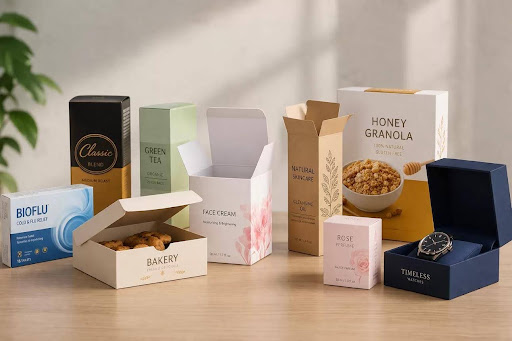
Paper packaging serves a wide range of markets. The most suitable format varies with the product’s physical properties, customer expectations, and distribution method.
Food and Bakery
Bakeries and food businesses use cartons, bags, trays, wraps, and corrugated boxes for products such as bread, pastries, cakes, and takeaway orders.
The material must be appropriate for the food and its conditions of use. Grease resistance, moisture exposure, temperature, ventilation, and direct food contact should be evaluated where relevant.
For bakery applications, bakery packaging boxes may be suitable for presenting and transporting selected products. The specific construction should match the product size and handling needs.
Cosmetics and Personal Care
Cosmetic brands often use paperboard cartons for skincare, makeup, soap, and beauty accessories. Packaging can display ingredients, directions, product details, and brand graphics while helping organize the item for retail sale.
The carton may be paired with an internal insert when a product needs additional positioning or separation. For this market, both visual quality and product protection should guide the design.
Ecommerce and Online Retail
Online retailers need packaging that can handle packing, parcel handling, and transportation. Corrugated boxes and mailer boxes are common options, while paper wraps and inserts can help organize the contents.
The best design balances protection with the package’s size and weight. Excess material may increase shipping volume, while insufficient protection can increase damage risk.
Clothing and Accessories
Paper bags, tissue paper, sleeves, and cartons are often used for apparel, accessories, and gift purchases. The packaging can support presentation and help organize items during storage or delivery.
For heavier or delicate products, the package may need reinforced construction or additional protection.
Gifts and Premium Products
Gift packaging may prioritize presentation, convenient opening, and a consistent branded appearance. Paperboard boxes, sleeves, wraps, and decorative finishes can be combined to achieve a particular look.
Premium packaging should still be functional. A beautiful box that is unnecessarily large or difficult to open may create avoidable costs or a frustrating customer experience.
Electronics and Small Components
Paperboard cartons, corrugated outer boxes, and custom inserts may be used for selected electronic products and accessories. The design should prevent excessive movement and protect vulnerable surfaces.
For heavier or delicate electronics, paper packaging may need engineered cushioning or other protective components. The final construction should be tested against the actual distribution conditions.
How to Choose the Right Paper Packaging
Choosing packaging becomes easier when the decision follows a consistent process.
1. Identify the Product’s Requirements
Record the product’s length, width, height, weight, fragility, and any sensitivity to moisture, light, contamination, or pressure. Determine whether the packaging will be used for retail display, storage, delivery, or several purposes.
2. Choose the Structure
Match the package style to its function:
- Use a folding carton for many lightweight retail products.
- Consider corrugated board for shipping and heavier handling needs.
- Consider kraft paper for suitable bags, wraps, and box applications.
- Use paper sleeves when the package needs branding or grouping rather than full protection.
- Consider rigid paperboard constructions when presentation and structural firmness are important.
- Add inserts or dividers when products need separation or positioning.
These are starting points, not universal rules. Product testing and manufacturing advice may be needed for demanding applications.
3. Determine the Required Strength
Choose a material grade and structure that can support the product during normal use. Consider stacking, vibration, compression, handling, and humidity where relevant.
A thicker material is not automatically the best choice. A well-designed structure may provide suitable performance without adding unnecessary material.
4. Plan the Branding
Decide which information needs to appear on the package and how customers should recognize the brand. Select the artwork, typography, colors, and finishes to support those goals.
Keep mandatory information readable and ensure that decorative effects do not interfere with essential instructions or product details.
5. Review Sustainability Requirements
If recyclability, recycled content, or compostability is important, identify the exact claim you want to make and verify that the material and local disposal systems support it.
Avoid broad claims such as “100% eco-friendly” without evidence. It is more useful to state specific, verifiable details about the package’s composition and disposal instructions.
Businesses comparing materials may also find the guides to sustainable packaging and recyclable packaging helpful.
6. Confirm Order Quantity and Budget
The total cost depends on more than the price of the paper. It may include structural design, printing plates or setup, tooling, finishing, assembly, inserts, freight, and storage.
Ask suppliers to clarify minimum order quantities, production lead times, sample availability, and any costs that apply to design revisions.
7. Request and Evaluate a Sample
A sample helps verify dimensions, material feel, print appearance, closure performance, and product fit. For shipping packaging, consider testing a filled sample under realistic handling conditions.
Before approving a production run, confirm the final artwork, dimensions, material specification, finishing, and quantity.
How Much Does Paper Packaging Cost?
Paper packaging costs vary according to the material, dimensions, structure, order quantity, printing method, finishing, and delivery requirements. There is no single price that applies to every paper box or bag.
A basic unprinted carton may involve fewer production steps than a custom-printed box with inserts, lamination, or special finishing. Larger orders may reduce the per-unit cost in some circumstances, but they also require more upfront spending and storage.
To compare supplier quotations fairly, request the same specifications from each supplier. Include:
- Internal or external dimensions, clearly identified.
- Material type and grade.
- Printing coverage and number of printed sides.
- Finishes, coatings, windows, or other special features.
- Inserts, dividers, and assembly requirements.
- Order quantity and sample requirements.
- Delivery location, shipping charges, and expected lead time.
For a broader explanation of pricing factors, read the packaging cost guide.
Bluebird Packaging can help businesses discuss their packaging requirements and request a tailored quotation through its custom packaging quote page.
Paper Packaging Design and Printing Tips
Good packaging design makes a package practical, recognizable, and suitable for its intended use. The strongest design is not necessarily the most complicated; it is the one that supports the product and communicates clearly.
Prioritize Readability
Use a clear information hierarchy. Customers should be able to identify the product and locate essential information without struggling to read small text or navigate crowded panels.
Check text size, contrast, logo placement, and the visibility of required product information.
Match the Print Method to the Project
Printing methods vary in setup requirements, cost, production speed, and suitability for different quantities and materials. Digital printing may suit certain short runs or variable designs, while other methods may be appropriate for larger production volumes.
The choice should be based on the actual artwork, material, quantity, and quality requirements rather than on a general assumption that one method is always best.
Select Finishes Carefully
Matte or gloss surfaces, embossing, foil details, and spot effects can change how packaging looks and feels. They may also add production cost or affect the material’s end-of-life options.
Explore possible packaging finishes before finalizing the design. Ask the supplier whether the chosen finish is compatible with the base material and any recycling requirements.
Check the Dieline Before Printing
A dieline defines the package panels, folds, cuts, and bleed areas. Artwork should be checked against the approved dieline so that important text, logos, and graphics do not land on a fold, cut, or glued area.
A printed prototype or sample is particularly useful for complex designs and packages with multiple panels or inserts.
Is Paper Packaging Environmentally Friendly?
Paper packaging can offer useful environmental advantages, particularly when materials are responsibly sourced, the package is appropriately designed, and the local recycling system can process it. However, paper is not automatically the best environmental choice for every product or use case.
A meaningful assessment considers the full life cycle, including raw materials, manufacturing, transportation, product protection, reuse, and end-of-life management.
Consider the Complete Package
A paper box with a plastic window, foil layer, adhesive, or heavy coating may be harder to process in a standard paper recycling stream than an uncoated design. The exact result depends on the construction and the facilities available.
Where practical, simplify the material mix and confirm that any sustainability claims are supported by supplier documentation.
Right-Size the Packaging
A package that is unnecessarily large may use more material and require additional shipping space. Right-sizing can reduce wasted space while maintaining adequate product protection.
However, reducing material at the expense of protection can lead to damaged goods and replacement shipments. The goal is to use an appropriate amount of packaging, not simply the smallest possible amount.
Check Local Disposal Guidance
Recycling and composting acceptance varies by location. Some facilities accept certain paperboard cartons but reject contaminated or heavily coated materials. Compostable claims also require suitable conditions and should not be assumed to apply to every paper product.
Give customers accurate disposal instructions based on the actual package and the relevant local guidance.
Frequently Asked Questions About Paper Packaging
1. What is paper packaging used for?
Paper packaging is used to contain, protect, ship, store, and present products. Common examples include folding cartons, corrugated shipping boxes, kraft bags, paper wraps, mailers, sleeves, and paperboard inserts. The appropriate format depends on the product and its handling requirements.
2. What are the main types of paper packaging?
The main types include folding cartons, corrugated boxes, kraft packaging, paper bags, paper mailers, sleeves, wraps, rigid paperboard boxes, and inserts. Each serves a different purpose, from lightweight retail presentation to shipping protection.
3. What is the difference between paper and paperboard?
Paper is generally thinner and more flexible, while paperboard is thicker and commonly used to make cartons, sleeves, trays, and inserts. The precise distinction depends on the material grade and industry terminology.
4. Is paper packaging recyclable?
Many paper-based packages are recyclable, but acceptance depends on the material, coatings, contamination, adhesives, windows, and local recycling facilities. Clean, uncoated paper products are often easier to process than complex mixed-material packaging. Check local guidance for the specific package.
5. Is paper packaging better than plastic packaging?
Neither material is always better. Paper may be suitable for cartons, bags, and many shipping applications, while plastic may be necessary for certain moisture barriers, flexible formats, or product requirements. Compare protection, material sourcing, weight, reuse, and disposal options for the specific application.
6. What is kraft paper packaging?
Kraft paper packaging uses paper made through the kraft pulping process. It is commonly used for bags, wraps, boxes, and protective paper products. Its familiar natural-brown appearance can suit simple or understated branding, but kraft paper can also be produced in other colors.
7. What paper packaging is best for ecommerce?
Corrugated boxes are commonly used when an ecommerce order needs structural protection. Mailer boxes can suit many direct-to-consumer products, while paper mailers may work for items that are lightweight and do not need rigid protection. Product testing helps determine the right option.
8. Can paper packaging be customized with a logo?
Yes. Many paper-based formats can be printed with logos, brand colors, product information, and graphics. Depending on the material and production process, businesses may also choose coatings, embossing, foil details, or other finishes.
9. Does paper packaging protect products from moisture?
Ordinary paper and many paperboard formats have limited resistance to moisture. Coatings, barrier layers, or suitable structural designs may improve performance, but the results vary. Products exposed to moisture need packaging selected and tested for their specific conditions.
10. How can a business order custom paper packaging?
Start by defining the product dimensions, weight, packaging purpose, quantity, design, and any protective or regulatory requirements. Request a quotation and, where appropriate, a sample or prototype. Before production, approve the material specification, artwork, dimensions, and final construction.
Conclusion: Choosing the Right Paper Packaging
Paper packaging offers a wide range of options for businesses that need product protection, retail presentation, shipping support, or branded packaging. Folding cartons, kraft paper, corrugated boxes, paper bags, sleeves, and rigid paperboard structures each have different strengths and limitations.
The best choice depends on the product, required protection, printing needs, order quantity, budget, and end-of-life requirements. Evaluate the full package rather than choosing by appearance or material name alone. Confirm dimensions, test product fit, and verify any environmental or performance claims before placing a production order.
If your business needs packaging designed around a particular product, quantity, or brand identity, visit Bluebird Packaging to explore options or request a custom quote.