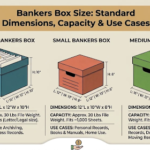

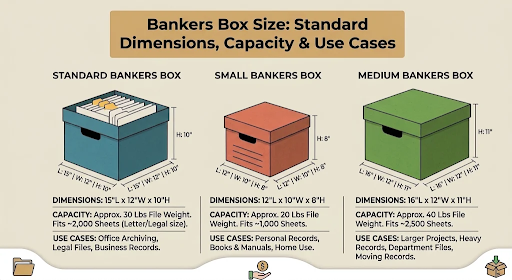
The most common standard Bankers Box size for office document storage is approximately 15 × 12 × 10 inches (38.1 × 30.5 × 25.4 cm), generally listed as length × width × height. However, exact dimensions depend on the model, manufacturer, and whether measurements refer to the inside or outside of the box.
A typical letter/legal file storage model has interior dimensions around 15 inches deep × 12 inches wide × 10 inches high, while its exterior dimensions are larger to account for corrugated walls, folded edges, and the lid. Larger legal-size and high-capacity archive boxes are also available.
If you are selecting a box for records, measure the documents and folders first, then compare those measurements with the manufacturer’s usable interior dimensions.
What Is a Bankers Box?
A Bankers Box is a file storage container designed to organize, transport, and archive paperwork. Traditional models are made from corrugated cardboard and usually feature a removable lid, built-in hand holes, and a rectangular shape that accommodates letter-size or legal-size documents.
The name is associated with the Bankers Box brand, but people also use the term informally for similar office file boxes and archive storage containers.
These boxes are commonly used in:
- Offices and corporate records departments
- Banks and financial institutions
- Legal firms and accounting practices
- Schools, colleges, and universities
- Medical and administrative record rooms
- Home offices and personal document storage
- Warehouses and document archiving facilities
Unlike ordinary moving cartons, file storage boxes are designed around the dimensions of paper, folders, and hanging files. Their construction and strength can also differ depending on how frequently the records will be accessed and how the boxes will be stacked.
Standard Bankers Box Dimensions
The most common Bankers Box measurements for everyday office filing are approximately 15 × 12 × 10 inches. However, there is no single universal size for every product sold under this name.
Some manufacturers list dimensions as length × width × height, while others use width × depth × height. Always check the measurement order before comparing products.
Standard Bankers Box Size Chart
| Box type | Common dimensions (inches) | Approx. dimensions (cm) | Typical use |
|---|---|---|---|
| Standard letter/legal | 15 × 12 × 10 | 38.1 × 30.5 × 25.4 | Everyday office files |
| Letter-size high-capacity | Varies; some models are longer | Model-dependent | Larger volumes of letter files |
| Legal-size archive box | Varies by model; often wider or longer than standard models | Model-dependent | Legal documents and folders |
| A4 document box | Varies by manufacturer | Model-dependent | A4 paperwork |
| Small file storage box | Custom or model-specific | Model-dependent | Limited records and compact storage |
| Heavy-duty file box | Often similar in footprint to standard models | Model-dependent | Frequent access and stronger stacking needs |
Important: The table describes common formats rather than guaranteed dimensions for every brand. For example, one widely sold Bankers Box STOR/FILE model has interior dimensions of 12 × 15 × 10 inches and exterior dimensions of approximately 12.5 × 16.3 × 10.5 inches. Check the exact product specification before purchasing or designing a replacement.
Bankers Box Size in Inches
For a commonly used standard letter/legal model, the approximate measurements are:
- Length or depth: 15 inches
- Width: 12 inches
- Height: 10 inches
These measurements are often quoted as the usable inside size. The actual exterior size is larger because the box has corrugated walls, folded seams, and a lid.
Bankers Box Dimensions in CM
To convert inches into centimeters, multiply the measurement by 2.54.
For a box measuring 15 × 12 × 10 inches:
- 15 inches = 38.1 cm
- 12 inches = 30.48 cm
- 10 inches = 25.4 cm
Therefore, the approximate dimensions are 38.1 × 30.5 × 25.4 cm.
Metric conversions are useful when ordering archive boxes internationally or planning storage shelves that use centimeter measurements.
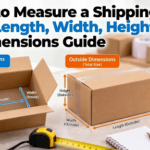
Bankers Box Length, Width, and Height Explained
Understanding the measurement order helps prevent confusion when comparing different file storage boxes.
- Length: Usually the longer horizontal measurement, often around 15 inches on a standard model.
- Width: The shorter horizontal measurement, commonly around 12 inches.
- Height: The vertical measurement from the bottom of the box to the top edge, commonly around 10 inches.
Manufacturers may use depth instead of length. This is why a product listing might show width × depth × height rather than length × width × height.
When ordering a custom file storage box, provide the measurement order explicitly and state whether the dimensions are internal or external.
Interior vs. Exterior Bankers Box Dimensions
One of the most important details when choosing a file storage box is the difference between interior and exterior measurements.
Interior dimensions describe the usable space inside the box. They determine whether folders, documents, binders, and other records will fit.
Exterior dimensions describe the total space occupied by the assembled box. They include the thickness of the corrugated material, lid, folds, and other structural features.
For example, a commonly listed Bankers Box model has:
| Measurement | Width | Depth | Height |
|---|---|---|---|
| Interior | 12 in | 15 in | 10 in |
| Exterior | 12.5 in | 16.3 in | 10.5 in |
The difference matters when you are fitting boxes into cabinets, shelving units, storage rooms, or shipping cartons.
If you are planning a storage system, use exterior measurements to calculate the space required. If you are checking whether documents will fit, use interior measurements.
For a more detailed explanation of measurement methods, see our guide to box dimensions and how to read them.
Letter-Size vs. Legal-Size Bankers Box Dimensions
Letter-size and legal-size boxes are designed around two common US paper formats.
- Letter paper: 8.5 × 11 inches
- Legal paper: 8.5 × 14 inches
A letter-size document is shorter than a legal-size document. A box intended for legal files therefore needs enough usable depth or width to accommodate the longer paper and its folders.
Letter-Size File Storage Boxes
Letter-size file boxes are designed to hold standard 8.5 × 11-inch documents. They are commonly used for invoices, employee records, office correspondence, reports, and general administrative paperwork.
A standard letter/legal box measuring approximately 15 × 12 × 10 inches may accommodate letter-size documents, depending on the folder arrangement and usable internal space.
Legal-Size File Storage Boxes
Legal-size files are longer, so a dedicated legal storage box may have a different internal layout or a larger footprint. Some models use a longer or wider dimension to provide sufficient room for 14-inch documents and their folders.
Do not assume that every box labeled letter/legal has the same usable space. Check the product’s supported file size and internal measurements.
Which One Should You Choose?
Choose a letter-size box if most of your documents are standard 8.5 × 11-inch pages. Choose a legal-size model if you regularly store 8.5 × 14-inch paperwork, legal folders, or records that cannot be folded.
If your office handles both formats, a box specifically rated for letter and legal documents can simplify storage. Confirm that the folders fit in the intended orientation before buying boxes in bulk.
How Much Can a Bankers Box Hold?
Bankers Box capacity depends on the box’s internal dimensions, document size, folder thickness, and construction.
A standard file storage box can hold a substantial collection of paper records, but there is no reliable universal number of files that fits every model. A box filled with thin paper folders will hold more individual files than one containing bulky binders, expanding folders, or heavily clipped documents.
How Many Files Fit in a Bankers Box?
The number of files depends on:
- The thickness of each folder
- Whether documents are stored vertically or horizontally
- The amount of unused space around the folders
- Whether folders have tabs, fasteners, or expanding sections
- The box’s internal width and depth
For a practical estimate, arrange a representative sample of your actual folders inside the box. Count how many fit comfortably without bending, crushing, or forcing the lid closed. Then use that count to estimate your total storage requirements.
Avoid filling the box so tightly that employees struggle to remove folders. A little clearance makes records easier to access and helps reduce damage during handling.
How Much Weight Can a Bankers Box Hold?
Weight limits vary by model and must be checked against the manufacturer’s product specifications.
One basic-duty Bankers Box STOR/FILE listing specifies a 450 lb stacking strength. This figure refers to the average evenly distributed weight that can safely be stacked on top of the box under the stated product conditions. It does not mean that the box itself should be filled with 450 pounds of documents or lifted with that weight inside.
Stacking strength and carrying capacity are different measurements:
- Stacking strength: How much evenly distributed weight the box can support when other boxes are placed on top.
- Carrying capacity: How much weight the assembled box can safely hold while being lifted and transported.
- Material strength: How well the corrugated construction resists compression, tearing, and deformation.
Always follow the manufacturer’s handling and stacking guidance. If a box will be moved frequently, choose a suitable duty rating and avoid overloading it.
Basic-Duty vs. Medium-Duty vs. Heavy-Duty Archive Boxes
Not all file storage boxes are built for the same conditions. The right construction depends on how frequently you access the records, how long they will remain stored, and whether the boxes will be stacked.
| Box construction | Best suited for | Key consideration |
|---|---|---|
| Basic-duty | Infrequent access and light office storage | Economical for occasional use |
| Medium-duty | Regular office filing and moderate stacking | Better suited to repeated handling |
| Heavy-duty | Frequent access and demanding storage environments | Reinforced construction may improve durability |
A heavy-duty box may use stronger corrugated construction, reinforced handles, or additional layers. However, the term heavy-duty does not guarantee a specific weight limit. Compare the actual product specifications rather than relying on the label alone.
For more information about structural differences, read our guide to cardboard vs. corrugated boxes.
Are Bankers Boxes Stackable?
Many Bankers Boxes are designed to be stacked, but the safe stacking arrangement depends on their construction, condition, and manufacturer rating.
Before stacking file storage boxes:
- Use boxes with compatible dimensions and a suitable stacking design.
- Place heavier boxes at the bottom.
- Keep the contents evenly distributed.
- Avoid stacking damaged, wet, or crushed boxes.
- Do not exceed the manufacturer’s stacking-strength guidance.
- Store boxes on a stable, level surface.
- Keep stacks at a manageable height for safe access.
A box may be labeled stackable without being suitable for every storage environment. Humidity, damaged corners, uneven loads, and long storage periods can affect performance.
If boxes will be stored for years, inspect them periodically and replace any that show signs of structural damage.
Common Uses of Bankers Boxes
Bankers Boxes are useful wherever paper records need to be grouped, labeled, transported, or archived.
1. Office File Organization
Businesses use file storage boxes to organize invoices, contracts, HR documents, reports, and administrative records. Separate boxes by department, year, or document category to make retrieval easier.
2. Legal and Financial Records
Law firms, banks, and accounting departments often need to store large volumes of paperwork. Letter-size and legal-size boxes can help organize case files, tax records, financial statements, and client documents.
3. Document Archiving
Archive boxes help businesses move inactive paperwork out of everyday workspaces while keeping it organized for future reference. Use clear labels that identify the contents, date range, department, and retention period.
Before archiving sensitive or legally important documents, follow the organization’s record-retention and privacy policies.
4. Moving and Relocation
File storage boxes can make office relocations easier by keeping related paperwork together. Their handles and removable lids can help with handling, although the box should not be overloaded.
5. Home and Personal Storage
People also use archive storage boxes for tax documents, school records, certificates, manuals, photographs, and personal paperwork.
For documents that need extra protection, consider appropriate protective sleeves, folders, or inner packaging rather than relying on the outer box alone.
How to Choose the Right File Storage Box Size
Choosing the right box involves more than matching a product’s advertised dimensions. Think about the documents, storage location, handling frequency, and expected storage period.
1. Identify the Paper Size
Check whether your records use letter, legal, A4, or another document format. The box must have enough internal space for the paper and its folders.
2. Measure Your Folders
Measure the complete folder, including tabs and fasteners. Documents may fit inside a box even when their folders do not.
3. Check Interior Dimensions
Use the usable internal dimensions to confirm that your records will fit without bending or excessive compression.
4. Consider Exterior Dimensions
Measure the available shelf, cabinet, or storage area. The box’s exterior dimensions determine how much room it will occupy.
5. Select the Appropriate Strength
Choose basic-duty construction for occasional storage and stronger construction for frequent access or demanding stacking requirements. Confirm the manufacturer’s specifications for the intended use.
6. Plan for Labeling and Retrieval
Choose boxes with a convenient labeling area or add clear labels to the front and sides. Include the department, record type, date range, and box number where appropriate.
7. Think About Storage Conditions
Keep paper records away from moisture, direct sunlight, and unsuitable temperature conditions. For long-term archiving, select materials and storage practices appropriate to the documents.
Businesses planning larger storage systems can also review standard box sizes and custom box sizes before selecting a suitable format.
Bankers Boxes vs. Custom File Storage Boxes
A standard Bankers Box is a convenient choice when its dimensions and construction already match your document storage needs. However, businesses with unusual records, special shelving, or specific organizational requirements may benefit from custom file storage boxes.
| Feature | Standard Bankers Box | Custom file storage box |
|---|---|---|
| Dimensions | Predefined model sizes | Can be made to specified dimensions |
| Document compatibility | Common paper formats | Can accommodate special document sizes |
| Branding | Usually standard printed design | Custom printing may be available |
| Construction | Depends on the selected model | Material and structure can be specified |
| Organization | General file storage | Can include tailored compartments or labels |
| Order requirements | Depends on retailer and model | Often subject to a manufacturer’s MOQ |
Custom boxes can be designed around the actual dimensions of files, folders, documents, and storage equipment. This can be useful for businesses that need consistent packaging across multiple departments or locations.
For example, a company may need a longer box for oversized records, a reinforced base for repeated handling, or a printed exterior that identifies departments and archive dates.
Explore corrugated boxes and cardboard boxes when comparing material options for custom storage packaging.
Which Materials Are Suitable for File Storage Boxes?
Material selection affects durability, handling, and the box’s ability to protect stored paperwork.
Corrugated Cardboard
Corrugated cardboard is widely used for file storage and shipping because its fluted inner layer provides structural support. The appropriate board grade depends on the box size, contents, and handling conditions.
Learn more about corrugated packaging and how its construction supports different packaging applications.
Kraft Paperboard
Kraft-based materials are commonly used for paper packaging. They can provide a natural appearance and may be suitable for certain lightweight storage applications, depending on the board specification and construction.
Explore Kraft Boxes for examples of kraft packaging options.
Recycled Paper-Based Materials
Recycled fiber can be incorporated into corrugated and paper-based packaging. The amount of recycled content varies by product, so check the supplier’s specifications if recycled material is a purchasing requirement.
For a broader overview, see our guides to packaging materials and paper packaging.
How to Assemble a Bankers Box
Correct assembly helps the box maintain its shape and makes it easier to handle.
Although assembly varies by model, many standard file boxes follow these steps:
- Open the flat box: Unfold the panels and identify the base, side walls, and locking flaps.
- Form the bottom: Fold the bottom panels into the manufacturer’s specified configuration.
- Secure the base: Engage the locking tabs or follow the printed assembly instructions. Use tape only when the product instructions call for it.
- Raise the side walls: Fold the walls into position and check that the corners are properly aligned.
- Prepare the lid: Assemble or unfold the lid and fit it securely over the top.
- Test the structure: Before adding records, check that the base is stable and the handles are properly formed.
- Load and label: Add documents evenly, close the lid, and label the box clearly.
Some models use quick-assembly systems, while others require more folding. Follow the instructions supplied with the exact box rather than assuming every file storage box is assembled in the same way.
Common Mistakes When Choosing Bankers Box Dimensions
A box can look large enough but still be unsuitable for the documents or storage area. Avoid these common mistakes:
- Confusing interior and exterior measurements: This can lead to folders that do not fit or boxes that will not fit on shelves.
- Ignoring document orientation: Legal-size documents need more room than letter-size paper.
- Assuming every model has identical dimensions: Different manufacturers and product lines use different measurements.
- Overloading the box: Heavy contents can strain the base and handles.
- Treating stacking strength as carrying capacity: These specifications describe different performance conditions.
- Choosing a box without considering access frequency: Frequently handled records may need stronger construction.
- Leaving no room for labels: Clear identification makes archive retrieval easier.
- Ignoring storage conditions: Moisture and poor handling can damage both the box and the documents.
For businesses shipping stored records or moving boxes between locations, review our guide to packaging for shipping and the importance of packaging testing.
Frequently Asked Questions About Bankers Box Size
1. What are the standard dimensions of a Bankers Box?
A commonly used standard letter/legal Bankers Box measures approximately 15 × 12 × 10 inches (38.1 × 30.5 × 25.4 cm). Exact dimensions vary by model, and some product listings show interior measurements while others show exterior measurements.
2. How big is a standard Bankers Box?
A typical standard file storage box is around 15 inches long, 12 inches wide, and 10 inches high. Its assembled exterior dimensions are usually slightly larger because of the corrugated walls and lid.
3. What is the Bankers Box size in inches?
One common standard size is 15 × 12 × 10 inches. Always check whether the listed order is length × width × height or width × depth × height.
4. What are Bankers Box dimensions in centimeters?
A box measuring 15 × 12 × 10 inches is approximately 38.1 × 30.5 × 25.4 cm. The conversion is based on 1 inch equaling 2.54 centimeters.
5. How many files can fit inside a Bankers Box?
There is no fixed file count for every model. Capacity depends on the box’s internal dimensions, folder thickness, document orientation, and how tightly the files are arranged. Test a representative group of folders to estimate the capacity of your specific box.
6. What is the difference between letter-size and legal-size file boxes?
Letter-size boxes accommodate standard 8.5 × 11-inch paper, while legal-size boxes are designed for longer 8.5 × 14-inch documents. Legal-size models need enough usable internal space to hold the longer paperwork and folders.
7. How much weight can a Bankers Box hold?
The safe load depends on the model and its construction. Some product listings specify a stacking-strength rating, such as 450 lb, but this is not the same as the weight the box can safely carry when lifted. Follow the manufacturer’s carrying and stacking instructions.
8. Are Bankers Boxes stackable?
Many models are designed to be stackable. However, the safe stacking height depends on the box’s construction, condition, load distribution, and manufacturer rating. Place heavier boxes at the bottom and avoid damaged or overloaded boxes.
9. What is the difference between interior and exterior Bankers Box dimensions?
Interior dimensions describe the usable space for files and documents. Exterior dimensions include the thickness of the walls, folded edges, and lid. Use interior dimensions to check document fit and exterior dimensions to plan shelf or storage space.
10. How do I choose the right size archive storage box?
Identify your document format, measure the folders, compare the measurements with the box’s interior dimensions, and check the exterior size against your available storage space. Also consider the box’s strength, access frequency, and storage conditions.
11. Can I order custom file storage box dimensions?
Yes. Packaging manufacturers can produce custom boxes in specified dimensions, subject to their available materials, structural requirements, and minimum order quantities. Custom sizing can be useful when standard file boxes do not fit your documents, shelves, or storage system.
Choose the Right Box for Organized Document Storage
Selecting the right Bankers Box size helps businesses organize paperwork, use storage space efficiently, and make archived records easier to retrieve. A standard box measuring around 15 × 12 × 10 inches is a useful starting point for many office filing needs, but the correct choice depends on document format, interior capacity, exterior measurements, and construction strength.
Before ordering, measure your folders, confirm the manufacturer’s specifications, and consider how the boxes will be stored and handled. If standard dimensions do not suit your requirements, custom corrugated file storage boxes can be designed around your document sizes and storage layout.
Need Custom File Storage or Corrugated Boxes?
If your business needs packaging made to specific dimensions, material requirements, or branding specifications, request a custom packaging quote. The right box design can help improve storage organization while making better use of available space.
You can also explore custom retail packaging and custom gift boxes for other packaging applications.