
Hot sauce labels do more than identify a flavor. They help customers recognize your brand, understand the sauce’s heat level, read product information, and decide whether your bottle belongs in their kitchen. The right label must also fit the bottle correctly, withstand moisture and handling, and leave enough space for the information required for your market.
Quick answer: The best hot sauce labels are sized to the bottle’s actual label panel and printed on a material that suits the sauce’s storage and handling conditions. Many brands use white or clear BOPP film for moisture resistance, but the right choice depends on the bottle, adhesive, finish, and application process. For a common 5 oz woozy bottle, a label around 4 × 3 inches can be a useful starting point—not a universal specification. Always measure the exact container before ordering.
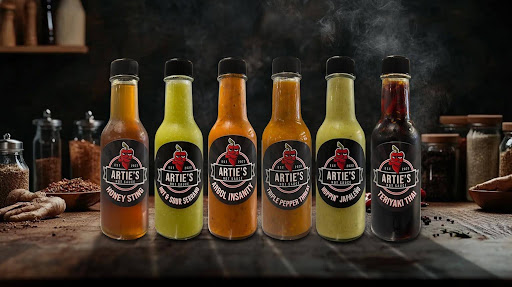
In this guide, you’ll learn how to choose hot sauce label sizes, design a professional front and back label, select durable materials, prepare print-ready artwork, and check important US food-labeling requirements before production.
What Are Hot Sauce Labels?
Hot sauce labels are printed labels attached to sauce bottles to identify the product, display branding, and communicate relevant product information. Depending on the product and market, they may include the sauce name, flavor, net contents, ingredients, allergen information, nutrition information, business details, barcode, storage instructions, and batch identification.
A well-designed label has three main jobs:
- Identify the product: Make the flavor and sauce type easy to recognize.
- Support the brand: Use consistent colors, typography, illustrations, and packaging details.
- Communicate information: Present required and useful details clearly and legibly.
A label that looks attractive but peels off in a refrigerator or hides important information can create problems for both the customer and the business. Good design balances shelf appeal, readability, material performance, and the requirements that apply to the product.
If you are planning the complete presentation of your sauce, our guides to product packaging and packaging design can help you think beyond the label itself.
What Should a Hot Sauce Label Include?
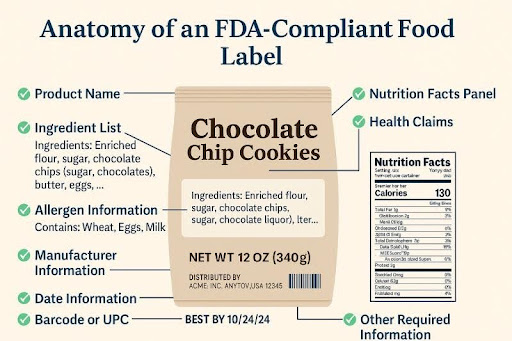
For hot sauce sold in the United States, food-labeling requirements depend on the product and applicable exemptions. The FDA’s Food Labeling Guide is a useful starting point for understanding common requirements. Confirm the final label against current regulations before printing.
| Label element | Typical placement | What to check |
|---|---|---|
| Product name | Front or principal display panel | Clearly identify the food, such as “Habanero Hot Sauce.” |
| Net contents | Principal display panel | For a liquid, use an appropriate volume statement, such as 5 FL OZ (148 mL), where applicable. |
| Ingredients | Information panel | Check the required order, ingredient names, and any applicable sub-ingredient declarations. |
| Major food allergens | Ingredient list or a separate “Contains” statement, as permitted | Identify any applicable major allergens, including allergens present in compound ingredients. |
| Business name and address | Label information panel | Use the appropriate manufacturer, packer, or distributor details. |
| Nutrition Facts | Usually the information panel | Confirm whether nutrition labeling is required or a valid exemption applies. |
| Lot or batch identification | On the container or label, as applicable | Determine whether special coding requirements apply to the product and process. |
| Barcode | Often on the back or another suitable area | Check retailer requirements, contrast, dimensions, and scanning performance. |
Not every item in this table has the same legal status for every product. For example, a barcode is commonly requested by retailers but is not a universal FDA food-label requirement. Nutrition labeling exemptions have specific conditions and should not be assumed simply because a business is small.
1. Product name and brand identity
Make the product type easy to understand. A creative brand name can support recognition, but it should not make the actual food difficult to identify.
Examples include:
- Habanero Hot Sauce
- Smoked Chipotle Pepper Sauce
- Fermented Jalapeño Hot Sauce
- Garlic and Cayenne Hot Sauce
Keep the product name readable against the background. A decorative font can work for a logo, but the descriptive name should remain clear at the size customers will see on the bottle.
2. Net contents
Net contents communicate how much sauce is inside the container. For liquid food products, the statement is generally expressed by volume. US labels commonly use US customary and metric units, subject to applicable requirements.
For example, a bottle containing five fluid ounces may display 5 FL OZ (148 mL). Verify the actual filled quantity and the required presentation for your product.
The FDA explains that net quantity statements generally belong in the bottom 30% of the principal display panel, with type-size rules determined by the panel area. See the FDA’s official food-labeling guidance.
3. Ingredients and allergen information
Review the full recipe, including compound ingredients such as prepared sauces, seasoning blends, and spice mixes. Depending on the ingredients and applicable rules, sub-ingredients and major food allergens may need to be declared.
The nine major US food allergens are milk, eggs, fish, crustacean shellfish, tree nuts, peanuts, wheat, soybeans, and sesame. Check the FDA’s food-allergy guidance before finalizing the ingredient panel.
Do not rely on a generic online template to determine your exact ingredient wording. The formulation and supplier specifications matter.
4. Nutrition Facts
Many packaged hot sauces sold at retail need a Nutrition Facts panel, but certain exemptions may apply. Eligibility depends on specific criteria, and some claims or sales circumstances can affect whether an exemption is available.
Leave adequate room for the panel if your product requires it. If you are unsure whether your business or product qualifies for an exemption, confirm the details with a qualified food-labeling professional or the relevant regulator before sending artwork to print.
5. Business details and product coding
The label generally needs the appropriate name and place of business for the manufacturer, packer, or distributor. The precise details and permitted format depend on the applicable rules.
Some acidified foods are subject to additional processing, registration, filing, and container-coding requirements. Do not assume every hot sauce is legally classified the same way: the formulation and production process matter. Review the FDA’s acidified foods guidance and obtain qualified process advice when needed.
Hot Sauce Label Sizes: How to Choose the Right Dimensions
The correct hot sauce label size depends on the bottle’s shape and usable label panel—not just the bottle’s capacity. Two containers advertised as 5 oz can have different heights, circumferences, shoulders, and curves.
The dimensions below are starting points for mockups, not guaranteed fits. Confirm them with the bottle manufacturer and a physical test.
| Bottle type | Example label size to test | Possible layout |
|---|---|---|
| 2 oz mini bottle | 1.5 × 2 in or 2 × 3 in | Small front label or compact wrap |
| 5 oz woozy bottle | 4 × 3 in or separate 2 × 3 in labels | Wrap label or front and back labels |
| 8 oz sauce bottle | 3 × 4 in or 4 × 5 in | Front label with separate information label |
| 10 oz woozy bottle | 3 × 5 in or 6 × 2 in | Tall label or wider wrap, if the panel allows |
| 12 oz bottle or squeeze bottle | 3 × 5 in or 4 × 6 in | Larger front panel and separate information area |
These examples are not industry-wide standards. Bottle suppliers may offer containers with substantially different dimensions, and a label that fits one design may not fit another.
How to measure a hot sauce bottle for a label
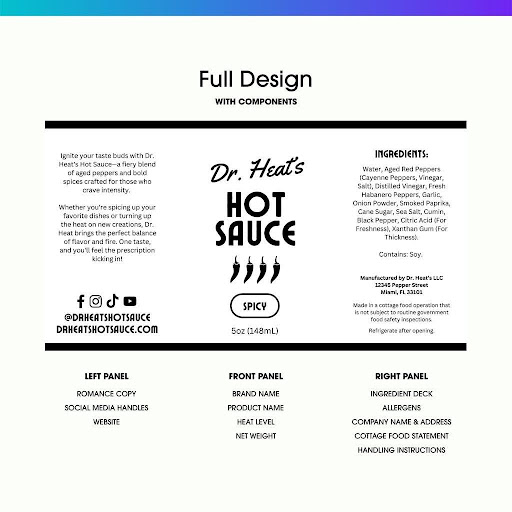
Follow these steps before ordering custom hot sauce bottle labels.
Step 1: Find the usable label panel.
Look for the relatively straight area between the bottle’s shoulder and base curve. A label may wrinkle or lift if it extends onto a sharply tapered section.
Step 2: Measure the available height.
Measure the straight panel from top to bottom. Choose a label height that leaves suitable clearance around curves, seams, and other bottle features.
Step 3: Measure the circumference.
Wrap a flexible measuring tape around the intended label area. If you do not have one, use a narrow paper strip, mark where it overlaps, and measure the strip on a ruler.
Step 4: Decide between a wrap and separate labels.
A wrap label can create a continuous design, but its width must account for the bottle circumference and any intended gap. Separate front and back labels can offer more flexibility when the bottle has a narrow panel or the information area needs more space.
Step 5: Print a full-size mockup.
Print the proposed dimensions on ordinary paper, cut it out, and test it on the actual bottle. Check the height, overlap, curvature, barcode area, and readability.
Step 6: Request a production proof.
Before committing to a large run, confirm the final dimensions, material, adhesive, winding direction if using rolls, and any application-machine requirements with your label printer.
How to Design a Hot Sauce Label That Stands Out
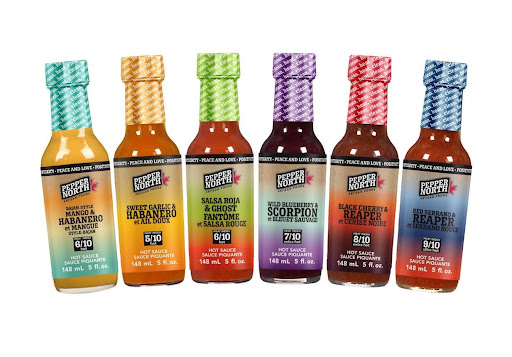
Strong hot sauce label design communicates flavor, heat, and personality without making the bottle difficult to read. A customer should be able to recognize the sauce name and flavor quickly, even when several bottles are displayed together.
1. Make the flavor easy to identify
Give the flavor name a clear position in the visual hierarchy. If you sell several sauces, use a consistent layout and change the flavor name, illustration, or accent color for each product.
For example, a chipotle sauce could use smoky visual cues, while a green jalapeño sauce could feature a fresh pepper illustration. The design should reflect the actual product rather than imply ingredients or characteristics that are not present.
2. Create a consistent heat-level system
You can use labels such as Mild, Medium, Hot, and Extra Hot, or create a simple visual meter. Whatever system you choose, use it consistently across the range.
Color can support the system, but do not rely on color alone. Include a readable text label or symbol so customers can understand the heat level even when colors look different on different screens or under store lighting.
3. Choose typography for readability
Use one distinctive display typeface for the brand or main heading and a more readable font for supporting text. Tiny decorative lettering may look good on a computer screen but become difficult to read after the label is printed and wrapped around a small bottle.
Before approving the artwork, inspect the smallest text at actual size.
4. Use illustrations and photography carefully
Pepper illustrations, ingredient graphics, regional motifs, and simple icons can help distinguish your sauce. Keep the artwork relevant to the flavor and leave enough open space around important text.
Avoid placing detailed artwork behind ingredients, net contents, or other information that needs to be easy to read.
5. Use finishes to support the brand
Gloss can make colors appear vivid, while matte finishes can create a softer, understated appearance. Metallic elements may suit a premium product, but they should not interfere with text or barcode readability.
The finish should be chosen alongside the material and adhesive—not as an isolated design decision.
Hot Sauce Label Templates and Print-Ready Artwork
A hot sauce label template helps organize the design before the final file is prepared. Start with the actual finished label dimensions, then arrange the front branding and required information panels around the available space.
A typical layout may look like this:
| Design area | Suggested content |
|---|---|
| Front upper area | Brand name or logo |
| Front center | Product name and flavor |
| Front supporting area | Heat-level indicator or short descriptive phrase |
| Front lower area | Net contents, positioned according to applicable rules |
| Back or information panel | Ingredients, allergen declaration where applicable, Nutrition Facts where required, and business details |
| Reserved area | Barcode and any applicable batch or lot code |
Artwork preparation checklist
Before submitting the design, confirm:
- Finished size: Set the artboard to the exact approved label dimensions.
- Bleed: Follow the printer’s required bleed specification. A common starting point is 0.125 in, or 3 mm, but the printer’s template takes priority.
- Safe area: Keep critical text, logos, and barcode quiet zones away from the trim edge. A 0.125 in inset may be a starting point, but the final safe area depends on the printer and label size.
- Color mode: Follow the printer’s requirements for CMYK, spot colors, and any special inks.
- Image resolution: Use raster images at approximately 300 PPI at final print size unless the printer specifies otherwise.
- Fonts: Embed or outline fonts as requested by the printer.
- Barcode: Use the correct barcode artwork and verify it with a scanner on a representative printed sample.
- Proofing: Check the exported PDF, trim, bleed, small text, color contrast, and actual bottle fit.
If you are building the artwork yourself, Bluebird Packaging’s guide to printing from Canva can help with general print-file preparation. Your label printer’s own file specifications should take precedence.
Choosing the Best Hot Sauce Label Material
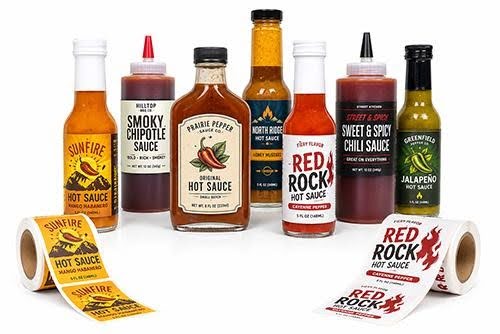
Hot sauce bottle labels may come into contact with splashes, oils, vinegar, condensation, refrigeration, and frequent handling. The right material should withstand the conditions the bottle will actually experience.
| Material | Potential advantages | Considerations |
|---|---|---|
| White BOPP film | Opaque background, good print contrast, commonly selected for moisture-resistant labels | Confirm adhesive performance and suitability for the application conditions |
| Clear BOPP film | Transparent appearance that allows the bottle or sauce color to show through | The design may need a white ink layer to keep certain colors readable |
| Metallic film | Reflective appearance for premium or specialty branding | Check color reproduction, contrast, and barcode performance |
| Coated paper | Can provide a traditional paper appearance and may suit dry environments | Unprotected paper can be vulnerable to moisture and edge damage |
| Paper with a protective coating | Offers a paper-like look with added surface protection | Coating does not automatically make the complete label waterproof |
| Shrink sleeve | Can cover more of a container and accommodate some curved shapes | Requires suitable sleeve material, equipment, and artwork adjustment |
Are waterproof hot sauce labels necessary?
Water-resistant film labels are often a practical choice for bottles exposed to drips, condensation, or refrigeration. However, no material should be treated as automatically suitable for every sauce or bottling process.
Ask the supplier to confirm:
- Resistance to water, oil, and expected handling conditions
- Compatibility with glass or plastic bottles
- Adhesive performance at the intended application temperature
- Suitability for refrigeration or other storage conditions
- Resistance to the filling process and any post-fill handling
- Whether the finished label needs a laminate or protective coating
Test the complete combination of label stock, adhesive, ink, finish, and bottle. A film that resists water can still fail if the adhesive is unsuitable or the bottle is applied wet.
For broader material considerations, see Bluebird Packaging’s guides to packaging materials and sustainable packaging.
Hot Sauce Label Printing: Digital, Flexographic, and Application Options
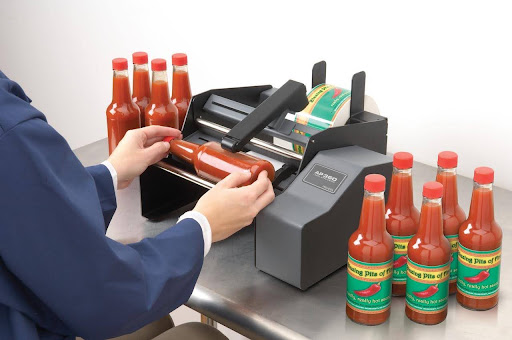
The best printing method depends on order quantity, number of flavors, artwork complexity, and the label format.
| Printing approach | Often useful for | What to consider |
|---|---|---|
| Digital printing | Short runs, test launches, and several flavors | Setup costs, available materials, color consistency, and per-label price |
| Flexographic printing | Larger repeat orders | Plate and setup costs, production volume, and repeat-order economics |
| Sheet labels | Hand application and some small-batch workflows | Application speed and compatibility with the intended bottle |
| Roll labels | Higher-volume application and many label machines | Core size, roll diameter, unwind direction, and machine compatibility |
Do not choose a method on unit price alone. Compare the total cost, including setup, proofing, waste, shipping, and the risk of reprinting a label that does not fit.
How to apply hot sauce bottle labels
- Confirm that the bottle surface is clean and dry.
- Follow the adhesive supplier’s application-temperature instructions.
- Align the label with a consistent reference point on each bottle.
- Apply from the center outward where practical to reduce bubbles and wrinkles.
- Smooth the edges and inspect the seam or overlap.
- Allow the adhesive to develop according to the manufacturer’s guidance.
- Test representative bottles under expected storage and handling conditions.
For machine-applied labels, confirm roll specifications before production. A correctly printed roll can still be unusable if the unwind direction, core size, or roll dimensions do not match the equipment.
Hot Sauce Label Warning and Compliance Considerations
A label should not be approved based only on its visual appearance. US food-labeling rules can apply to the product name, net contents, ingredients, allergens, nutrition information, business details, and claims.
Claims such as “organic,” “gluten-free,” “low sodium,” or “all natural” should not be added casually. Requirements vary by claim, and the business should have evidence to support any regulated or potentially misleading statement.
A voluntary heat warning may be useful for an extremely hot sauce, especially when it contains concentrated pepper extracts. Do not present a voluntary warning as a universal federal requirement. If your sauce is unusually potent, review appropriate consumer-safety language and any requirements relevant to the markets where you sell.
If your product is made at home, sold through farmers markets, or manufactured in a commercial facility, check the applicable state and federal rules. Cottage-food permissions differ by jurisdiction, and some products or processes may require additional controls.
For a practical starting point, review the FDA’s Food Labeling Guide and seek qualified regulatory advice for your specific formulation and production process.
Common Hot Sauce Label Mistakes—and How to Avoid Them
| Common mistake | Why it creates problems | Better approach |
|---|---|---|
| Choosing dimensions from bottle capacity alone | Bottles with the same capacity may have different label panels | Measure the actual container |
| Designing only for a screen | Text and graphics can become too small in print | Review a full-size proof |
| Using a material without testing it | Moisture, oil, or unsuitable adhesive may cause failure | Test the complete label on the actual bottle |
| Crowding the information panel | Required details become difficult to read | Plan the information area before decorating the design |
| Using unsupported product claims | Claims may be misleading or noncompliant | Verify claims before printing |
| Forgetting the barcode quiet zone | Retail scanners may struggle to read the barcode | Follow barcode specifications and test a physical sample |
| Printing the same layout for every bottle | Different shapes may cause wrinkles or poor alignment | Approve each bottle and label combination |
| Ordering a large quantity before approval | A mistake can affect the whole production run | Start with a proof or small test batch |
| Omitting space for applicable batch coding | The finished label may not accommodate required identification | Confirm coding needs early in the design process |
Hot Sauce Packaging Beyond the Label
The label is only one part of the product presentation. If you sell bottles online, at markets, or through retail stores, the outer packaging also affects protection, handling, and brand recognition.
For a hot sauce gift set, consider a box with dividers that help prevent bottles from striking one another. For retail shelves, packaging may need to support organized display and easy product identification. For online orders, the shipping configuration should protect the glass bottles against movement and impact.
Bluebird Packaging offers custom packaging options for businesses looking for printed boxes and product presentation. Explore custom food boxes, custom corrugated boxes, and custom cardboard boxes to compare possible outer packaging formats. For point-of-sale presentation, see product display boxes.
If you are creating a broader product range, you can also explore custom retail boxes or custom mailer boxes, depending on the way the sauce will be sold and shipped.
Hot Sauce Label Pre-Print Checklist
Use this checklist before approving a label order:
- The bottle and usable label panel have been measured.
- The label dimensions have been tested on the actual bottle.
- The product name and flavor are clear and readable.
- Net contents have been checked against the filled quantity and applicable rules.
- Ingredients and applicable allergen information have been reviewed.
- Nutrition Facts requirements or a valid exemption have been confirmed.
- Business details are correct.
- Applicable batch or lot-coding needs have been addressed.
- Any nutrition, ingredient, or marketing claims have been reviewed.
- Material and adhesive suit the bottle and expected storage conditions.
- Artwork includes the required bleed and safe area.
- Barcode artwork and placement have been checked.
- The final proof has been reviewed at actual size.
- A representative printed sample has been tested before a larger run.
Frequently Asked Questions About Hot Sauce Labels
What information should be on a hot sauce label?
Depending on the product and applicable rules, a US retail hot sauce label commonly includes the product name, net contents, ingredients, required allergen declarations, business details, and Nutrition Facts unless an exemption applies. Certain products may also need specific coding or other information. Confirm the requirements for your product before printing.
What size should a hot sauce label be?
The correct size depends on the bottle’s usable label panel. A 4 × 3 inch label may be a starting point for some 5 oz woozy bottles, but it is not a universal standard. Measure the actual bottle and test a full-size mockup.
Which material is best for hot sauce labels?
White or clear BOPP film is a common option when moisture resistance is important. The best material depends on the bottle surface, adhesive, storage conditions, printing process, and desired appearance. Test the finished label under realistic conditions.
Are waterproof labels best for hot sauce bottles?
Water-resistant labels are often useful for bottles exposed to splashes, refrigeration, or condensation. Confirm that the material and adhesive suit the complete application. A water-resistant face material alone does not guarantee that the label will stay attached.
How do you design a hot sauce label?
Start with the bottle measurements and information requirements. Prioritize the brand, sauce name, flavor, and heat level, then arrange the supporting information in a readable layout. Prepare print-ready artwork and test a full-size proof on the actual bottle.
What should be included on a hot sauce ingredients label?
Review all ingredients and compound ingredients in the recipe, and determine the required declaration format and order. Check whether any of the nine major US food allergens must be declared. Supplier specifications can help verify the contents of prepared sauces and seasoning blends.
Do hot sauce labels need Nutrition Facts?
Many retail hot sauces require Nutrition Facts, but certain exemptions may apply under specific conditions. Eligibility should be confirmed rather than assumed. Product claims and other circumstances can affect whether an exemption is available.
How do you print labels for hot sauce bottles?
Choose a suitable printing method based on order volume, label material, and design. Prepare the artwork to the printer’s specifications, check the proof, and test the finished label on the actual bottle. For roll labels, confirm core size, roll dimensions, and unwind direction if using a labeling machine.
Can hot sauce labels be used on glass and plastic bottles?
Some label stocks and adhesives can work on both, but compatibility should not be assumed. Glass and different plastics have different surface characteristics. Ask the supplier to confirm suitability for the exact container and test the label before a production run.
How do you make hot sauce labels stand out?
Use a clear product name, a recognizable visual style, consistent heat-level indicators, and illustrations that reflect the sauce. Make sure the design remains readable at the actual printed size. A distinctive label should improve recognition without obscuring important information.
How much bleed is needed for hot sauce labels?
A common starting point is 0.125 inches, or approximately 3 mm, beyond the trim edge on each side. However, bleed requirements vary by printer and production method. Always follow the label printer’s supplied template.
What resolution should hot sauce label artwork use?
A common guideline for raster images is 300 PPI at the final printed size. Vector artwork is generally useful for logos, typography, and other elements that need clean edges. Confirm the file format and resolution requirements with the printer.
Are hot sauce stickers the same as bottle labels?
The terms are sometimes used interchangeably. A bottle label usually identifies the product and carries relevant information, while stickers can also refer to promotional decals, cap seals, or flavor markers. The material and adhesive should match the intended use.
Can I use a free hot sauce label template?
Yes, as a starting point for layout, but adjust it to the actual bottle and confirm the required information. A template does not automatically ensure compliance or a correct fit. Test the finished design before ordering labels.
Final Takeaway
The best hot sauce labels combine a suitable size, readable design, durable material, and accurate product information. Measure the bottle before selecting dimensions, test the label stock and adhesive under realistic conditions, and prepare artwork according to the printer’s specifications. Most importantly, verify the labeling rules that apply to your formulation, production method, and sales market before approving the final design.
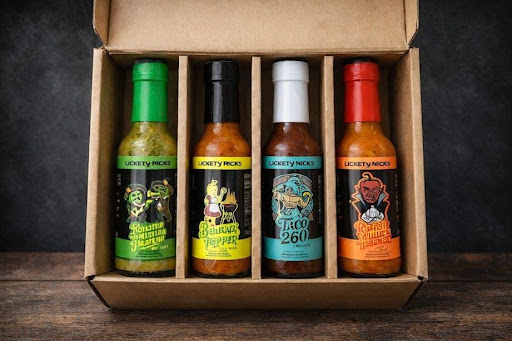
If you are planning the full presentation of your sauce brand, Bluebird Packaging can help you explore custom outer packaging options. Visit Bluebird Packaging to review available packaging solutions, or request a custom packaging quote for your box requirements.