
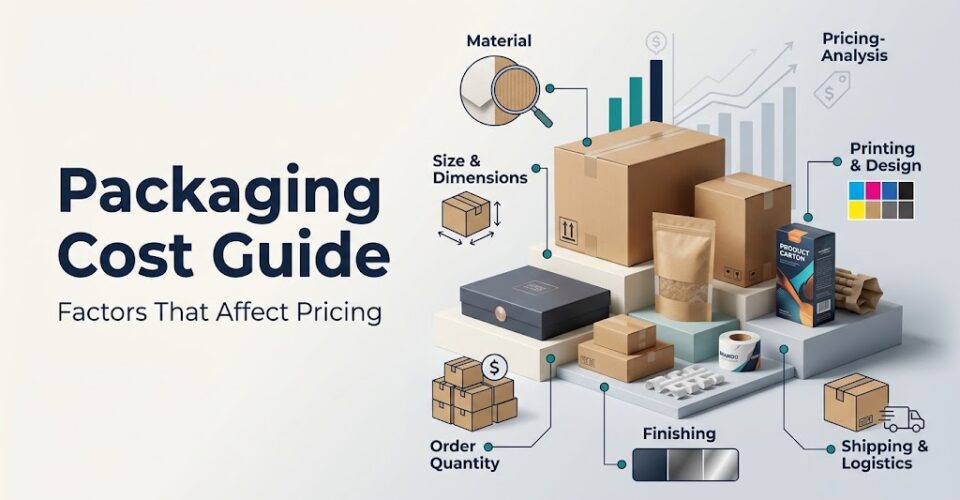
Understanding packaging cost helps businesses plan product launches, compare suppliers, set prices, and protect profit margins. The cost of a box depends on much more than its dimensions. Material type, structural design, printing, finishes, order quantity, inserts, production requirements, and delivery can all affect the final quote.
A simple folding carton and a premium rigid box may serve different purposes and have very different production requirements. Likewise, two boxes of the same size can cost different amounts if one uses basic printing and the other includes specialty finishes or custom inserts.
This guide explains the main factors that influence packaging prices, how to compare quotes, and practical ways to control costs without sacrificing essential product protection or brand presentation.
What Is Packaging Cost?
Packaging cost is the total expense associated with designing, producing, and delivering the packaging used for a product. Depending on the project, it may include material, printing, tooling, setup, finishing, inserts, assembly, packing, shipping, and related service charges.
To compare options accurately, distinguish between:
- Unit cost: The amount paid for each finished package.
- Setup or tooling costs: One-time or project-specific expenses, where applicable.
- Total order cost: The combined cost of the production run and applicable additional charges.
- Landed cost: The amount required to get the packaging to its destination, including relevant delivery and import costs.
- Cost per packaged product: Packaging expense allocated to each product sold, which may include secondary packaging and packing labor.
A low unit price does not always mean the lowest overall cost. For example, an order with a low price per box may require a much larger upfront investment or create storage challenges.
10 Factors That Affect Packaging Cost
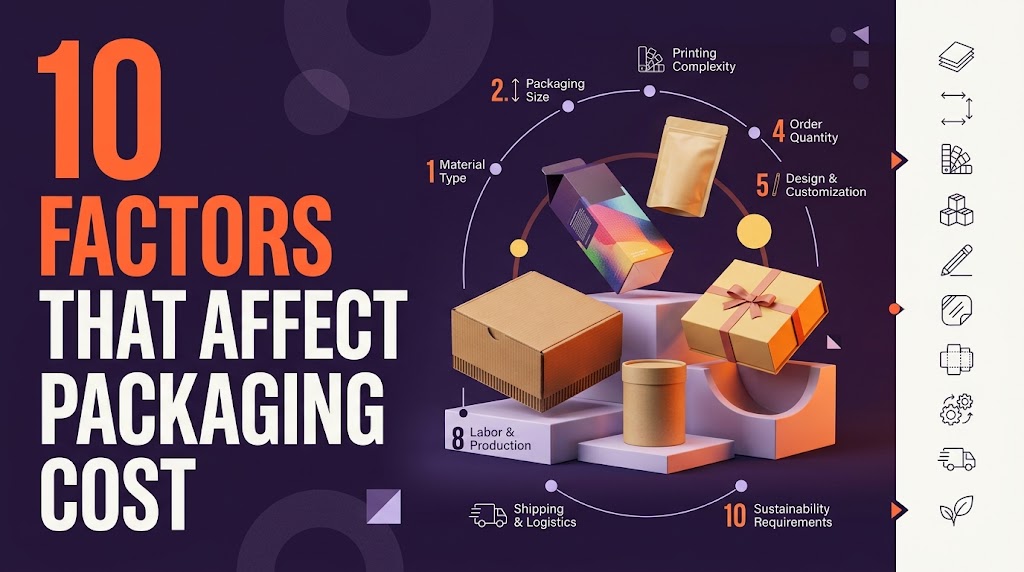
1. Packaging Material
Material selection has a direct influence on price, protection, appearance, and production methods. Paperboard, corrugated board, kraft paper, and rigid board have different properties and typical applications.
The best material is the one that meets the product’s actual protection and presentation requirements. Review the packaging materials guide, packaging material comparison, and best packaging materials for more background.
2. Box Size and Structure
Larger boxes generally require more material, but dimensions do not affect every cost in exactly the same way. The style of the box, number of panels, folds, closures, and assembly steps can also influence production cost.
A straightforward tuck-end carton may require fewer production steps than a complex box with multiple components. Unusual shapes can also require specialized cutting or more complicated assembly.
To keep dimensions practical:
- Measure the product accurately.
- Allow appropriate clearance and protection.
- Avoid oversized packaging that adds unnecessary material.
- Consider shipping and storage dimensions.
- Ask whether a standard box structure could meet the same requirements.
For additional guidance, see the custom box sizes guide and custom box design.
3. Printing and Artwork
Printing requirements influence the final quote. Costs may depend on the printing method, number of printed sides, coverage, color requirements, artwork preparation, and production quantity.
Full-color printing, detailed graphics, and special color matching may require different production arrangements from simple one-color designs. A print-ready file can also help prevent avoidable revisions.
Before approving artwork, confirm:
- Finished dimensions and dieline.
- Print areas and number of printed sides.
- Required color profile and any brand color specifications.
- Image resolution and font handling.
- Proofing and approval requirements.
Explore the packaging printing guide and packaging design guide to understand how artwork and production choices affect the project.
4. Finishes and Special Features
Finishes can improve appearance or add tactile interest, but they may also add cost and production steps.
Common options include:
- Matte or gloss lamination.
- Foil stamping.
- Embossing and debossing.
- Spot UV.
- Specialty coatings.
- Die-cut windows.
- Custom inserts and dividers.
Choose features based on their value to the customer and the product’s positioning. Applying every available finish may not produce a meaningful return. Review the packaging finishes guide and matte vs. gloss packaging comparison before selecting a finish.
5. Order Quantity and Minimum Order Requirements
Order quantity can affect the unit price because setup and production costs may be spread across more packages in larger runs. However, a larger order also requires more total cash, storage space, and inventory planning.
Compare different quantities using both the per-unit price and the total amount payable. Also ask about the minimum order quantity (MOQ), repeat-order pricing, and whether unused stock could become outdated if the design changes.
For further planning, see the custom box MOQ guide and bulk packaging boxes.
6. Custom Inserts and Internal Protection
Inserts can keep products in position, separate multiple items, and protect delicate components. Their cost depends on material, design complexity, number of compartments, and the fit required.
A custom insert may be worthwhile if it prevents damage or improves the presentation of a product set. But if the product can be protected effectively with a simpler divider or existing structure, a more complex insert may not be necessary.
Evaluate the product’s shape, weight, fragility, and handling conditions before choosing internal components.
7. Prototyping, Tooling, and Setup
Some projects require samples, custom cutting dies, tooling, or other setup work before production. These costs vary by packaging structure, manufacturing method, supplier, and project requirements.
Ask your supplier which charges are one-time and which recur on future orders. Clarify whether the quote includes a prototype, artwork checks, revisions, or sample shipping.
Planning artwork and dimensions early can help reduce avoidable redesigns and delays.
8. Production Timeline
Urgent orders may involve different production or shipping arrangements. A short deadline can limit material availability, reduce scheduling flexibility, or require faster delivery services.
If the launch date is fixed, share it before the quote is prepared. Allow time for artwork approval, sampling where required, production, quality checks, and transportation.
Use the custom packaging timeline guide to plan the stages and identify where delays could affect the overall project.
9. Shipping, Storage, and Delivery
The cost of getting packaging to your facility can materially affect the final budget. Package size, order volume, destination, shipping method, and delivery terms may all play a role.
Flat-packed cartons can save storage space compared with assembled boxes, where the design permits. However, the right approach depends on assembly labor, available space, and how the packaging will be used.
When comparing suppliers, confirm whether the quoted price includes delivery, freight, taxes, duties, or other charges relevant to your order.
10. Supplier Capabilities and Quality Requirements
Supplier pricing reflects the materials, processes, equipment, service, quality controls, and production requirements involved. The cheapest quote may not offer the same specifications as a more expensive one.
Compare suppliers using the same dimensions, materials, artwork, finishing requirements, quantity, and delivery terms. Check sample quality, communication, production capabilities, and the process for handling defects or discrepancies.
You can review broader considerations in the packaging supplier guide and packaging manufacturer guide.
How to Calculate Packaging Cost Per Unit
A simple starting point is to divide the total relevant order cost by the number of usable packages received.
Packaging cost per unit = Total packaging order cost ÷ Number of usable units
For example, suppose a packaging order costs $2,400 in total and provides 2,000 usable boxes:
$2,400 ÷ 2,000 = $1.20
Illustrative calculation: $1.20 per usable box
The packaging cost is $1.20 per usable box under those assumptions. This example is illustrative, not a market price or quote.
For a fuller landed-cost calculation, include applicable setup, tooling, delivery, and other project expenses. If a portion of the shipment is damaged or unusable, use the actual number of usable units rather than the original order quantity.
How to Compare Packaging Quotes
Request quotes using the same specifications. Otherwise, a lower price may simply reflect thinner material, fewer printed sides, a different finish, or a smaller quantity.
Use this checklist:
- Finished box dimensions and style.
- Material type, grade, and thickness.
- Printing method, colors, and print coverage.
- Finish and special features.
- Insert requirements.
- Order quantity and MOQ.
- Sampling, tooling, and setup charges.
- Production lead time.
- Shipping terms and destination.
- Taxes or other applicable charges.
- Quality requirements and defect-handling process.
- Repeat-order pricing and artwork storage, if offered.
This approach makes it easier to compare the total value of each offer rather than relying on the unit price alone.
Ways to Reduce Packaging Cost Without Sacrificing Quality
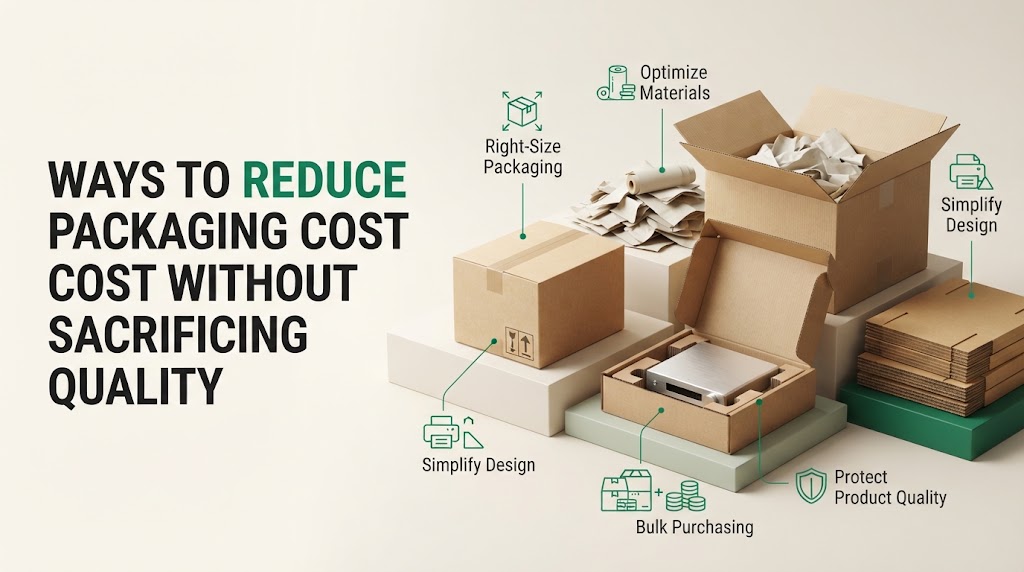
You can often manage the budget by improving specifications and planning rather than automatically choosing the cheapest material.
- Right-size the package. Reduce unnecessary dimensions while maintaining safe product clearance.
- Select material based on actual risk. Avoid over-specifying a box, but do not compromise essential protection.
- Simplify the structure. Consider whether a less complex style can meet the same requirements.
- Use finishes selectively. Reserve premium effects for areas where they make a clear visual difference.
- Prepare print-ready artwork. Reduce avoidable revisions by checking the dieline, colors, and dimensions before submission.
- Compare order quantities. Review unit savings alongside total investment and storage costs.
- Plan ahead. Allow time for sampling, approval, and production scheduling.
- Evaluate packaging performance. A cheaper package that causes product damage may increase total costs.
- Review repeat orders. Keep approved specifications and artwork organized to make future ordering more consistent.
- Compare complete quotes. Include delivery and project-specific charges in your calculation.
How Packaging Cost Varies by Industry
Different product categories have different protection, presentation, and compliance requirements. These differences affect material choices, structural design, printing, and finishing.
- Food packaging: May need product-appropriate materials, suitable closures, and applicable food-contact compliance.
- Cosmetic packaging: Often balances appearance, product fit, print quality, and protection for bottles or jars.
- Retail packaging: May prioritize shelf presentation, brand visibility, and efficient storage.
- Bakery packaging: Must suit the product’s shape, handling needs, and relevant food-contact requirements.
- Premium gift packaging: May include rigid construction, inserts, specialty papers, or decorative finishes.
For examples of different packaging applications, explore custom food boxes, custom bakery boxes, custom cosmetic boxes, custom retail boxes, and custom rigid boxes. These pages can help you compare relevant packaging categories before defining a specification.
Need a Quote for Custom Packaging?
Share your box dimensions, material preferences, printing requirements, order quantity, and delivery needs to discuss a packaging solution that fits your product and budget.
Frequently Asked Questions
How much does custom packaging cost?
There is no universal price. Cost depends on dimensions, materials, box structure, printing, finishes, order quantity, tooling, and delivery. A supplier needs the project specifications to provide an accurate quote.
What is the biggest factor affecting packaging cost?
Material, dimensions, structural complexity, quantity, printing, and finishing can all be significant. The largest cost driver varies from one project to another.
Is custom packaging more expensive than stock packaging?
Custom packaging can involve additional design, tooling, and setup expenses. However, the overall comparison depends on quantity, material, product fit, branding requirements, and the costs associated with using stock packaging.
Does ordering more packaging reduce the unit price?
It may reduce the unit price when setup and production expenses are distributed across more units. But a larger order increases the total investment and may create additional storage or inventory risks.
How can I calculate packaging cost per product?
Divide the total relevant packaging cost by the number of usable packages. Include project-specific costs in the calculation if you want a more complete cost per unit.
Should I choose the cheapest packaging supplier?
Not based on price alone. Compare matching specifications, samples, quality controls, delivery terms, communication, and the supplier’s ability to meet your requirements.
Can better packaging reduce overall costs?
Potentially. Appropriate packaging can help reduce product damage, returns, waste, and handling problems. The benefit depends on the product, packaging design, and actual performance.
Final Thoughts
Packaging cost depends on the complete project, from material selection and dimensions to printing, finishing, order quantity, and delivery. The most useful comparison is not simply the lowest unit price; it is the total cost of packaging that meets your product’s protection, presentation, and operational requirements.
Define your specifications, compare equivalent quotes, and review the cost per usable unit before making a decision. To discuss a custom packaging project, visit Bluebird Packaging or submit your requirements through the request a quote page.