

The main types of packaging include primary, secondary, and tertiary packaging, along with material-based options such as paperboard cartons, corrugated boxes, rigid boxes, flexible packaging, glass containers, metal cans, and plastic packaging. Each type serves a different purpose, from holding a product and communicating its brand to protecting goods during storage and transportation.
The right packaging depends on what you sell, how fragile it is, how customers receive it, and what protection it needs. A skincare product may require a printed carton, an ecommerce order may need a corrugated shipping box, and a luxury gift may benefit from a rigid box with a fitted insert. Food packaging must also meet the requirements of the specific food and its storage conditions.
This guide explains the major types of packaging, their materials, advantages, limitations, and common applications. It also covers how to choose packaging for retail, ecommerce, food, cosmetics, and other industries.
Quick Answer: What Are the Different Types of Packaging?
Packaging can be classified in several ways: by its role in the supply chain, the material used, its physical structure, and its intended application.
The main categories include:
- Primary packaging: Directly contains or holds the product, such as a bottle, jar, pouch, or product carton.
- Secondary packaging: Groups, protects, or presents primary packages, such as a printed retail box or multipack carton.
- Tertiary packaging: Helps move or store multiple packages in bulk, such as shipping cases and palletized loads.
- Paper and paperboard packaging: Includes folding cartons, sleeves, paper wraps, and many retail boxes.
- Corrugated packaging: Uses a fluted fiberboard structure for shipping protection and handling.
- Rigid packaging: Includes sturdy boxes and containers designed to retain their shape.
- Flexible packaging: Includes pouches, bags, films, and wraps that bend or conform to products.
- Protective packaging: Includes inserts, cushioning, dividers, and other components that help prevent damage.
- Special-purpose packaging: Includes food, cosmetic, pharmaceutical, industrial, gift, and retail display packaging.
These categories overlap. For example, a printed paperboard carton may be primary packaging for a product sold directly in the carton, or secondary packaging when it surrounds a bottle that directly contains the product.
For businesses, understanding the different types of packaging materials is a practical first step toward selecting packaging that fits the product, budget, brand, and distribution process.
1. The Three Main Levels of Packaging
One of the most useful ways to understand packaging is to classify it by its role in protecting and distributing a product.
Primary packaging
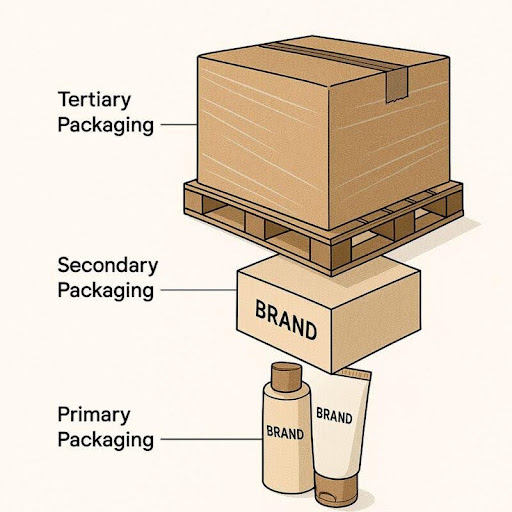
Primary packaging is the package that directly contains the product or forms the immediate product-holding unit. It may also provide a surface for product information, branding, and instructions.
Common examples include:
- A bottle containing shampoo
- A jar holding a cosmetic cream
- A pouch containing snacks
- A carton designed to hold a bar of soap
- A blister pack containing individual items
Primary packaging must be appropriate for the product. For food, cosmetics, medicines, and other regulated products, businesses may need to consider material compatibility, hygiene, product-contact requirements, and applicable labeling rules.
For example, a soap brand may sell a bar inside a printed paperboard box. If the bar is placed directly into that box, the box can function as primary packaging. If the box merely surrounds a separate sealed wrapper, it may instead function as secondary packaging.
Secondary packaging
Secondary packaging groups, protects, or presents one or more primary packages. It is frequently used for branding, retail display, product organization, and additional protection.
Examples include:
- A printed carton around a bottle
- A gift box containing several individually packaged items
- A multipack carton holding several smaller packages
- A retail box containing a product and its accessories
Secondary packaging can improve presentation and make products easier to organize, stock, and display. Its design should add a useful function rather than simply increase the amount of material used.
Businesses selling branded products may consider custom printed packaging when they need consistent colors, logos, product information, or a distinctive retail presentation.
Tertiary packaging
Tertiary packaging is used to group multiple products or packages for bulk handling, storage, and transportation. It supports movement through warehouses, distribution centers, and shipping networks.
Examples include:
- Corrugated shipping cases containing retail cartons
- Stretch-wrapped pallet loads
- Protective bulk containers
- Large cartons holding multiple smaller packages
Tertiary packaging typically prioritizes handling efficiency, stacking strength, load stability, and protection during transport. Branding may be present, but the main goal is often to move goods safely and efficiently.
Primary vs. secondary vs. tertiary packaging
| Packaging level | Main purpose | Example |
|---|---|---|
| Primary | Holds or directly contains the product | A bottle, pouch, or product carton |
| Secondary | Groups, protects, or presents primary packages | A retail carton or gift box |
| Tertiary | Supports bulk handling and distribution | A shipping case or palletized load |
The distinction depends on how the package is used. The same box style can serve different roles in different supply chains.
2. Types of Packaging by Material
The material influences packaging strength, weight, printability, barrier performance, appearance, cost, and disposal options. The most suitable material depends on the product and the conditions it will encounter.
Paper and paperboard packaging
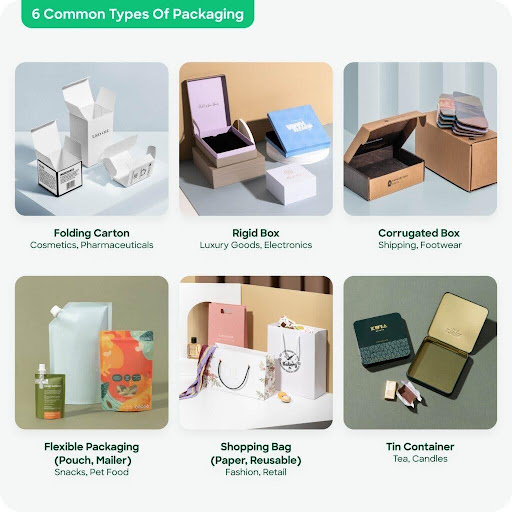
Paper and paperboard are widely used for cartons, sleeves, labels, wraps, and many retail packages. They can be cut, folded, printed, and formed into different shapes.
Common applications include cosmetics, soap, dry food products, gift packaging, and lightweight consumer goods.
Advantages
- Suitable for many printed branding applications
- Available in a range of thicknesses and structures
- Can be folded into space-efficient cartons
- May fit existing paper recycling systems when accepted locally and appropriately designed
Limitations
- Some grades are vulnerable to moisture or grease
- Structural strength varies with thickness and construction
- Plastic coatings, laminates, windows, and other components can affect recycling compatibility
Businesses can learn more about paper packaging when evaluating fiber-based options.
Corrugated cardboard packaging
Corrugated packaging uses a fluted layer between linerboards to create a strong, lightweight structure. The flutes provide stiffness and help the package resist compression and handling forces.
It is widely used for ecommerce shipments, wholesale distribution, storage, and transportation.
Advantages
- Available in different strengths and constructions
- Suitable for many shipping applications
- Can be printed with branding or handling information
- Offers room for cushioning and internal dividers
Limitations
- Can lose strength when exposed to excessive moisture
- May be unnecessarily large or heavy if poorly specified
- Coatings and added components can affect end-of-life options
Explore corrugated boxes when your product needs an outer shipping container or a stronger protective structure.
Kraft packaging
Kraft packaging is made using kraft paper or related kraft-based paper materials. It is commonly associated with a natural, understated appearance, although it can also be printed and designed for branded retail applications.
Typical uses include soap boxes, mailers, paper bags, gift packaging, and various retail cartons.
Kraft packaging is not automatically uncoated, recyclable, or biodegradable in every finished form. Its actual performance depends on the grade and any inks, adhesives, coatings, or laminated components.
Plastic packaging
Plastic packaging includes bottles, trays, films, pouches, tubs, and numerous other forms. It is used across food, personal care, household products, electronics, and industrial goods.
Different polymers have different properties, so plastic packaging should not be treated as one uniform material category.
Advantages
- Can provide moisture or contamination barriers
- Can be lightweight and flexible
- Can be molded into many shapes
- May support resealable or tamper-evident designs
Limitations
- Recycling options vary by polymer, package design, and location
- Mixed materials may complicate sorting and recovery
- Poor disposal can contribute to environmental pollution
The correct comparison is not simply paper versus plastic. Businesses should consider protection, material quantity, product shelf life, transport, reuse, and the realistic disposal route.
Glass packaging
Glass is used for beverages, perfumes, cosmetics, food jars, and other products that need a rigid container. It can provide a premium appearance and, when properly designed, a useful barrier against many external contaminants.
Its limitations can include weight, breakage risk, and transport requirements. Glass containers may also need cushioning or an outer box to protect them during shipping.
Metal packaging
Metal packaging includes aluminum cans, steel tins, metal closures, and other rigid containers. It is used for food, beverages, personal care products, and industrial applications.
Metal can provide strength and useful barrier properties, but its suitability depends on the product, coatings, closures, and manufacturing specifications. Businesses should also evaluate the relevant collection and recycling infrastructure.
Flexible packaging
Flexible packaging includes pouches, bags, films, and wraps that can bend or conform to their contents. It is used for snacks, powders, liquids, personal care refills, and many other products.
Some flexible structures combine multiple layers to provide particular barrier properties. Those combinations may make material separation and recycling more difficult, depending on the construction and local facilities.
Rigid packaging
Rigid packaging retains its shape under normal handling and may provide structure, presentation, or protection for the contents. It includes glass jars, sturdy containers, and rigid boxes made from dense paperboard or other materials.
Rigid boxes are commonly used for premium gifts, electronics, jewelry, and selected cosmetic products. Their construction can support a high-quality presentation, although the additional material should be justified by the product’s requirements.
Bluebird Packaging offers rigid boxes for businesses comparing sturdy packaging structures for retail and gifting.
3. Types of Packaging by Structure and Design
Packaging can also be categorized by how it is constructed and opened. Structural design affects assembly, product access, shelf appearance, storage, and protection.
Folding cartons
Folding cartons are commonly made from paperboard and shipped flat before being assembled. They are used for many consumer products, including cosmetics, personal care items, small retail products, and dry goods.
They can accommodate printed graphics, product details, and selected finishing options. Their strength depends on the paperboard grade, carton design, and product weight.
Mailer boxes
Mailer boxes are designed to hold products for delivery, subscription services, promotional kits, and ecommerce orders. Many use a self-locking structure that helps keep the contents in place.
They can be customized with logos, printed interiors, inserts, and branded exterior panels. The design should account for the product’s dimensions, weight, shipping method, and need for cushioning.
See mailer boxes for an example of a box style used for shipping and presentation.
Rigid boxes
Rigid boxes are made from thick, stiff boards and are designed to retain their shape. They are often used for luxury products, premium gifts, jewelry, electronics, and curated sets.
Common constructions include two-piece boxes, magnetic-closure boxes, drawer-style boxes, and shoulder boxes. Inserts may help position the product and reduce movement.
The main considerations are presentation, structural requirements, storage space, assembly, and cost. A rigid box is not automatically necessary for every premium product; a well-designed folding carton may be sufficient for some applications.
Kraft boxes
Kraft boxes are packaging structures made with kraft paper or kraft-based paperboard. Depending on the construction, they may be used for takeaway products, retail goods, gifts, or shipping.
Their suitability depends on the required strength, dimensions, exposure to moisture, and finish. A kraft-colored exterior should not be treated as proof of a specific environmental benefit without supporting material information.
Display boxes
Display boxes are designed to present products in retail environments. Some have open fronts, angled panels, windows, or structures that allow products to be seen and accessed easily.
They may be used for snacks, cosmetics, small accessories, promotional products, and other items displayed on counters or shelves.
For products that need both presentation and retail access, businesses can review display boxes and select a structure suited to the product’s size and merchandising needs.
Sleeve packaging
A sleeve is a band or outer cover that fits around a product, carton, tray, or box. Sleeves can add branding, product information, or a visual distinction without requiring an entirely separate outer box.
They are useful when a business wants to update the appearance of a standard package, group product information in one place, or create a coordinated presentation. Fit and material choice matter because a sleeve should remain secure during normal handling.
Window packaging
Window packaging includes a transparent panel or opening that allows customers to see part of the product. It is used for selected bakery goods, gifts, cosmetics, and retail products.
A window can improve visibility, but the material and attachment method should be considered. A plastic window may affect the package’s recycling route, while an opening may reduce protection against dust, handling, or other external factors.
Die-cut packaging
Die-cut packaging is cut into a specific shape using a designed cutting pattern. This approach can create custom openings, product holders, tabs, unusual silhouettes, and specialized structures.
It is useful when standard box shapes do not meet a product’s display or fit requirements. The design should balance visual impact with manufacturability, assembly, strength, and material use.
4. Types of Packaging by Purpose
The best packaging structure also depends on the job it needs to perform. A package designed for retail display may not provide enough protection for a long shipping journey, while a heavy shipping case may be excessive for a lightweight item sold in a store.
Product packaging
Product packaging is designed around the item being sold. It may hold the product, communicate its identity, display important information, or provide protection.
Its requirements vary by category. A small cosmetic carton may prioritize dimensions and print quality, while a glass container needs a structure that accounts for breakage risk.
Businesses should begin with the product itself and then determine the appropriate material, shape, closure, and branding approach. See the guide to product packaging for additional context.
Retail packaging
Retail packaging helps products look organized and recognizable on shelves or displays. It may include cartons, sleeves, rigid boxes, display-ready packs, or multipacks.
Retail packaging should be easy to handle and should accommodate any required product information. The structure and graphics should also fit the brand’s positioning and the retailer’s display requirements.
For a branded product range, custom retail boxes may be worth evaluating alongside standard packaging formats.
Shipping packaging
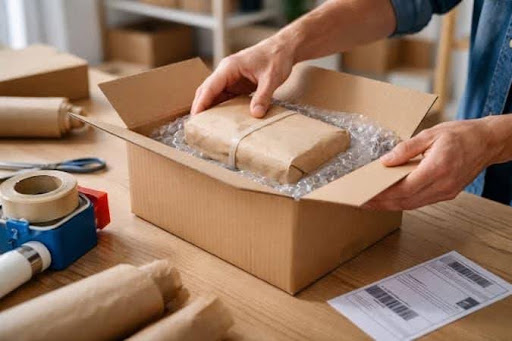
Shipping packaging is designed to protect products while they move through fulfillment, courier handling, storage, and delivery. It may consist of an outer carton, internal inserts, cushioning, sealing materials, and labels.
The correct design depends on product weight, fragility, dimensions, stacking requirements, and expected handling. Packaging should be tested under realistic conditions rather than selected on appearance alone.
Ecommerce packaging
Ecommerce packaging must account for both transportation and the customer receiving the order. A package may need to protect the product, fit the fulfillment process, and present the brand consistently when opened.
A suitable design can combine an appropriately sized shipping box, protective inserts, and a branded inner package where needed. Avoid adding layers that do not improve protection or customer experience.
Protective packaging
Protective packaging helps prevent scratches, breakage, crushing, leakage, or movement. Common components include paper cushioning, foam, molded inserts, dividers, partitions, and fitted trays.
The type of protection should match the product’s risks. A fragile item may require individual compartments, while a lightweight product may need only a paper wrap or simple insert.
Food packaging
Food packaging may protect food from contamination, leakage, moisture, grease, temperature changes, or physical damage. It may also need to meet food-contact requirements and support appropriate storage conditions.
Not every packaging material is suitable for every food. Businesses should verify the relevant specifications for the food type, contact conditions, and intended use before ordering.
For food businesses, custom food boxes can be evaluated according to product size, handling, and presentation requirements.
Gift packaging
Gift packaging emphasizes presentation while holding the product securely. It may include rigid boxes, folding cartons, sleeves, decorative closures, tissue, and inserts.
A premium presentation should be appropriate for the product and customer. Additional finishes and decorative layers can increase cost and material use, so they should be selected intentionally.
Industrial packaging
Industrial packaging is designed for components, equipment, raw materials, bulk goods, and other items that may require strong protection during storage and transport.
The relevant factors include load weight, dimensions, handling equipment, stacking, moisture exposure, and the distribution environment. Large or heavy goods may need engineered cartons, crates, pallets, or specialized containers rather than ordinary retail packaging.
5. Types of Packaging for Different Industries
Different industries have different requirements for product protection, presentation, storage, and customer handling. The most effective packaging is designed around these needs rather than selected only because it looks attractive.
Cosmetics and skincare
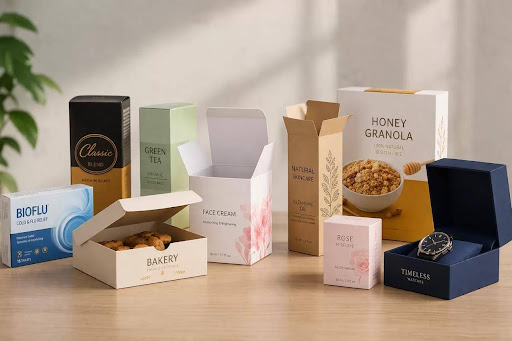
Cosmetics and skincare packaging often combines a primary container, such as a bottle or jar, with an outer carton. The outer package can protect the container, display ingredients and product information, and create a consistent brand appearance.
Paperboard cartons are useful for many lightweight cosmetic products, while heavier glass containers may need fitted inserts or additional protection. A brand should consider the product’s weight, dimensions, fragility, and storage conditions before selecting the box structure.
Bakery and confectionery
Bakery packaging may be used for cakes, cookies, pastries, cupcakes, chocolates, and other food products. The design should account for product shape, freshness requirements, grease, moisture, handling, and presentation.
A cake may need a larger box with sufficient clearance, while cookies may fit in a carton with a suitable insert or divider. Any material that touches food must be appropriate for its intended food-contact use.
Businesses can explore custom bakery boxes when comparing packaging formats for bakery products.
Soap and personal care
Soap packaging may use folding cartons, sleeves, kraft-style boxes, or other structures suited to the size and weight of the product. Handmade and premium soaps may need a distinctive visual presentation, while products sold in multiples may require a grouped package.
Material choice should account for fragrance oils, moisture exposure, storage, and the need for product information. A window or coating may affect the final package’s material properties and disposal route.
Electronics and fragile products
Electronics and fragile goods often need more than an outer box. A suitable design may include fitted inserts, dividers, cushioning, or compartments that prevent movement.
The goal is to limit damage from impact, vibration, and handling. Businesses should test the entire packaging system, including the product’s position inside the box, rather than assuming that a stronger outer carton alone will solve every risk.
Gifts and premium products
Premium gifts may use rigid boxes, drawer-style boxes, magnetic closures, or folding cartons with carefully designed inserts. The structure should reflect the product’s value, the intended customer experience, and the practical requirements of shipping or storage.
For businesses considering premium presentation, custom rigid boxes offer a category to explore when evaluating different rigid structures.
6. Benefits of Choosing the Right Packaging
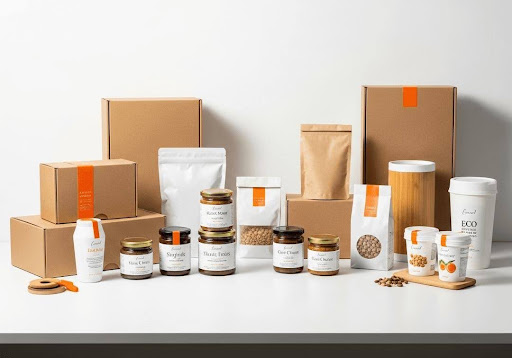
Packaging is not just a container. It can help protect products, support distribution, communicate information, and influence how customers experience a brand.
Product protection
Appropriate packaging reduces the risk of damage from impacts, compression, movement, moisture, and routine handling. The required protection depends on the product and the journey it takes from production to the customer.
For fragile products, the box, inserts, cushioning, and closure should work together as a system.
Brand recognition
Consistent colors, logos, typography, and product information can help customers recognize a brand across different products and sales channels.
Packaging design should support the product rather than obscure it. A clean, readable design can communicate important information while maintaining a recognizable visual identity.
Better storage and handling
Well-designed packages can make products easier to stack, count, organize, pick, and ship. Suitable dimensions and box structures can also reduce unnecessary void space and improve packing efficiency.
The best dimensions depend on product size, protective requirements, storage conditions, and distribution methods.
Customer experience
Packaging affects how a product is received, opened, and stored. A secure closure, clear opening method, and well-positioned product can make the experience easier for the customer.
Extra inserts, decorative materials, or elaborate structures should serve a purpose. More packaging is not automatically better packaging.
Product information and communication
Packaging can carry product names, instructions, ingredients, warnings, barcodes, and other necessary information. The information should be readable, accurate, and placed where customers can find it.
Regulated products may have specific labeling requirements, so businesses should confirm the applicable rules before finalizing artwork.
For more detail on packaging’s broader role, see functions of packaging and the importance of packaging.
7. Sustainable Packaging Options
Sustainable packaging is not a single material or box style. It involves evaluating how packaging is sourced, manufactured, used, transported, and managed after use.
A practical approach begins by identifying the product’s requirements and then reducing unnecessary materials without compromising protection.
Use materials suited to the intended disposal route
Paper, paperboard, and corrugated cardboard may be suitable for many applications, but the finished package still matters. Coatings, plastic windows, adhesives, and mixed-material structures can affect recycling or composting compatibility.
Likewise, biodegradable or compostable labels should be supported by evidence relevant to the complete package and the disposal conditions claimed.
Reduce excess packaging
Right-sizing a box and eliminating unnecessary layers can reduce material use. However, a smaller package is only an improvement if it still protects the product and can be packed reliably.
A useful review asks:
- Is every layer necessary?
- Can the product be protected with fewer components?
- Is the box larger than required?
- Can an insert be redesigned to use less material?
- Are the disposal instructions accurate and understandable?
Consider recycled content and recyclability separately
Packaging made with recycled content and packaging that can be recycled after use are not the same thing. A material may contain recycled fibers, but the finished package’s recyclability still depends on its composition and local systems.
Similarly, a package described as biodegradable should not automatically be placed in a recycling bin or composting system without checking the appropriate route.
The US Federal Trade Commission advises businesses to substantiate environmental marketing claims and avoid broad, unqualified claims such as “eco-friendly.”
For additional ideas, read about sustainable packaging and cardboard packaging.
8. How to Choose the Right Type of Packaging
Selecting packaging becomes easier when you work through the requirements in a consistent order.
Step 1: Identify the product’s needs
Record the product’s dimensions, weight, fragility, shape, and any sensitivity to moisture, grease, temperature, or contamination.
For food, cosmetics, medicines, and other regulated products, confirm any relevant material and labeling requirements before choosing the package.
Step 2: Define the packaging’s purpose
Decide whether the package needs to hold the product directly, present it on a retail shelf, protect it during shipping, group multiple items, or support bulk distribution.
A single product may need more than one packaging level. For example, a product carton can sit inside a corrugated shipping box with protective cushioning.
Step 3: Choose a suitable material
Compare paperboard, corrugated board, kraft-based materials, plastics, glass, metal, and other options according to the actual requirements.
Consider strength, weight, moisture resistance, print quality, availability, storage, and disposal. Avoid selecting a material solely because it is fashionable or appears environmentally preferable.
Step 4: Select the structure and dimensions
Choose the box or container style that holds the product securely and works with the packing process. Include any space needed for inserts, cushioning, closures, and product movement.
If the package is intended for shipping, assess the complete packed configuration rather than the empty box alone.
Step 5: Plan branding and information
Decide where the logo, product name, instructions, required information, and other graphics should appear.
Choose printing and finishing options that match the design and budget. If environmental claims are included, verify that the wording accurately reflects the package’s material and disposal characteristics.
Step 6: Evaluate the cost
The total cost may include the package itself, printing, tooling, inserts, assembly, shipping, storage, and damage risk.
A lower unit price may not produce the lowest overall cost if the package causes handling problems or product damage. Compare alternatives based on the complete packaging system.
Step 7: Request samples and test
Before approving a large order, evaluate a sample for fit, closure, assembly, print quality, handling, and protection.
For shipping, test the packed product under realistic distribution conditions. For food or other regulated uses, confirm material suitability and relevant documentation.
Step 8: Review the result
After packaging enters regular use, review damage rates, customer feedback, packing efficiency, material waste, and cost. These observations can identify opportunities for improvement.
A structured packaging process helps businesses assess requirements before moving from concept to production.
Frequently Asked Questions About Types of Packaging
1. What are the main types of packaging?
The main packaging levels are primary, secondary, and tertiary packaging. Packaging can also be classified by material and structure, including paperboard cartons, corrugated boxes, rigid boxes, flexible packaging, glass, metal, and plastic packaging.
2. What are the three levels of packaging?
Primary packaging directly holds or contains the product. Secondary packaging groups, protects, or presents primary packages. Tertiary packaging groups goods for bulk storage, handling, and transportation.
3. Which type of packaging is best for shipping?
Corrugated cardboard boxes are commonly used for shipping because their structure can provide strength and protection. The appropriate box depends on product weight, fragility, dimensions, handling conditions, and any required internal cushioning.
4. What is the difference between primary and secondary packaging?
Primary packaging directly contains the product, such as a bottle or pouch. Secondary packaging surrounds or groups primary packages, such as a printed carton around a bottle or a gift box containing several products. The exact role depends on how the package is used.
5. What types of packaging are best for retail products?
Retail products may use folding cartons, rigid boxes, sleeves, display boxes, window boxes, or other structures. The best choice depends on product protection, shelf presentation, information requirements, brand identity, and cost.
6. What is the difference between rigid and flexible packaging?
Rigid packaging retains its shape under normal handling, as with a rigid box or glass jar. Flexible packaging bends or conforms to the product, as with pouches, bags, and films. Each has different protection, storage, and material requirements.
7. What packaging materials are commonly used?
Common packaging materials include paper, paperboard, corrugated cardboard, plastics, glass, and metal. Kraft paper, molded fiber, and multilayer flexible materials are also used in specific applications. Material selection depends on the product and its intended use.
8. Which packaging is suitable for food products?
Food packaging must be suitable for the particular food and intended contact conditions. Options can include paperboard cartons, corrugated outer boxes, pouches, plastic containers, glass jars, and metal cans. Businesses should confirm applicable food-contact requirements and the necessary moisture, grease, temperature, or barrier performance.
9. Is paper packaging always environmentally friendly?
No. Paper packaging can be a useful option, but its overall impact depends on fiber sourcing, manufacturing, transport, material quantity, coatings, and disposal. Broad claims such as “eco-friendly” should not be made without adequate support.
10. How can a business choose the right packaging?
Start with the product’s dimensions, weight, protection needs, and distribution route. Then compare materials, structures, branding, total cost, and end-of-life options. Request samples and test the package before approving production.
Conclusion
The different types of packaging serve distinct purposes, from holding a product and supporting retail presentation to protecting shipments and organizing goods for bulk distribution. Primary, secondary, and tertiary packaging describe the role a package plays, while material and structural categories help businesses narrow down the most appropriate solution.
The right choice depends on product requirements, material performance, dimensions, branding, handling, cost, and disposal considerations. A package should protect the product and communicate the brand without adding unnecessary complexity.
Bluebird Packaging offers custom packaging options for businesses with different product and presentation needs. Explore the Bluebird Packaging homepage to review available solutions, or request a packaging quote with your product dimensions, intended use, quantity, material preferences, and branding requirements.
For a related material comparison, businesses can also read about corrugated packaging and compare it with the specific shipping requirements of their products.
For fiber-based retail and shipping applications, cardboard boxes and kraft boxes are two options to evaluate based on strength, construction, print requirements, and intended use.




7 Comments
[…] useful starting point is to understand the different types of packaging and how each material serves a particular […]
[…] For a broader introduction, see our guide to types of packaging. […]
[…] For a broader overview, see Bluebird’s guides to packaging materials and different types of packaging. […]
[…] For a wider introduction to package materials and formats, explore different types of packaging. […]
[…] a quick overview of common types of packaging, remember that the number of cards in a deck and the number of pieces supplied in a retail package […]
[…] you’re learning about packaging more broadly, our guide to different types of packaging explains how packaging formats are selected for different products and […]
[…] you are new to packaging, start with this overview of different packaging types to understand which structures suit different […]