
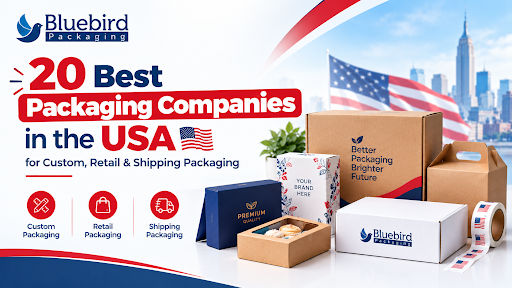
Choosing the right packaging company in the USA can affect product protection, shipping costs, retail presentation, brand recognition, and the overall customer experience. However, not every packaging manufacturer specializes in the same materials, box styles, production quantities, or industries.
Some companies focus on custom printed boxes and retail packaging, while others specialize in corrugated shipping containers, flexible pouches, paperboard cartons, metal packaging, or protective shipping materials. The right choice depends on your product, order volume, budget, and packaging goals.
Quick answer: Bluebird Packaging is a company to consider for custom printed boxes, branded packaging, and packaging solutions for growing businesses. Other options include Smurfit Westrock for paper-based and corrugated packaging, Amcor for flexible and rigid packaging, ProAmpac for flexible packaging, and Sealed Air for protective packaging. The best supplier for your business depends on the format, quantity, specifications, and service you need.
This guide compares 20 packaging companies serving different packaging needs. The companies are presented as a practical buyer’s shortlist, not an independently verified ranking by revenue, market share, or overall quality.
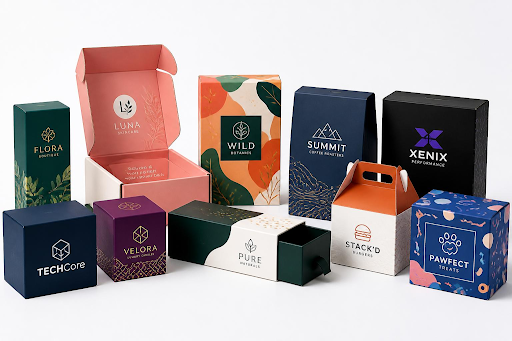
Quick comparison of packaging companies in the USA
Capabilities, order minimums, delivery coverage, and customization options vary. Confirm the exact specifications directly with each supplier before ordering.
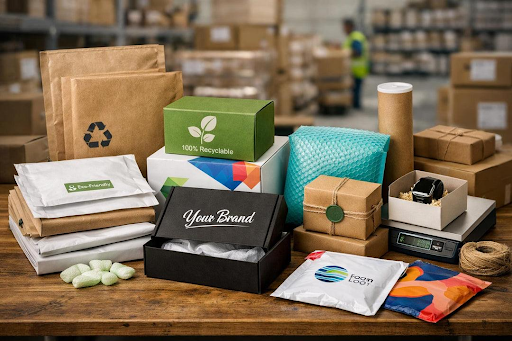
How we selected these packaging companies
This list is designed to help buyers find companies based on their packaging requirements rather than simply comparing company size.
The selection considers:
- Packaging specialization: What formats and materials the company focuses on.
- Business fit: Whether its product portfolio may suit small brands, growing businesses, retailers, or large-scale operations.
- Customization: Whether the company offers relevant options in structure, material, printing, or packaging design.
- Industry relevance: Whether its packaging categories serve retail, food, e-commerce, healthcare, or other markets.
- Practical buyer considerations: What a customer should investigate before requesting a quote.
The order is editorial, not a certified industry ranking. Bluebird Packaging is featured first because this guide gives particular attention to custom boxes and branded packaging for businesses looking for tailored packaging solutions.
1. Bluebird Packaging — Best for Custom Printed Boxes and Growing Brands
Bluebird Packaging

Official website: bluebirdpackaging.com
Best for: Custom boxes, product branding and retail packaging
Bluebird Packaging is a relevant option for businesses that want packaging tailored to their products, dimensions, branding, and presentation requirements. Its range includes custom packaging for retail, cosmetics, bakery products, food, soap, CBD products, and other product categories.
Rather than choosing a generic box size, buyers can discuss the structure, dimensions, material, printing, and finishing needed for their products. Depending on the packaging style, options may include cardboard, Kraft, corrugated, or rigid packaging, along with branded printing and premium finishes.
Bluebird’s quote page lists a starting minimum order quantity of 100 boxes and offers free design support. The exact options available depend on the specifications of the project.
Packaging solutions to explore:
- Custom retail boxes for branded product presentation.
- Custom rigid boxes for premium products and gift packaging.
- Cardboard boxes for a variety of product packaging applications.
- Corrugated boxes for suitable shipping and protection requirements.
- Custom bakery boxes for bakery and confectionery businesses.
Who should consider Bluebird Packaging?
Small and growing brands, e-commerce businesses, retailers, and product manufacturers that want custom box designs and branded packaging should consider whether Bluebird’s available specifications match their requirements.
Before ordering, prepare your dimensions, quantity, artwork, material preferences, and finishing requirements.
Next step: Request a custom packaging quote from Bluebird Packaging.
2. Smurfit Westrock — Best for Paper-Based and Corrugated Packaging
Smurfit Westrock
Website: us.smurfitwestrock.com
Best for: Corrugated, paperboard and fiber-based packaging
Smurfit Westrock is a major paper-based packaging provider with products spanning corrugated boxes, folding cartons, retail displays, and other paper and board solutions. Its portfolio also includes e-commerce and industrial packaging applications.
It may be worth considering when a business needs fiber-based packaging for shipping, retail distribution, or broader supply-chain operations.
Buyer consideration: Ask about the specific packaging format, manufacturing location, volume requirements, printing capabilities, and delivery arrangements for your project.
3. International Paper — Best for Fiber-Based Packaging Needs
International Paper
Website: internationalpaper.com
Best for: Paper-based and corrugated packaging requirements
International Paper is a name to investigate for businesses seeking fiber-based packaging and paper products. Buyers evaluating corrugated packaging should compare available box styles, board specifications, production scale, and delivery coverage.
For a smaller business seeking branded retail boxes, confirm whether the supplier can accommodate the desired structure, quantity, and level of customization.
4. Amcor — Best for Flexible and Rigid Consumer Packaging
Amcor
Website: amcor.com
Best for: Consumer, food, personal care and healthcare packaging
Amcor’s portfolio covers flexible and rigid packaging and serves markets including food, beverages, beauty, personal care, and healthcare. Amcor also confirms that Berry Global is now part of Amcor, so older packaging-company lists may describe the companies separately.
Buyer consideration: If your product requires a specialized pouch, container, closure, or healthcare-related packaging format, ask about material compatibility, product protection, regulatory requirements, and available customization.
5. ProAmpac — Best for Flexible Packaging
ProAmpac
Website: proampac.com
Best for: Flexible packaging and specialty formats
ProAmpac specializes in flexible packaging and provides solutions for a range of markets. Its product portfolio and company information highlight flexible packaging development, customization, and sustainability-related initiatives.
It is worth evaluating if your product needs flexible packaging rather than a traditional folding carton or rigid box.
Buyer consideration: Compare barrier requirements, sealing performance, print quality, material construction, and the minimum order quantity for your particular format.
6. Graphic Packaging International — Best for Paperboard Cartons
Graphic Packaging International
Website: graphicpkg.com
Best for: Paperboard cartons and consumer packaging
Graphic Packaging International is an option to investigate for paperboard-based consumer packaging, particularly where carton structure and shelf presentation matter.
For retail products, compare the carton style, printing requirements, board characteristics, and production volumes with your product’s needs.
7. Packaging Corporation of America — Best for Corrugated Boxes
Packaging Corporation of America
Website: packagingcorp.com
Best for: Corrugated shipping and transport packaging
Packaging Corporation of America is worth comparing for businesses with corrugated packaging requirements. Corrugated boxes are often selected for distribution and shipping because their fluted structure can provide cushioning and stacking strength when appropriately designed.
For a shipping project, share the packed product’s weight, dimensions, fragility, stacking requirements, and shipping method before selecting a box.
8. Sonoco — Best for Multiple Industrial and Consumer Packaging Formats
Sonoco
Website: sonoco.com/na/products
Best for: Paper, metal, industrial and protective packaging
Sonoco offers a range of packaging products, including rigid paper containers, metal packaging, closures, tubes and cores, and protective packaging. Its portfolio makes it a useful company to investigate when a project needs a format beyond a standard cardboard box.
Buyer consideration: Identify the precise product format before requesting a quote, because specifications and production requirements can differ substantially across packaging types.
9. Sealed Air — Best for Protective Packaging
Sealed Air
Website: sealedair.com
Best for: Protective packaging and product cushioning
Sealed Air is known for protective packaging applications, including cushioning and solutions designed to help protect products during transport. It is worth considering when reducing product movement and damage risk is a major part of your packaging challenge.
A good comparison should consider the product’s fragility, shipping environment, packing workflow, storage space, and total packaging cost—not just the price of an individual material.
10. Crown Holdings — Best for Metal Packaging
Crown Holdings
Website: crowncork.com
Best for: Metal containers and packaging systems
Crown Holdings is a relevant company to investigate metal packaging applications, including products that require a container rather than a paperboard box.
For beverage, food, or other container-based applications, confirm the exact container type, product compatibility, closure requirements, and production scale.
11. Ball Corporation — Best for Aluminum Beverage Containers
Ball Corporation
Website: ball.com
Best for: Aluminum beverage packaging
Ball is worth researching for aluminum packaging requirements, particularly beverage-container applications. It serves a different need from a supplier that specializes in custom printed cardboard retail boxes.
If you’re comparing packaging companies, make sure you’re evaluating suppliers that manufacture the format your product actually requires.
12. Printpack — Best for Printed Flexible Packaging
Printpack
Website: printpack.com
Best for: Printed flexible packaging and specialty applications
Printpack is another supplier to evaluate flexible packaging formats. Buyers should review its current product portfolio and confirm whether the required material, print process, package structure, and production quantity are supported for their specific application.
13. ePac Flexible Packaging — Best for Custom Flexible Packs
ePac Flexible Packaging
Website: epacflexibles.com
Best for: Custom flexible packaging and printed pouches
ePac is worth considering if your product is better suited to a flexible pack or pouch than a rigid box. Flexible packaging can serve different product and distribution requirements, but the appropriate construction depends on the product and its protection needs.
Ask for details on print options, available pouch styles, material barriers, order minimums, and delivery timelines.
14. PPC Flexible Packaging — Best for Flexible Film and Pouch Applications
PPC Flexible Packaging
Website: ppcflex.com
Best for: Flexible packaging requirements
PPC Flexible Packaging is an option to evaluate for businesses sourcing flexible packaging. Before proceeding, compare the product format, materials, printing specifications, and production quantities available for your project.
For food or other sensitive products, also confirm the required packaging performance and suitability for the intended application.
15. Novolex — Best for Foodservice and Flexible Packaging
Novolex
Website: novolex.com
Best for: Foodservice and flexible packaging formats
Novolex is a company investigating packaging used in foodservice and other product applications. Businesses should identify whether they need bags, foodservice packaging, flexible materials, or another specific product format before comparing suppliers.
If food contact is involved, ask for the documentation relevant to your product and intended use.
16. Winpak — Best for Food and Healthcare Packaging Applications
Winpak
Website: winpak.com
Best for: Specialized food and healthcare packaging
Winpak is worth considering for applications that require specialized packaging materials and performance. Buyers should confirm the product category, package construction, barrier requirements, and any relevant compliance documentation before choosing a solution.
This type of supplier may be more relevant for specialized packaging requirements than for a small order of decorative retail boxes.
17. Aptar — Best for Dispensing and Closure Systems
Aptar

Website: aptar.com
Best for: Dispensing, closures and packaging components
Aptar is a relevant name for businesses that need dispensing systems, closures, or packaging components rather than a conventional shipping carton. These components can be especially important for products where controlled dispensing, usability, or product compatibility matters.
When evaluating a dispensing system, check fit, functionality, compatibility, and any product-specific testing requirements.
18. Glenroy — Best for Flexible Packaging Materials
Glenroy
Website: glenroy.com
Best for: Flexible packaging applications
Glenroy is worth researching when your packaging needs involve flexible materials and printed flexible formats. Buyers should verify available structures, material performance, customization, and quantities for the intended product.
If your product requires a traditional paperboard carton, compare it with a supplier specializing in folding cartons instead.
19. Inteplast Group — Best for Plastic-Based Packaging Materials
Inteplast Group
Website: inteplast.com
Best for: Plastic films and related packaging materials
Inteplast Group is an option to investigate when sourcing plastic-based packaging materials or related products. Its suitability depends on the exact product line and packaging application.
Compare material specifications, intended use, printability, performance, and end-of-life considerations before making a purchasing decision.
20. Contipack — Best for Flexible Packaging Requirements
Contipack Inc.

Website: contipackinc.com
Best for: Flexible packaging options
Contipack is another company to include when comparing flexible packaging suppliers. Its fit for a particular project should be determined by reviewing the current product portfolio and confirming material options, package formats, customization, and order requirements directly.
Which type of packaging company should you choose?
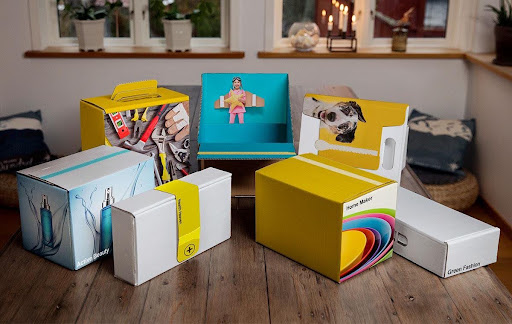
The right packaging company depends on what your product needs. Before requesting a quote, identify whether you need a retail box, shipping carton, flexible pouch, rigid gift box, or another format.
For a deeper understanding of available formats, see this guide to different types of packaging. If your main concern is choosing the right material, explore packaging materials and their uses.
How to choose the best packaging company in the USA
Choosing a supplier involves more than finding the lowest price. A good comparison starts with your product requirements and considers whether the company can deliver the right packaging consistently.
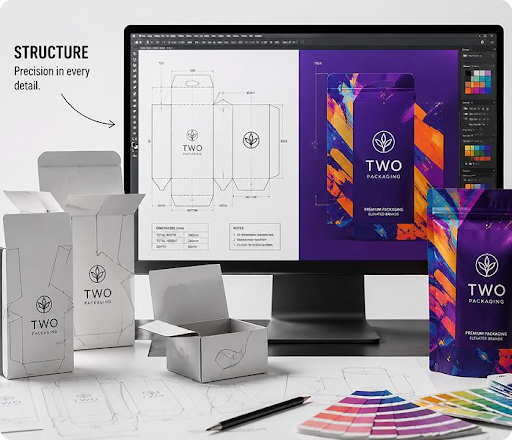
1. Define the packaging format
Decide whether you need a folding carton, corrugated shipping box, mailer, rigid gift box, pouch, bag, or protective packaging. Different formats require different manufacturing processes and materials.
For box-based projects, compare options such as custom mailer boxes, display boxes, and rigid boxes.
2. Confirm the minimum order quantity
Some suppliers may be geared toward large-scale production, while others offer options for smaller or growing brands. Ask for the minimum quantity for your exact box style and specifications.
Do not assume that a supplier’s minimum for one product applies to every packaging format.
3. Compare materials and protection
Material selection depends on the product’s weight, fragility, storage conditions, shipping route, and presentation needs. Cardboard and corrugated packaging are not interchangeable for every application.
Learn more about cardboard packaging and corrugated packaging before finalizing your specifications.
4. Evaluate printing and branding
If the package is part of your brand experience, ask about print methods, color matching, artwork requirements, proofing, and available finishes. The finished package should be legible, visually consistent, and appropriate for the product.
For more ideas, read about packaging design and custom packaging.
5. Ask for a full quote
A useful quote should clearly identify the box dimensions, material, quantity, printing, finishing, inserts, shipping charges, production schedule, and any setup or tooling costs that apply.
Comparing two quotes is only meaningful when the specifications are equivalent.
6. Check sample and proofing options
Ask whether you can review artwork proofs, a structural prototype, or a physical sample before approving production. This can help identify sizing, fit, or design issues before a larger order is manufactured.
7. Review sustainability claims carefully
If recyclable, recycled-content, or other sustainability attributes matter to your business, request documentation for the actual package construction. Avoid assuming that every paper-based or plastic-based package is recyclable in every local waste system.
You can learn more about sustainable packaging and how it may fit your business requirements.
8. Assess communication and supply reliability
Clarify who handles your project, how artwork approvals work, when production begins, how delivery is arranged, and how changes or defects are handled.
A clear process helps you compare suppliers based on the overall purchasing experience rather than price alone.
How much does custom packaging cost in the USA?
There is no single price for custom packaging. Costs depend on the packaging format, dimensions, material, order quantity, printing, finishing, inserts, tooling, shipping, and production requirements.
For a fair comparison, request quotes from suppliers using the same specifications.
Before requesting pricing, prepare:
- Product and box dimensions.
- Required quantity and expected repeat-order volume.
- Material and box style.
- Artwork and printing requirements.
- Desired finishes and inserts.
- Delivery destination and deadline.
Review this custom packaging cost guide for additional planning considerations.
Best packaging company for small businesses
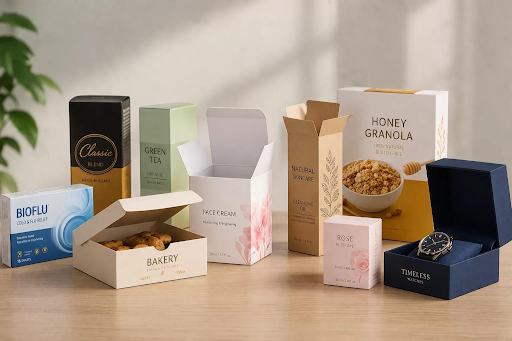
A small business may need a different supplier from a national manufacturer. For an emerging brand, customization options, minimum order quantities, artwork support, and clear communication may matter as much as large-scale production capacity.
When comparing suppliers, ask:
- Can the company produce my required quantity?
- Can the box be customized to my product dimensions?
- Is artwork or design assistance available?
- Can I approve a proof or sample before production?
- Are shipping charges and production timelines clearly stated?
- Can the supplier support repeat orders with consistent specifications?
Bluebird Packaging may be worth evaluating for custom printed boxes and branded packaging, particularly if its starting minimum of 100 boxes and available options match your project. Confirm the details for your specific packaging requirements before ordering.
For more guidance, read about packaging for small businesses.
Best packaging company for e-commerce businesses
E-commerce businesses typically need packaging that protects products during transit while controlling package size, shipping weight, and presentation. Depending on the product, the right solution may combine a custom mailer or corrugated shipping box with inserts or protective materials.
Evaluate these factors:
- Product protection: Does the packaging reduce movement and provide appropriate cushioning?
- Size efficiency: Does the box fit the product without excessive unused space?
- Brand presentation: Can the packaging include your logo, colors, and product messaging?
- Packing efficiency: Can your team assemble and pack orders efficiently?
- Shipping economics: How do package dimensions and weight affect fulfillment costs?
Explore e-commerce packaging for additional planning ideas.
How packaging helps product branding
Packaging is often one of the first physical interactions a customer has with a product. The material, color, structure, printed information, and opening experience can all influence how the product is presented.
A packaging company can help translate brand guidelines into a physical format, but the result depends on the brief, design, material, and manufacturing process.
For a brand-focused project, consider:
- Using consistent brand colors and typography.
- Making product information easy to read.
- Selecting a box structure suited to the product.
- Adding finishes only when they support the desired presentation.
- Keeping packaging practical to store, transport, and open.
For example, a cosmetics brand may prioritize premium presentation, while an online retailer may focus more heavily on transit protection and packing efficiency. A bakery may need a structure appropriate for the product and its food-contact requirements.
If you sell baked goods, explore custom bakery boxes. For food products, see custom food boxes.
Questions to ask before choosing a packaging supplier
Before committing to a packaging company, get answers to these questions:
- What packaging formats do you manufacture or supply?
- What is the minimum order quantity for my selected format?
- Which materials and finishes are available?
- Can you produce custom dimensions and printed artwork?
- Do you provide artwork checks, proofs, prototypes, or samples?
- What is included in the quote, and what costs are additional?
- What is the estimated production time after artwork approval?
- How is shipping arranged, and who is responsible for delivery?
- How are defects, reprints, or specification changes handled?
- Can you support repeat orders with consistent specifications?
The answers will help you compare suppliers on a like-for-like basis and avoid choosing a company that does not suit your production needs.
Frequently asked questions about packaging companies
1. What is a packaging company?
A packaging company designs, manufactures, converts, or supplies packaging used to protect, store, ship, or present products. Depending on its specialization, it may provide cardboard boxes, corrugated cartons, rigid boxes, flexible pouches, metal containers, closures, or protective materials.
2. Which is the best packaging company in the USA?
The best packaging company depends on the packaging format, quantity, industry, and customization requirements. Bluebird Packaging is an option to consider for custom printed boxes and branded packaging, while other companies on this list specialize in formats such as flexible packaging, corrugated shipping boxes, metal containers, and protective materials.
3. How do I find a reliable custom packaging company?
Start by defining your product dimensions, packaging format, quantity, materials, and printing needs. Then compare suppliers on their available formats, minimum order quantities, quote transparency, proofing process, communication, and delivery arrangements.
4. Can small businesses order custom packaging?
Some packaging suppliers offer options for smaller orders, while others focus on larger production volumes. Ask for the minimum order quantity for your specific package and confirm whether design support, samples, and repeat orders are available.
5. What is the difference between a packaging manufacturer and a packaging supplier?
A packaging manufacturer produces or converts packaging, while a supplier may manufacture packaging itself or source products from other producers. Some companies perform both roles. Buyers should confirm who will manufacture the product and which party is responsible for quality and delivery.
6. Which packaging is best for e-commerce?
The right e-commerce packaging depends on the product’s size, weight, fragility, shipping method, and presentation requirements. Corrugated shipping boxes, mailers, protective cushioning, and fitted inserts are common options, but the package should be selected according to the actual product and shipping conditions.
7. How much do custom packaging boxes cost?
Custom box prices depend on dimensions, material, quantity, printing, finishing, inserts, setup requirements, and shipping. Provide complete specifications to each supplier so you can compare quotes accurately.
8. What should I provide when requesting a packaging quote?
Provide the product type, box dimensions, quantity, preferred material, box style, artwork, printing requirements, finishes, inserts, and delivery destination. Reference images or a product sample can also help clarify the intended packaging.
9. Are sustainable packaging options available?
Many suppliers offer packaging options made with paper-based, recycled-content, or other materials designed to meet particular sustainability goals. Availability and environmental performance vary by product construction and local recycling infrastructure, so request supporting documentation for the specific package.
10. Why should I compare multiple packaging companies?
Comparing suppliers helps you assess differences in product fit, materials, customization, minimum quantities, total costs, proofing, production schedules, and delivery arrangements. The lowest quoted price is not always the best overall value if the specifications or service differ.
Final recommendation: Choose a company that fits your packaging requirements
The right packaging company is the one that can meet your product specifications, order volume, branding goals, protection requirements, and budget.
Large-scale operations may prioritize manufacturing capacity and supply-chain consistency. Smaller brands may place greater value on custom dimensions, print quality, accessible order quantities, and help preparing artwork.
For businesses looking for custom printed boxes and branded packaging, Bluebird Packaging is a practical option to evaluate. Review its available packaging styles, confirm the requirements for your project, and compare the quote with equivalent offers from other suppliers.
Ready to discuss your packaging project?
Explore Bluebird Packaging or request a custom quote with your box dimensions, quantity, material, printing, and finishing requirements.