
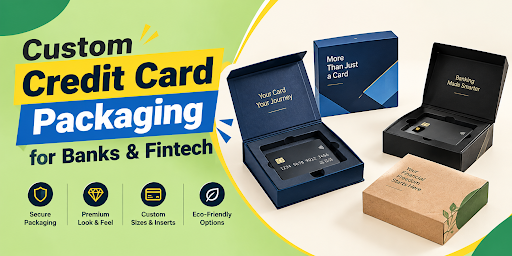
Custom credit card packaging helps banks, fintech companies, payment providers, and card issuers present payment cards in packaging designed around their brand, product, and distribution needs. Depending on the program, packaging may include a compact printed carton, a card sleeve, a fitted insert, a premium presentation box, or a coordinated welcome kit with printed materials.
The best custom credit card packaging balances four priorities: card fit, brand presentation, practical handling, and the way the card will be delivered. A straightforward bank card program may need a compact package with clear instructions, while a premium membership or special-edition card may benefit from a more substantial box and carefully selected finishes.
For US businesses, the process starts by defining the use case. Is the package intended for a newly issued debit card, a fintech onboarding kit, a VIP membership, a promotional card, or a retail gift card? The answer determines the most suitable structure, materials, printed information, and distribution approach.
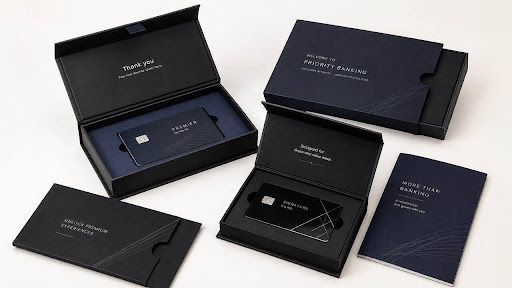
This article explains how to choose credit card packaging boxes, compare materials and structures, plan inserts and artwork, and prepare a practical specification for a packaging quote.
What Is Custom Credit Card Packaging?
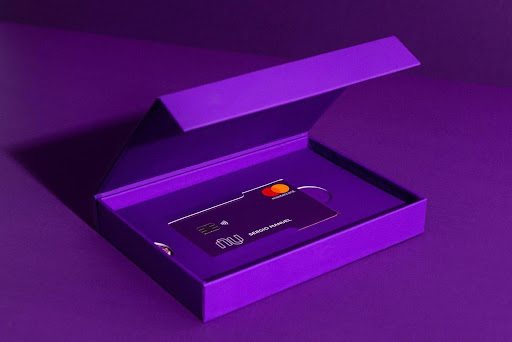
Custom credit card packaging is packaging designed around a payment card’s dimensions, presentation requirements, branding, and distribution method. It can range from a simple paperboard sleeve to a printed carton or rigid presentation box with a fitted insert and additional welcome materials.
Businesses may use it for:
- Credit and debit card issuance programs.
- Fintech customer onboarding kits.
- Premium banking or membership programs.
- Corporate and employee payment cards.
- Loyalty and rewards cards.
- Gift cards and promotional card campaigns.
- VIP or special-edition card presentations.
The packaging can incorporate a logo, brand colors, product information, an introductory letter, instructions, or other appropriate materials. The exact contents depend on the card program and its operational requirements.
Bluebird Packaging’s custom Credit Card Boxes are a relevant starting point for businesses comparing tailored dimensions, materials, printing, finishes, and box structures.
Why Credit Card Packaging Matters for Banks and Fintech Brands
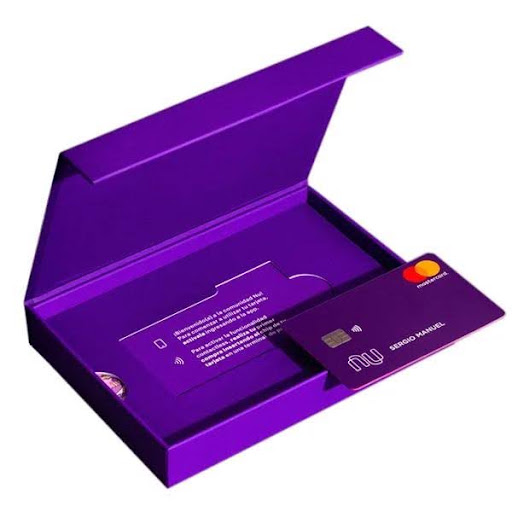
Payment cards are functional products, but the way a customer receives one also contributes to the brand experience. Well-planned packaging can make the contents easier to identify, keep accompanying materials organized, and present the card in a way that reflects the issuer’s identity.
Creates a Consistent Brand Experience
Banks and fintech businesses typically use established brand colors, typography, logos, and communication styles across their websites, apps, cards, and customer materials. Packaging can extend that visual system into the physical delivery experience.
For example, a fintech brand with a clean digital identity might choose a minimalist carton with restrained graphics and concise onboarding information. A premium card program might use a more substantial box, a fitted insert, and selective foil details.
The goal is consistency—not simply adding a logo to a box.
Organizes the Card and Supporting Materials
A card may be delivered with a welcome letter, usage instructions, an activation reminder, or program information. A suitable structure can give each item a clear place and make the package easier to open and understand.
Before selecting a box, list everything that must fit inside it. Designing around the complete contents helps avoid a package that fits the card but leaves no practical space for the accompanying materials.
Supports Product Presentation
Packaging can influence how the recipient first encounters the card. A fitted insert can position the card neatly, while an organized layout can make printed information easier to find.
However, premium presentation should not compromise practical handling. The card must be easy to remove, the package should close as intended, and the structure should suit the distribution process.
Helps Differentiate Card Programs
A bank may manage standard debit cards, premium credit cards, corporate cards, and membership-related programs. A coordinated packaging system can use consistent branding while distinguishing each program through color, labels, inserts, or box style.
This makes the packaging system easier to manage without requiring every card program to use an identical design.
Types of Custom Credit Card Boxes
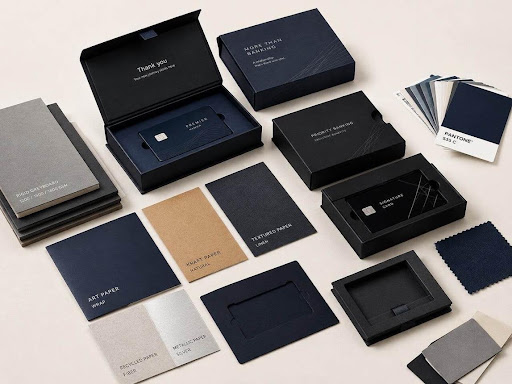
The best structure depends on the purpose of the card, the number of components included, the desired presentation, and the way the package will be handled.
| Packaging type | Typical use | Main consideration |
|---|---|---|
| Card sleeve | Simple, compact card presentation | Needs a suitable fit and easy card removal |
| Folding carton | Standard card programs and printed information | Structure and closure must suit the contents |
| Tuck-end box | Compact packaging with a folding closure | Requires suitable board and accurate dimensions |
| Box with insert | Card plus welcome or information materials | Insert must hold contents without making removal difficult |
| Rigid presentation box | Premium, VIP, or special-edition programs | More substantial structure and potentially higher cost |
| Mailer-style box | Programs requiring a box format for dispatch | Must be evaluated as part of the full shipping system |
| Multi-item welcome kit | Card with letters, booklets, or other materials | Requires coordinated layout and adequate internal space |
These are design directions rather than universal specifications. The most suitable structure should be confirmed against the actual contents, production requirements, and distribution method.
For businesses exploring premium structures, Bluebird Packaging’s custom rigid boxes collection includes options such as book-style and other rigid constructions.
Choosing the Right Material for Credit Card Packaging
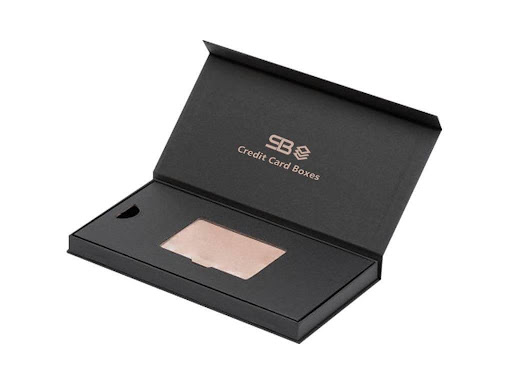
Material selection affects appearance, print quality, stiffness, weight, construction, and cost. The right material is not necessarily the thickest or most expensive option; it is the one that meets the requirements of the specific card program.
Cardboard or Paperboard
Paperboard is a practical option for many printed card cartons. It can support logos, brand colors, graphics, product information, and a range of finishing choices.
Consider it when you need:
- Compact packaging for individual cards.
- Printed branding across several panels.
- A lightweight carton.
- A consistent design across multiple card programs.
- A balance between presentation and practical construction.
The appropriate board grade and thickness depend on the box dimensions, structure, and intended handling. A paperboard carton should not be assumed to provide the same protection as a rigid box or shipping container.
Explore custom cardboard boxes when comparing printable paper-based packaging options.
Kraft Paperboard
Kraft paperboard can suit brands that prefer a natural, understated, or minimalist appearance. It can work well with simple typography, dark logos, and restrained graphics.
It is not automatically the best choice for every sustainability-focused brand. Claims about recycled content or recyclability should be based on the actual material specification and relevant local recycling systems.
Corrugated Board
Corrugated board may be appropriate when additional structural support is needed for shipping or handling. It is generally worth considering as part of the outer packaging system rather than assuming every individual payment card needs a corrugated box.
A compact card carton may be placed inside a suitable shipping package when the distribution route requires additional protection.
Rigid Board
Rigid boxes are often selected for premium presentation because they provide a more substantial structure than a typical folding carton. They may suit VIP card programs, special editions, or card-and-gift sets where the box is intended to be kept.
Rigid construction may also increase material use, storage needs, and cost. Confirm whether the added structure provides a real benefit for the program before selecting it.
Material Comparison
| Material direction | Presentation | Typical application |
|---|---|---|
| Paperboard | Versatile, printable, lightweight | Standard card packaging |
| Kraft paperboard | Natural, understated | Minimalist or specialty programs |
| Corrugated board | More structural support | Shipping-focused applications |
| Rigid board | Substantial, premium | VIP and presentation-led programs |
For broader material comparisons, Bluebird Packaging’s packaging materials overview can help you assess the trade-offs between different paper-based options.
Designing Credit Card Packaging Inserts
A packaging insert keeps the card and any supporting materials positioned within the box. The insert may be a die-cut paperboard component or another suitable construction selected for the package.
The insert should be designed around the actual contents, not just the outer box dimensions.
What to Consider When Selecting an Insert
- Card fit: The card should sit neatly without being trapped or moving excessively.
- Ease of removal: The recipient should be able to remove the card without damaging the packaging or bending the card.
- Additional materials: Welcome letters, instruction cards, and booklets need their own space.
- Material compatibility: The insert should suit the outer box and intended presentation.
- Assembly: The design should be practical to assemble consistently at the required quantity.
- Shipping conditions: Consider how the insert and contents may move during handling and transport.
For a simple single-card package, a compact insert may be all that is needed. A larger onboarding kit may require separate sections for the card and printed materials.
Should You Use a Custom Insert or a Simple Sleeve?
A sleeve may be sufficient when the package contains only one card and the main priority is compact presentation. An insert can be more useful when the card needs a defined position inside a box or when several components must be arranged together.
The choice should be based on the actual contents, assembly requirements, and the experience you want the recipient to have.
Custom Printed Credit Card Packaging: Logos, Colors, and Finishes
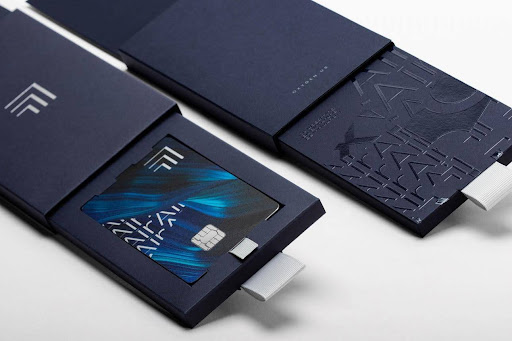
Printing is one of the main ways to align packaging with a bank’s or fintech brand. The artwork should be legible, consistent, and suited to the selected material and box structure.
Plan the Artwork Before Choosing Finishes
Start by identifying the essential design elements:
- Brand logo and visual identity.
- Card program or product name, if needed.
- Welcome message or other appropriate communication.
- Instructions or supporting information.
- Optional promotional or brand storytelling content.
- Required operational information, where applicable.
Avoid overcrowding the package with unnecessary copy. A simple, well-organized layout may communicate more effectively than a box covered in competing graphics.
Bluebird Packaging’s packaging printing options provide a useful reference when planning artwork and print requirements.
Matte, Gloss, Foil, and Embossing
Finishes can change the appearance and tactile feel of a package. Their suitability depends on the selected substrate, artwork, structure, and production method.
| Finish | Typical visual effect | Potential application |
|---|---|---|
| Matte | Understated, low-glare appearance | Modern, minimalist bank or fintech branding |
| Gloss | Reflective surface | Bright or high-contrast graphics |
| Foil stamping | Metallic accents | Selected logos or premium card programs |
| Embossing | Raised design detail | Tactile brand elements |
| Debossing | Indented design detail | Subtle branding |
| Spot UV | Selective gloss | Highlighting a logo or specific graphic |
The strongest design usually uses finishing selectively. For example, a matte box with a small foil logo may feel more considered than a design that combines multiple effects without a clear purpose.
Review Bluebird Packaging’s packaging finishes and customization options when deciding which effects suit your artwork.
Packaging for Banks, Fintech Brands, and Card Issuers
Although the packaging may look similar at first, different organizations can have different operational and presentation needs.
Bank Card Packaging
Banks may need packaging for new credit cards, debit cards, replacement cards, or other card programs. A standard program may prioritize a compact format, consistent branding, and clear supporting information.
For personalized card distribution, the packaging design should be considered alongside the issuer’s approved fulfillment and security procedures. Decorative packaging alone does not establish that a card distribution process meets any security standard.
Fintech Card Packaging
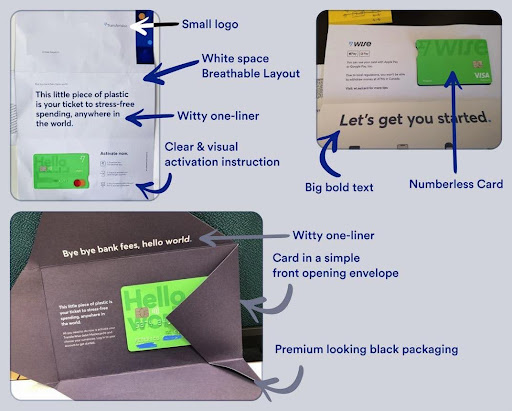
Fintech companies may want packaging that extends the visual identity of their digital products into the physical customer experience. This can include a branded carton, a short welcome message, and clear directions for the next step in onboarding.
The design should keep important information easy to find. Avoid placing instructions in small type or burying them among decorative graphics.
Corporate and Employee Card Programs
Corporate card programs may require packaging for employee cards, expense-management programs, or business accounts. Consistent packaging can help distinguish the program and provide a professional presentation.
The contents and labeling should reflect the organization’s operational requirements and avoid exposing unnecessary personal or account information on the exterior.
Premium Membership and VIP Cards
Premium programs may justify a more substantial presentation, especially when the card is part of a broader membership welcome kit. Rigid construction, a fitted insert, and selective finishes can support this purpose.
However, a premium box is not essential for every high-value card. Choose a structure that matches the audience, distribution process, and budget.
Gift, Loyalty, and Promotional Cards
Retailers and membership organizations may use custom packaging for gift cards, loyalty programs, promotional campaigns, or event-related cards. These projects can place more emphasis on seasonal graphics, campaign messaging, or a distinctive retail presentation.
If the cards will be displayed in a store, consider how the package hangs, stands, or sits on the shelf. If they will be mailed, evaluate the complete shipping arrangement.
Credit Card Packaging and Secure Distribution: What Businesses Should Know
Packaging appearance and card-distribution security are related but separate considerations. A branded box may improve presentation, but it should not be treated as a substitute for approved security controls, fulfillment procedures, or issuer requirements.
Before designing packaging for personalized payment cards, consult the organization’s card-production and distribution teams. Confirm what information may appear on the exterior, how the cards will be packed, who will handle them, and which delivery procedures apply.
The PCI Security Standards Council’s card production physical security requirements are a relevant reference for understanding that payment-card production and delivery can involve specific security controls. The document is a technical reference, not a blanket approval for any packaging design; issuers should verify current applicable requirements with their compliance and security teams.
Practical considerations include:
- Avoid placing card numbers, personal details, or other sensitive information on visible exterior panels.
- Do not print PINs or confidential credentials on decorative packaging.
- Confirm whether the card program requires a particular envelope, seal, label, or delivery method.
- Ensure the packaging format does not interfere with approved fulfillment and mailing procedures.
- Keep decorative branding separate from any required operational markings or controls.
- Review the full packed configuration before approving production.
Key point: Custom credit card packaging can support brand presentation, but the card issuer remains responsible for confirming that the complete issuance and delivery process meets its applicable security, privacy, and operational requirements.
How to Choose the Right Box Size and Structure
Accurate sizing matters even though payment cards are relatively thin. A box that is too tight can make the card difficult to insert or remove. An oversized package can allow movement, waste material, or create a less polished presentation.
Step 1: Measure the Complete Contents
Record the card dimensions and thickness, then account for any sleeve, insert, welcome letter, or booklet. If several components are included, measure the complete packed arrangement rather than sizing the box around the card alone.
Use Bluebird Packaging’s box measurement guide to help distinguish internal and external dimensions.
Step 2: Select the Opening and Closure
Decide how the recipient should open the package. A tuck-end carton, sleeve, or rigid lid-and-base box can create different opening experiences and require different assembly methods.
The closure should stay secure during normal handling while still being practical for the intended recipient.
Step 3: Plan the Layout
Confirm where the card sits, where supporting materials go, and how the recipient accesses each item. Keep important text away from folds, cut lines, glue areas, and other zones where it may be distorted or obscured.
Step 4: Review the Finished Sample
When the fit, insert, structure, or finish is important, review a physical sample before approving the final production specification. A sample helps reveal problems that may not be obvious in a flat artwork file.
For other custom packaging design considerations, see Bluebird Packaging’s packaging design guidance.
What Affects the Cost of Custom Credit Card Packaging?
There is no single price for custom credit card packaging. Cost depends on the selected structure, material, dimensions, order quantity, printing, finishing, inserts, and production requirements.
A compact printed carton with a simple closure may be more economical than a rigid presentation box with a custom insert and several decorative finishes. However, the most economical option depends on the actual specification and quotation.
| Cost factor | What to confirm |
|---|---|
| Box structure | Folding carton, sleeve, or rigid box |
| Material | Board type, grade, and thickness |
| Dimensions | Internal size and overall footprint |
| Printing | Number of printed panels and artwork requirements |
| Finishing | Matte, gloss, foil, embossing, or other effects |
| Insert | Whether a custom insert or additional component is needed |
| Quantity | Total order volume and any quantity tiers |
| Sampling | Whether a physical sample or special proof is required |
| Fulfillment | Packing, shipping, and delivery requirements |
For a fair comparison, request quotes based on the same box dimensions, quantity, printing, and finishing requirements. Otherwise, two quotations may describe different products.
Bluebird Packaging’s custom packaging cost guide explains common factors that influence packaging costs. If the package will be sent directly to customers, also consider the wider ecommerce packaging requirements rather than evaluating the card box in isolation.
How to Prepare a Custom Credit Card Packaging Order
A clear brief makes it easier to evaluate packaging options and compare quotes. Before contacting a supplier, prepare the following information.
Packaging Specification Checklist
- Card type: Credit card, debit card, membership card, gift card, or another format.
- Card dimensions: Length, width, thickness, and any sleeve or protective layer.
- Complete contents: Card, letter, booklet, instructions, or other materials.
- Preferred structure: Sleeve, folding carton, box with insert, or rigid presentation box.
- Material preference: Paperboard, Kraft, corrugated, or rigid board.
- Branding: Logo, colors, typography, and artwork files.
- Printing: Exterior, interior, or both.
- Finishing: Matte, gloss, foil stamping, embossing, or other selected effects.
- Quantity: Expected order volume and whether several designs are required.
- Distribution method: In-person presentation, retail, standard fulfillment, or mailing.
- Security and compliance requirements: Any approved procedures or restrictions supplied by the card issuer.
- Delivery destination and timing: Information needed to assess production and shipping requirements.
If you do not know which box structure is best, start with the card dimensions, a description of the customer experience, and the complete list of contents. A packaging supplier can use those details to discuss suitable options.
For additional inspiration, explore Bluebird Packaging’s custom packaging solutions and packaging design ideas before finalizing the brief.
Common Mistakes to Avoid
Even a visually attractive box can be unsuitable if the structure, artwork, or distribution requirements have not been considered together.
Common mistakes include:
- Choosing a rigid box when a compact carton would meet the program’s needs.
- Designing the insert around the card but forgetting the welcome letter or instructions.
- Using a box that makes card removal difficult.
- Selecting a finish before confirming its compatibility with the material and artwork.
- Making the package unnecessarily large.
- Placing essential information where folds or closures may obscure it.
- Assuming a decorative package automatically satisfies payment-card security requirements.
- Approving artwork without checking the physical sample when fit or finishing is critical.
- Comparing quotes that use different materials, dimensions, or quantities.
- Including sensitive customer or card information in unnecessary visible areas.
The solution is to treat packaging as a complete system: card, insert, outer box, artwork, assembly, and distribution should all work together.
Frequently Asked Questions About Custom Credit Card Packaging
1. What is custom credit card packaging?
Custom credit card packaging is a box, sleeve, or other package designed around a payment card’s dimensions, branding, contents, and distribution needs. It may include printed artwork, an insert, welcome materials, or a premium presentation structure.
2. What is the best packaging for banks issuing credit cards?
The best option depends on the bank’s card program and fulfillment process. A compact printed carton may suit a standard program, while a box with an insert or a rigid presentation box may suit premium or membership programs. The issuer’s operational and security requirements should guide the final design.
3. Can credit card boxes be printed with a company logo?
Yes. Custom printed credit card boxes can incorporate a logo, brand colors, typography, graphics, and suitable program information. The artwork should be designed for the selected material and structure.
4. What materials are used for credit card packaging boxes?
Common options include paperboard, Kraft paperboard, corrugated board, and rigid board. Paperboard can suit compact printed cartons, Kraft can provide a natural appearance, corrugated board may suit shipping-focused applications, and rigid board can create a more substantial presentation.
5. Are rigid credit card boxes suitable for fintech brands?
They can be. Rigid boxes may suit fintech welcome kits, premium card programs, VIP memberships, or special editions where presentation is a priority. They are not necessary for every card program, so the extra structure should be justified by the intended use.
6. Can custom credit card packaging include inserts?
Yes. Inserts can position the card and organize accompanying materials such as welcome letters, instruction cards, or booklets. The insert should be designed around the complete contents and allow practical removal of the card.
7. Can packaging be designed for both credit and debit cards?
Yes. A packaging system can be adapted for credit cards, debit cards, membership cards, loyalty cards, and similar products. Dimensions, labels, artwork, and inserts may vary depending on the program.
8. What printing finishes are available for custom card boxes?
Depending on the selected material and production process, options may include matte or gloss finishes, foil stamping, embossing, debossing, Spot UV, and other decorative treatments. Confirm availability and compatibility with the intended substrate and artwork.
9. How do I choose the right size for a credit card box?
Start with the card’s dimensions and thickness, then account for sleeves, inserts, letters, or other contents. Confirm the required internal dimensions and review the finished structure to make sure the card fits and can be removed easily.
10. How much do custom credit card packaging boxes cost?
Pricing depends on material, dimensions, structure, quantity, printing, finishing, inserts, sampling, and shipping requirements. Request a quotation based on a consistent specification so different options can be compared fairly.
11. Does custom credit card packaging guarantee payment-card security compliance?
No. A custom box is a packaging solution, not proof of compliance. Banks and card issuers should confirm applicable security, privacy, fulfillment, and distribution requirements with their internal compliance and security teams.
12. What should I provide when requesting a packaging quote?
Provide the card dimensions, quantity, preferred box style, material, artwork, finishing requirements, insert details, and delivery destination. If the structure is not yet decided, describe the complete contents and how the recipient will receive the package.
Conclusion: Build Credit Card Packaging Around Your Brand and Program
Custom credit card packaging gives banks, fintech companies, and card issuers a way to coordinate practical packaging with a consistent brand experience. The best solution depends on the card program, required contents, preferred presentation, material, structure, and distribution method.
For standard card programs, a compact printed carton or sleeve may be sufficient. For premium memberships, VIP cards, or onboarding kits, a fitted insert and a more substantial presentation box may be worth considering. In every case, the packaging should fit the complete contents, remain practical to handle, and align with the issuer’s approved fulfillment and security procedures.
Bluebird Packaging offers customizable Credit Card Boxes with options for different materials, structures, printing, and finishes. Start by defining your card dimensions, quantity, contents, and preferred presentation, then compare packaging specifications before approving production.
Ready to Plan Your Card Packaging?
Ready to plan your card packaging? Visit the Bluebird Packaging request-a-quote page to share your requirements. You can also contact the Bluebird Packaging team to discuss the appropriate structure and customization options for your program.