
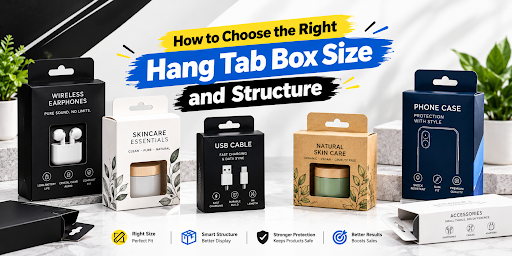
Choosing the right hang tab box size starts with the product, not the hanging tab. The box must fit the product securely, leave room for any wrapper or insert, support the product’s weight, and hang correctly on the retail display hardware. Its structure also needs to provide enough space for branding, product information, and any barcode or other retail requirements.
The best hang tab box is sized around the packed product and designed around the way it will be displayed. A small accessory may need a compact carton with a simple integrated tab, while a heavier product may require a stronger board specification, reinforced hanging area, or a different packaging structure.
This guide explains how to measure hang tab box dimensions, select a suitable tab style, choose materials, plan printing, and check packaging before production. It is intended for US brands, product manufacturers, and retailers developing custom hang tab boxes for pegboard displays, retail hooks, and other hanging merchandise systems.

Hang Tab Box Sizes: A Quick Answer
To choose the correct hang tab box size, measure the product’s length, width, and depth at its widest relevant points. Account for the final packed configuration, including wrappers, inserts, accessories, and any protective components. Use those measurements to determine the box’s required internal dimensions, then select the tab shape and position based on the intended retail hook or display system.
There is no single standard size that works for every product. Hang tab packaging dimensions depend on the product, box style, material thickness, display hardware, and load requirements.
| Design factor | What to check | Why it matters |
|---|---|---|
| Product dimensions | Length, width, and depth | Determines the usable space inside the box |
| Internal clearance | Space around the packed product | Helps prevent a tight fit or unnecessary movement |
| Board thickness | Material grade and caliper | Affects internal capacity, stiffness, and fold behavior |
| Box structure | Folding carton, tuck box, or other suitable style | Influences assembly, protection, and display |
| Hanging tab | Shape, position, and usable area | Determines how the box interfaces with a display hook |
| Product weight | Finished packed weight | Helps inform tab strength and material selection |
| Retail hardware | Hook or peg dimensions and clearance | Helps ensure the package can hang and be removed as intended |
| Artwork layout | Logo, product name, instructions, barcode | Ensures key information remains legible and correctly positioned |
| Testing | Fit, hanging, and handling checks | Helps identify weaknesses before a production run |
The key principle is simple: size the box body for the product and design the hanging tab for the display system. Treating these as two separate design decisions makes it easier to create packaging that fits properly and hangs reliably.
What Are Hang Tab Boxes?
Hang tab boxes are retail packaging cartons with a tab or hanging feature that allows the package to be suspended from a compatible retail hook or display fixture. They help present products vertically, keep merchandise visible, and use retail display space efficiently.
The tab may be integrated into the carton, die-cut as part of the structure, or designed as a separate feature depending on the packaging construction. The correct choice depends on the product’s weight, the board specification, the display system, and the required appearance.
Hang tab packaging is commonly considered for:
- Small electronics and accessories.
- Phone and computer accessories.
- Hardware and small tools.
- Beauty and personal care accessories.
- Craft and hobby supplies.
- Small household products.
- Replacement parts and packaged components.
- Promotional products and compact retail merchandise.
For example, a lightweight cable accessory may fit inside a compact printed carton with an integrated hanging tab. A heavier tool accessory may need a more robust structure, a larger body, or a different packaging format. The appropriate design should be based on the actual product and intended display conditions, not just the category name.
For businesses exploring different retail presentation formats, Bluebird Packaging’s retail packaging box options provide a useful starting point for comparing packaging styles.
How to Measure Hang Tab Box Dimensions
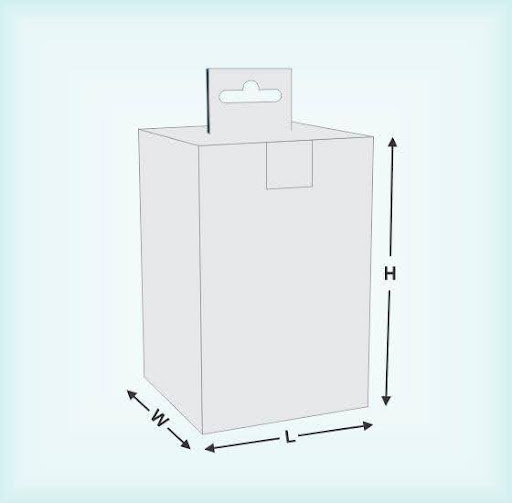
The most reliable way to determine hang tab box sizes is to measure the complete product configuration first and then establish the required internal box dimensions. Do not begin by selecting a random stock carton and assuming the product will fit.
Step 1: Measure the Product
Measure the product at its maximum relevant points:
- Length: The longest dimension of the product in its intended packed orientation.
- Width: The side-to-side dimension across the product.
- Depth or height: The distance from the front to the back, or the product’s thickness, depending on its orientation.
Use consistent units, such as inches or millimeters. If the product is irregularly shaped, include protruding parts, connectors, rounded edges, or accessories that affect the packed dimensions.
For example, a small accessory may measure 4 inches long, 2.5 inches wide, and 1 inch deep. Those figures describe the product itself; they do not automatically determine the final box dimensions. The packaging designer must still account for the wrapper, insert, board construction, closure, and necessary clearance.
Step 2: Measure the Packed Product
If the product will be wrapped or placed in an insert, measure it in that finished configuration. A sleeve, protective pouch, molded insert, instruction leaflet, or accessory can change the space required inside the carton.
This step is especially important for products with cables, small components, delicate surfaces, or multiple pieces. A carton that fits the main item but cannot accommodate its accessories is not correctly sized.
Step 3: Set the Internal Dimensions
Determine the required internal length, width, and depth based on the packed product and the way it will sit inside the box. Allow enough clearance for loading and removal without making the package unnecessarily loose.
There is no universal clearance allowance for every product. A rigid item, a soft accessory, and a product secured by an insert may need different amounts of space. The packaging supplier should confirm the final dimensions against the actual structure and material specification.
For additional measurement guidance, use Bluebird Packaging’s box measurement guide, particularly when distinguishing internal capacity from the finished carton dimensions.
Step 4: Account for Board Thickness and Construction
Internal dimensions and external dimensions are not interchangeable. Board thickness, folds, glue flaps, and the carton structure affect the finished outside measurements and the space available inside.
When specifying a custom carton, state clearly whether the dimensions refer to the internal product cavity or the external package. Ask the packaging supplier to confirm how dimensions will be applied to the selected box style.
Step 5: Measure the Hanging Tab Separately
Once the box body is sized, determine the hanging tab’s overall height, usable area, hole or slot position, and relationship to the top edge of the carton.
The tab should align with the intended display hardware and leave enough material around the opening for the specified design. The exact dimensions depend on the tab shape, carton construction, board specification, and retail hook.
Step 6: Check the Finished Package
Before production, review a sample or structural prototype where appropriate. Confirm that the product fits, the carton closes correctly, the hanging feature aligns with the display hook, and the package can be handled as intended.
A dimensioned drawing is helpful, but a physical sample can reveal problems that are difficult to assess from a flat layout alone.
Which Hang Tab Structure Should You Choose?
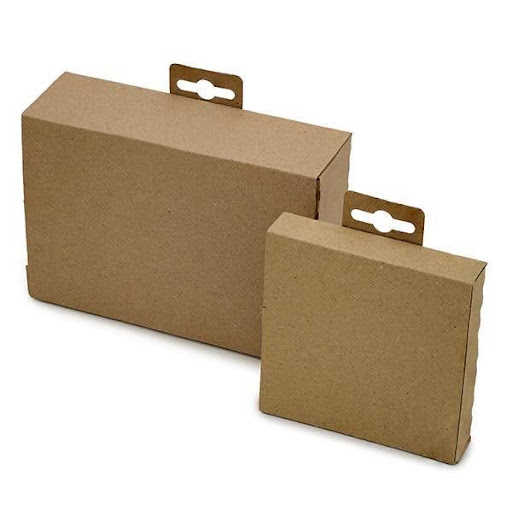
The best hang tab structure is the one that fits the display fixture, suits the product’s weight, and works with the carton design. A tab that looks suitable in the artwork may not be compatible with the actual hook, so confirm the display hardware before finalizing the structure.
1. Integrated Hang Tab
An integrated hang tab is formed as part of the carton itself. It can create a coordinated appearance because the hanging feature and the box body are designed together.
This style may suit lightweight products when the selected board and tab geometry provide adequate support. However, the tab’s performance depends on its dimensions, the opening shape, the surrounding material, and the load placed on it.
2. Euro Slot Hang Tab
A Euro slot is a shaped opening designed to hang a package on compatible retail hooks. The slot’s shape and position should be selected around the intended display hardware.
A Euro slot may be suitable for products sold on standard retail peg displays, but the name alone does not guarantee compatibility with every hook. Check the actual slot dimensions and the hook geometry before approving the packaging.
3. Round-Hole Hang Tab
A round-hole tab uses a circular opening to suspend the carton from compatible hooks or display fixtures. It may work for certain product and display combinations, depending on the opening size, tab construction, and hook design.
Do not select a round hole solely because it is easy to draw in the artwork. The opening must fit the display system and leave adequate material around it.
4. Reinforced or Extended Hanging Tab
Some packaging designs require additional support around the hanging area or a tab that extends above the carton body. Depending on the product and manufacturing method, the structure may use a larger tab area, folded reinforcement, or another suitable construction.
A heavier product should not automatically be assigned a thicker tab without evaluating the complete design. Board stiffness, slot position, the load path, and the carton body all affect performance.
5. Separate Hanging Feature
Some packaging systems use a separate hanging component rather than relying entirely on a tab formed from the carton. This may be considered when the product or display requirements call for a different construction, but the attachment method and compatibility need to be verified.
For most projects, start with the simplest structure that meets the product and display requirements. Additional components should solve a specific packaging problem rather than add complexity without a clear benefit.
How to Choose the Right Hang Tab Box Structure for Your Product
The box structure should protect the product, support its presentation, and work with the intended retail display. Product dimensions alone are not enough to determine the best design.
| Product type | Structure to evaluate | Main design consideration |
|---|---|---|
| Lightweight cable or accessory | Compact folding carton with an integrated tab | Product fit and hanging compatibility |
| Small packaged hardware | Cardboard carton with an appropriate hanging feature | Product weight and secure closure |
| Beauty accessory | Printed retail carton with a suitable tab | Branding, readability, and presentation |
| Craft or hobby supply | Carton sized around the packed components | Organization and space for accessories |
| Small tool accessory | More robust carton construction if needed | Load, handling, and structural support |
| Multi-piece product kit | Larger carton with an insert and suitable hanging structure | Product organization and overall packed weight |
These are starting points, not fixed specifications. A lightweight product with a fragile component may need more internal protection than a heavier but solid product. Likewise, a small box can still require a carefully designed hanging feature if the load is concentrated around the slot.
If the product is sold in several variants, consider developing a consistent structural system with different dimensions for each SKU. This can help keep branding consistent while ensuring each carton fits its own product.
For broader ideas about how structure, artwork, and product presentation work together, explore Bluebird Packaging’s packaging design guidance and packaging design ideas.
How Strong Should a Hang Tab Be?
A hang tab should be designed for the weight of the complete packed product and the conditions in which it will be displayed and handled. There is no universal weight rating that applies to every hang tab box because performance depends on the material, slot geometry, tab dimensions, carton construction, and display hardware.
A box that holds a product while stationary may behave differently when shoppers repeatedly lift it from a hook or when the package is moved during restocking. For that reason, the hanging feature should be evaluated as part of the complete package.
Factors That Affect Hang Tab Strength
Board grade and thickness: The material must be appropriate for the product and structure. A thicker board can help in some designs, but thickness alone does not establish the load capacity.
Slot or hole placement: The opening needs adequate surrounding material. A slot too close to an edge or fold can create a weak area, depending on the design.
Tab geometry: The width, height, shape, and connection to the box body affect how the load is transferred through the carton.
Product weight distribution: A product that shifts inside the box can place uneven forces on the package. Internal fit and inserts may help control movement where needed.
Display hook compatibility: A poorly matched hook can place pressure on the tab in unintended locations or make the package difficult to hang and remove.
Handling conditions: Consider whether the package will be frequently handled, restocked, shipped, or displayed for an extended period.
How to Test a Hang Tab Box Before Production
- Confirm the final packed product and its weight.
- Assemble a sample using the intended material and construction.
- Hang it on the specified display fixture.
- Check whether the package hangs in the intended orientation.
- Review the tab, slot, folds, and connection points for visible deformation.
- Check how the carton behaves when it is carefully removed and rehung.
- Conduct any additional load or handling tests appropriate to the product and distribution environment.
These checks are practical design steps, not a substitute for a defined test protocol when one is required. For products with higher loads or demanding retail conditions, agree on suitable acceptance criteria with the packaging supplier before production.
Which Material Is Best for Cardboard Hang Tab Boxes?
Cardboard hang tab boxes are typically designed using a paperboard grade that balances print quality, stiffness, foldability, and product protection. The right grade depends on the carton dimensions, the product’s weight, the hanging structure, and the expected handling conditions.
White or Coated Paperboard
White or coated paperboard can be a good option for retail packaging that needs detailed graphics, product photography, and consistent color reproduction. Its surface may also support selected coatings or decorative finishes, subject to the material and production method.
It is worth evaluating when branding and product information need to be highly visible on the retail shelf.
Kraft Paperboard
Kraft paperboard may suit brands that prefer a natural, understated appearance. It can work with minimalist artwork, dark logos, and restrained color palettes.
As with other materials, the board specification must be appropriate for the box body and hanging feature. The natural appearance does not by itself establish the strength or recyclability of the finished package.
Corrugated Board
Corrugated board uses a fluted layer between liner sheets and is often selected when additional cushioning or structural protection is needed. It is not automatically the best option for small hang tab retail cartons, because the fluted construction can affect thickness, fold behavior, and the final appearance.
It may be worth considering for products that need more protection, but the design should be evaluated against the intended display and product dimensions.
For a broader comparison of material characteristics, see Bluebird Packaging’s packaging materials overview. You can also compare cardboard packaging boxes and Kraft packaging boxes when evaluating suitable paper-based packaging directions.
How to Plan Printing and Branding on Hang Tab Boxes
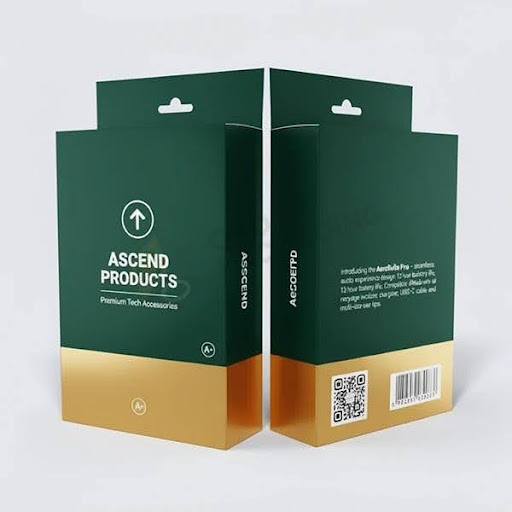
Hang tab packaging has to perform two jobs at once: hang correctly on the display and communicate the product clearly. Artwork should therefore be designed around the complete carton, including the front panel, side panels, folds, closure, and hanging tab.
Keep the Front Panel Easy to Read
The front of the box is often the first part shoppers see. Prioritize the brand, product name, and the information that helps customers understand the product. Avoid overcrowding the panel with competing claims or decorative elements.
The amount of text and the required product information will vary by product and applicable rules. Keep important details legible and leave enough space for any barcode or retail information that needs to be included.
Treat the Hanging Tab as Part of the Design
The tab should look intentional rather than like an afterthought. Avoid placing essential text, logos, or key graphics across an opening, cut line, or fold. Also account for the way the box will hang: the display hook may partially obscure the area around the slot.
A logo can appear on the tab if the available space and structural design permit it, but visibility and legibility should come first.
Prepare Artwork on the Correct Dieline
A dieline shows the cut lines, folds, glue areas, and other structural details used to manufacture the carton. Artwork should be developed against the approved dieline so that graphics align correctly when the box is assembled.
Before approving print-ready artwork:
- Confirm the final box dimensions and structure.
- Keep important graphics away from cut lines, folds, and glue areas.
- Check that small text remains legible at the final printed size.
- Confirm color requirements and any special finishing.
- Verify barcode placement and readability if the product needs a barcode.
- Review the assembled design rather than relying only on a flat artwork file.
Bluebird Packaging’s packaging printing guidance can help with print planning, while its packaging finishes overview can help you evaluate suitable surface treatments.
Choose Finishes That Suit the Product
Matte, gloss, foil, embossing, and other finishes can change how a retail carton looks and feels. Their suitability depends on the material, artwork, budget, and production method.
A clean printed carton may be sufficient for everyday accessories. A premium product may benefit from a carefully selected accent, but extra finishes should not compromise readability, structural function, or the intended brand style.
How to Make Hang Tab Packaging Work in a Retail Store
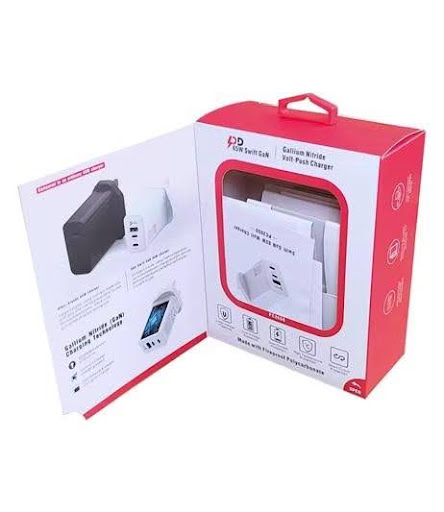
A well-designed hang tab box should be easy to identify, easy to hang, and practical for shoppers to remove from the display. The packaging should also fit the retail environment, including the available hook spacing, shelf layout, and surrounding products.
Check Hook Clearance and Display Orientation
Measure or confirm the display fixture before finalizing the tab. Check the hook’s shape, thickness, usable length, and spacing from neighboring hooks. The package should hang without unnecessary tilting or interference with nearby products.
If the product has a front-facing design, check that it remains oriented toward shoppers when the package is hanging. The tab’s position and the product’s center of gravity can affect how the box sits on a hook.
Consider Visibility and Shelf Space
The box should use its dimensions efficiently. Oversized packaging can take up unnecessary display space, while a carton that is too small may not provide enough room for the product, required information, or readable branding.
For a range of products, establish a consistent visual system while sizing each box to its own product. Matching typography, logo placement, and artwork style can create a coherent retail display without forcing every product into identical dimensions.
Think About Restocking and Handling
Retail employees may need to hang, remove, or rearrange packages regularly. Make sure the box can be handled without snagging, opening unexpectedly, or putting unnecessary stress on the tab.
If the packaging will also be shipped directly to customers, consider whether the retail carton needs a separate protective outer package. A hang tab box designed for shelf display is not automatically suitable as a standalone shipping container. Bluebird Packaging’s ecommerce packaging guide explains why packaging requirements can differ between retail and direct-to-consumer distribution.
Common Hang Tab Box Sizing and Design Mistakes
Many packaging problems arise when a box is designed around its appearance without checking product fit, display compatibility, and the actual structure.
| Common mistake | Why it causes problems | Better approach |
|---|---|---|
| Measuring only the bare product | Wrappers, inserts, or accessories may not fit | Measure the complete packed configuration |
| Confusing internal and external dimensions | The finished box may have less usable space than expected | Specify which dimensions are required |
| Choosing a tab before confirming the hook | The carton may not hang correctly | Confirm display hardware and slot geometry first |
| Assuming a thicker tab is always stronger | Strength also depends on geometry and material | Evaluate the complete hanging structure |
| Putting text across cut or fold areas | Important information may be cut off or distorted | Use the approved dieline and safe areas |
| Ignoring the product’s weight distribution | The package may tilt or stress the tab | Check the packed product’s position and fit |
| Using an oversized box | Wastes display space and can allow product movement | Size the carton to the actual product and components |
| Skipping sample checks | Structural or artwork issues may appear late | Review a sample or prototype when appropriate |
| Treating a retail carton as a shipping box | The package may not withstand transit handling | Evaluate the full distribution system |
| Comparing quotes with different specifications | Price differences become difficult to interpret | Request quotes using consistent requirements |
For smaller businesses, a clear specification is especially helpful because it makes supplier discussions and quote comparisons easier. Bluebird Packaging’s packaging guidance for small businesses provides a useful starting point for planning packaging projects.
A Step-by-Step Checklist Before Ordering Custom Hang Tab Boxes
Use this checklist before approving the final packaging specification.
- Measure the product’s length, width, and depth.
- Include wrappers, inserts, accessories, and other packed components.
- Define the required internal dimensions.
- Confirm the material and board grade.
- Choose the box structure and closure.
- Confirm the display hook and hanging tab compatibility.
- Check the packed product’s weight and weight distribution.
- Plan the logo, product information, artwork, and barcode.
- Prepare artwork on the approved dieline.
- Review printing and finishing requirements.
- Check fit, closure, hanging position, and handling on a sample when appropriate.
- Confirm quantity, production requirements, and delivery expectations.
A supplier can help turn these requirements into a practical structural specification. Providing accurate product measurements, photographs, weight, and display hardware details at the start makes it easier to evaluate suitable options.
How Much Do Custom Hang Tab Boxes Cost?
The cost of custom hang tab boxes depends on the material, dimensions, structure, printing, finishing, quantity, and production requirements. There is no reliable universal price for a hang tab box without knowing the product and packaging specification.
Smaller cartons may use less material, but a complex hanging structure, special finish, or specific board requirement can change the price. A simple carton with limited printing may have different cost considerations from a full-color package with several decorative effects.
When requesting a quote, provide:
- Product dimensions and packed weight.
- Required box dimensions or a physical product sample.
- Preferred material and structure, if known.
- Hanging tab style or display hardware details.
- Printing requirements and artwork files, if available.
- Quantity and any special finishing needs.
- Intended use, such as retail display or retail-plus-ecommerce.
Compare quotations using the same requirements so you can evaluate material and production differences fairly. Bluebird Packaging’s custom packaging cost guide explains other factors that may affect packaging costs.
Frequently Asked Questions About Hang Tab Box Sizes
What are the standard hang tab box sizes?
There is no single standard size for all hang tab boxes. The required dimensions depend on the product, packed configuration, carton structure, board thickness, and display hardware. Custom dimensions are often used when a product needs a specific fit or retail presentation.
How do I measure hang tab box dimensions?
Measure the product’s length, width, and depth, including any wrapper or insert. Use those measurements to determine the required internal box dimensions, then specify the tab height, opening, and position according to the intended retail hook.
Should I measure the box from the inside or outside?
For product fit, internal dimensions are usually the most useful starting point. External dimensions matter for display space, storage, and shipping. Board thickness and carton construction affect the relationship between the two, so specify which dimensions you are providing.
Which hang tab style is best for retail packaging?
An integrated tab, Euro slot, round-hole tab, or reinforced hanging feature may be appropriate depending on the product and display fixture. Confirm the actual hook dimensions and product weight before selecting the style.
How much weight can a hang tab box hold?
There is no universal weight limit for every hang tab box. Capacity depends on the board, tab design, opening geometry, carton construction, product weight distribution, and display hardware. The finished package should be evaluated for its intended use.
Can hang tab boxes be custom printed with a logo?
Yes, hang tab boxes can be designed with custom branding and printed artwork, subject to the selected material and production process. The dieline should account for the tab, cutouts, folds, glue areas, and the space needed for readable product information.
What material is best for hang tab packaging?
Paperboard may suit many lightweight retail products because it can support printed graphics and folding carton structures. Kraft can suit natural-looking designs, while corrugated board may be considered when additional protection is needed. The appropriate material depends on the product and structure.
How can I prevent a hang tab from tearing?
Use a material and structure suitable for the packed product, confirm the slot is compatible with the hook, and avoid placing the opening too close to a weak edge or fold. Test the assembled package under appropriate handling conditions before production.
Are hang tab boxes suitable for ecommerce shipping?
They can be part of an ecommerce packaging system, but a retail hang tab carton is not automatically designed to withstand shipping on its own. Evaluate whether an outer shipping package or additional protection is needed for the distribution conditions.
What should I send a packaging supplier to get an accurate quote?
Provide product measurements, packed weight, photos or a sample, desired quantity, printing requirements, and information about the retail hook or display fixture. If you do not know the exact structure, explain how the product will be displayed so the supplier can help assess suitable options.
Conclusion: Choose Hang Tab Box Sizes Around Fit, Strength, and Display
The right hang tab box size balances three priorities: a secure fit for the packed product, a hanging structure that suits the retail fixture, and a printed design that communicates the brand clearly. Product dimensions establish the box body, while the tab style and position must be evaluated against the hook, material, and intended handling conditions.
Before approving production, confirm internal dimensions, board specification, slot geometry, artwork placement, and the fit of the finished package. A sample or prototype can help identify issues before they affect a larger order.
Bluebird Packaging can help businesses explore custom packaging options based on product dimensions, branding, and retail presentation requirements. If you are planning a new product launch or updating existing retail packaging, request a custom packaging quote with your measurements, quantity, and design requirements.
The best hang tab packaging is not simply a box with a hole in it. It is a coordinated structure that fits the product, works with the display, and presents the brand professionally.
Related Packaging Resources
Hang tab boxes are only one way to present products in a retail environment. Depending on the product’s size, weight, and display requirements, these other packaging formats may also be worth evaluating.
- For products that need a dedicated shelf or countertop presentation, compare custom display boxes.
- If the package needs to travel directly to customers, consider whether custom mailer boxes would better suit the shipping requirements.
- For products that need additional cushioning or protection, review corrugated packaging boxes.
- Explore the wider range of custom retail boxes if you are comparing different structures for store displays.
- If you are still deciding between packaging formats, Bluebird Packaging’s custom packaging options and packaging types overview can help you compare possible directions.
- You can also review the factors that affect custom packaging costs before finalizing your specification.