

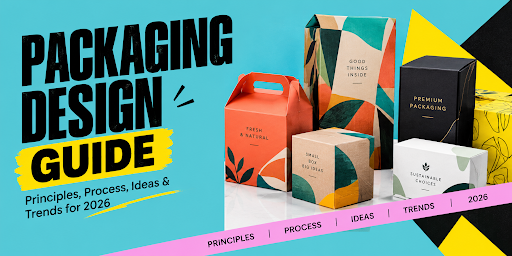
Packaging design is more than making a product box look attractive. It combines visual communication, structural engineering, material selection, usability, and brand strategy to create packaging that protects a product and communicates its value.
For businesses launching a new product or improving an existing one, effective product packaging design can help customers understand what they are buying, recognize the brand, and use the product more easily. The design also needs to work in real-world conditions: it must fit the product, suit the intended sales channel, and be practical to manufacture, store, ship, and open.
Quick answer: Packaging design is the process of planning a package’s appearance, structure, materials, graphics, and user experience. Good packaging design balances brand identity, product protection, clear information, functionality, production requirements, and cost. The process typically includes research, concept development, structural design, artwork preparation, prototyping, testing, and final production approval.
Whether you are a startup, an established retailer, or an e-commerce brand, the best packaging design starts with a clear understanding of your product and customers—not simply a trend or a color palette.
This guide explains the essential packaging design principles, practical ideas, step-by-step process, 2026 trends to consider, and the decisions to make before ordering custom packaging.
What Is Packaging Design?
Packaging design is the process of creating the visual appearance and physical structure of a product’s packaging. It includes decisions about the box or container, materials, colors, typography, graphics, product information, closures, inserts, and how customers interact with the package.
The goal is to make packaging functional, informative, appropriate for the brand, and suitable for its intended use.
Packaging design typically has two connected parts:
- Visual packaging design: The logo, colors, typography, illustrations, images, layout, and product messaging that customers see.
- Structural packaging design: The package’s size, shape, construction, folds, closures, inserts, material specifications, and physical performance.
These two parts need to work together. An attractive box that does not fit the product or cannot be manufactured reliably is not an effective design. Similarly, a strong and practical box may not communicate the brand clearly if the graphics and information hierarchy are poorly planned.
For a wider introduction to package materials and formats, explore different types of packaging.
Why Is Packaging Design Important?
Packaging can influence how a product is presented, understood, protected, and remembered. Its value goes beyond appearance because it often connects product development, marketing, manufacturing, and customer experience.
1. It communicates brand identity
A package is a physical expression of your brand. Consistent colors, typography, logo placement, imagery, and messaging can help customers recognize your products across different sizes and product lines.
For example, a premium skincare brand might use restrained typography and a carefully selected finish, while a playful snack brand might use bold colors and expressive illustrations. Neither style is automatically better; the design should match the brand and target customer.
2. It helps customers understand the product
Customers should be able to identify what the product is, what it does, and why it may be suitable for them. Product names, benefits, directions, ingredients, and other relevant details need to be arranged clearly.
The available space is often limited, so the design should prioritize the most important information without making the package crowded.
3. It supports product protection
The package structure and materials should be appropriate for the product’s weight, fragility, storage conditions, and handling requirements. Inserts, dividers, closures, and cushioning can help keep products in place when designed correctly.
Protection depends on the complete packaging system, not graphics alone.
4. It differentiates products in a crowded market
Retail shelves and online stores often present customers with many competing products. A clear visual identity and recognizable package structure can help a product stand apart without sacrificing readability or usefulness.
Distinctive design should be based on the brand’s positioning and audience rather than copying another company’s packaging.
5. It improves the customer experience
Packaging affects how a customer opens, handles, stores, and sometimes reuses a product. Easy-to-open closures, logical product placement, clear instructions, and appropriately sized boxes can make the experience more convenient.
6. It supports marketing and product storytelling
Packaging can communicate a brand’s story, product origin, key features, or intended use. It can also connect the physical product to digital resources through a QR code or other useful feature, provided that the additional element serves a clear purpose.
Packaging should support the overall marketing message rather than compete with it.
What Are the Main Elements of Effective Packaging Design?
Effective packaging design combines several elements. Each should support the product’s purpose and the customer’s needs.
1. Structure and dimensions
Structure determines the package’s shape, opening method, closure, capacity, and how it holds the product. Dimensions should be based on the actual product and any inserts or protective materials.
Common structures include folding cartons, mailer boxes, rigid boxes, sleeves, display boxes, and corrugated shipping boxes.
Explore cardboard boxes and custom mailer boxes for examples of different packaging formats.
2. Materials
Material choice affects appearance, stiffness, weight, printing, protection, and cost. Paperboard may suit a retail carton, corrugated board may suit shipping, and rigid board may suit premium gift packaging.
The material should match the product’s actual requirements. A visually appealing material is not useful if it fails to provide the required protection or cannot be manufactured within budget.
Read more about packaging materials before choosing a structure.
3. Color
Color can help create brand recognition and establish a product’s visual personality. The right palette depends on brand guidelines, audience expectations, product category, readability, and printing limitations.
Avoid choosing colors solely because they are trending. A palette should work across the full product range and remain legible on the selected material.
4. Typography
Typography helps customers navigate the information on a package. Product names, key benefits, instructions, and supporting information should have a clear hierarchy.
Consider:
- Readability at the actual printed size.
- Contrast between text and background.
- Appropriate font sizes and line spacing.
- Consistent use of brand typography.
- Space for required product information.
5. Graphics and imagery
Illustrations, photographs, patterns, icons, and supporting graphics can explain product features or establish a visual style. Each graphic should have a purpose and remain consistent with the brand.
Too many competing elements can make packaging difficult to understand. A clear design usually gives the most important information visual priority.
6. Brand messaging
Packaging copy should explain the product accurately and clearly. Claims, benefits, instructions, and other statements should be appropriate for the product and supported where necessary.
For regulated product categories, review applicable labeling requirements before approving the artwork.
7. Finishes and tactile details
Depending on the material and manufacturing process, packaging may include matte or gloss coatings, lamination, embossing, foil stamping, or spot UV effects.
These finishes can change the appearance and feel of the package, but they also affect cost and may influence recycling. Select them because they support a specific design goal—not simply because more finishes appear more premium.
For additional ideas, explore packaging finishes.
What Are the 7 Principles of Packaging Design?
There is no single universal list of exactly seven packaging design principles. For practical product development, the following seven principles provide a useful checklist.
1. Clarity
Customers should quickly understand what the product is. The product name and most important information should be easy to locate.
2. Brand consistency
The package should reflect the brand’s identity through consistent use of its logo, colors, typography, tone, and design system.
3. Functionality
Packaging should perform its practical job. It should fit the product, close correctly, be manageable to handle, and suit the intended use.
4. Product protection
The structure and material should provide appropriate protection during storage, handling, and shipping. The required level depends on the product and its distribution environment.
5. Visual hierarchy
The most important elements should attract attention first. Typography, contrast, spacing, imagery, and layout should guide the customer through the design.
6. Manufacturability
The package should be feasible to print, cut, fold, assemble, fill, and deliver using the intended production process. Designs must account for real material and manufacturing limitations.
7. Sustainability and resource efficiency
Where possible, consider appropriate material use, right-sized packaging, reuse or recycling options, and the effect of coatings or mixed materials. Environmental claims should be specific and supportable.
These principles work best together. A visually striking design still needs to be functional, and a sustainable material choice still needs to protect the product adequately.
How to Design Product Packaging: A Step-by-Step Process
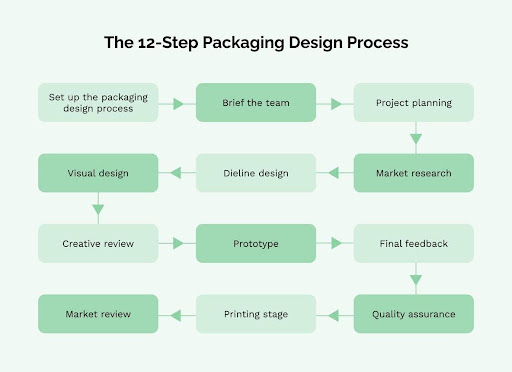
A structured packaging design process helps reduce avoidable revisions and ensures the final package works beyond the screen mockup.
Step 1: Research the product, audience, and market
Define the product’s purpose, price point, target customer, sales channel, competitors, and packaging goals. Review competitor packaging to understand category conventions and identify opportunities for differentiation—not to copy their designs.
Step 2: Write a packaging design brief
Document the product dimensions, weight, packaging quantity, required information, brand guidelines, material preferences, budget, and delivery needs. A clear brief gives the designer and manufacturer a shared reference.
Step 3: Develop design concepts
Explore several visual directions through sketches, mood boards, color palettes, typography, and layout ideas. Compare each concept against the brief rather than selecting one only because it looks attractive.
Step 4: Develop the structure
Choose the box style, dimensions, material, closure, and any inserts. The designer or packaging manufacturer may prepare a dieline—a flat template showing the package’s cut lines, fold lines, panels, and glue areas.
Step 5: Prepare the graphics and artwork
Apply the approved brand assets, product information, colors, images, and finishing instructions to the packaging layout. Follow the printer’s requirements for bleed, safe areas, color settings, and file formats.
Step 6: Prototype and test
Where available, review a physical sample or prototype. Check the fit, closure, opening experience, readability, product protection, and print appearance. Digital mockups alone cannot verify every physical property.
Step 7: Approve and prepare for production
Confirm the final artwork, material specifications, colors, quantity, quote, and production schedule. Make sure the manufacturer has the approved files and clear instructions before the order moves into production.
For an additional look at how packaging production works, see how packaging is made.
Packaging Design Ideas for Different Industries
The best packaging design ideas come from the product’s use, audience, and sales channel. The following examples illustrate directions to explore—not fixed formulas that every brand should follow.
1. Cosmetics and skincare packaging
Beauty packaging often needs to communicate product type, brand personality, and product information within a compact space. Options may include clean typography, a consistent color palette, subtle graphics, and a structure that fits the product container.
Premium finishes can be considered when they suit the brand and budget, but legibility and practical use should remain priorities.
Explore custom cosmetic boxes for relevant product packaging options.
2. Bakery and food packaging
Food and bakery packaging should reflect the product while meeting practical handling and applicable food-contact requirements. Window features may help display suitable products, while internal supports can help keep items positioned correctly.
Choose materials and finishes appropriate for the actual food application; decorative design should not compromise hygiene, protection, or usability.
See custom bakery boxes for bakery-specific formats.
3. E-commerce packaging
E-commerce packaging needs to work across storage, packing, shipping, delivery, and opening. A custom mailer with a well-designed insert can combine brand presentation with practical organization.
Avoid oversized packaging that wastes material or creates unnecessary shipping volume. At the same time, do not reduce package size at the expense of product protection.
Explore e-commerce packaging for more ideas.
4. Luxury and gift packaging
Gift packaging may use rigid boxes, carefully arranged inserts, coordinated paper materials, and selective finishing to create a considered presentation.
A premium result does not always require the most elaborate design. Consistent branding, clean layout, a well-fitting structure, and quality execution may be more effective than adding many decorative elements.
Explore custom rigid boxes for premium packaging formats.
5. Retail display packaging
Retail packaging needs to communicate quickly and work in its intended display environment. Consider how the product will sit on a shelf or counter, what customers will see first, and whether the package needs a hanging tab, window, or easy-access opening.
The final design should be tested at the actual viewing size and orientation.
Explore custom retail boxes for retail-focused packaging.
6. Small-business packaging
Smaller brands often need a balance between visual identity, manageable order quantities, production cost, and packaging flexibility. A simple design system can be adapted across multiple products without making every package look identical.
For example, a business may keep the same typography and brand colors while changing the product name, size, imagery, or accent color for each product variant.
For more guidance, read about packaging for small businesses.
Packaging Design Trends to Consider in 2026
Trends can offer inspiration, but they should not replace a clear understanding of your brand and customer. Evaluate each idea according to whether it improves communication, usability, product fit, or the overall experience.
1. Simpler, clearer layouts
Minimal layouts can help important product information stand out. Use spacing, typography, and contrast to establish a clear hierarchy rather than removing information customers need.
2. More intentional material choices
Brands can review package weight, material efficiency, protective performance, and end-of-life options when developing a design. Sustainability claims should be supported by details about the actual packaging construction.
3. Tactile and finish-led details
Texture, embossing, foil, or selective gloss can help create a distinct physical experience. Use these effects selectively and confirm their cost, production feasibility, and compatibility with material or recycling goals.
4. Packaging systems for product families
A consistent design system can make different products recognizable as part of the same brand. Shared typography, layout, and color rules can be combined with product-specific details to distinguish variants.
5. Useful digital touchpoints
QR codes and other digital features can direct customers to instructions, product details, support, or brand content. They should have a clear purpose, remain easy to scan, and not replace essential information that needs to appear on the package.
6. Accessible information design
Readable typography, adequate contrast, clear instructions, and logical information placement help make packaging easier to understand. Accessibility should be considered alongside visual style, not added as an afterthought.
7. Practical unboxing experiences
Opening a package can be designed to feel orderly and intuitive. Thoughtful placement, easy-to-remove inserts, and sensible closures can improve the experience without adding unnecessary components.
The most effective approach is to select trends that support the product and brand, then validate them through samples and customer feedback.
Sustainable Packaging Design: How to Make Better Choices
Sustainable packaging design considers the full packaging system, including the amount of material used, product protection, sourcing, transportation, reuse, and end-of-life options.
A lighter package may reduce material use, but it must still protect the product adequately. A recyclable material may not be accepted in every local recycling system, and coatings or mixed-material components can affect recovery.
When assessing an eco-friendly packaging design, ask:
- Can the package use less material without reducing necessary protection?
- Is the package appropriately sized for the product?
- Are recycled-content or sourcing claims documented?
- Can the package be reused or recycled in the intended market?
- Will coatings, windows, laminations, or mixed components complicate recycling?
- Does the package protect the product well enough to avoid preventable damage?
There is no single material that is the best environmental choice for every product. Compare options using the requirements of the product and the relevant end-of-life systems.
Read more about sustainable packaging and eco-friendly packaging.
Packaging Graphics Design vs. Structural Packaging Design
Visual and structural design are closely connected, but they solve different problems.
| Area | Packaging graphics design | Structural packaging design |
|---|---|---|
| Main focus | What customers see and read | How the package is built and functions |
| Key decisions | Color, typography, imagery, layout, messaging | Dimensions, board structure, folds, closures, inserts |
| Typical deliverables | Artwork, graphic layouts, print files | Dielines, structural drawings, prototypes |
| Main objective | Brand communication and information clarity | Fit, usability, protection, and manufacturability |
| Validation | Artwork review and print proofing | Sample fitting and functional testing |
A successful package needs both. Graphics must align with the physical panels and folds, and the structure must support the design without hiding important information or making the package difficult to use.
How Much Does Custom Packaging Design Cost?
The cost of packaging design depends on the scope of the project. A simple graphic layout for an existing box structure is different from a full project involving brand strategy, a new structural design, multiple product variations, prototypes, testing, and production coordination.
Common cost factors include:
- Project complexity: The number of design concepts, packaging components, and revisions.
- Structural requirements: Whether an existing box style can be used or a custom structure is needed.
- Artwork and branding: Whether the project requires new graphics, illustrations, photography, or brand development.
- Number of products: Multiple sizes or product variants may need separate layouts and testing.
- Prototyping: Physical samples and revisions may add time and expense.
- Production requirements: Material, printing, finishing, tooling, quantity, and shipping affect the total order cost.
Request a quote that clearly separates design work from manufacturing costs when possible. Confirm what is included, how many revision rounds are covered, which final files you will receive, and whether prototypes or print proofs cost extra.
For manufacturing-related cost considerations, see the custom packaging cost guide.
How to Choose Packaging Design Services
A designer, design agency, or packaging supplier may offer different levels of support. Before choosing a partner, establish whether you need visual artwork only, structural design, prototype development, or a complete design-to-production process.
Ask potential providers:
- Have you worked with products or packaging formats similar to mine?
- Do you provide both graphic design and structural design?
- Can you prepare production-ready artwork and dielines?
- Do you coordinate with the manufacturer or printer?
- Can I review a physical sample before full production?
- How many concepts and revision rounds are included?
- What files and usage rights will I receive?
- What are the estimated design and production timelines?
- Which costs are included in the quote, and which are additional?
- How are changes, print errors, or structural issues handled?
Review portfolios for real packaging examples, not only digital mockups. A convincing 3D render may look attractive on a screen, but the final product still needs to print, assemble, fit, and perform correctly.
How Bluebird Packaging Can Fit Into Your Packaging Design Process
Businesses planning custom printed boxes can evaluate Bluebird Packaging as a potential packaging supplier. Its website features custom packaging categories for retail, rigid boxes, bakery products, food, cosmetics, and other applications.
The best starting point is a clear project brief containing the product dimensions, desired box style, quantity, material preferences, artwork, finishing, and delivery requirements. These details help establish which packaging options may be suitable and what information is needed for a quote.
Before production, confirm the available design support, structural specifications, artwork requirements, sample options, pricing, and production schedule for your specific project.
You can explore Bluebird Packaging, review custom packaging options, or request a packaging quote.
Packaging Design Checklist Before Printing
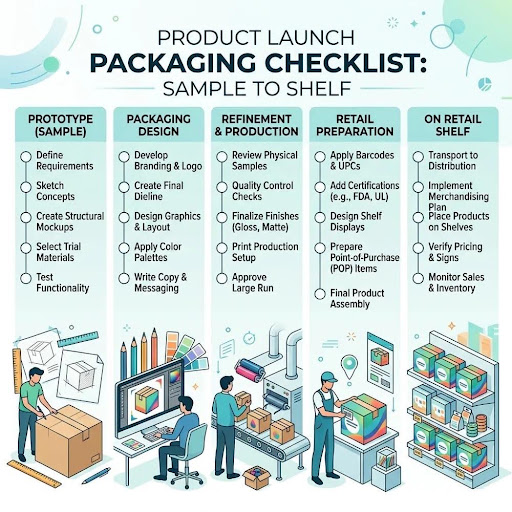
Use this checklist before giving final approval to a packaging design.
- The package fits the product and any inserts.
- The material is appropriate for the product and distribution conditions.
- The logo, colors, typography, and graphics follow the brand guidelines.
- Product names and key information are readable at the printed size.
- Required labels, barcodes, warnings, or instructions have been reviewed.
- Artwork follows the manufacturer’s dieline, bleed, and safe-area requirements.
- Print colors and finishes have been reviewed using an appropriate proof.
- The package can be assembled, opened, stored, and handled as intended.
- A sample or prototype has been reviewed where appropriate.
- The quote, quantity, specifications, and delivery expectations are confirmed.
A final review can help catch avoidable errors before production begins.
Frequently Asked Questions About Packaging Design
1. What is packaging design?
Packaging design is the process of creating a product package’s appearance, structure, materials, graphics, and user experience. It aims to combine brand communication, product protection, usability, and manufacturing requirements.
2. Why is packaging design important?
Packaging design helps customers recognize a brand, understand a product, and interact with the package. It also influences product protection, retail presentation, and the practical experience of opening and using the product.
3. What are the 7 principles of packaging design?
A practical set of seven principles includes clarity, brand consistency, functionality, product protection, visual hierarchy, manufacturability, and sustainability or resource efficiency. These principles should be balanced according to the product and its intended use.
4. What are the main elements of packaging design?
The main elements include structure, dimensions, material, color, typography, graphics, brand messaging, and finishing. The importance of each element depends on the product, audience, sales channel, and manufacturing process.
5. What is the difference between packaging design and structural design?
Packaging design is the broader process of planning the package’s appearance and function. Structural packaging design focuses specifically on its physical construction, including dimensions, folds, closures, inserts, material specifications, and how it fits and protects the product.
6. How do you create effective product packaging?
Start with product and customer research, write a clear brief, develop visual concepts, choose a suitable structure and material, prepare artwork, and review a sample. Test readability, fit, usability, and protection before approving production.
7. How does packaging design affect brand identity?
Packaging can reinforce brand identity through consistent colors, typography, logos, imagery, and messaging. A coherent design system helps customers recognize related products while allowing individual products to remain distinguishable.
8. What are the latest packaging design trends in 2026?
Design directions worth evaluating in 2026 include simpler layouts, more intentional material choices, tactile finishes, consistent packaging systems, useful digital touchpoints, accessible information, and practical unboxing experiences. The best choice depends on whether a trend supports the product and audience.
9. How much does custom packaging design cost?
Costs depend on project complexity, structural design, artwork, number of product variations, revisions, prototyping, and production requirements. Request an itemized quote and confirm the included deliverables and revision limits.
10. What makes packaging design successful?
Successful packaging design fits the product, communicates essential information, reflects the brand, works in real-world use, and can be manufactured within the project’s requirements. Its effectiveness should be evaluated against the goals established in the design brief.
11. What is the difference between a packaging mockup and a prototype?
A mockup is often a digital or visual representation used to review appearance and layout. A prototype is a physical or functional sample used to evaluate dimensions, construction, fit, opening, and other real-world characteristics. A digital mockup cannot replace every type of physical test.
12. Can small businesses create custom packaging?
Yes. Small businesses can start with an existing box structure and customize its artwork, colors, labels, or selected finishes, or explore a fully custom structure if the budget and order requirements support it. The best approach depends on product needs and available production options.
Final Thoughts
Packaging design works best when creativity and practical requirements are considered together. A strong design reflects the brand, communicates essential information, fits and protects the product, and can be manufactured consistently.
Before committing to a final concept, define the product’s requirements, compare suitable materials and structures, review the artwork at its actual size, and test a sample where possible. These steps help turn a promising visual concept into packaging that works for both the business and its customers.
If you are developing custom packaging for a new product or refreshing an existing brand, explore Bluebird Packaging’s custom box options and request a quote to discuss your project requirements.



6 Comments
[…] To understand how printing fits into the broader package, see Bluebird Packaging’s guide to packaging design. […]
[…] For more context on preparing a package visually, see this guide to packaging design. […]
[…] artwork workflows, Bluebird Packaging’s guides to packaging artwork and packaging design can also provide useful background on preparing branded artwork for packaging […]
[…] For related packaging design considerations, see packaging design. […]
[…] For additional context, explore Kraft packaging and packaging design. […]
[…] For a broader introduction to packaging visuals and layout, explore this guide to packaging design. […]