


Quick answer: In the United States, a standard cigarette pack typically contains 20 cigarettes. A common carton contains 10 packs, or 200 cigarettes. However, pack sizes and packaging rules can differ by country, so the exact count depends on the market and the product.
The words pack, box, sleeve, and carton are sometimes used interchangeably, but they do not always mean the same thing. A pack is the individual retail package; a carton usually groups several packs together; and a sleeve may refer to a smaller bundle or a packaging component, depending on the market.
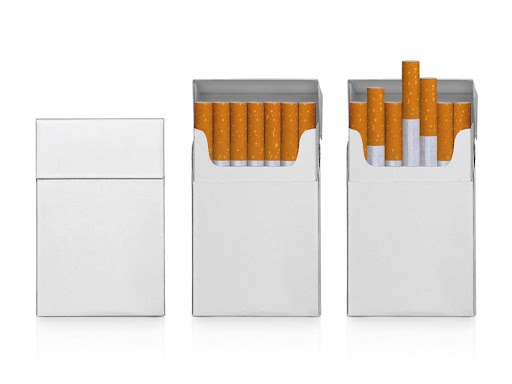
This guide explains how many cigarettes are in a pack, how many packs are in a carton, what a cigarette sleeve means, and why packaging quantities and dimensions can vary across countries. It also explains the difference between the number of cigarettes in a package and the physical size of the packaging itself.
Quick Facts: Cigarettes per Pack, Sleeve, and Carton
| Packaging unit | Common quantity | Important detail |
|---|---|---|
| Individual cigarette pack | 20 cigarettes | Common standard in the US |
| Carton | 10 packs / 200 cigarettes | A common retail and distribution format |
| Sleeve | No universal count | Meaning varies by market and supplier |
| Shipping case | Varies | May contain multiple cartons or another wholesale quantity |
In the US, a typical carton contains 10 packs of 20 cigarettes each, totaling 200 cigarettes. A US Government Accountability Office report describes this common arrangement, although wholesale shipping-case quantities may vary.
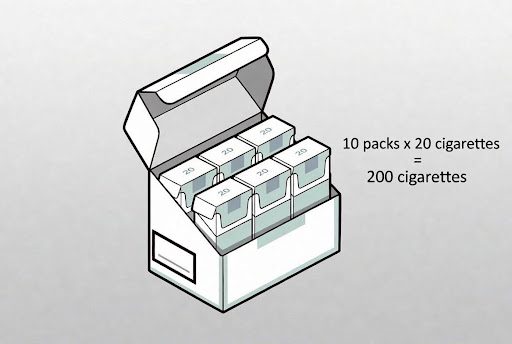
These figures are useful general references, not a guarantee that every product or country uses the same packaging format. Always check the label, local rules, and supplier specifications when an exact count matters.
How Many Cigarettes Are in a Standard Pack?
A standard cigarette pack in the United States typically contains 20 cigarettes. This is the most useful starting point when estimating a pack count, comparing package quantities, or understanding common cigarette carton sizes.
A pack generally holds the cigarettes in a compact rectangular package. Its internal capacity depends on the number and physical dimensions of the cigarettes, while the external dimensions depend on the package structure, material, closure, and manufacturing requirements.
For example, if a package contains 20 cigarettes, it does not follow that every brand’s pack has precisely the same height, width, and depth. Package dimensions can differ even when the number of cigarettes is the same.
If you’re learning about packaging more broadly, our guide to different types of packaging explains how packaging formats are selected for different products and uses.
Is a 20-cigarette pack always the standard?
Twenty cigarettes is a common pack count, but it is not a universal rule for every country or every historical product. Some jurisdictions set minimum or specific quantities through tobacco-packaging legislation. Other markets may have different rules or product formats.
For example, current Australian regulations specify 20 cigarettes per retail pack and 10 packs per cigarette carton.
In the UK, cigarette packs are subject to a minimum pack-size requirement of 20 cigarettes.
The distinction matters: a common retail count describes what buyers usually encounter, while a legal requirement describes what the applicable law permits or requires.
How Many Cigarettes Are in a Carton?
A common cigarette carton contains 10 packs. When each pack contains 20 cigarettes, the carton holds 200 cigarettes.
The calculation is straightforward:
- 1 pack = 20 cigarettes
- 10 packs = 10 × 20
- Total = 200 cigarettes
This is a common US retail and distribution arrangement. State tax information also commonly describes a carton as 10 packs of 20 cigarettes.
However, do not assume every product described as a carton contains exactly 200 cigarettes. The total depends on the number of packs and the count in each pack. For shipping, inventory, or regulatory purposes, use the declared quantity on the actual package.
How many packs of cigarettes are in a carton?
The common answer is 10 packs per carton. This format is especially familiar in the United States, where a standard 20-cigarette pack multiplied by 10 packs produces a 200-cigarette carton.
A carton is an outer package that groups individual retail packs. It can help with storage, handling, transport, and stock counting. Its physical dimensions depend on the arrangement of the packs, protective space, and carton construction.
For a packaging overview, see our guide to product packaging and its role.
How many cigarettes are in 5, 10, or 20 packs?
If each pack contains 20 cigarettes, the total can be calculated by multiplying the pack count by 20.
| Number of packs | Cigarettes per pack | Total cigarettes |
|---|---|---|
| 1 | 20 | 20 |
| 5 | 20 | 100 |
| 10 | 20 | 200 |
| 20 | 20 | 400 |
| 30 | 20 | 600 |
| 50 | 20 | 1,000 |
These totals are arithmetic examples based on 20 cigarettes per pack. If the actual pack count differs, recalculate using the quantity printed on the package.
How Many Cigarettes Are in a Sleeve?
There is no single worldwide standard for how many cigarettes are in a sleeve. The word sleeve can mean different things depending on the country, retailer, wholesaler, or packaging supplier.
In some contexts, people use sleeve to describe a bundle of individual cigarette packs. In others, the word refers to a paperboard or outer wrap around a product or group of products. It should not automatically be treated as a synonym for carton.
If a seller uses the term “sleeve,” check these details before calculating the total:
- How many individual packs are included?
- How many cigarettes are in each pack?
- Is the sleeve a retail bundle, an outer wrap, or a shipping unit?
- Is the stated quantity confirmed on the product label or invoice?
For example, if a particular sleeve contains five packs of 20 cigarettes, its total would be 100 cigarettes. That is an example of the calculation, not a universal sleeve standard.
Is a cigarette sleeve the same as a carton?
Not necessarily. A carton commonly refers to an outer package holding multiple retail packs; a sleeve may refer to a smaller bundle or a specific packaging component. Terminology can vary, so the actual pack count is more reliable than the name alone.
This is similar to packaging terminology in other industries: a box, carton, case, and sleeve can describe different structures or distribution levels. The correct term depends on the package’s purpose and how the supplier defines it.
Our guide to common packaging materials explains how paperboard, corrugated board, and other materials are used in packaging structures.
Cigarette Pack Counts by Country
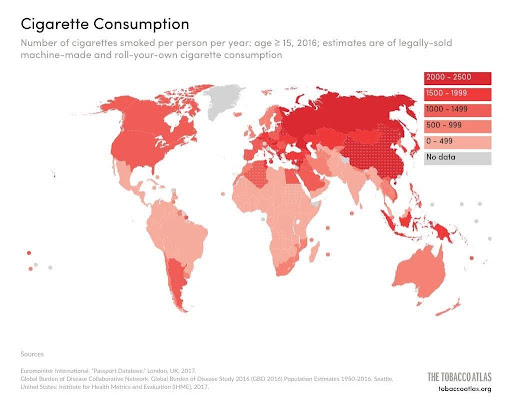
The number of cigarettes in a pack can differ across markets because governments may set different minimum or standardized package quantities. It is important to distinguish common market practice from a legal requirement.
| Country or market | General reference | What to know |
|---|---|---|
| United States | 20 cigarettes is common | A typical carton contains 10 packs, or 200 cigarettes |
| United Kingdom | Minimum of 20 cigarettes per pack | UK rules require packs to contain at least 20 cigarettes |
| Canada | At least 20 cigarettes per package under federal law | Provincial and other applicable requirements may also matter |
| Australia | 20 cigarettes per pack | Current national regulations also specify 10 packs per carton |
The UK requirement is reflected in the UK tobacco-packaging regulations, while Canada’s federal legislation establishes a minimum number of cigarettes per package.
Australia’s current regulations specify the pack and carton quantities directly.
United States
In the United States, a pack of 20 cigarettes is a common retail format. A carton often contains 10 of these packs, giving a total of 200 cigarettes. State tax guidance uses this pack-and-carton calculation as a reference.
If you need an exact count for inventory, tax, shipping, or compliance, verify the specific product packaging rather than relying only on the word “carton.”
United Kingdom
UK rules require cigarette packs to contain at least 20 cigarettes.
The number of cigarettes in a particular outer carton should still be checked on the actual package or supplier documentation.
Packaging regulations may also cover the package’s appearance, warnings, and permitted labeling. These requirements are separate from the number of cigarettes inside.
Canada
Canadian federal legislation establishes a minimum of 20 cigarettes in a package.
This minimum should not be interpreted as proof that every retail pack contains exactly 20; the actual count and applicable requirements must be checked for the specific product and jurisdiction.
For businesses handling packaging, this illustrates why product quantity, package construction, and compliance need to be considered separately.
Australia
Australia specifies that a cigarette pack must contain 20 cigarettes and that a cigarette carton must contain 10 packs.
This is a clear example of a market where both the retail-pack count and carton count are set by regulation. Other markets may take a different approach, so international comparisons should always be checked against current local legislation.
Important: Tobacco regulations change. For legal or commercial decisions, consult the relevant government authority and the latest legislation rather than relying on a general online summary.
What Is the Difference Between a Cigarette Pack, Box, Sleeve, and Carton?

These terms describe packaging at different levels, but everyday usage is not always consistent.
| Term | Typical meaning | What to verify |
|---|---|---|
| Pack | Individual retail package | Cigarette count per pack |
| Box | General word for a package | Whether it means one retail pack or an outer package |
| Sleeve | Bundle or wrap, depending on context | Number of packs and the supplier’s definition |
| Carton | Outer package holding several packs | Number of packs per carton |
| Shipping case | Larger distribution package | Cartons or units per case |
The distinction is useful in retail, logistics, and packaging design. A product can have an inner package, an outer carton, and a shipping case, each with its own dimensions and quantity.
Packaging professionals use these terms carefully because the dimensions, materials, and labeling needs can differ at every level. Our guide to cardboard packaging explains how paper-based packaging is formed into different types of cartons and boxes.
Do Cigarette Pack Dimensions Vary?
Yes. The number of cigarettes inside a pack does not determine its exact external dimensions. Two packs with the same count may differ in shape, height, width, depth, closure design, or internal arrangement. Applicable regulations may also restrict the permitted dimensions or appearance of tobacco packaging.
When measuring a package, distinguish between:
- Internal dimensions: the usable space inside the package.
- External dimensions: the outside height, width, and depth.
- Material thickness: the thickness of the board or other packaging material.
- Structural features: folds, flaps, seams, closures, and any inner components.
These details are relevant to packaging in general, not just cigarette packs. A package that must fit a particular product needs appropriate internal dimensions, while the outer dimensions affect storage, shipping, and shelf arrangement.
For a practical measurement walkthrough, see how to measure a box and our box dimensions guide.
Why packaging material affects dimensions
Packaging material can change the final outside measurements and the way a package folds or holds its shape. Folding carton board, for example, is different from corrugated board, which has a fluted structure intended for different protective and structural needs.
The choice of material depends on the product, protection requirements, manufacturing process, applicable regulations, and intended distribution conditions. It should not be selected based on package count alone.
For more background, compare corrugated packaging with other paper-based formats and explore the role of packaging design in balancing structure, dimensions, and presentation.
How Is Cigarette Packaging Different From General Product Packaging?
Cigarette packaging is subject to tobacco-specific rules in many markets. These may regulate the quantity inside the pack, package appearance, health warnings, labeling, and other details. Ordinary retail packaging does not necessarily face the same set of requirements.
General packaging design still involves familiar considerations:
- Choosing a suitable material and structure.
- Defining internal and external dimensions.
- Allowing for material thickness and manufacturing tolerances.
- Ensuring the package closes and holds its contents as intended.
- Preparing accurate artwork and production files.
- Checking relevant labeling and legal requirements before production.
For businesses evaluating packaging formats for lawful products, custom packaging can include a range of structures and materials. The right solution depends on the product’s needs and the requirements that apply to its market.
Paperboard cartons and folding carton structures
Folding cartons are made from paperboard cut and creased into a shape that can be folded and assembled. They are used across many consumer-product categories. Their design may include tuck flaps, locking tabs, glued seams, or other structural features.
Different box styles serve different purposes. For example, cardboard boxes can be used for a wide range of packaged products, while retail boxes are designed for presentation and product handling in retail environments.
The appropriate structure depends on the product and its regulatory requirements. Tobacco packaging should not be treated as interchangeable with general-purpose packaging without checking the rules that apply.
Printing and artwork considerations
Printed packaging requires accurate artwork placement and file preparation. Designers typically need to account for cut lines, fold lines, bleed, safe areas, and any required labeling. The exact specifications depend on the printer’s workflow and the package structure.
Our overview of packaging printing explains why artwork preparation matters. For other retail applications, custom mailer boxes and display boxes show how different structures serve different packaging functions.
Tobacco packaging may be subject to additional restrictions on branding and visual presentation. Always confirm the relevant laws before preparing or printing artwork for a regulated product.
How to Calculate Cigarettes per Carton or Case
To calculate the number of cigarettes in a larger packaging unit, multiply the number of packs by the number of cigarettes in each pack.
Formula:
Total cigarettes = Number of packs × Cigarettes per pack
For example, if a carton has 10 packs and each pack contains 20 cigarettes:
10 × 20 = 200
If a shipping case contains 50 cartons of 200 cigarettes each, the arithmetic total would be:
50 × 200 = 10,000
The second example is a mathematical illustration, not a universal shipping-case specification. Actual cases may contain a different number of cartons or units.
Use this checklist when calculating a packaging quantity:
- Confirm the declared cigarette count per pack.
- Confirm how many packs are in the carton.
- Confirm how many cartons or packs are in the shipping case.
- Multiply the quantities at each level.
- Check the result against the supplier’s invoice, packing list, and applicable regulations.
These steps help avoid mistakes caused by assuming that the words pack, sleeve, carton, and case always refer to the same quantity.
Packaging Design: What Businesses Should Measure

When the task involves packaging design rather than simply counting cigarettes, quantity is only one part of the specification. A complete packaging brief may include the product dimensions, package style, material, board thickness, print requirements, and compliance information.
For a general packaging project, consider the following:
- Product measurements: length, width, and height at the widest points.
- Required clearance: space needed to place or remove the product without damaging it.
- Material: the substrate appropriate to the product and its handling conditions.
- Structure: the package style, closure, and assembly method.
- Artwork: graphics, text, color requirements, and required warning or information panels.
- Production checks: a review of the final dieline, artwork, dimensions, and sample or proof before manufacturing.
For smaller brands working on lawful consumer products, our guide to packaging for small businesses discusses practical considerations when planning packaging. You can also explore custom rigid boxes for products that require a rigid structure, although rigid packaging is a different format from a typical folding carton.
Bluebird Packaging provides a range of custom packaging options for different product categories. To discuss a suitable packaging format for a product, you can request a quote with the dimensions, material preferences, and project requirements. Tobacco-related packaging, where applicable, must be designed and produced in accordance with relevant laws and restrictions.
Common Mistakes When Counting Cigarettes in a Pack or Carton
A few simple errors can lead to incorrect quantity estimates.
Assuming every pack contains 20 cigarettes
Twenty is a common count in the US and a specified count in some other markets, but pack rules are not identical worldwide. Check the actual label and local requirements.
Assuming every carton contains 200 cigarettes
A carton with 10 packs of 20 contains 200 cigarettes. If the number of packs or the pack count differs, the total changes. Use the formula rather than relying on the word carton.
Treating a sleeve as a universal unit
“Sleeve” does not have one universally accepted cigarette count. Verify how the seller or supplier defines it.
Confusing package dimensions with package capacity
Height, width, and depth describe a package’s physical size. They do not by themselves confirm how many cigarettes it contains. Capacity depends on the dimensions and arrangement of the contents, along with the package structure.
Ignoring local packaging rules
Tobacco products may have specific requirements for pack quantities, warnings, labeling, and appearance. An arrangement used in one country may not be compliant in another.
Frequently Asked Questions
1. How many cigarettes are in a standard pack?
A standard cigarette pack in the United States typically contains 20 cigarettes. The count can vary by market and product, so check the actual pack and the rules that apply in the country where it is sold.
2. How many cigarettes are in a carton?
A common carton contains 10 packs of 20 cigarettes each, for a total of 200 cigarettes. Carton quantities are not universal, so verify the declared count for the specific product.
3. How many packs are in a carton of cigarettes?
Ten packs is a common carton configuration. If each pack contains 20 cigarettes, the carton holds 200 cigarettes. Some jurisdictions, including Australia, specify 10 packs per carton in their regulations.
4. Is a sleeve the same as a carton of cigarettes?
Not necessarily. A carton commonly groups multiple retail packs, while sleeve may describe a bundle or a packaging component. The term is not a reliable count on its own; check how many packs it contains.
5. Do all countries sell the same number of cigarettes per pack?
No. Countries may set different minimum or standardized quantities. For example, UK rules require at least 20 cigarettes per pack, Canadian federal law establishes a minimum of 20, and Australian regulations specify 20 cigarettes per pack.
6. How many cigarettes are in a pack in the UK?
UK rules require a cigarette pack to contain at least 20 cigarettes. For legal or business decisions, refer to the current UK regulations and the specific product label.
7. How many cigarettes are in a pack in the United States?
Twenty cigarettes is a common US pack count. A typical carton contains 10 packs, totaling 200 cigarettes, but the exact product and declared quantity should always be checked.
8. How many cigarettes are in a 10-pack carton?
If each of the 10 packs contains 20 cigarettes, the total is 200 cigarettes. If the packs contain a different number, multiply the actual pack count by the number of cigarettes in each pack.
9. What is the difference between a cigarette pack and a carton?
A pack is the individual retail package holding the cigarettes. A carton is a larger package that groups multiple retail packs together. The pack count and carton count depend on the product and applicable market rules.
10. Are cigarette pack sizes different by brand or country?
Yes. The number of cigarettes, external dimensions, package structure, and labeling requirements can vary according to the product and market. Some countries regulate specific pack quantities or dimensions. Always verify the current local requirements.
Conclusion
In the United States, a typical cigarette pack contains 20 cigarettes, and a common carton contains 10 packs, totaling 200 cigarettes. A sleeve does not have a universally fixed count, so its quantity should be confirmed with the seller or supplier.
Pack counts, packaging dimensions, and legal requirements are separate considerations. The most reliable way to determine the exact quantity is to check the package label, calculate using the actual number of packs, and consult current regulations for the relevant country.
For broader packaging projects, Bluebird Packaging offers custom packaging options for a range of products and industries. Explore the Bluebird Packaging website or contact the team to discuss packaging requirements for products where custom packaging is appropriate and legally permitted.
References and Further Reading
- Australian Government — Public Health (Tobacco and Other Products) Regulations 2024 — pack and carton quantities in Australia.
- Australian Government — Information for consumers on tobacco product changes — explanation of standardized pack and carton quantities.
- UK legislation — Standardised Packaging of Tobacco Products Regulations 2015 — UK tobacco-packaging requirements.
- Government of Canada — Tobacco Products Appearance, Packaging and Labelling Regulations — Canadian tobacco-product requirements.
- Pennsylvania Department of Revenue — Tobacco Products Taxes — US state reference to a 20-cigarette pack and 10-pack carton.