

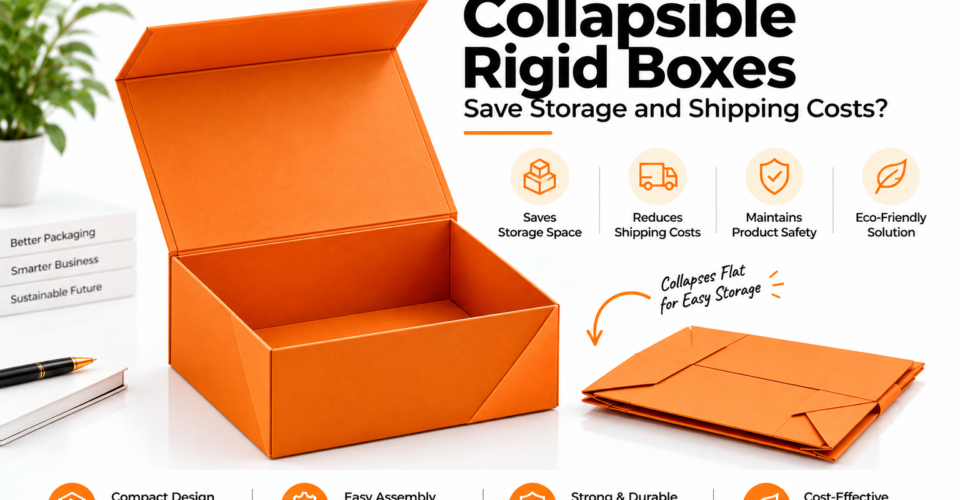
Collapsible rigid boxes help businesses store premium packaging more efficiently by allowing the box to fold flat before use and return to a structured, rigid shape when assembled. For US brands managing large packaging orders, seasonal launches, ecommerce fulfillment, or limited warehouse space, this design can reduce the volume occupied by empty boxes while preserving a high-end product presentation.
Unlike conventional rigid boxes that arrive fully assembled, collapsible rigid packaging is designed to be stored and transported in a flat or folded configuration. When needed, the panels are raised and secured to create the finished box. The actual space savings depend on the box dimensions, folding mechanism, material thickness, and shipping configuration, so businesses should compare samples and packing specifications rather than rely on a universal savings percentage.
The main benefit is operational flexibility: brands can keep packaging inventory on hand without dedicating as much space to fully assembled empty boxes. However, the decision should also account for assembly labor, storage conditions, product protection, and the type of customer experience the packaging needs to deliver.
Collapsible Rigid Box Storage: A Quick Answer
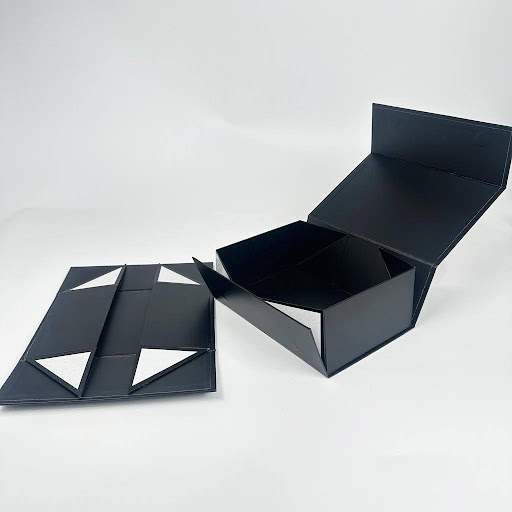
Collapsible rigid box storage is the practice of storing rigid packaging in a flat or folded condition before assembling it for use. Because the boxes do not occupy their full finished volume while stored, businesses may be able to fit more packaging into the same warehouse, stockroom, or fulfillment area than with pre-assembled rigid boxes.
This approach is especially useful for premium retail packaging, gift boxes, cosmetics, jewelry, electronics, promotional kits, and ecommerce brands that need a refined presentation without keeping every empty box fully assembled.
Key benefits include:
- Reduced storage footprint: Flat-packed boxes can occupy less space than assembled rigid boxes.
- More flexible inventory: Businesses can store packaging ahead of seasonal campaigns or product launches.
- Potential freight efficiencies: Lower shipping volume for empty packaging may improve freight economics, depending on the shipment.
- Premium presentation: A well-designed collapsible rigid box can retain premium wrapping, printing, inserts, and closure options.
- Assembly on demand: Staff can assemble boxes when orders need to be packed instead of storing every box in its final shape.
The important trade-off is that space savings do not eliminate work. The business must have an efficient assembly process and protect flat-packed boxes from moisture, bending, surface abrasion, and damage to folding components.
What Is a Collapsible Rigid Box?
A collapsible rigid box is a premium packaging structure made with rigid board and a folding design that allows the box to collapse for storage or transportation. When its panels are raised and secured, it forms a structured box suitable for product presentation and gifting.
Traditional rigid boxes are often called setup boxes because they are delivered in their finished, assembled shape. Collapsible rigid boxes use a different construction approach: selected walls, corners, or panels fold inward, allowing the box to occupy less volume before use.
The outer appearance can still include printed or textured wrapping paper, magnetic closures, ribbon details, custom inserts, foil stamping, embossing, or other finishing options, subject to the chosen structure and production specifications.
For businesses evaluating this format, the main question is not simply whether a box folds. It is whether the design can be stored compactly, assembled consistently, protect the product, and deliver the desired presentation.
Brands considering this packaging format can review Bluebird Packaging’s custom collapsible rigid boxes to understand how a foldable structure can be developed around product dimensions, branding, and functional requirements.
Why Traditional Rigid Boxes Can Create Storage Problems
Traditional rigid boxes offer a substantial feel and a premium appearance, but their fixed shape can make empty packaging difficult to store in large quantities.
Consider a business ordering boxes for several product lines. If the boxes arrive fully assembled, each one occupies a three-dimensional space even though it contains no product. As packaging orders grow, that empty volume can compete with finished inventory, packing materials, workstations, and space needed for order preparation.
This challenge becomes more noticeable when a company:
- Orders packaging in bulk to support several months of demand.
- Manages multiple box sizes, colors, or product variations.
- Stores holiday or promotional packaging outside peak sales periods.
- Ships empty boxes from a supplier to a separate fulfillment center.
- Operates from a small stockroom or shared warehouse.
- Needs to distribute packaging across several retail or fulfillment locations.
The issue is not that traditional rigid boxes are inherently inefficient. They may be the right choice when ready-to-fill packaging and minimal assembly work are priorities. The problem arises when the space occupied by empty, assembled boxes becomes a major operational constraint.
Businesses can evaluate the full packaging system by comparing different rigid box styles and structures before deciding whether a collapsible design offers a better balance of presentation and storage.
How Collapsible Rigid Boxes Work
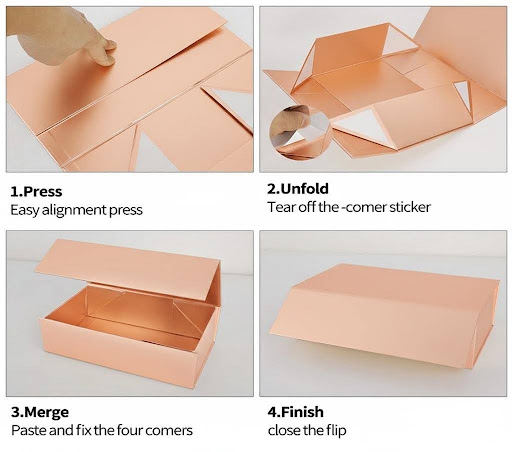
Collapsible rigid boxes use a folding structure that allows the finished box to be stored in a flatter configuration. At the packing location, the panels are raised and secured according to the design, restoring the box’s intended shape.
The exact assembly method varies. Some designs use folding side panels and adhesive tabs; others incorporate magnetic closures, hinges, locking features, or other structural components. The supplier’s instructions and approved sample should determine how each model is assembled.
A typical workflow looks like this:
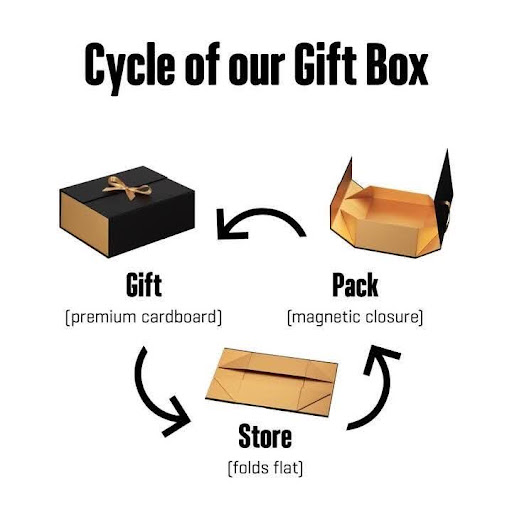
Step 1: Store flat
Packaging arrives in a compact, folded format and is placed in a clean, dry storage area.
Step 2: Assemble when needed
Staff raise the walls and secure the designated tabs, corners, or closure components.
Step 3: Pack and present
The assembled box is checked, filled with the product and any insert, and prepared for retail presentation or fulfillment.
Before adopting a design at scale, test how quickly employees can assemble it, whether corners align consistently, how securely the box closes, and whether the structure remains stable when filled.
A folding mechanism that saves space but takes too long to assemble may not be the best option for a high-volume packing operation.
How Collapsible Rigid Boxes Improve Warehouse Storage
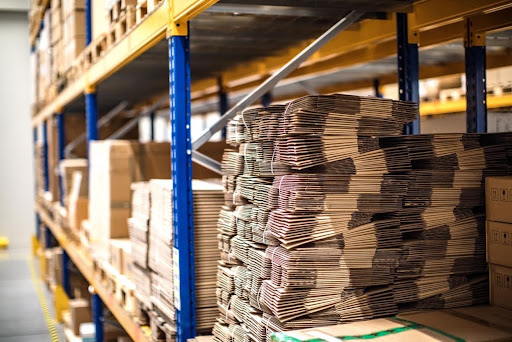
Collapsible rigid boxes can improve warehouse storage by reducing the amount of space required for empty packaging before assembly. This can help businesses organize packaging inventory, preserve room for saleable products, and plan stock levels more flexibly.
1. More room for packaging inventory
Flat-packed packaging can be stacked in organized groups instead of occupying the full three-dimensional volume of each assembled box. The improvement depends on the actual flat-pack dimensions, stack height, protective packaging, and safe handling limits.
Rather than assuming a fixed percentage of space savings, measure the number of boxes that fit in a defined storage area under both configurations.
2. Better use of limited stockroom space
Small businesses, boutique retailers, and growing ecommerce companies may not have a dedicated packaging warehouse. They may store boxes near packing tables, in a back room, or alongside product inventory.
Reducing the packaging footprint can free up space for order picking, quality checks, finished goods, and other supplies. This is especially helpful when packaging must be kept close to the team that assembles and fills it.
3. More organized seasonal inventory
Holiday gifts, limited-edition launches, promotional kits, and event packaging often have demand peaks. A business may need to order packaging before the busy season but have limited space to store it.
Flat-packed boxes can make this inventory easier to accommodate, provided the packaging remains protected and the company can assemble it fast enough to meet demand.
4. Simpler inventory separation
When boxes arrive flat, teams can organize them by product, size, artwork version, or campaign. Clear labels and designated storage locations help prevent staff from assembling the wrong packaging for a particular order.
For businesses improving their overall packaging system, a broader packaging materials overview can help clarify the differences between materials and structures used for different operational needs.
Collapsible Rigid Boxes vs. Standard Rigid Boxes
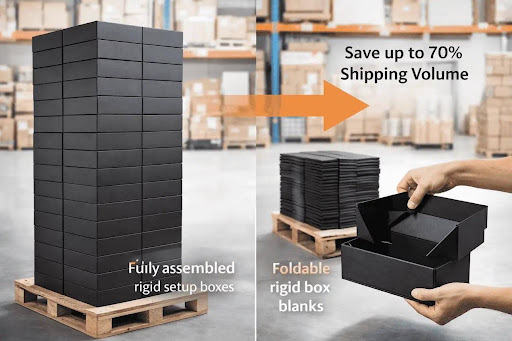
The main difference between collapsible and standard rigid boxes is how they are stored and supplied before use. Standard rigid boxes typically arrive assembled, while collapsible rigid boxes can be stored flat and assembled at the packing location.
| Comparison factor | Collapsible rigid boxes | Standard rigid boxes |
|---|---|---|
| Storage before use | Flat or folded configuration | Fully assembled shape |
| Warehouse footprint | Often lower for empty packaging | Can require more space |
| Assembly requirement | Usually needs setup before filling | Typically ready to fill |
| Premium presentation | Can support premium printing and finishes | Can support premium printing and finishes |
| Packing workflow | Requires assembly planning | Often simpler at the packing station |
| Best operational fit | Businesses prioritizing compact storage | Businesses prioritizing ready-to-use boxes |
| Main consideration | Assembly quality and labor | Storage volume and shipment configuration |
Neither format is automatically better for every business. A brand with limited storage and sufficient packing labor may benefit from collapsible construction. A business with ample storage but a very fast packing line may prefer pre-assembled boxes.
When choosing a premium box, also consider whether the product requires a particular lid style, interior insert, or presentation. For example, magnetic closure rigid boxes may be appropriate when the opening experience is an important part of the product presentation, but the complete design should be evaluated for its storage and assembly requirements.
How to Estimate the Storage Space You Could Save
The most reliable way to estimate the benefit of collapsible rigid box storage is to compare the real storage footprint of both formats using the same box quantity and storage conditions.
Do not calculate savings from the finished box dimensions alone. A collapsible box’s flat-packed dimensions, bundle height, protective packaging, and safe stacking limits determine how much space the shipment or stored inventory actually occupies.
Use this practical comparison:
- Choose a representative quantity. Use the number of boxes you normally order or store, such as 500 or 2,000 units.
- Measure assembled boxes. Record the outside length, width, and height of the empty standard rigid box.
- Measure the flat-packed bundle. Record the dimensions of a bundle containing a known number of collapsible boxes, including protective materials.
- Calculate the total storage volume. Multiply length × width × height for each storage configuration, using consistent units.
- Account for real warehouse conditions. Include pallets, shelf clearances, aisle access, carton overhang, and safe stacking limits.
- Compare the usable capacity. Calculate how many boxes can be stored in the same designated area without compromising product condition or safe handling.
Example: Comparing Two Storage Configurations
The following figures are illustrative only. They are not Bluebird Packaging product specifications or a claim about guaranteed savings.
Suppose a company stores 1,000 empty rigid boxes. Its current assembled boxes occupy 12 cubic meters when packed for storage, while a tested flat-packed configuration occupies 5 cubic meters for the same quantity.
The estimated volume reduction would be:
\(\frac{12-5}{12}\times100 \approx 58.3\%\)
In this example, the flat-packed configuration uses approximately 58.3% less storage volume. Your result may be higher or lower depending on the box structure, bundle dimensions, packaging method, and storage setup.
| Measurement | Assembled boxes | Flat-packed boxes |
|---|---|---|
| Quantity | 1,000 | 1,000 |
| Storage volume | 12 m³ | 5 m³ |
| Difference | — | 7 m³ less |
| Estimated volume reduction | — | 58.3% |
This is a comparison of storage volume, not a promise of equivalent savings in warehouse rent, labor, or shipping charges. Those financial effects must be calculated separately.
Can Collapsible Rigid Boxes Reduce Shipping Costs?
Collapsible rigid boxes can reduce the volume required to transport empty packaging because the boxes can travel flat instead of in their fully assembled shape. This may improve the number of units that fit in a shipment and reduce the cost associated with moving empty packaging.
The financial result depends on the transport method, supplier packing arrangement, route, carrier rules, and the final packed dimensions. For parcel shipments in the United States, dimensional weight can matter when a package occupies a lot of space relative to its actual weight. UPS explains this principle in its shipping dimensions and dimensional-weight guidance.
There is an important distinction between shipping empty packaging to your facility and shipping a finished product to your customer.
- Inbound packaging shipments: Flat-packed boxes may reduce the space needed to move empty packaging.
- Warehouse storage: Flat-packed stock may occupy less volume before assembly.
- Outbound customer orders: The finished box still needs to fit the product and shipping requirements. A collapsible retail box does not automatically reduce the dimensions of the final parcel.
- Returns and reusable packaging: Any return-shipping benefit depends on whether the packaging is designed to be collapsed, returned, and reused in the intended process.
For this reason, compare the complete cost of getting packaging from the supplier to the packing station—not just the quoted price per box.
The Business Benefits Beyond Storage Space
Space efficiency is a major reason to consider collapsible rigid boxes, but the design can also influence purchasing, inventory, and fulfillment decisions.
More flexible purchasing and stock planning
When flat-packed packaging takes up less room, businesses may find it easier to hold stock for different products or campaigns. This can support more flexible inventory planning, but the right order quantity still depends on demand forecasts, supplier lead times, storage conditions, and cash flow.
Businesses should avoid increasing order quantities solely because the boxes are compact. Packaging that remains unused can still tie up working capital and become outdated when artwork, branding, or product dimensions change.
Easier distribution across multiple locations
Brands with multiple stores, regional warehouses, event locations, or fulfillment partners may need to distribute packaging across different sites. A compact format can make it easier to plan how many boxes each location receives.
Before distributing flat-packed boxes, confirm that each destination has the staff, instructions, and workspace needed to assemble them correctly.
Better support for seasonal and promotional launches
A seasonal campaign may require premium gift packaging for a limited period. Collapsible rigid boxes can make it easier to hold this packaging before demand peaks, then assemble it as orders arrive.
The same principle can apply to influencer kits, corporate gifts, limited-edition products, and promotional collections. The best approach is to align packaging quantities with realistic sales forecasts and campaign dates.
Premium branding without a permanently assembled box
A flat-packed format does not necessarily mean a basic or plain appearance. Depending on the design, businesses may be able to use custom printed wraps, brand colors, textured papers, foil details, magnetic closures, and fitted inserts.
For a wider look at premium packaging choices, explore custom rigid packaging options, including structures designed around different products and presentation goals.
Where Businesses Can Use Collapsible Rigid Packaging
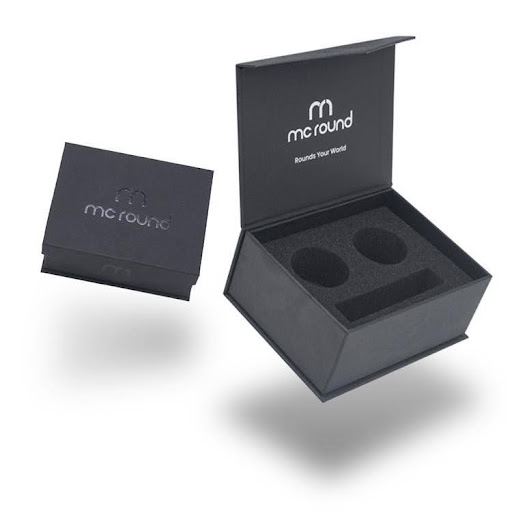
Collapsible rigid boxes are particularly relevant when a business wants a premium presentation but needs to manage storage space before packaging is used. The best fit depends on the product, protection requirements, assembly process, and customer experience.
| Industry or application | Why collapsible rigid packaging may fit | What to consider |
|---|---|---|
| Beauty and skincare | Premium presentation for gift sets and product collections | Bottle fit, insert design, spill protection, and finish durability |
| Jewelry and accessories | A structured presentation for higher-value items | Secure inserts, closure quality, and interior protection |
| Electronics and tech accessories | Organized presentation for accessories or premium kits | Product weight, cushioning, and shipping protection |
| Corporate gifts | Compact storage before an event or distribution date | Assembly time, branding consistency, and kit contents |
| Seasonal gift collections | Packaging can be stored before the selling season | Demand forecasts, storage duration, and artwork timing |
| Subscription and promotional kits | Multiple components can be arranged in a custom insert | Packing speed, SKU variations, and repeatability |
| Apparel and specialty retail | Premium presentation for selected accessories or gift sets | Product dimensions, folding requirements, and storage workflow |
For products that need a more traditional premium structure, custom two-piece rigid setup boxes are another option to evaluate. They may be preferable when ready-to-fill construction is more important than compact storage.
Similarly, brands using distinctive presentation packaging can compare book-style rigid boxes with collapsible formats, depending on how the product is displayed, opened, and protected.
Materials, Finishes, and Structural Design Considerations
The material and construction of a collapsible rigid box influence how it folds, how it looks after assembly, and how well it performs in storage and use.
Rigid board provides the box structure, while a wrapped paper surface can carry printed artwork, textures, and finishing effects. The folding points and connection method must be designed to support repeated handling during assembly without damaging the exterior or interfering with the closure.
Board and wrapping material
Board thickness, surface wrapping, and structural geometry should be chosen around the product’s size, weight, and intended use. A heavier product or a box with a large lid may require a different design from a small gift box.
Material selection should also account for the finished box’s appearance. Textured paper, printed surfaces, and specialty wraps can produce different visual and tactile effects.
Magnetic closures and other opening styles
Magnetic closures can support a premium opening experience, but magnets, hinges, and closing panels need to align correctly when the box is assembled. A closure that looks good in a digital mockup still needs to be tested on a physical sample.
Other structures may use ribbons, tuck-in elements, or different lid arrangements, depending on the packaging concept.
Inserts and product fit
A fitted insert can help hold products in place and organize multiple components. The insert must be designed around the actual packed product, including accessories, protective materials, and any required spacing.
For a complete specification, measure the product and review how to measure a box correctly. Confirm both internal and external dimensions, since the board and folded structure affect the usable space inside the finished box.
Printing and finishing
Printing should be planned around the approved structure and dieline. Artwork needs to account for folds, edges, closure areas, and any surface that may be hidden during assembly.
Common options can include full-color printing, foil stamping, embossing, debossing, matte lamination, gloss lamination, and spot UV, depending on the material and supplier capabilities. Review packaging printing considerations and packaging finishes and their uses before finalizing the specification.
The goal is to ensure that the finished box looks consistent after assembly—not only when viewed flat.
How to Store Flat-Packed Rigid Boxes Correctly
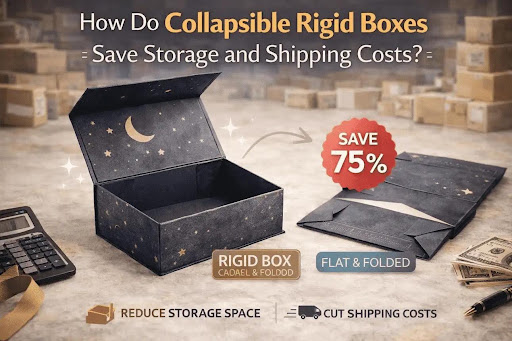
Flat-packed packaging still needs proper storage. Folding the boxes reduces their footprint, but it does not make them immune to moisture, dust, compression, or surface damage.
Follow these practical steps:
- Keep packaging dry. Store boxes in a clean, dry environment and avoid direct contact with damp floors or walls.
- Use stable, even stacks. Follow the supplier’s guidance for safe stacking height and weight distribution.
- Protect the printed surfaces. Use the supplied protective packaging or suitable separators when abrasion could affect the finish.
- Keep different SKUs separate. Label bundles by product, dimensions, artwork version, and intended use.
- Rotate inventory sensibly. Use older, approved stock first when the packaging design remains current and undamaged.
- Inspect before assembly. Check for bent panels, scuffs, moisture damage, damaged magnets, or weakened folding components.
- Train the packing team. Provide assembly instructions and show staff how to secure corners, panels, and closures without forcing them.
- Keep a quality-check sample. Store an approved assembled sample so staff can compare the shape, alignment, and finish of assembled boxes.
Storage practices should be matched to the actual construction. If the supplier specifies special handling, stacking, or assembly instructions, follow those requirements rather than assuming every collapsible rigid box works the same way.
How to Decide Whether Collapsible Packaging Is Cost-Effective
A collapsible rigid box may have a different unit price from a standard rigid box, so comparing the supplier’s quoted price alone can give an incomplete picture. The better approach is to compare the total cost of acquiring, storing, assembling, and using each format.
A practical cost comparison should include:
| Cost factor | What to compare |
|---|---|
| Unit price | Supplier price for the required quantity and specification |
| Inbound freight | Cost to transport the empty packaging to your facility |
| Storage | Space used, storage duration, and any related warehouse charges |
| Assembly labor | Time required to prepare each box for filling |
| Quality control | Inspection time and the cost of damaged or incorrectly assembled boxes |
| Packing workflow | Whether assembly slows down or improves order preparation |
| Outbound shipping | Final packed parcel dimensions, weight, and carrier pricing |
| Obsolete inventory | Risk of unused boxes if branding, product dimensions, or campaigns change |
A business can estimate the total cost per usable box using this formula:
Totalcostperusablebox=Packagingpurchase+freight+storage+assembly+qualitycostsUsableboxes
Use the same time period and quantity for both packaging options. If you include storage cost for one format, include the equivalent cost for the other. If you estimate assembly labor, base it on a timed trial with actual samples.
A simple example
Imagine a business is comparing two packaging options for 2,000 units. The collapsible option has a higher quoted unit price but requires less space in the warehouse. The standard option costs less per box but arrives fully assembled and needs a larger storage area.
The collapsible option may be worthwhile if its reduction in freight and storage costs exceeds the additional packaging and assembly costs. However, if assembly takes too long or the business has inexpensive, readily available storage, the standard option may have a lower total cost.
The best choice is the one with the lowest acceptable total operating cost while meeting presentation and protection requirements. No packaging format should be selected based on an assumed freight saving without checking the real shipment dimensions and supplier quote.
For additional context, custom packaging cost considerations can help businesses assess the different factors that contribute to a packaging budget.
Collapsible Rigid Boxes for Ecommerce and Fulfillment
Ecommerce businesses often manage two different packaging requirements: the presentation customers see and the protection needed to deliver the product safely.
Collapsible rigid boxes can help with the first part by offering premium presentation while remaining compact before assembly. But the finished box still needs to work with the outbound shipping method, protective materials, and outer packaging.
Consider the complete fulfillment process:
- Store the flat-packed packaging in a designated area.
- Pick the correct box and insert for the order.
- Assemble the box according to the approved instructions.
- Place the product and protective components inside.
- Check the closure and overall presentation.
- Add an appropriate outer shipping package if the retail box is not intended to withstand parcel transit.
- Measure the final parcel and verify the shipping method.
Brands should not assume that a collapsible rigid box is automatically a shipping box. Premium presentation packaging may need an outer carton or other protection for distribution, depending on the product and handling conditions.
For a broader look at packaging for online orders, see ecommerce packaging considerations. Businesses shipping products that require additional transit protection can also compare corrugated boxes for shipping and protection with the presentation box used inside.
Collapsible Rigid Boxes vs. Other Space-Saving Packaging
Collapsible rigid boxes are not the only way to make packaging storage more efficient. The best structure depends on whether the priority is premium presentation, shipping protection, simple assembly, or low-volume storage.
| Packaging format | Main advantage | Important limitation |
|---|---|---|
| Collapsible rigid box | Premium appearance with a flat-pack storage option | Requires assembly and careful handling |
| Standard rigid box | Ready-to-use structure and substantial presentation | Empty boxes can take up considerable space |
| Folding carton | Often suited to lightweight retail products and flat shipment | Does not offer the same construction or feel as every rigid box |
| Corrugated box | Useful for shipping protection and distribution | May not provide the intended luxury presentation on its own |
| Mailer box | Convenient format for many ecommerce orders | Suitability depends on the product, dimensions, and transit requirements |
| Kraft box | Natural-looking packaging option available in different structures | Appearance and protection depend on the chosen board and design |
These formats are not direct substitutes in every application. A folding carton may be suitable for a lightweight retail product, while a collapsible rigid box may be preferred for a premium gift set. A corrugated shipper may still be needed to protect the product during delivery.
If the goal is to evaluate more than one material or format, compare cardboard and corrugated packaging differences before making a final decision. For ecommerce orders where the outer package is central to fulfillment, custom mailer boxes may be worth considering.
Sustainability and Packaging Waste Considerations
Reducing the space occupied by empty packaging can improve storage efficiency, but it does not automatically make a box more sustainable. A complete evaluation should consider material use, durability, manufacturing, shipping, reuse, and what happens to the packaging at the end of its life.
Businesses can ask suppliers:
- What materials are used in the board, wrap, insert, magnets, and other components?
- Can the components be separated for recycling where local facilities accept them?
- Does the folding structure withstand the expected handling and assembly process?
- Can the box be reused by the customer or in a return program?
- Does the chosen finish or adhesive affect the available end-of-life options?
- Can the design be simplified without compromising product protection?
A premium box may be reused for storage or gifting, but that should be presented as a potential benefit rather than a guarantee. Recyclability also depends on the actual materials, local collection systems, and any mixed-material components.
For businesses reviewing these choices, Bluebird’s sustainable packaging considerations provide a useful starting point for thinking about material selection and packaging performance together.
Common Mistakes to Avoid When Choosing Collapsible Rigid Boxes
Collapsible rigid packaging can be effective, but several mistakes can reduce its operational value.
| Common mistake | Why it matters | Better approach |
|---|---|---|
| Comparing only the unit price | Storage, freight, and labor can change the total cost | Compare the complete cost per usable box |
| Assuming a fixed percentage of space savings | Designs and shipping configurations vary | Measure real flat-packed bundles and assembled boxes |
| Ignoring assembly time | Slow assembly can delay fulfillment | Time a sample assembly run before ordering at scale |
| Ordering without a physical sample | Fit, alignment, and closure problems may be missed | Approve a sample and test it with the actual product |
| Overlooking inserts | The product may move or fail to fit correctly | Include all inserts and accessories in the specification |
| Storing boxes in unsuitable conditions | Moisture, pressure, and abrasion can damage the packaging | Follow supplier storage instructions |
| Treating the retail box as a shipping carton | The presentation box may not be designed for parcel transit | Test the full packed configuration and add outer protection if required |
| Ordering too much seasonal stock | Artwork or demand may change before use | Match quantities to forecasts and campaign timing |
| Skipping staff training | Assembly can become inconsistent | Provide clear instructions and quality checks |
For small or growing brands, these decisions can have a meaningful effect on day-to-day operations. A practical packaging guide for small businesses can help put packaging selection in the context of inventory, budgets, and customer experience.
A Buyer’s Checklist for Storage-Efficient Rigid Packaging
Before selecting a collapsible rigid box, review the following checklist with your packaging supplier and fulfillment team.
- Product dimensions, weight, and fragile areas are confirmed.
- Internal and external box dimensions are documented.
- The flat-packed dimensions are measured for the actual order configuration.
- The box structure and folding method are understood.
- The insert and all product components fit correctly.
- Printing, wrapping paper, and finishes are approved.
- Closure alignment and assembled-box stability are tested.
- Storage conditions and safe stacking requirements are confirmed.
- Assembly time is measured with the people who will pack orders.
- Inbound freight and storage costs are compared with the standard rigid alternative.
- The final shipping configuration is tested where relevant.
- A sample is approved before full production.
- Inventory quantities are aligned with realistic demand.
- Staff have assembly and quality-control instructions.
The checklist helps ensure that storage efficiency does not come at the expense of presentation, product protection, or packing speed.
Frequently Asked Questions About Collapsible Rigid Box Storage
1. What is collapsible rigid box storage?
Collapsible rigid box storage means keeping rigid boxes in a flat or folded condition before use, then assembling them when required. This reduces the volume occupied by empty packaging compared with storing every box in its fully assembled shape.
2. Do collapsible rigid boxes save warehouse space?
They can save warehouse space because flat-packed boxes generally occupy less volume than fully assembled empty boxes. The actual reduction depends on the box dimensions, folding construction, bundle arrangement, and storage conditions. Measuring a sample shipment is the most reliable way to estimate the benefit.
3. Are collapsible rigid boxes as premium-looking as standard rigid boxes?
They can be. Depending on the design, collapsible rigid boxes can use rigid board, premium wrapping papers, printed branding, magnetic closures, inserts, and decorative finishes. The assembled result should be checked through a physical sample to confirm the intended look and feel.
4. Do collapsible rigid boxes reduce shipping costs?
They may reduce the cost of transporting empty packaging when the flat-packed configuration takes up less shipping volume. The final saving depends on the carrier or freight method, route, shipment dimensions, and packaging arrangement. The outbound shipment containing the product must be evaluated separately.
5. Are collapsible rigid boxes suitable for ecommerce businesses?
Yes, they can suit ecommerce brands that want premium presentation and compact storage before orders are packed. However, the finished box may need an outer shipping carton or additional protection. The complete packed order should be tested for the intended delivery method.
6. How should flat-packed rigid boxes be stored?
Store them in a clean, dry area, protect printed surfaces from abrasion, use stable stacks within the supplier’s handling guidance, and separate inventory by size and artwork version. Inspect boxes before assembly and avoid using packaging that has been damaged by moisture, pressure, or improper handling.
7. Do collapsible rigid boxes require assembly?
Yes, most collapsible designs require the walls or panels to be raised and secured before filling. The amount of work varies by construction. Businesses should test the assembly process and train staff to achieve consistent corners, closures, and overall presentation.
8. What products work well with collapsible rigid boxes?
They can be suitable for premium gift sets, cosmetics, jewelry, electronics accessories, corporate gifts, promotional kits, and other products where presentation is important. The box must still be designed around the product’s dimensions, weight, insert, protection requirements, and intended distribution route.
9. Are collapsible rigid boxes more cost-effective than standard rigid boxes?
They can be, particularly when empty-box storage and inbound freight are major cost factors. But the total result depends on the unit price, storage expense, shipping arrangement, assembly labor, quality control, and order volume. A side-by-side cost comparison is more useful than assuming one format is always cheaper.
10. How can a business choose the right collapsible rigid box?
Start with the product dimensions and desired presentation. Then evaluate the folding mechanism, material, insert, closure, printing, flat-packed dimensions, storage requirements, assembly time, and total cost. Request a sample and confirm the finished box works for both the packing process and the customer experience.
How to Build a Better Packaging Design and Storage Plan
The best packaging decision balances structure, appearance, cost, and operational efficiency. Before finalizing a collapsible box, review the artwork and assembly process as part of the same project.
A well-planned packaging design should account for the assembled box’s proportions, how the customer opens it, where the logo appears, how the insert holds the product, and whether folding lines affect the final appearance. This is particularly important when a box has several printed panels or premium finishing details.
For businesses comparing different rigid formats, Bluebird Packaging’s custom rigid box collection is a useful place to explore suitable structures. If the project also needs a more conventional cardboard option, custom cardboard boxes may be relevant depending on the product and presentation requirements.
Final Thoughts: Is Collapsible Rigid Box Storage Right for Your Business?
Collapsible rigid box storage offers a practical way to manage premium packaging when empty-box volume is a challenge. By storing boxes flat and assembling them when needed, businesses may be able to improve warehouse organization, support seasonal inventory planning, and reduce the space required to transport empty packaging.
The right choice still depends on the full operation. Product fit, board construction, finishes, assembly time, storage conditions, inbound freight, and outbound shipping requirements all influence whether collapsible packaging is a worthwhile investment.
For US retailers, ecommerce brands, gifting businesses, and companies preparing premium product launches, the most reliable approach is to compare an actual collapsible sample with a standard rigid box. Measure the storage footprint, time the assembly process, check the finished presentation, and calculate the total cost per usable box.
If you’re considering a custom design, Bluebird Packaging offers packaging options for businesses evaluating their product presentation and structural requirements. Share your box dimensions, quantity, branding preferences, and intended use through the custom packaging quote form to discuss a suitable solution. You can also reach the team through the Bluebird Packaging contact page.