
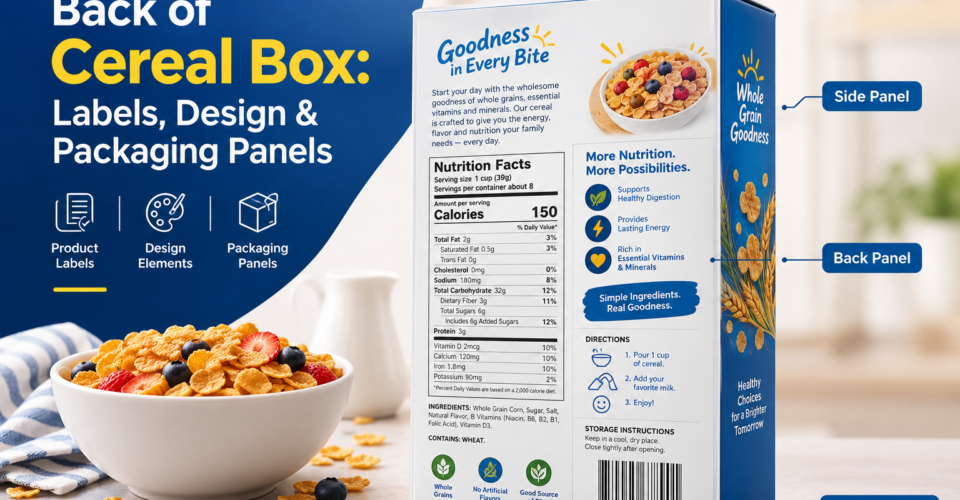
The back of a cereal box is commonly used for games, puzzles, recipes, brand stories, promotions, and QR codes. However, some cereal brands also use this panel for required food-label information. In the United States, the placement of Nutrition Facts, ingredients, allergen declarations, and other label details depends on the package layout and applicable FDA requirements.
For cereal manufacturers and food brands, the goal is to design every panel so consumers can understand the product, find important information, and recognize the brand without struggling to read crowded packaging. The back panel must work alongside the front display panel, information panel, barcode area, and production-code space.
This guide explains what goes on the back of a cereal box, how US food-labeling rules affect panel placement, how to plan artwork, and how to choose packaging materials and printing options for retail cereal cartons.
What Goes on the Back of a Cereal Box? Quick Answer
The back of a cereal box usually contains consumer-engagement and marketing content, such as games, puzzles, recipes, brand stories, product promotions, and QR codes. Depending on the carton design, it may also contain Nutrition Facts, ingredients, allergen information, or other required label details if the back serves as the designated information panel.
Here is a quick overview of what typically belongs on each part of a cereal carton:
| Cereal box panel | Common content | Important consideration |
|---|---|---|
| Front panel | Brand name, cereal name, product image, permitted claims, net quantity | The principal display panel has specific labeling requirements. |
| Back panel | Games, recipes, brand story, promotions, QR codes, or required information when designated as the information panel | Make content readable, useful, and appropriate for the audience. |
| Information panel | Nutrition Facts, ingredients, allergen declarations, and manufacturer or distributor details, as applicable | Follow applicable FDA placement and formatting requirements. |
| Other side panel | Barcode, recycling instructions, customer service details, additional product information | Keep the barcode scannable and avoid folds or distorted areas. |
| Top flap | Best-by date, lot code, or other production information | Reserve a suitable area for codes added during packing. |
| Bottom and glue flap | Structural folds, manufacturing information, and some printer marks | Keep essential consumer information away from covered or glued areas. |
The exact layout depends on the carton structure, the space available, and the product’s labeling needs. The FDA’s food-labeling regulations should be reviewed before approving artwork for US retail distribution.
What Information Goes on Each Panel of a Cereal Box?
Cereal packaging works best when every panel has a clear purpose. The front helps shoppers identify the product, the information panel presents essential food details, and the back provides room for supporting content or additional labeling where appropriate.
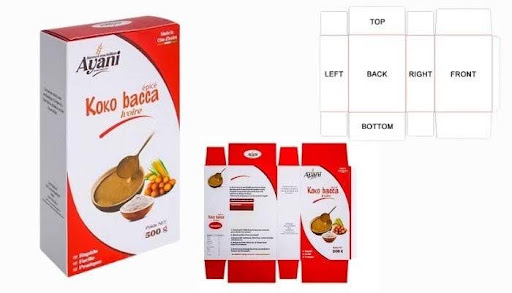
1. Front panel: Product identity and shelf appeal
The front of a cereal box is usually the principal display panel (PDP)—the area most likely to be seen by consumers at the time of purchase.
Common elements include:
- Brand name and product name
- Product illustration or photography
- Flavor or variety information
- Truthful, permitted marketing claims
- Net quantity of contents
- Other information required for the specific product
The net quantity statement for packaged food generally belongs in the bottom 30% of the principal display panel, subject to the applicable rules and exceptions. It must be presented in the required units and format. The FDA explains placement and quantity statements in its Food Labeling Guide.
A strong front panel balances visual appeal with legibility. Product imagery should not obscure required information, and claims such as “whole grain,” “high fiber,” or “healthy” should only be used when the product qualifies under applicable requirements.
2. Back panel: Storytelling and engagement
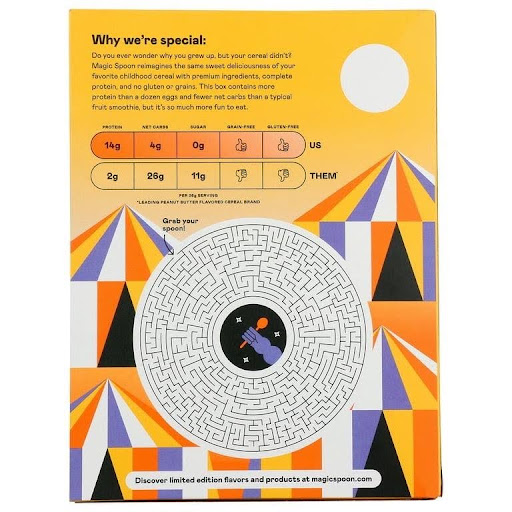
The back panel is often the most flexible creative space on a cereal carton. Brands may use it to offer a puzzle, explain an ingredient, introduce a recipe, tell a brand story, or invite customers to explore more content online.
The best back-panel content depends on the target audience. A cereal aimed at families might feature a maze or activity, while a premium granola brand might focus on serving ideas, ingredient sourcing, or recipe suggestions.
Avoid treating the back as a place to squeeze in everything that did not fit elsewhere. Choose one main purpose and arrange supporting elements around it. If mandatory labeling information is placed there, reserve enough room for that content first.
3. Side panels: Essential information and supporting details
One side panel often serves as the information panel. It commonly carries the Nutrition Facts label, ingredient declaration, allergen statement when applicable, and name and address of the responsible business.
The other side can accommodate additional content, such as a barcode, storage advice, customer service details, recycling guidance, or product-range information. Actual placement depends on the complete layout and applicable rules.
4. Top, bottom, and glue flap
The top flap is often used for a best-by date or lot code applied during packing. The exact location depends on the filling equipment, carton construction, and printing process.
The bottom and glue flap are generally less suitable for essential consumer information because portions may be folded, hidden, or covered during assembly. Printer marks can appear in non-consumer-facing areas, but they should be handled according to the printer’s production specifications.
For a broader look at how packaging materials and structures affect a finished carton, see Bluebird Packaging’s overview of packaging materials and their uses.
Why Is the Nutrition Facts Label Usually on the Side of a Cereal Box?
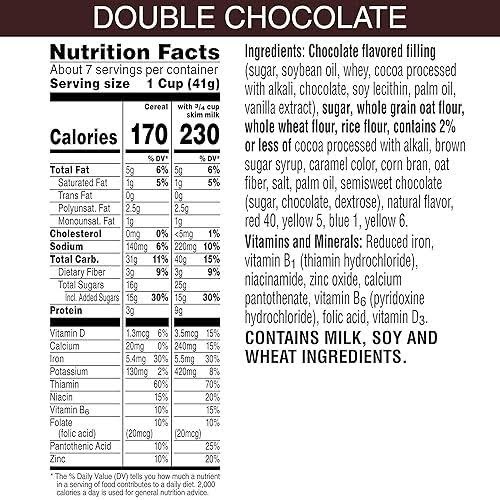
The Nutrition Facts label is often on the side because the front panel is designed for product identification, while the information panel is intended to carry required details. Under 21 CFR § 101.2, the information panel is generally the panel immediately to the right of the principal display panel when a person faces the front.
If that adjacent panel is too small or otherwise unusable for the required information, the regulation provides circumstances in which another panel may be used. This is why some cereal cartons place Nutrition Facts and ingredients on the back rather than on a side panel.
The important point is not that nutrition information must always appear on the right side. It is that the required information must follow the applicable placement and presentation rules for the package.
When planning a new carton:
- Identify the principal display panel.
- Determine which panel will serve as the information panel.
- Reserve sufficient space for the required information.
- Check the approved artwork against the actual carton dieline.
- Confirm the final arrangement with a qualified food-labeling professional when needed.
The information panel should be planned before decorative elements are finalized. Moving a nutrition label late in the process can affect typography, panel width, artwork balance, and production approval.
Cereal Box Nutrition Labels, Ingredients, and Allergens
Food-label information helps consumers compare products, understand ingredients, and identify allergens. It also needs to remain readable after printing, folding, gluing, and filling.
What belongs in the Nutrition Facts label?
For most packaged cereal products that require nutrition labeling, the Nutrition Facts panel presents information such as:
- Serving size and servings per container
- Calories per serving
- Total fat, saturated fat, and other required nutrient declarations
- Sodium and total carbohydrate
- Dietary fiber and total sugars, including added sugars
- Protein and applicable vitamins and minerals
- Percent Daily Value where required
The exact information and format depend on the product and the applicable regulations. Cereal brands should use the current requirements rather than copying an old label from an existing package.
The FDA provides details about the Nutrition Facts label and its required elements.
How is cereal serving size determined?
Serving size is not simply an arbitrary number selected for the front of the box. FDA rules establish reference amounts customarily consumed for different food categories. For ready-to-eat breakfast cereals, the applicable reference amount can depend on the cereal’s weight per cup and product type.
For example, FDA regulations distinguish between lighter ready-to-eat cereals, cereals with a greater weight per cup, and dense biscuit-style cereals. The corresponding serving-size declaration must follow the relevant category and labeling rules.
Manufacturers should verify the correct category in 21 CFR § 101.12 rather than using a generic serving size for every cereal.
Where should the ingredient list appear?
Ingredients are generally declared by their common or usual names in descending order of predominance by weight, subject to applicable exceptions. For many cereal products, the ingredient declaration appears on the information panel near the Nutrition Facts label.
The list should be accurate, readable, and consistent with the actual formulation. If ingredients change, the artwork and label should be reviewed before the updated package is printed.
What allergen information belongs on cereal packaging?
US food-labeling requirements cover nine major food allergens: milk, eggs, fish, crustacean shellfish, tree nuts, peanuts, wheat, soybeans, and sesame.
When a major allergen is present as an ingredient, it must be declared in the manner required by law. Depending on the formulation and label, the allergen may be identified within the ingredient list or in a separate “Contains” statement placed as permitted by the rules.
Precautionary statements such as “may contain” should not be used as a substitute for appropriate manufacturing controls or mandatory allergen declarations. Review the FDA’s food-allergen labeling guidance when developing a label.
Manufacturer or distributor details
Packaged-food labels generally need to identify the responsible manufacturer, packer, or distributor and provide the required place-of-business information. If the named business is not the manufacturer, wording may be needed to clarify its relationship to the product.
The details must meet applicable rules; a website or customer-service phone number does not automatically replace the required business identification.
Cereal Box Labeling Requirements: A Practical Checklist
Before releasing cereal packaging artwork, review the full carton rather than checking each panel in isolation.
Prepress review checklist
0 of 12 checked
- Confirm the product name and principal display panel.
- Verify the net quantity statement and its placement.
- Check Nutrition Facts formatting and serving-size calculations.
- Review the ingredient list against the current product formulation.
- Confirm all required major allergen declarations.
- Verify manufacturer, packer, or distributor details.
- Check any nutrition, health, or marketing claims for compliance.
- Confirm barcode readability and placement.
- Reserve a clear area for best-by dates and lot codes.
- Review recycling statements for accuracy.
- Check text size, contrast, and legibility on the printed substrate.
- Approve a proof or sample of the assembled carton.
This checklist is a planning aid, not a substitute for a full regulatory review. Food labeling obligations can vary by product, claims, package size, and applicable exemptions.
How to Design an Effective Cereal Box Back Panel
A successful back panel combines useful content, clear hierarchy, readable type, and an appropriate visual style. It should feel like part of the same brand system as the front, not a separate flyer pasted onto the carton.
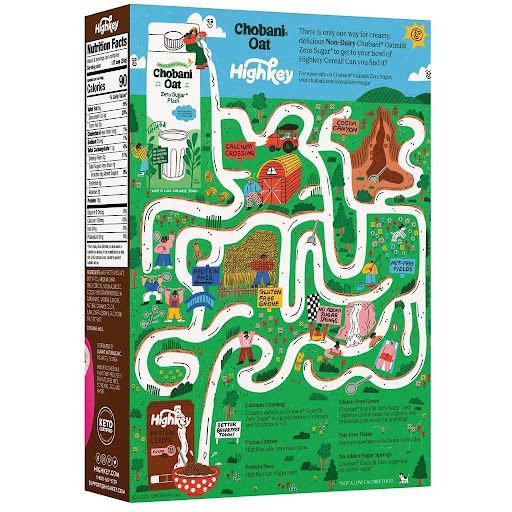
1. Choose one primary purpose
Decide what you want the reader to do or learn. A back panel might encourage a family to complete a puzzle, help a customer use cereal in a recipe, explain a product’s ingredients, or invite the shopper to scan a QR code.
Trying to give equal prominence to multiple games, recipes, promotional offers, long paragraphs, and social links can make the panel feel crowded. Start with one main feature, then add only the supporting content that fits.
2. Build a clear visual hierarchy
Use headings, illustrations, body copy, and spacing to make the panel easy to scan. A simple content hierarchy might include:
- A short headline that introduces the activity or topic
- A main illustration, recipe, or featured message
- Brief instructions or supporting copy
- A QR code or call to action, if relevant
- Required label information, if the panel is designated for that purpose
Make sure the creative content does not interfere with required labeling. If the back is also the information panel, compliance and readability must take priority over decorative design.
3. Match the design to the intended audience
Children’s cereal packaging may use friendly characters, puzzles, mazes, or interactive activities. Adult-focused products may benefit more from recipe ideas, serving suggestions, ingredient information, or a concise brand story.
In both cases, use language and visuals that are appropriate for the audience and truthful about the product. Do not imply health benefits that the cereal cannot substantiate.
4. Keep text readable in the real world
The carton may look large on a monitor but appear much smaller in a customer’s hands. Test the back panel at its actual printed size, including after folding.
Use strong contrast, sensible line lengths, clear headings, and sufficient spacing. Do not reduce essential text merely to make room for a decorative element. Required food-label text must meet the applicable legal requirements, and optional copy should remain comfortable to read.
5. Make QR codes useful
A QR code can connect the physical package to recipes, product information, promotions, games, or a brand website. Before printing, verify that the destination works on mobile devices and that the code can be scanned from the finished carton.
Include a short explanation of what the user will get by scanning. A code without context may be ignored, and a code that is too small, low-contrast, distorted, or placed across a fold may not scan reliably.
6. Design for the entire product range
If the brand sells multiple cereal flavors or varieties, keep core visual elements consistent while making each SKU easy to distinguish. Controlled changes in color, illustration, or secondary graphics can help customers identify the right product without relearning the entire design.
For more ideas on building a coherent packaging identity, explore Bluebird Packaging’s guide to planning packaging design around product and brand needs.
Cereal Box Games, Recipes, and Promotional Content
Games and promotional content can make a cereal carton more engaging, especially when the package is designed for families or children. However, the best feature is not necessarily the most complicated one. A simple activity with clear instructions can work better than a crowded collection of unrelated elements.
Common options include:
- Games and puzzles: Mazes, word searches, matching activities, riddles, and spot-the-difference illustrations.
- Recipes: Ideas for cereal bars, snack mixes, toppings, or desserts that use the product.
- Brand stories: Short explanations of the brand’s purpose, product development, or ingredient sourcing, where claims are accurate and supportable.
- Product education: Suggestions for serving the cereal or using it in a recipe.
- Promotions: Seasonal campaigns, loyalty programs, collectibles, or other offers with clear terms.
- QR-code experiences: Digital recipes, games, product details, or campaign pages.
- Product-range discovery: Illustrations or brief descriptions of other varieties in the same range.
Every element should have a reason to be there. If a promotion includes eligibility conditions, an expiry date, or other material terms, ensure they are clear and accurate. Any claims about nutrition or health must comply with the relevant regulations.
Barcode, Best-By Date, and Lot Code Placement
A cereal box needs to function on the retail shelf and during manufacturing. Barcodes, date codes, and batch identifiers may be small, but poor placement can cause scanning problems, unreadable codes, or avoidable production errors.
Where should the cereal box barcode go?
The barcode is commonly positioned on a side or another suitable flat area of the carton. Its exact location depends on the retailer’s requirements, packaging design, and production setup.
For reliable scanning:
- Use the barcode format and dimensions specified for the product and retail channel.
- Maintain sufficient contrast between the bars and background.
- Keep it away from folds, corners, glue areas, and other distortions.
- Avoid placing artwork or finishes that interfere with scanning.
- Test the barcode on a production-representative sample.
Barcode dimensions and placement should be confirmed with the relevant barcode standards and retail requirements. Do not assume one size or position is appropriate for every cereal carton.
Where is the best-by date printed?
The best-by date is often printed on a top flap or another designated area during the packaging process. The exact position depends on the equipment, carton construction, and manufacturer.
Reserve an area where the code can be applied clearly and remain legible. Some coatings or finishes may affect ink adhesion or drying, so confirm the proposed surface with the packaging and production teams.
A best-by date is not necessarily the same as a safety-based expiration date. Date-label terminology and obligations can vary by product and applicable rules, so brands should use the correct wording for their product and market.
What is the lot code used for?
A lot or batch code helps a manufacturer identify a production run. It can support traceability, quality investigations, and recall processes when necessary.
The code should be readable and applied consistently. Keep it separate from decorative elements that could make it difficult to find or interpret.
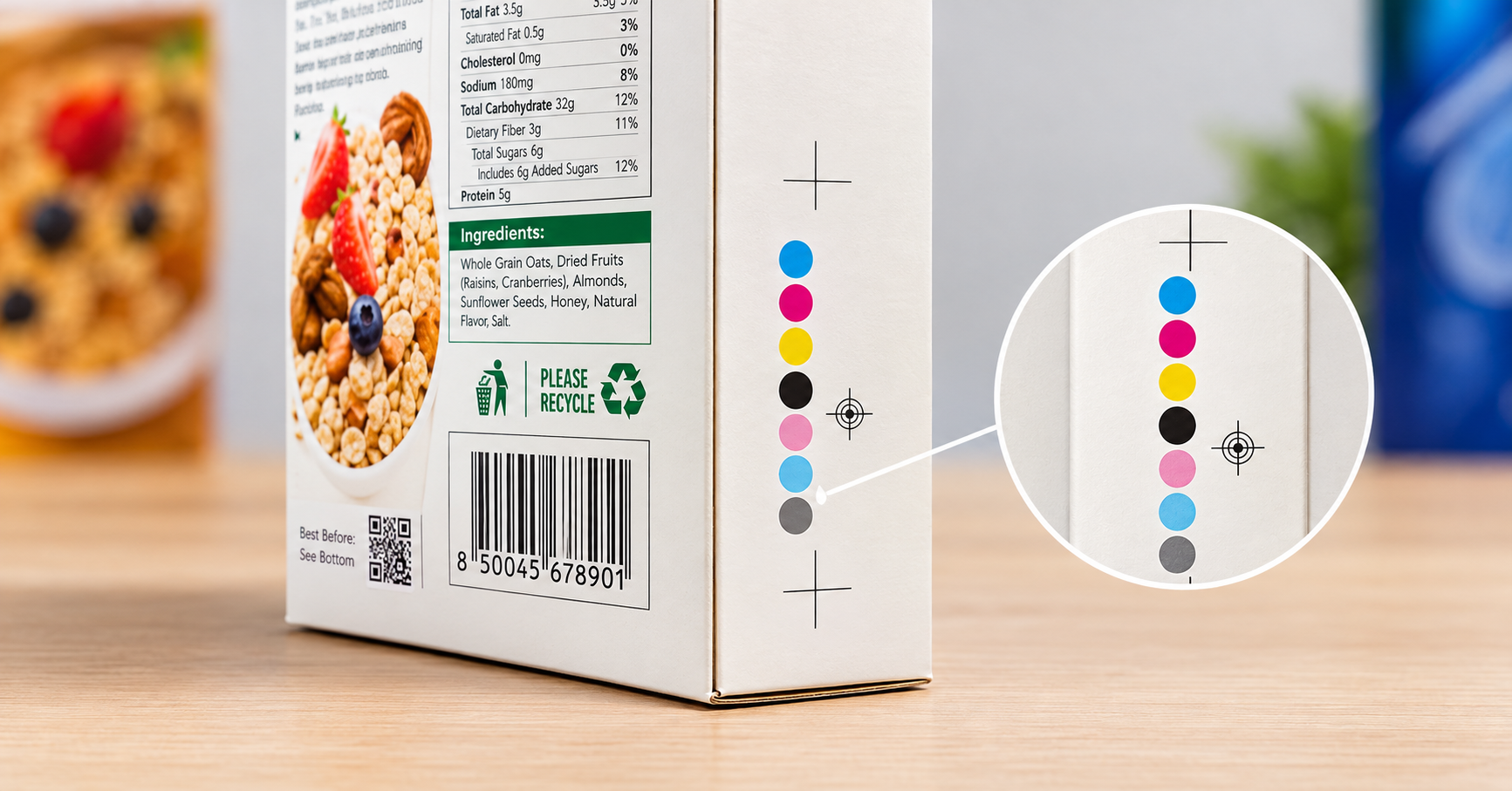
What are the colored squares on a cereal box?
Small color patches, crosshairs, or registration marks may be printer’s marks used during production to help check ink color and alignment. They are not automatically part of the consumer-facing design.
Their location and use depend on the print process and the packaging supplier’s production workflow. They should not be confused with a consumer nutrition rating or recycling symbol.
Cereal Box Materials, Printing, and Recycling
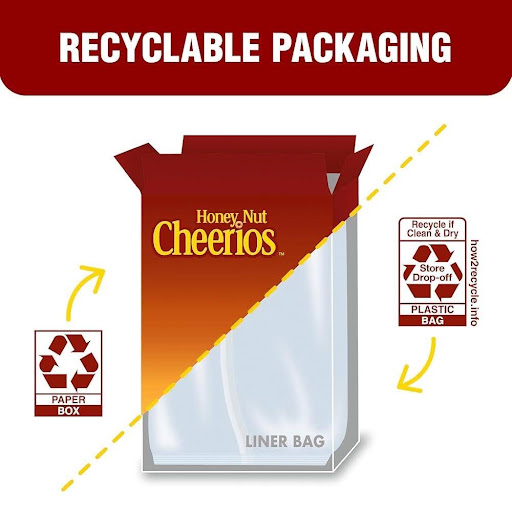
The typical cereal carton is made from paperboard, while the cereal itself is often held inside a separate bag or liner. These components serve different purposes and may have different recycling options.
Paperboard vs. corrugated packaging
Paperboard is commonly used for folding cartons because it supports printed graphics and can be converted into lightweight retail packaging. Corrugated board has a fluted layer between liner sheets, providing a different structure that is often useful when greater cushioning or shipping protection is needed.
| Material or structure | Common application | Main consideration |
|---|---|---|
| Folding paperboard carton | Retail cereal boxes and lightweight packaged foods | Supports detailed printing and efficient carton conversion. |
| Corrugated board | Shipping cartons and protective outer packaging | Adds structure and cushioning, depending on construction. |
| Kraft paperboard | Packaging that uses a natural-looking paper aesthetic | Color, surface, and print appearance depend on the selected stock. |
| Rigid board | Premium presentation boxes and gift packaging | Provides a more substantial structure but is not the typical format for everyday cereal cartons. |
The best material depends on the product, retail requirements, printing needs, production equipment, and distribution conditions. Brands comparing paperboard and corrugated structures can read Bluebird Packaging’s explanation of how cardboard and corrugated boxes differ.
Printing and finishing options
Cereal carton artwork may use full-color graphics, brand colors, illustrations, photography, and selective finishing. The chosen process should suit the board, artwork, quantity, budget, and required appearance.
Before approving production, review:
- Print color and contrast on the actual substrate
- Small text and fine-line details
- Alignment across panels and folds
- Coatings and finishes near the date-code area
- Barcode readability
- Cut lines, fold lines, and glue areas
Bluebird Packaging’s resources on packaging printing methods and packaging finishes provide further context for planning artwork and surface treatments.
Are cereal boxes recyclable?
Paperboard cereal cartons may be accepted in many community recycling programs, but acceptance varies by location and material. The plastic inner bag may follow different collection rules and should not automatically be placed in the same recycling stream as the carton.
Brands should check local guidance and the actual packaging components before printing recycling instructions or making recyclability claims. Avoid assuming that every coating, window, adhesive, or liner is accepted by every program.
For additional context, the US Environmental Protection Agency provides information about recycling and paper and paperboard materials. Bluebird Packaging also covers practical considerations in its sustainable packaging resource and packaging recycling guide.
A recycling claim should be accurate for the specific component and supported by the relevant collection and processing conditions. If the carton and inner liner have different disposal instructions, explain that difference clearly.
How to Plan Cereal Box Dimensions and Artwork
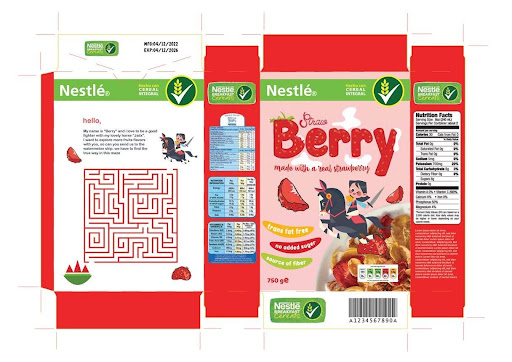
Cereal packaging design should begin with the product and the packaging line—not with a graphic layout alone. The dimensions, board thickness, closure, filling process, and print area all affect how the final carton works.
Step 1: Confirm the product and carton requirements
Identify the cereal type, net quantity, inner liner, storage requirements, and retail environment. Confirm whether the carton will be packed on existing machinery or requires a different construction.
The package should fit the product and suit the filling and sealing process. Do not finalize panel dimensions until the structural requirements are clear.
Step 2: Measure the carton and establish panel sizes
Record the required height, width, and depth, and confirm whether the specification refers to internal or external dimensions. Board thickness, folds, and construction affect the finished size.
For practical guidance on measurement terminology and dimensions, use Bluebird Packaging’s guide to measuring a box accurately.
Step 3: Obtain the approved packaging dieline
A dieline shows the intended cut lines, folds, flaps, glue areas, and panel boundaries. It gives the designer a reliable structure on which to build the artwork.
Do not estimate panel widths from a flat photograph or assume that every carton uses the same proportions. Work from the supplier’s approved dieline for the specific structure.
Step 4: Assign content to each panel
Plan the front, back, information panel, other side, top, and bottom together. Place mandatory information first, then fit the creative content around it.
A simple planning sequence is:
- Establish the front-panel product identity and net quantity.
- Reserve space for required food-label information.
- Choose the back-panel activity or story.
- Place the barcode and other operational details.
- Mark the date-code area.
- Check all folds, flaps, and glue zones.
Step 5: Set bleed and safe zones
Artwork that reaches a cut edge generally needs bleed, while essential text and logos should stay within the recommended safe area. The exact measurements should come from the printer or packaging supplier.
Keep important content away from cut lines, scores, glue areas, and areas likely to be hidden during assembly. For food packaging, also ensure that the final layout leaves sufficient room for required label text.
Step 6: Review color and print specifications
Prepare artwork according to the supplier’s required file format, color settings, resolution, and dieline conventions. Screen colors do not always reproduce exactly on printed board.
Check that brand colors, images, small text, and barcode contrast remain suitable on the chosen substrate. A physical proof is particularly helpful when the carton has multiple panels, small label text, or specialized finishes.
Step 7: Inspect an assembled sample
A flat artwork file cannot show every issue that may appear after folding and gluing. Inspect a folded sample to confirm that panel content appears in the correct location and remains readable.
Check fit, closure, barcode scanning, date-code legibility, print alignment, and any required label information. Correct problems before approving a production run.
For businesses comparing packaging choices across product lines, Bluebird Packaging’s custom packaging overview explains the broader considerations involved in selecting a suitable packaging solution.
Common Cereal Box Design Mistakes to Avoid
Small artwork decisions can create larger issues once a carton reaches the packing line or retail shelf. These are some common problems to catch during planning and proofing.
| Mistake | Why it causes problems | Better approach |
|---|---|---|
| Treating the back as the only place for all label information | Required details may be poorly placed or difficult to read | Plan the information panel against applicable rules. |
| Crowding the back with too many features | Readers may struggle to find the main activity or message | Choose one primary purpose and limit secondary content. |
| Using small, low-contrast text | Important information becomes harder to read | Test type size and contrast on the printed carton. |
| Placing content across folds | Text or graphics may become distorted or hidden | Use the approved dieline and safe zones. |
| Forgetting the date-code area | Production codes may be difficult to apply or read | Reserve and test a suitable coding surface. |
| Putting a barcode too close to a fold | Scanning can become unreliable | Confirm barcode placement and test the finished sample. |
| Using unsupported claims | Labeling and marketing claims may mislead consumers or fail compliance checks | Verify claims against applicable requirements before printing. |
| Making vague recycling claims | Consumers may receive inaccurate disposal guidance | Check the carton, liner, and local collection rules separately. |
| Approving artwork without a folded sample | Panel alignment and structural problems may go unnoticed | Inspect a representative assembled carton before production. |
Cereal Box Back Panel Design: A Practical Example
Imagine a brand launching a new whole-grain cereal for families. The goal is to make the box informative and engaging without overcrowding it.
A practical panel plan could look like this:
- Front: Brand, cereal name, product image, permitted claims, and net quantity statement.
- Right-side information panel: Nutrition Facts, ingredients, allergen information, and responsible-business details as required.
- Back: A simple maze or recipe, short instructions, and a QR code linking to related content.
- Other side: Barcode, customer service details, and suitable recycling instructions.
- Top flap: A clear area for the best-by date and lot code.
- Bottom and glue flap: Structural and production areas kept clear of essential consumer-facing text.
This is an illustrative layout, not a universal template. The final panel arrangement should be based on the carton structure, labeling requirements, retailer expectations, and production equipment.
Choosing Custom Food Packaging for a Cereal Product
A cereal carton is both a retail package and a communication surface. It needs to hold its shape, present the product clearly, support accurate labeling, and reproduce artwork consistently.
When planning packaging for cereal or another dry food, consider:
- The product’s dimensions, weight, and handling requirements
- The board and carton structure
- The available print area on every panel
- The space needed for required label information
- Barcode and date-code placement
- The intended retail and distribution channels
- The need for a physical sample before production
Bluebird Packaging offers packaging-related resources and product options that can help businesses compare structures and printing considerations. Explore custom food packaging boxes for food-focused packaging needs, or review custom retail boxes when shelf presentation is a major priority.
Other structures may be relevant for different stages of the supply chain. For example, cardboard box options may be worth considering for suitable carton applications, while corrugated box packaging can be relevant when an outer shipping structure is needed. For natural-looking packaging concepts, compare kraft box options. If a product requires a separate presentation or display structure, custom display boxes may be worth reviewing.
These products are not interchangeable by default. Choose a structure based on the product’s needs and confirm its suitability with the packaging supplier before production.
Frequently Asked Questions About the Back of Cereal Boxes
What information is on the back of a cereal box?
The back often contains games, puzzles, recipes, brand stories, promotions, or QR codes. It may also contain required food-label information if the panel is being used as the information panel. The exact arrangement depends on the carton design and applicable labeling rules.
Why is the nutrition label usually on the side of a cereal box?
The information panel is generally the panel immediately to the right of the principal display panel when facing the front. Cereal brands often use this side for Nutrition Facts and other required information, leaving the back available for marketing content. Exceptions can apply under the regulations.
Can the Nutrition Facts label go on the back of a cereal box?
Yes, depending on the package layout and the applicable rules. If the usual information panel is too small or unusable, another panel may be permitted. The required information must still be presented in accordance with FDA requirements.
Where do ingredients go on cereal packaging?
The ingredient declaration is commonly placed on the information panel near the Nutrition Facts label. Ingredients generally appear in descending order of predominance by weight, subject to applicable exceptions. The final label should reflect the actual formulation.
What allergen information must cereal boxes include?
When a major food allergen is present as an ingredient, the required allergen declaration must follow US labeling rules. The nine major allergens include milk, eggs, fish, crustacean shellfish, tree nuts, peanuts, wheat, soybeans, and sesame.
Where is the best-by date printed on a cereal box?
It is often printed on a top flap or another designated area during packing. The location depends on the carton and coding equipment. Manufacturers should reserve a readable area and verify that the selected surface works with the coding process.
What are the colored squares on a cereal box?
They may be printer’s color-control marks used during production to check ink color or registration. Their meaning depends on the printing workflow, and they are not necessarily intended as consumer-facing graphics.
Are cereal boxes recyclable?
Paperboard cereal cartons are accepted by many recycling programs, but local rules vary. The inner plastic liner may need a different disposal route. Check local recycling guidance and avoid making claims that are not supported for the actual materials.
What should be included in cereal box artwork?
Artwork usually includes brand graphics, product identification, panel-specific information, and any approved promotional content. It should also account for the Nutrition Facts label, ingredients, allergen information, net quantity, barcode, coding area, bleed, safe zones, and folds as applicable.
What is the best way to design a cereal box back panel?
Start by choosing one main purpose, such as a puzzle, recipe, or brand story. Establish a clear hierarchy, use readable text, reserve space for required information if needed, and test the layout on a folded carton sample before approving production.
Conclusion: Plan the Back of a Cereal Box Around Information, Design, and Function
The back of a cereal box is more than an empty space for decoration. It can engage customers with games and recipes, tell a brand story, or present required food-label information when the layout calls for it. The most effective designs coordinate the back panel with the front, information panel, barcode, date-code area, and the structure of the entire carton.
For US cereal packaging, verify label placement and claims against current FDA requirements. Then use an approved dieline, readable typography, sensible content hierarchy, accurate recycling guidance, and a folded proof to check the final result.
If you’re planning printed food packaging and need help evaluating suitable structures, materials, or artwork requirements, visit Bluebird Packaging to explore the available packaging options. You can also request a packaging quote to discuss your project requirements.
Editorial note: This article provides general packaging and labeling information, not legal advice. Have a qualified food-labeling professional review final artwork for the specific product and market before printing.
Additional relevant resources for cereal packaging
Cereal brands selling through both retail stores and online channels should also consider how the carton will be handled after purchase. Bluebird Packaging’s guide to ecommerce packaging requirements can help frame distribution considerations, while its custom packaging cost guide provides a useful starting point for evaluating project costs. Smaller food businesses can also review packaging ideas for small businesses when comparing practical packaging options.
If the cereal carton will be placed inside a separate shipping package, custom mailer boxes may be worth evaluating for that outer packaging role, depending on the product and shipping requirements.